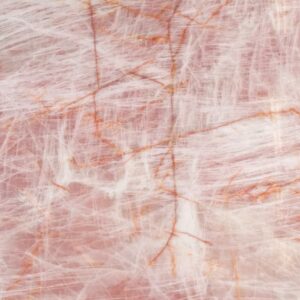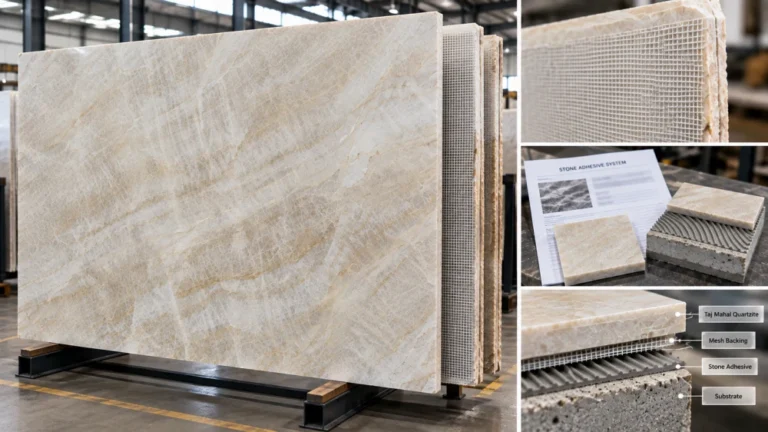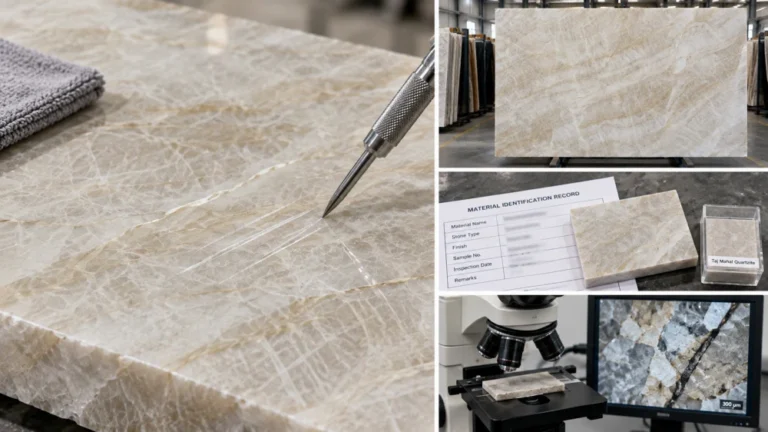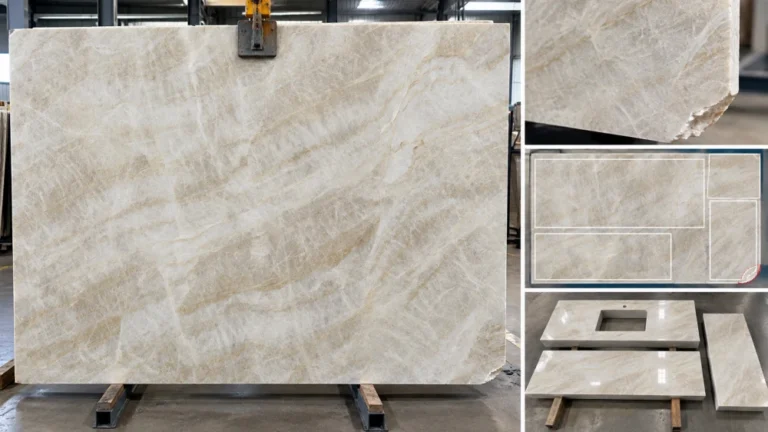


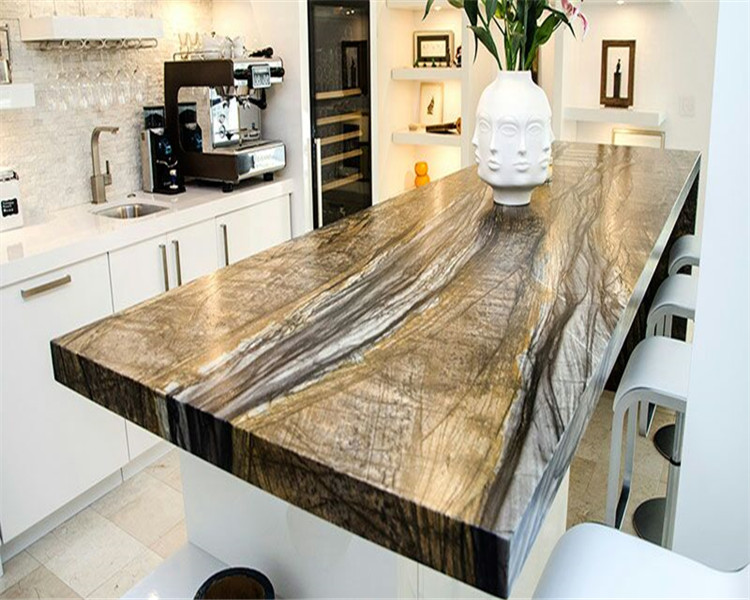
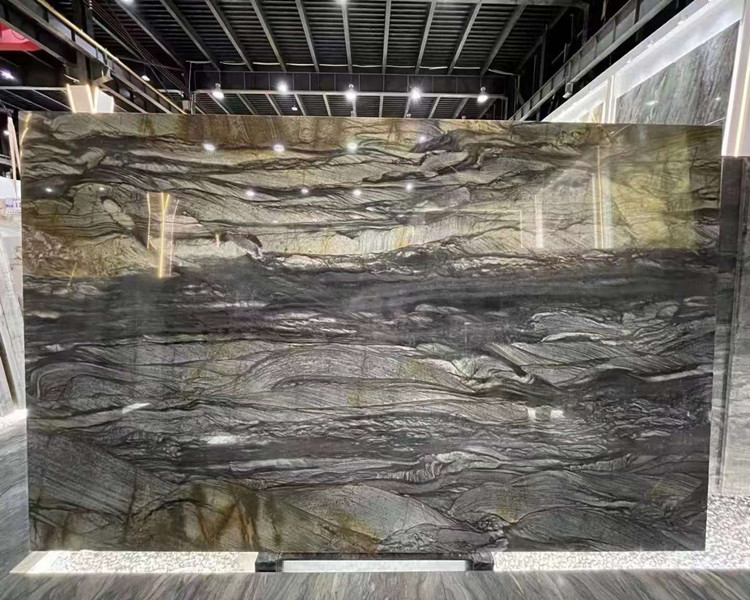
Sandalus Quartzite is a distinctive Brazilian natural stone characterized by long layered bands of brown, grey, black and silver mineral movement. Its flowing horizontal or diagonal structure often resembles natural wood grain, giving the stone a warm architectural character while preserving the depth and variation of natural quartzite.
Origine Brésil
18 mm / 20 mm
Wood-Grain Movement
Fabrication sur mesure
Quartzite naturel
Brésil
Brown / Grey / Black / Silver
Dalles / Carreaux / Découpe sur Mesure
Sandalus Quartzite Product Overview
Quartzite de santal, également recherché sous le nom de Sandalus Stone ou Sandalus Brown, is valued for its strong directional mineral movement. Layers of warm brown, charcoal, grey and silvery tones can form long ribbon-like bands across the slab.
This visual structure is why the material is often described as a Wood Look Quartzite ou Pierre à Veinage Bois. However, the pattern remains naturally irregular, with differences in band width, tone and direction from slab to slab.
For large islands, feature walls or furniture applications, the direction of the Sandalus Slab should be reviewed before fabrication because rotating the material can significantly change the final visual effect.
Spécifications du produit
| Item | Détails des spécifications |
| Nom du matériau | Quartzite de santal |
| Noms alternatifs | Sandalus Stone / Sandalus Brown |
| Type de matériau | Quartzite naturel |
| S’applique à | Brésil |
| Couleurs principales | Brown, Rust Brown, Grey, Silver, Black and Charcoal |
| Motif de texture | Layered, wavy and ribbon-like directional mineral movement with a natural wood-grain effect |
| Épaisseurs disponibles | 18 mm / 20 mm |
| Finition de surface | Leathered / Polished / Honed / Brushed / Project-Specific Finish |
| Formes de fourniture | Slabs, Tiles, Countertops, Island Tops, Vanity Tops, Wall Panels, Flooring, Stair Components, Fireplace Pieces and Table Tops |
| Champ d’application | Luxury Residential, Villas, Hotels, Kitchens, Bathrooms, Feature Walls, Floors, Stairs, Fireplaces and Custom Furniture |
| Fabrication sur mesure | Cut-to-Size, CNC Openings, Miters, Edge Profiles, Waterfall Pieces, Wall Panels, Stair Components, Fireplace Pieces and Table Tops |

How to Select Sandalus Quartzite
For Sandalus Quartzite, the most important selection factors are vein direction, band width, tonal balance and the relationship between brown, grey, black and silver mineral areas.
Pour un Sandalus Counter, Sandalus Island or feature wall, the direction of the long mineral bands should be planned before cutting because horizontal and vertical orientations create very different visual effects.
Logique de sélection
If a warmer result is required → Choose slabs with stronger brown and rust-brown bands.
If a more contemporary look is preferred → Choose slabs with stronger grey, silver and charcoal movement.
If stronger wood-grain character is desired → Choose slabs with longer, more continuous directional bands.
If several pieces connect visually → Approve the full slab orientation and cutting layout before fabrication.
Sandalus Quartzite Applications
The layered movement of this Pierre Brune de Luxe makes Sandalus suitable for both horizontal and vertical applications where direction can be used as part of the architectural design.
Sandalus Island
Large kitchen islands allow the layered mineral bands to travel across a broad surface and can create a warm, architectural centerpiece.
Sandalus Counter
Countertops can be fabricated with sink openings, cooktop cutouts and edge details while preserving the intended direction of the natural movement.
Sandalus Vanity
Vanity tops can use selected slab areas with basin openings, faucet holes, backsplashes and finished edges according to approved drawings.
Sandalus Wall
Large wall panels can emphasize the layered wood-like structure and are suitable for villas, hotel lobbies, reception areas and premium commercial interiors.
Sandalus Floor
Floor applications can use long directional bands to visually extend a space when piece orientation and tonal grouping are controlled.
Sandalus Table Top
Dining tables, coffee tables, consoles and bar tops can use the material’s layered mineral structure as a close-range decorative surface.
Wood-Look Direction and Design Planning
One of the defining characteristics of Sandalus is its Pierre à Veinage Bois appearance. Long bands can visually resemble timber grain, but because the material is natural quartzite, the movement remains irregular and mineral-driven.
The same slab can create a very different effect depending on whether the grain runs horizontally, vertically or diagonally. This is especially important for walls, waterfall islands and large furniture pieces.
Horizontal Direction → Creates a wider, calmer and more continuous architectural effect.
Vertical Direction → Emphasizes height and can work well on feature walls or tall fireplace panels.
Diagonal Direction → Creates a more dynamic composition but requires careful joint planning.
Kitchen and Bathroom Coordination
UN Sandalus Kitchen can use the material as a warm statement island or as a Comptoir brun coordinated with timber, charcoal, cream or metal finishes.
Pour un Sandalus Bathroom, the layered pattern works well on vanity tops and selected wall surfaces. The direction of the grain should be consistent across adjoining pieces where possible.
Si les armoires sont en bois chaleureux → Choose slabs with balanced brown and grey movement so the stone complements rather than visually competes with the wood.
If the cabinetry is dark charcoal → Slabs with stronger silver and lighter brown bands can provide clearer contrast.
Feature Walls and Pattern Continuity
UN Sandalus Wall Panel installation is one of the strongest applications because the long layered bands can continue across large vertical surfaces.
For multi-panel walls, the design should determine whether the pattern runs continuously in one direction or whether complementary slabs are used to create a more symmetrical composition.
Planification murale recommandée :
Actual Slab Review → Direction Selection → Wall Elevation → Panel Dimensions → Slab Sequence → Joint Planning → Cutting Layout → Dry-Lay Review → Final Approval
Disposition des veines et de la découpe à grande échelle
Sandalus is an Pierre brune exotique with long directional bands rather than small repetitive grain. A major brown, silver or charcoal band can cross a large portion of a finished island, wall panel or table top.
For premium projects, finished-piece layout should guide cutting. Maximizing material yield without considering direction can create visually disconnected pieces.
Si un îlot en cascade est requis → Coordinate the top and vertical return so the layered movement continues naturally.
Si plusieurs éléments focaux sont nécessaires → Allocate the strongest grain areas to the most visible components first.
Si les joints sont inévitables → Position them where changes in the natural bands make the transition visually logical.
Guide de sélection des applications
| Exigence du projet | Formulaire recommandé | Priorité de sélection |
| Statement kitchen island | Large Sandalus Slab | Grain direction and waterfall continuity |
| Comptoir de luxe | Sandalus Counter | Opening position and vein direction |
| Mur d’accent | Sandalus Wall Panel | Panel sequence and directional continuity |
| Interior floor | Sandalus Tile | Pattern direction and tonal grouping |
| Mobilier d’accent | Sandalus Table Top | Grain composition and finished edge quality |
Finitions de surface et fabrication
Leathered Sandalus
A leathered finish is especially effective on Sandalus because subtle surface texture can reinforce the natural wood-like character while reducing glare.
Polished Sandalus
A polished finish increases color depth and highlights brown, silver and dark mineral contrast for statement islands, walls and furniture.
Honed or Brushed
Honed or brushed finishes can create a softer architectural appearance and may suit selected walls, bathrooms, flooring and furniture applications.
Principaux risques liés aux achats
Rotating adjoining pieces without planning can make the natural wood-like grain appear broken or visually inconsistent.
A small sample cannot represent full-slab grain scale, band direction or brown-grey-black balance. Full-slab approval is recommended.
Strong directional bands may be lost inside openings or divided poorly at seams when fabrication starts without slab mapping.
Leathered, honed and polished surfaces can produce noticeably different visual depth and tactile character. A representative finish sample should be reviewed when appearance is critical.
Erreurs courantes d’achat et leurs conséquences
| Erreur fréquente | Conséquence possible | Contrôle recommandé |
| Se fier uniquement à un petit échantillon pour la commande | Unexpected grain scale or tone | Approuver les photos ou vidéos des dalles réelles |
| Ignoring slab direction | Disconnected visual flow across pieces | Mark finished-piece orientation before cutting |
| Mélanger des dalles sans lien entre elles | Abrupt differences in brown-grey balance | Examiner toutes les dalles du projet ensemble |
| Plans de fabrication incomplets | Découpes, profils de bord ou dimensions incorrects | Approuver les plans CAO ou d’atelier avant la production |
| Comparer uniquement le prix des dalles | Comparaison incomplète des coûts du projet final | Comparer le rendement utilisable, la fabrication, l’emballage et la logistique |
Fabrication sur mesure et contrôle qualité
Sandalus Quartzite can be fabricated into countertops, waterfall islands, vanity tops, wall panels, flooring, stair components, fireplace surrounds, table tops, bar tops and other custom architectural pieces according to approved CAD or shop drawings.
Before cutting, actual slab identity, visible face, grain direction, major brown-grey bands, natural fissures or repaired zones, finished dimensions, cutout locations, seam positions and exposed edges should be reviewed.
Flux recommandé du projet
Material Inspection → Actual Slab Selection → Direction Review → Slab Mapping → Drawing Approval → Cutting Layout → Cutting → CNC & Edge Fabrication → Surface & Edge Check → Dry-Lay Confirmation Where Required → Final QC → Packing Inspection
Packaging and Project Delivery
Finished Sandalus Quartzite components should be packed according to their dimensions, geometry, weight and breakage risk. Large islands, countertops with openings, wall panels, stair pieces and long furniture tops require suitable support during handling and international transportation.
Finished stone faces should be separated with soft non-staining protective materials. Exposed corners, edges, openings and vulnerable areas should receive additional cushioning before components are securely fixed inside reinforced fumigated wooden crates.
Information Required for Quotation
Pour une tarification B2B précise, communiquez les exigences principales du projet afin d’évaluer conjointement la quantité de dalles, le rendement utilisable, la complexité de la fabrication, ainsi que l’emballage et la logistique.
Island / Counter / Wall / Floor / Table
Dimensions des composants finis
Pieces or total area
18 mm / 20 mm
Leathered / Polished / Honed
Horizontal / Vertical / Custom Layout
Bords / Découpes / Chants / Cascade
Port or delivery address
Sandalus Quartzite FAQ
1. À quoi ressemble le quartzite de Sandalus ?
Le quartzite Sandalus présente généralement de longues bandes stratifiées composées de minéraux brun, gris, noir, argenté et teintés de rouille, offrant un aspect naturel rappelant le grain du bois ou des rubans ondulants.
2. Le quartzite de Sandalus est-il une pierre naturelle brésilienne ?
Oui. Le quartzite Sandalus est un quartzite naturel brésilien ; ainsi, la teinte, l’orientation du grain, la largeur des bandes et la répartition des minéraux varient naturellement d’une dalle à l’autre.
3. Pourquoi le quartzite de Sandalus ressemble-t-il au bois ?
Ses longues bandes minérales superposées forment un motif directionnel rappelant le veinage du bois. L’effet est naturel et irrégulier, plutôt que d’être un motif imprimé ou industriel.
4. Can Sandalus Quartzite be used for kitchen countertops?
Yes. Sandalus Counter applications can be fabricated with sink openings, cooktop cutouts, edge profiles and seams coordinated with the selected slab direction.
5. Is Sandalus Quartzite suitable for kitchen islands?
Yes. Sandalus Island applications are particularly effective because large surfaces allow the layered wood-like movement to remain visible and continuous.
6. Is a leathered finish suitable for Sandalus Quartzite?
Yes. Leathered Sandalus is a popular option because subtle texture complements the wood-like visual character and reduces glare compared with a highly polished surface.
7. Can Sandalus Quartzite be used for feature walls?
Yes. Sandalus Wall and Sandalus Wall Panel applications can emphasize the long mineral bands across large architectural surfaces.
8. Should the vein direction be approved before fabrication?
Yes. Horizontal, vertical and diagonal orientations create very different visual effects, so finished-piece direction should be confirmed before cutting.
9. Can Sandalus Quartzite be used for tables and furniture?
Yes. Sandalus Table Top applications work well for dining tables, coffee tables, consoles and bar tops where the layered pattern can be viewed at close range.
10. What affects Sandalus Quartzite price?
Price depends on slab quality, pattern consistency, dimensions, thickness, usable yield, finish, fabrication complexity, quantity, packaging requirements and shipping destination.
Note finale / conclusions pratiques
Sandalus Quartzite is best suited to projects where layered natural movement and warm wood-like character are intended to become part of the architectural identity. Its brown, grey, silver and black bands work especially well for kitchen islands, countertops, feature walls, floors and custom furniture. For B2B procurement, actual slab selection, pattern direction, cutting layout, finish approval, fabrication drawings, QC and export packaging should be evaluated together. If a warmer result is preferred → choose slabs with stronger brown and rust-toned bands. If a more contemporary result is required → choose slabs with stronger grey, silver and charcoal movement. If several finished pieces form one visual installation → approve the direction and complete slab allocation before fabrication.