Guide ultime : quartzite vs dalle de porcelaine pour les plans de travail de cuisine – coût, design, performance et approvisionnement
Post navigation
Résumé rapide
Ce guide aide les acheteurs de projets à comparer les dalles en quartzite naturel et en porcelaine selon l’application, l’apparence, les spécifications, la fabrication, la planification de la maintenance ainsi que par le biais d’un flux de travail d’approbation documenté.
Le Guide ultime sur le quartzite vs. la dalle en porcelaine pour les plans de travail de cuisine : coût, design, performance et approvisionnement doit être considéré avant tout comme une décision technique, et non comme un simple slogan. Pour un importateur, un fabricant, un architecte, un entrepreneur ou une équipe d’approvisionnement d’un projet, la question pertinente est de savoir comment ces deux solutions matérielles s’intègrent aux plans, à l’usage prévu et au processus d’approbation. La comparaison doit distinguer le quartzite naturel, qui est une pierre naturelle, des produits en dalles de porcelaine, qui sont des matériaux de surface manufacturés. Le quartzite naturel et les autres matériaux de pierre naturelle ne sont pas interchangeables simplement parce qu’un échantillon exposé dans un showroom peut sembler similaire.
HRST STONE, également connue sous le nom de XIAMEN HRST STONE CO., LTD., répond aux demandes concernant la quartzite naturelle selon une approche axée sur la documentation. Les acheteurs peuvent commencer par préciser le nom du matériau, l’application prévue, les dimensions, la quantité, les exigences relatives aux bords ou à la surface, ainsi que les plans et la destination de livraison. Cela permet d’établir une base plus claire pour l’examen des dalles, les discussions sur la fabrication, les attentes en matière d’emballage et la confirmation commerciale, sans supposer la disponibilité, le prix, les résultats des tests ou les délais de livraison.
quartzite-vs-porcelain-slab-kitchen-countertops
Commencez par l’application, et non par une affirmation générale
Avant de comparer le quartzite naturel et la dalle en porcelaine, définissez clairement l’application en termes pratiques. Une îlot de cuisine, une vasque d’accueil, un comptoir de réception, un panneau mural ou une surface décorative sèche imposent des exigences différentes en matière de rendu visuel, de fabrication, de nettoyage, de support et de livraison. Demandez à l’équipe de conception quelles caractéristiques sont essentielles et lesquelles relèvent des préférences. Une décision devient plus fiable lorsqu’elle est liée à un plan et à un processus d’approbation d’échantillons, plutôt qu’à un classement générique.
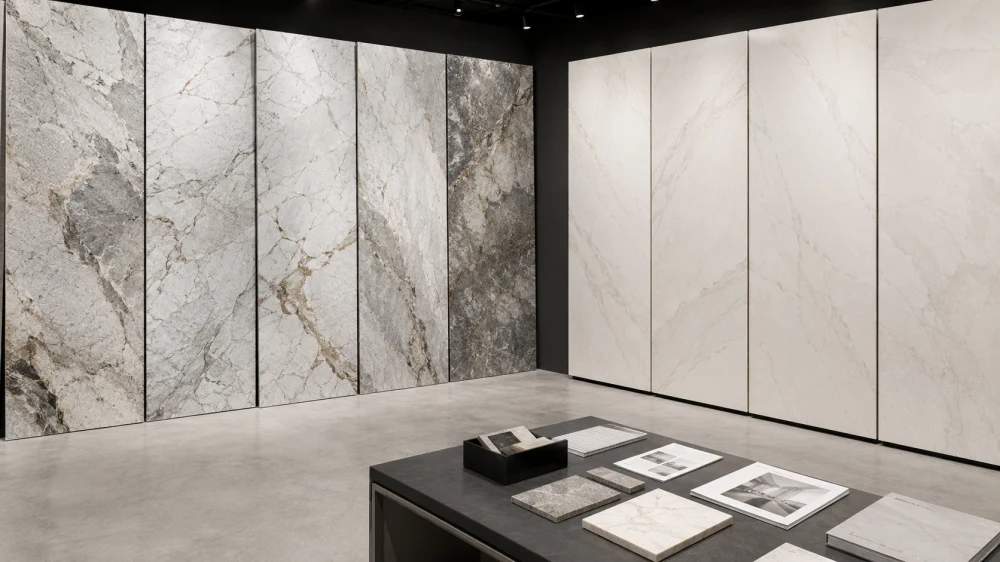
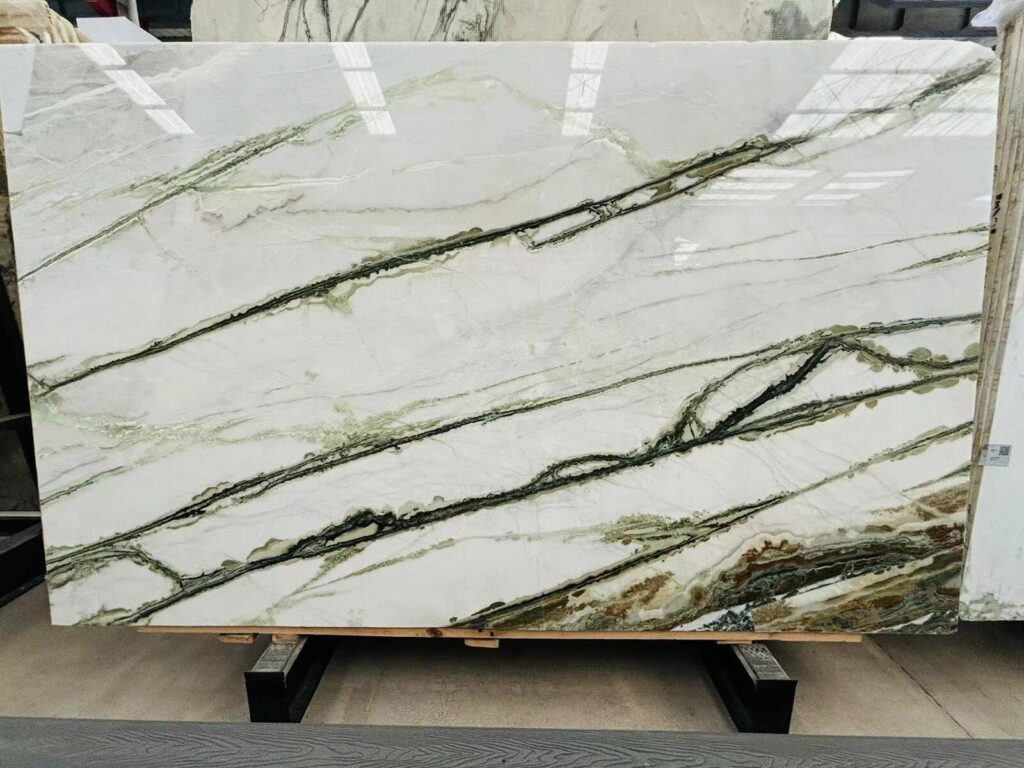
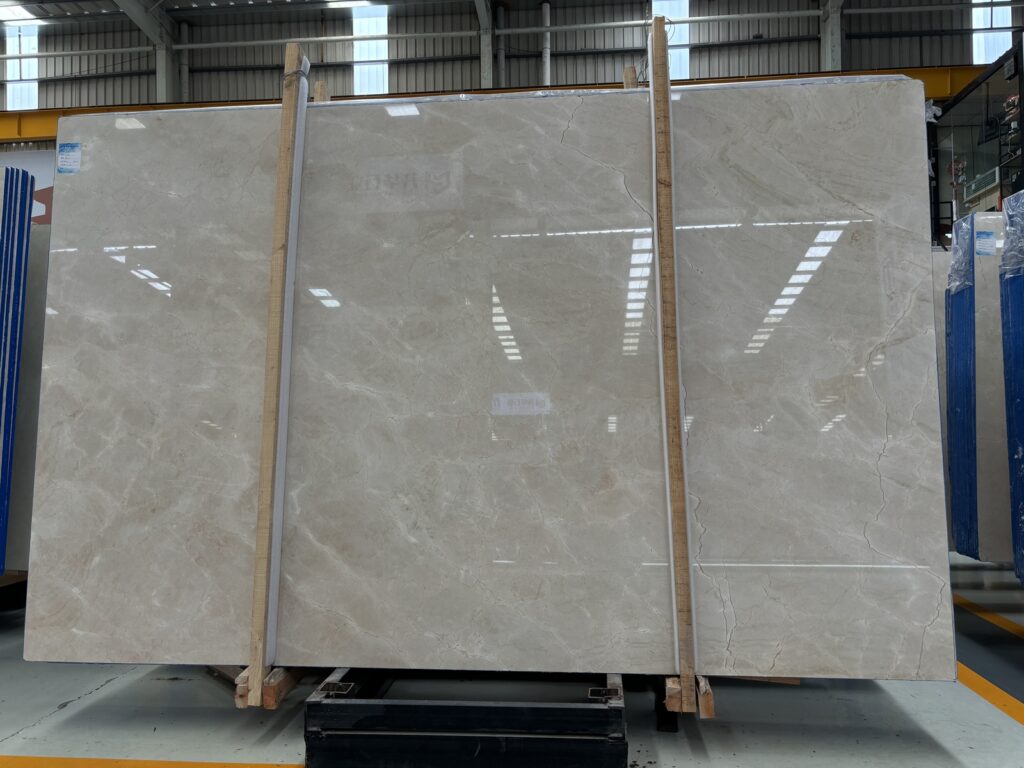
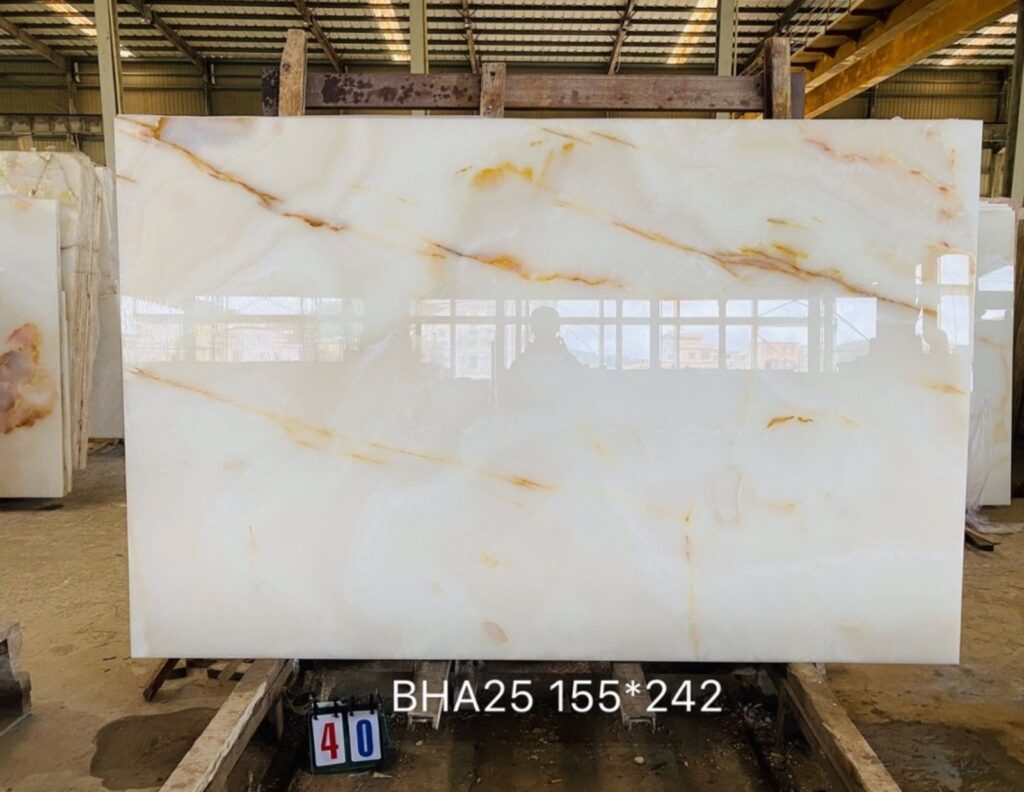
Pour la quartzite naturelle, les appellations commerciales peuvent englober des pierres présentant des variations visibles de couleur, de veinage, de mouvement, de translucidité et de structure. Examinez la dalle réelle ou une représentation approuvée convenu lorsque ces variations sont significatives. Pour les matériaux de comparaison, exigez le même niveau de clarté concernant le format et la finition du produit fourni. Ne considérez pas un petit éclat, une image numérique ou une étiquette de catalogue générique comme un substitut complet à une approbation spécifique au projet.
Input décisionnel
Ce qu’il faut confirmer
Pourquoi cela importe-t-il ?
Application
Localisation, exposition, mode d’utilisation et routine de nettoyage
Permet d’aligner le choix du matériau avec les conditions d’utilisation
Intention visuelle
Contexte, mouvement, orientation, logique des joints et éclairage
Évite de choisir un matériau uniquement sur la base d’un nom
Portée de la fabrication
Épaisseur, détails des bords, découpes, joints et support
Permet au fabricant d’évaluer la mise en œuvre pratique
Route d’approbation
Examen des dalles, échantillon de contrôle, disposition et validation par le propriétaire
Crée une base traçable pour les décisions
Le quartzite naturel et la dalle en porcelaine appartiennent à des catégories matérielles distinctes
Le quartzite naturel est une pierre naturelle. Son aspect peut présenter des variations et des mouvements qu’il convient d’examiner lors du choix spécifique du matériau et de la mise en page du projet. La dalle en porcelaine est un produit de surface manufacturé. Une comparaison ne doit pas confondre ces deux catégories ni utiliser le terme « quartz » comme s’il désignait automatiquement le quartz artificiel. Le quartz artificiel constitue une autre catégorie de matériaux manufacturés et n’est pas identique au quartzite naturel.
Pour les acheteurs, la première étape consiste à préciser clairement la catégorie demandée dans le cahier des charges et lors de la soumission. Ensuite, il faut identifier le produit commercial spécifique ou la dénomination exacte du quartzite naturel, la finition requise, l’élément prévu et la séquence d’approbation. Cela permet d’éviter une erreur courante en matière d’approvisionnement : approuver une description trop générale alors que l’équipe projet envisage un système matériel différent.
Comparez l’intention visuelle et la logique de mise en page
Le choix visuel doit tenir compte de l’ensemble de la composition, et non d’un seul échantillon. Pour le quartzite naturel, évaluez le ton de fond, les veines ou les motifs, la direction, les pièces adjacentes, les joints, les retours, l’éclairage ainsi que la relation avec les autres finitions. Un mur d’accent ou un îlot peuvent nécessiter un processus d’approbation différent de celui d’un petit plateau de vasque. Lorsque le design repose sur des effets de mouvement spectaculaires ou sur le bookmatching, intégrez l’examen de la disposition comme une étape officielle du projet.
Pour les choix de dalles en porcelaine, confirmez avec l’équipe projet la conception du produit, sa direction, les attentes en matière de répétition et la stratégie d’assemblage. L’objectif n’est pas de déclarer qu’une solution est universellement supérieure, mais de s’assurer que le langage visuel disponible soutient l’intention du design et peut être fabriqué et installé selon les modalités acceptées par l’équipe.
Zone de comparaison
Questions relatives au quartzite naturel
Questions relatives à la dalle en porcelaine
Catégorie de matériau
La pierre naturelle sélectionnée est-elle clairement nommée et approuvée ?
Le produit manufacturé et la finition spécifiés sont-ils clairement identifiés ?
Apparence
Comment seront examinées les variations naturelles et la disposition ?
Comment seront examinées la direction du motif et sa répétition ?
Fabrication
Quelles épaisseurs, quelles finitions de bord, quelles jointures et quelles modalités de manipulation s’appliquent ?
Quelle méthode de découpe et de manutention propre au produit s’applique ?
Contrôle du projet
Qui signe les échantillons, les plans et les dimensions finales ?
1. Traduisez le cahier des charges en questions mesurables
Listez la pièce, l’élément, la préférence d’épaisseur, les dimensions finales, le profil des bords, le calendrier des découpes, les emplacements des joints, la finition de surface et la destination de livraison. Si les plans sont encore en cours d’élaboration, indiquez ce qui reste provisoire. Cela est bien plus utile que de prétendre de manière générale que le quartzite naturel ou la dalle en porcelaine est toujours meilleur. La discussion sur les matériaux peut alors s’articuler autour des contraintes réelles du projet.
2. Séparez l’approbation visuelle des hypothèses de performance
La quartzite naturelle peut offrir un aspect naturel distinctif, mais l’acheteur ne doit pas transformer cela en une promesse non vérifiée applicable à chaque nom commercial de pierre ou à chaque installation. Discutez des caractéristiques visibles, de l’orientation, du bookmatching et des variations admissibles avec les personnes chargées de valider le projet. Échangez également sur les conditions d’utilisation, la planification de la maintenance, les détails d’installation et toute documentation projet requise avec les parties techniques compétentes.
3. Établissez un dossier écrit de comparaison
Une matrice concise facilite l’approbation interne. Notez l’application prévue, l’objectif visuel, la finition demandée, les contraintes de fabrication, les étapes d’inspection, les besoins d’emballage et les exigences de livraison. Cela aide également à éviter que la comparaison entre matériaux ne soit réduite à une simple décision basée sur le prix. Lorsque certaines affirmations nécessitent des tests, des certifications ou des preuves spécifiques au fournisseur, demandez ces documents directement à la partie responsable plutôt que de vous fier à des déclarations générales.
Évaluez la coordination entre la fabrication et l’installation
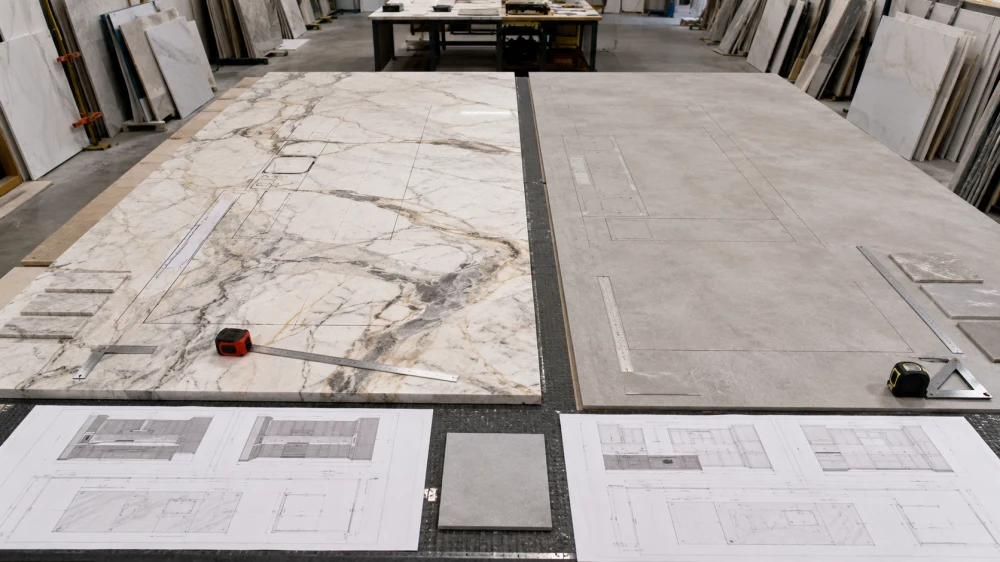
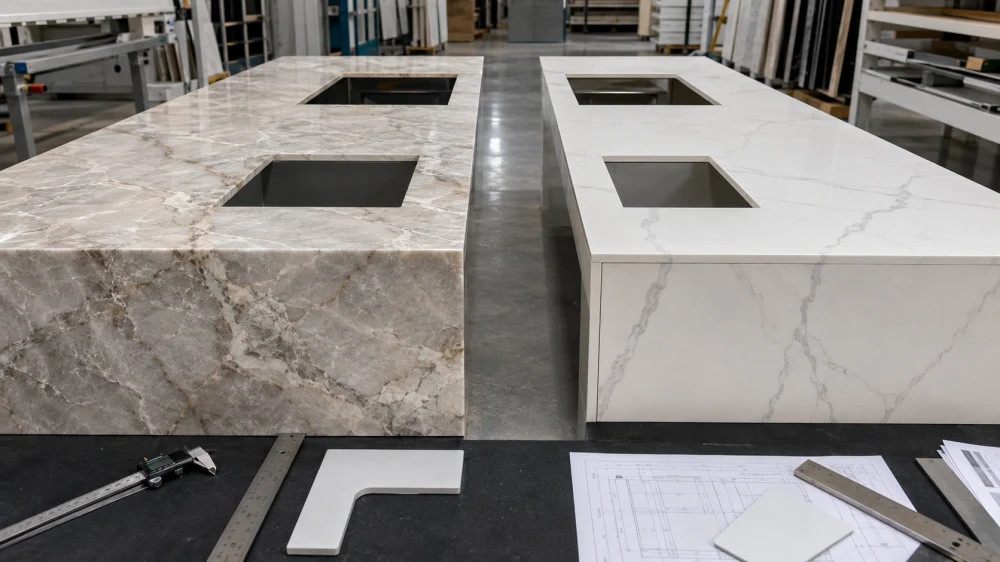
La conversation sur la fabrication doit partir des plans actuels et d’un calendrier clair des ouvertures, des retours, des bords et des transitions. Vérifiez les dimensions finales et la responsabilité des mesures avant toute découpe. Un fabricant doit évaluer le matériau choisi, son épaisseur, sa finition, sa géométrie, ses exigences de manutention et de support propres au projet. Ne transformez pas des recommandations générales en garantie pour une configuration différente ou des conditions de chantier particulières.
Les installateurs et les entrepreneurs doivent harmoniser la préparation du substrat, l’accès, la séquence, la protection, le traitement des joints et la remise des travaux. Si le projet exige des conditions spéciales, inscrivez-les dans le cahier des charges écrit et validez-les auprès des parties techniques responsables. Une bonne coordination transforme une comparaison de matériaux en une décision de projet concrète et réalisable.
Prenez en compte le nettoyage, la maintenance et l’utilisation opérationnelle
Les équipes d’exploitation ont besoin d’un plan d’entretien pratique adapté au matériau et à la finition choisis. Identifiez l’usage prévu, la fréquence de nettoyage, les produits de nettoyage, les responsabilités du personnel et les mesures de protection pendant l’aménagement. On ne peut pas supposer que le quartzite naturel et la dalle en porcelaine nécessitent les mêmes soins simplement parce qu’ils sont utilisés dans des applications similaires. Demandez des conseils adaptés à la sélection confirmée et faites en sorte que le propriétaire ou l’exploitant intègre ces informations dans les documents de remise.
Une discussion réfléchie sur la maintenance permet également d’identifier la responsabilité des risques. L’acheteur peut préciser l’usage prévu ; les équipes de conception et techniques peuvent définir les critères de performance pertinents ; et les fournisseurs responsables peuvent fournir la documentation de projet appropriée lorsque celle-ci est disponible. C’est bien plus fiable que des déclarations générales sur la durabilité sans contexte.
Construisez un dossier d’approbation avant l’engagement définitif
Un dossier d’approbation concis comprend généralement la description du matériau, l’intention de couleur ou de finition, les plans, les dimensions finales, les détails des bords et des joints, le procès-verbal de révision des échantillons ou des dalles, les notes de mise en page lorsque nécessaire, les exigences d’emballage, la destination de livraison ainsi que les contacts chargés de la validation. Veillez à garder visibles les dates de révision. Si le projet évolue après l’approbation, répétez l’étape de révision concernée plutôt que de supposer que l’approbation initiale couvre la géométrie modifiée.
Pour les achats transfrontaliers, renseignez-vous dès le début sur les informations nécessaires relatives à la destination et au plan de transport. HRST STONE peut examiner une demande dans le contexte de la sélection de quartzite naturel demandée et des détails du projet. Toutes les conditions commerciales, la disponibilité, les tests, la certification ou les engagements de livraison doivent être confirmés séparément pour chaque demande précise.
Détail des décisions pour les équipes projet
Définissez le scénario d’utilisation
Notez ce qui se passera à la surface après la réception des travaux. Prenez en compte la pièce, le groupe d’utilisateurs, les contacts éventuels avec des aliments ou de l’eau, la responsabilité du nettoyage, les corps de métier adjacents, la circulation autour de l’élément, ainsi que le caractère principalement esthétique ou fonctionnel de la surface. Cela ne remplace pas une évaluation technique, mais fournit aux équipes de conception, de fabrication et d’approvisionnement un point de départ commun. Plus le scénario est précis, plus il est facile de poser des questions pertinentes sur le quartzite naturel et les dalles en porcelaine, plutôt que de s’appuyer sur une réputation générique du matériau.
Confirmez les points de contrôle visuel
Les décisions relatives à la pierre visible bénéficient d’un responsable désigné et d’une procédure écrite. Déterminez si le projet nécessite un échantillon de contrôle, des images de dalles, une inspection en personne, une proposition de mise en page ou un maquette. Précisez quel côté d’une pièce constitue la face d’observation, dans quelle direction doit s’effectuer le mouvement, où peuvent se situer les joints, et quelle variation est acceptable. Pour un matériau de comparaison fabriqué, identifiez avec autant de soin la conception du produit et sa direction. Ainsi, une préférence esthétique devient un acte d’approbation pouvant être discuté avant la découpe ou la pose.
Séparez la sélection de la fabrication
Un matériau peut paraître attrayant sur un échantillon tout en nécessitant une approche de fabrication différente pour la géométrie choisie. Fournissez au fabricant les plans les plus récents ainsi qu’un calendrier des bords, des mitres, des trous, des planches de drainage, des retours, des joints, des rayons et des conditions de support. Demandez au fabricant responsable d’examiner les implications spécifiques au projet. L’acheteur doit éviter de transformer une affirmation générale tirée d’un blog en instruction de fabrication. La sélection du matériau, la conception finale et la révision de la fabrication sont liées mais demeurent des décisions distinctes.
Rendez les informations d’approvisionnement utilisables
Une demande est plus facile à examiner lorsqu’elle distingue les faits avérés des questions ouvertes. Indiquez le nom du matériau ou la voie de comparaison, les dimensions, la quantité, la finition, les plans, la destination de livraison et, si connus, les délais souhaités. Signalez également si le projet requiert un examen d’échantillon, une préférence d’emballage, une contribution à la mise en page ou un point de contrôle formel d’approbation. Cela aide Josh et l’équipe HRST STONE à comprendre la demande sans suggérer d’inventaire, de prix, d’origine, de certification, de tests ou de modalités de livraison non encore confirmés pour cette demande précise.
Attribuez la responsabilité aux interfaces
La plupart des problèmes évitables surviennent entre les différentes étapes : approbation de la conception, mesurage, fabrication, transport, accès au chantier, installation et nettoyage. Identifiez qui est responsable de chaque étape et comment les modifications seront communiquées. L’architecte ou le concepteur peut être chargé de la validation visuelle ; le fabricant peut superviser les détails de découpe ; l’entrepreneur peut coordonner le support et l’accès ; l’acheteur peut contrôler la documentation de la commande. Une liste de responsabilités simple apporte plus de valeur qu’une déclaration générique affirmant qu’un matériau est supérieur à un autre.
Maintenez la comparaison finale honnête
Aucun substitut ne saurait remplacer une confirmation spécifique au projet lorsque l’exigence est cruciale. Si une équipe a besoin d’une performance particulière, d’un document de conformité, d’une condition commerciale ou d’une méthode d’installation, elle doit solliciter ces informations auprès des parties responsables et les conserver dans le dossier du projet. Ce guide vise à favoriser une discussion structurée entre acheteurs concernant le quartzite naturel et les dalles en porcelaine. Il ne prétend pas garantir des résultats universels pour chaque nom de pierre, produit, design ou condition de chantier.
Vérifications pratiques avant la confirmation d’une commande
Avant de donner suite à une commande, comparez la dernière demande aux derniers plans. Vérifiez que les quantités, les mesures, l’épaisseur demandée, la finition, les informations sur les bords, les découpes et la destination de livraison n’ont pas changé depuis la précédente discussion. Si tel est le cas, déterminez si l’approbation visuelle, la révision de la fabrication, l’emballage ou la planification du transport doivent également être actualisés. Cette vérification rigoureuse est utile tant pour le quartzite naturel que pour les dalles en porcelaine, car les informations relatives au projet évoluent souvent après la première phase de sélection.
Utilisez un langage simple lors des approbations. Une brève note mentionnant le matériau approuvé, le responsable de l’approbation, la révision du plan ainsi que les points encore en suspens aide l’équipe à distinguer les détails acceptés des hypothèses. Lorsque certaines informations demeurent provisoires, indiquez clairement qu’elles sont à titre indicatif. Cela évite à chacun de considérer une description marketing, une image préliminaire ou un article général comme une instruction définitive pour le projet.
Enfin, veillez à ce que la décision reste alignée sur les véritables priorités du maître d’ouvrage. Un projet peut privilégier le mouvement naturel, un rythme visuel spécifique, un système de produit déterminé, la praticité de la fabrication, un plan de nettoyage ou un flux d’approvisionnement particulier. Le choix retenu doit répondre précisément à ces priorités telles qu’elles ont été définies pour le projet. HRST STONE pourra alors examiner une demande concernant la quartzite naturelle avec Josh en s’appuyant sur des éléments concrets plutôt que sur des suppositions.
Une dernière vérification utile consiste à poser une question propre à chaque discipline. Le concepteur peut s’assurer que l’aspect approuvé reste cohérent avec le concept de l’espace. Le fabricant peut confirmer que la géométrie et les détails sont réalisables à partir des plans actuels. L’entrepreneur peut vérifier que la séquence d’installation et les conditions sur site ont bien été prises en compte. Enfin, l’acheteur s’assure que la demande et le dossier d’approbation définissent exactement le même périmètre. Ce contrôle croisé n’ajoute pas de complexité inutile ; il rend le choix du matériau compréhensible, traçable et prêt à passer à l’étape suivante du projet. Il offre également à l’équipe un moment documenté pour soulever les questions restées en suspens avant que la fabrication ou les travaux sur site ne rendent les modifications plus difficiles à gérer. Les équipes peuvent joindre cette dernière vérification à leur dossier interne d’approbation et s’y référer lors des discussions liées à l’approvisionnement, à la coordination de la fabrication et à la réception des travaux. Cela favorise une meilleure suivi.
Liste de contrôle pour la comparaison des plans de travail de cuisine
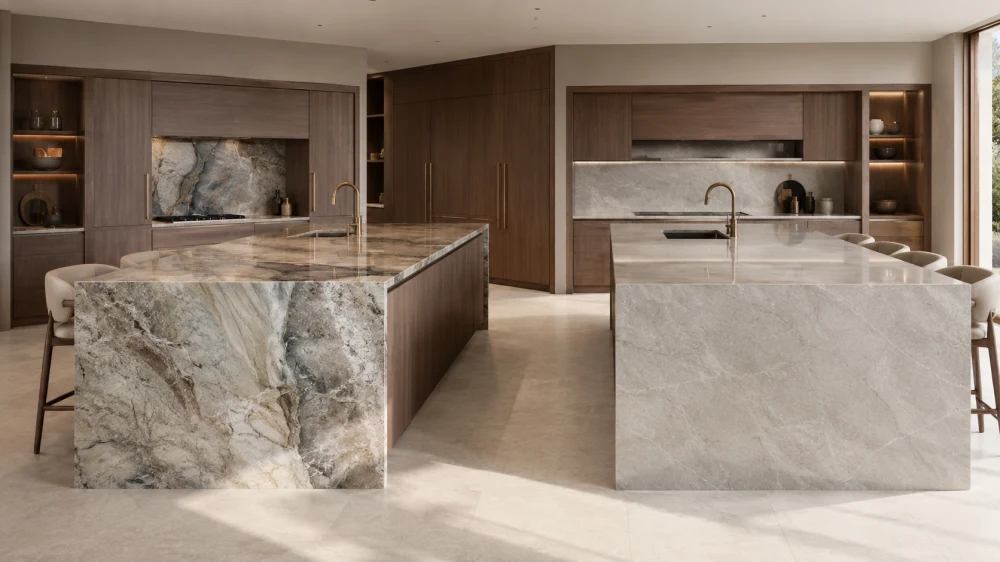
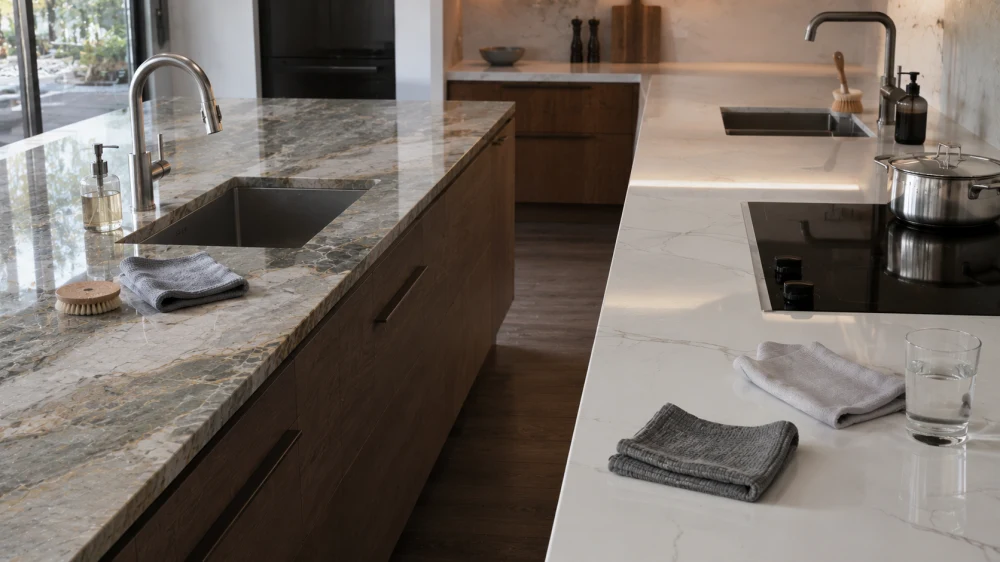
Les plans de travail de cuisine constituent un exemple parlant montrant pourquoi un simple classement des matériaux peut induire en erreur. L’équipe projet doit identifier si l’élément principal est une îlot, un comptoir périphérique, un dosseret, une table intégrée, un bar, ou une combinaison de ces éléments. Chacun peut impliquer des considérations différentes en termes d’esthétique, de dimensions, de joints, d’accès et d’installation. Les plans doivent indiquer les emplacements des appareils, des éviers, des robinets, les porte-à-faux, les supports, l’état des murs, ainsi que les interfaces avec les armoires et les autres revêtements. La sélection pourra ensuite être discutée dans le cadre d’un véritable dossier de fabrication.
Pour la voie du quartzite naturel, demandez comment la pierre choisie sera examinée visuellement et comment les pièces connectées seront assemblées. Pour la voie des dalles en porcelaine, interrogez sur la manière dont le motif, l’orientation, le format et la planification des joints seront contrôlés. Dans les deux cas, confirmez qui assume la responsabilité finale des mesures et à quel moment les informations de chantier sont considérées comme complètes. Cela aide l’acheteur à éviter d’approuver un concept préliminaire comme s’il s’agissait d’un plan définitif de production.
Le coût, la conception, la performance et l’approvisionnement sont liés, mais ils ne doivent pas être réduits à une affirmation non vérifiée. Utilisez le processus de demande pour clarifier le périmètre précis et sollicitez, lorsque nécessaire, des informations commerciales ou techniques spécifiques au projet. Conservez ces confirmations distinctes de ces orientations générales. Un dossier transparent permet aux services d’approvisionnement de comparer les offres et les décisions effectives au cahier des charges initial.
Au cours du développement de la conception, consignez le profil des bords du comptoir, le retour du dosseret, le traitement des joints, les détails de drainage ainsi que toute transition particulière vers d’autres matériaux. Ces éléments influencent la discussion avec le fabricant et l’installateur. Si le programme de cuisine comprend plusieurs pièces ou des unités répétées, identifiez quels détails sont standard et quels sont sur mesure. Une information structurée similaire facilite une comparaison équitable entre le quartzite naturel et les dalles en porcelaine, tout en maintenant l’équipe projet concentrée sur le dossier de plans approuvé.
Avant la réception des travaux, l’entrepreneur et le propriétaire peuvent confirmer le protocole de protection et d’entretien de la surface sélectionnée. Les recommandations de nettoyage doivent provenir de la source compétente correspondant au matériau et à la finition confirmés. Enregistrez le canal de communication pour les questions futures et conservez les documents d’approbation finale dans le dossier du projet de cuisine. Cette clôture méthodique est précieuse pour les propriétaires, les exploitants, les designers et les équipes d’approvisionnement, car elle relie la décision initiale de sélection au résultat final installé.
La décision finale doit rester visible dans la documentation du projet. Indiquez la catégorie de matériau approuvée, le nom ou le produit choisi, les exigences relatives à la surface, la révision du plan ainsi que toute instruction spéciale de mise en page. Si une substitution ultérieure ou un changement de conception est envisagé, revenez au processus d’approbation et précisez ce qui doit être réexaminé. Cette discipline simple aide chacun des participants à comprendre la décision actuelle et réduit le risque de s’appuyer sur des hypothèses obsolètes. Elle fournit également une référence claire lorsque les équipes projet coordonnent par la suite les étapes d’approvisionnement, les discussions avec les usines, la planification de la livraison et la communication finale relative à l’installation. Gardez tous les dossiers actuels accessibles aux contacts responsables du projet.
Questions que les acheteurs devraient résoudre avant la validation finale
1. Le quartzite naturel est-il identique aux dalles en porcelaine pour les plans de travail de cuisine ?
Non. Le quartzite naturel est une pierre naturelle, tandis que la dalle de porcelaine est un matériau de surface manufacturé. Un projet de cuisine doit préciser clairement la catégorie requise et la finition choisie.
2. Quels détails esthétiques doivent être approuvés avant la fabrication ?
Approuver le matériau ou le produit sélectionné, ainsi que les finitions, les orientations, les joints, les emplacements des coutures, les bords, les découpes, les retours et toutes les remarques de mise en page ayant une incidence sur l’aspect final de la cuisine.
3. Le coût devrait-il être le seul critère de comparaison ?
Non. Comparez l’ensemble du périmètre du projet, incluant le choix des matériaux, les détails de fabrication, la coordination des travaux d’installation, les étapes d’approbation, la planification des soins, les besoins en matière d’emballage et la destination de livraison.
4. Que doit examiner un fabricant ?
Un fabricant a besoin des plans à jour, des dimensions finales, de l’épaisseur, des détails de bord, des découpes, des joints, des conditions de support, des contraintes de manutention ainsi que de la sélection confirmée du matériau ou du produit.
5. Que doivent envoyer les acheteurs à Josh chez HRST STONE ?
Veuillez transmettre le nom du matériau, les dimensions, la quantité, les plans, l’aspect de surface requis, l’application prévue en cuisine ainsi que la destination de livraison afin d’effectuer un examen pratique de votre demande.
Note finale
Guide ultime : quartzite vs dalle de porcelaine pour les plans de travail de cuisine – coût, design, performance et approvisionnement – devrait être déterminé au travers des étapes suivantes : briefing du projet, examen des échantillons et des dalles, discussion sur la fabrication, ainsi que l’approbation écrite. Une comparaison rigoureuse est plus fiable qu’une affirmation générale concernant le matériau.
Discutez de vos besoins en quartzite naturelle avec Josh
Contactez Josh chez HRST STONE en lui communiquant le nom du matériau, ses dimensions, la quantité, les plans, la finition requise ainsi que la destination de livraison. N’oubliez pas d’indiquer l’application prévue et toute exigence relative à l’approbation ou à l’emballage, afin que la demande puisse être examinée dans un ordre pratique.
Copyright (c) HRST STONE / XIAMEN HRST STONE CO., LTD.
Hi, I am the author of this article. I have been working in the field of Natural Stone for more than 15 years. If you need customized Natural Stone services, please feel free to contact me.
Fabricant et fournisseur de marbre, granit, quartzite, agate de Chine - HRST STONE
Bienvenue chez HRST STONE !
Bonjour, j’aimerais en savoir plus sur vos produits. Pourriez-vous m’indiquer les prix, la quantité minimale de commande, les options de personnalisation ainsi que des informations sur les échantillons ?