
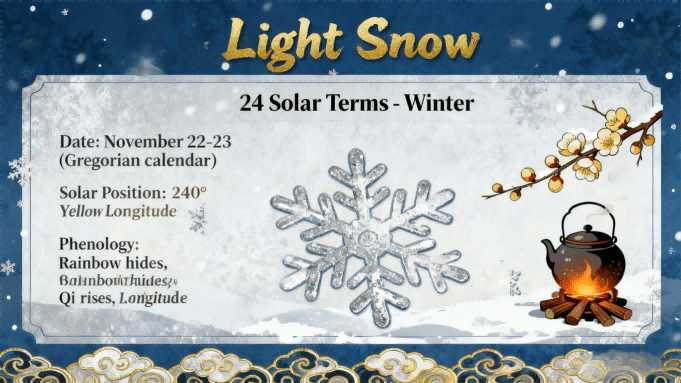
Neige légère (Xiaoxue) est l’un des 24 termes solaires de la Chine, marquant l’arrivée douce de l’hiver. Il mêle observation du climat, traditions culturelles et bien-être saisonnier. De la légère chute de neige aux aliments réchauffants en passant par des routines attentives, la Neige légère enseigne la patience, la préparation et l’appréciation des changements discrets de la nature, offrant aux lecteurs du monde entier un aperçu de la sagesse saisonnière unique de la Chine.
Neige légère (小雪, Xiaoxue) est le 20e des 24 termes solaires, de la Chine, signalant le moment où l’air froid se renforce et où les premières neiges légères apparaissent — surtout dans le nord de la Chine. Plus symbolique que littéral, la Neige légère représente l’arrivée discrète de l’hiver. Pour les lecteurs du monde entier, elle offre une fenêtre sur la manière unique dont la Chine intègre l’astronomie, l’agriculture, la sagesse en matière de santé et les traditions culturelles dans la vie quotidienne.
Imaginez une matinée de fin novembre à Pékin. Le vent vous pique le nez, les vendeurs réchauffent leurs mains au-dessus de poêles à charbon, et le premier flocon de neige fond aussitôt sur votre manche. Pas de tempêtes spectaculaires, pas de blizzards cinématographiques — juste un élégant murmure de l’hiver. C’est cette beauté sobre que les Chinois appellent Neige légère.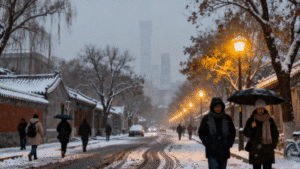
De nombreux lecteurs étrangers ont entendu cette expression mais n’en comprennent pas l’importance culturelle.
Le nom est poétique, mais le temps varie considérablement à travers la Chine.
Les gens veulent une signification pratique — pas seulement une curiosité historique.
Tout comme les cultures occidentales utilisent les solstices et les équinoxes, la Chine recourt aux 24 termes solaires pour marquer les schémas climatiques, les cycles agricoles et les habitudes saisonnières.
La médecine traditionnelle chinoise (MTC) recommande d’adapter l’alimentation, le sommeil et l’exercice lorsque les températures baissent — une approche que la culture moderne du bien-être peut apprécier.
La Neige légère vous aide à comprendre la vision du monde de la Chine : vivre avec la nature, plutôt que de lutter contre elle.
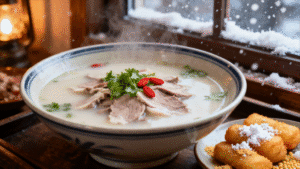 Les familles du nord de la Chine commencent souvent à préparer des plats réchauffants — ragoût d’agneau, bouillie de millet, soupes légèrement épicées. Ces mets ne sont pas seulement savoureux ; ils aident l’organisme à stocker de l’énergie pour les semaines plus froides à venir.
Dans les régions agricoles, la Neige légère marque le moment de protéger le blé d’hiver et de maintenir l’humidité du sol. Les agriculteurs profitent également de cette période pour réparer leurs outils et se préparer à la prochaine saison de plantation.
La Neige légère survient lorsque le Soleil atteint 240° de longitude sur l’écliptique, généralement vers le 22–23 novembre de chaque année. Les températures chutent brusquement à travers l’Asie de l’Est, car l’air continental froid se déplace vers le sud.
Nord de la Chine : de légères averses occasionnelles
Sud de la Chine : presque aucune neige, mais un refroidissement significatif
Température moyenne de la Neige légère à Pékin : environ. 0–5°C
Comparativement, le climat européen de fin novembre ressemble aux conditions de début de Neige légère — jours courts, gelées légères et météo transitionnelle.
De plus en plus de voyageurs internationaux découvrent désormais la tourisme lié aux termes solaires, en découvrant les marchés traditionnels d’hiver et les paysages ruraux.
L’UNESCO a inscrit les 24 termes solaires au patrimoine culturel immatériel, ce qui accroît la sensibilisation mondiale.
Les amateurs de bien-être à l’étranger adoptent des habitudes alimentaires saisonnières inspirées de la MTC — céréales chaudes, légumes-racines, thés au gingembre.
Bouillie chaude, bouillon d’agneau, patates douces rôties. Facile à reproduire, étonnamment réconfortant.
Coucher plus tôt, matinées plus lentes, exercice plus doux — à l’image de la transition silencieuse de la nature.
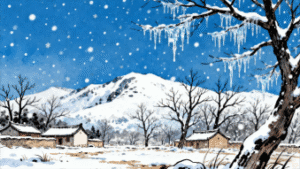
Faites une pause et observez les subtils changements saisonniers autour de vous : jours raccourcis, air frais, paysages plus calmes.
Pas nécessairement. Dans la majeure partie de la Chine, elle marque simplement la période pendant laquelle la neige peut apparaît, sans garantie.
Généralement le 22–23 novembre, lorsque le Soleil atteint 240° sur l’écliptique.
Oui — les agriculteurs, les acteurs culturels et les passionnés de bien-être font encore référence aux termes solaires.
Non. C’est un marqueur saisonnier, pas une célébration.
Plats chauds et nourrissants : agneau, bouillie de millet, soupes au gingembre, légumes-racines.
Le climat varie. Le nord de la Chine peut connaître des chutes de neige ; le sud de la Chine reste souvent sec.
Elle correspond approximativement à la fin de l’automne qui fait place au début de l’hiver.
Neige légère marque l’arrivée douce de l’hiver en Chine. C’est une période propice à des mets réchauffants, à des rituels attentifs et à la préparation du corps comme de la terre pour les mois plus froids à venir.
“ Observez les subtiles transformations de la nature, préparez-vous avec soin et vivez en harmonie avec les saisons. ”
La Neige légère n’est pas seulement un moment météorologique — c’est aussi une lentille culturelle. Elle enseigne la patience, la préparation et l’appréciation des petites variations saisonnières de la vie. Que vous exploriez la culture chinoise ou que vous cherchiez des habitudes hivernales réfléchies, la Neige légère offre un point de départ élégant.
👉 Si vous souhaitez d’autres articles sur les 24 termes solaires, les festivals chinois ou le bien-être saisonnier, n’hésitez pas à demander un autre sujet !
Pour en savoir plus sur les 24 termes solaires, vous pouvez consulter les articles pertinents sur https://www.hcenturystar.com/.