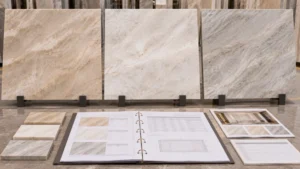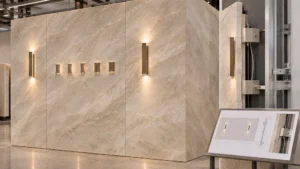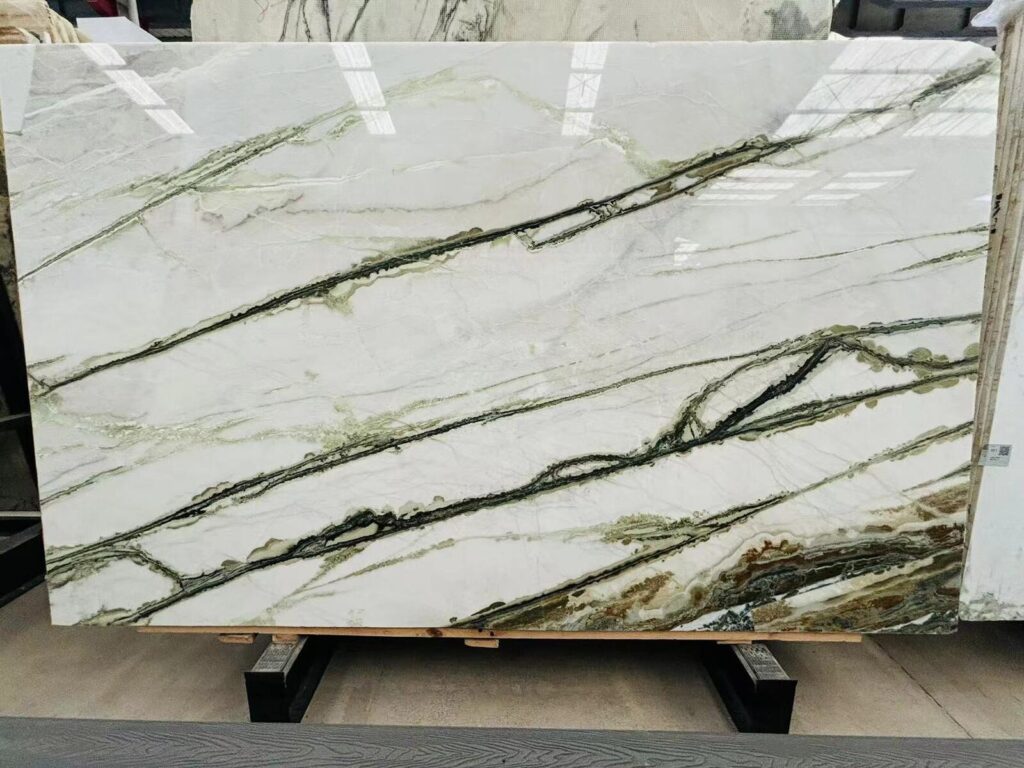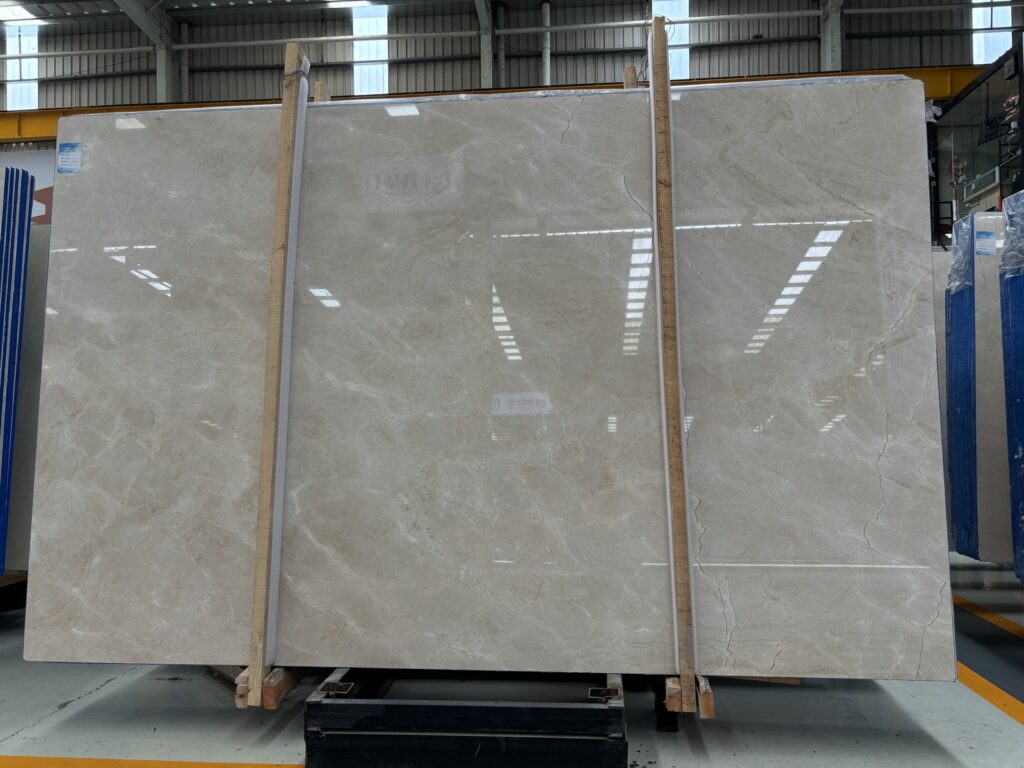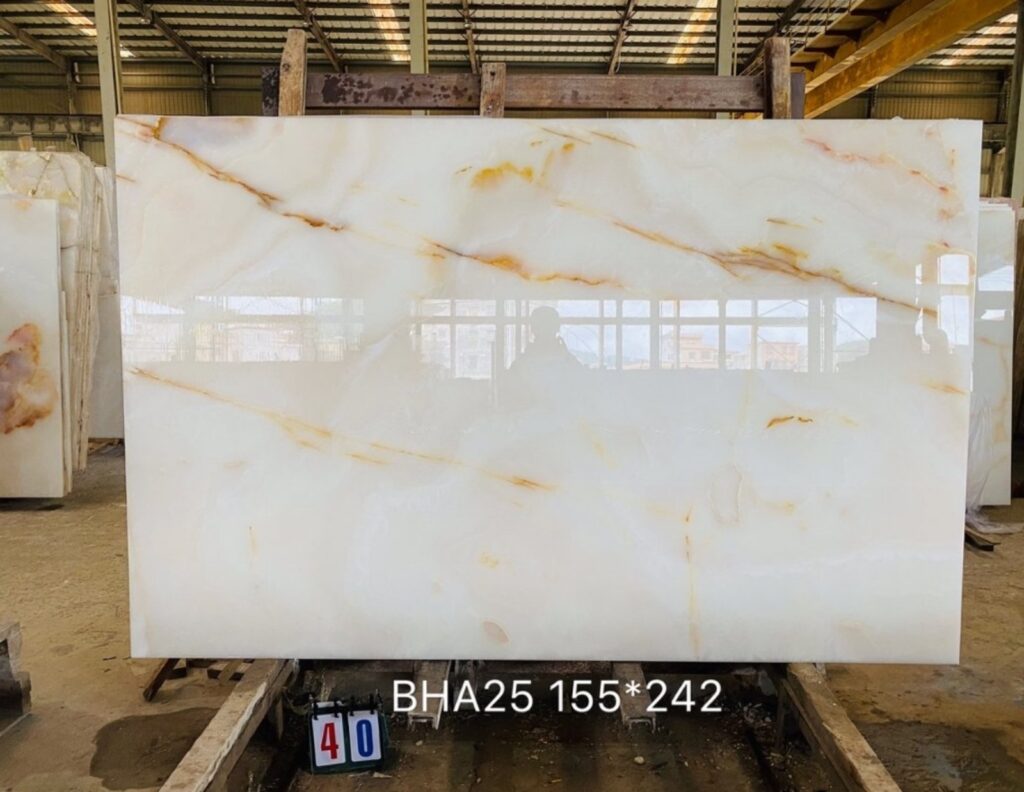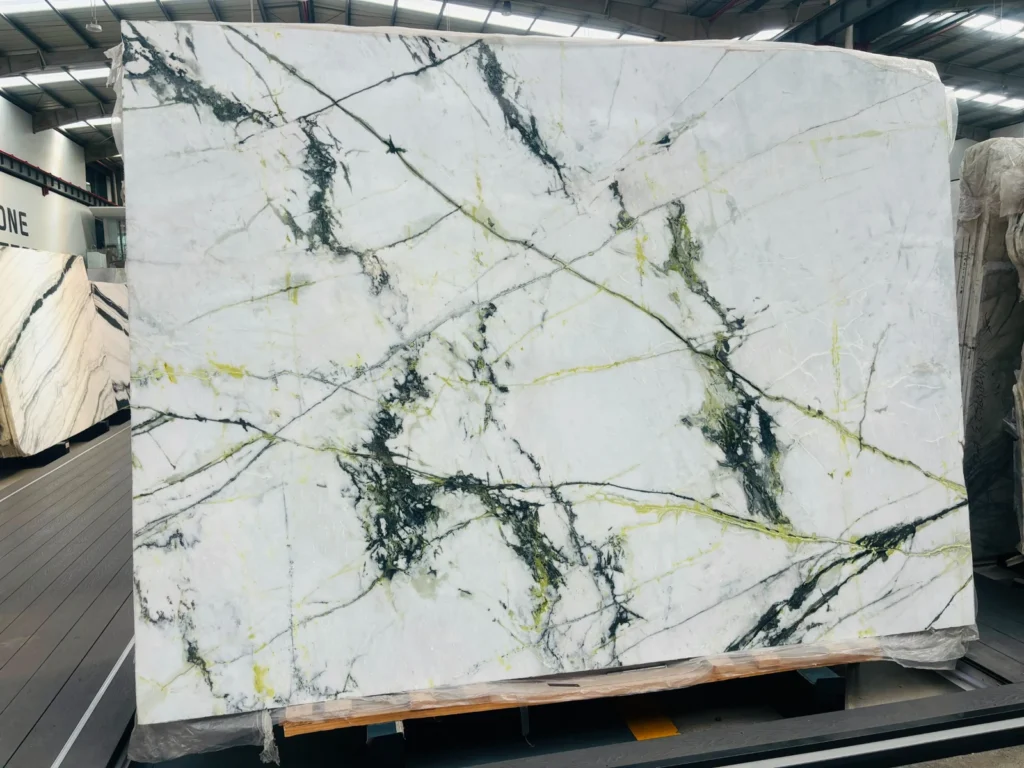


Quartzite colour names such as beige, white and grey should be treated as descriptive language in a quotation, not as complete colour specifications. A reliable natural-stone quotation separates the commercial material name from its visual description, identifies the actual slabs or approved reference range where available, and states what still requires buyer approval. This helps prevent disputes when a supplier calls a slab “warm white” but the buyer sees beige, or when a quoted “grey” stone arrives with noticeable brown or cream movement.
Resumen rápidoA Quartzite quotation should distinguish four things: the commercial stone name, the descriptive colour family, the physical stone reference and the approved variation range. Terms such as white, beige, cream, ivory, greige and grey can be interpreted differently by different buyers and suppliers. Record the intended background tone, undertone, movement and acceptable variation, then connect the quotation to current slab photographs, sample references or identified board numbers. If the final boards are not yet selected, state that clearly rather than implying that a colour word guarantees an exact appearance.
A Quartzite colour name in a quotation is a commercial or descriptive label used to communicate the appearance of a natural-stone product in an offer, purchase order or material specification.
It may refer to a recognized trade name, such as Taj Mahal Quartzite, or a broad colour description, such as warm beige Quartzite.

Neither type of wording automatically identifies one exact physical slab.
For international stone procurement, this distinction matters because the same stone can be described differently by different suppliers, designers or customers.
Consider a straightforward enquiry:
“Please quote white Quartzite for a hotel vanity project.”
The quotation is prepared. The buyer accepts the price. Later, full-slab photographs are sent for approval.
The supplier considers the material a soft warm-white Quartzite.
The designer describes the same slab as light beige because it contains cream and taupe movement.
The project manager expected a cooler, cleaner white background.
All three people may be describing the same stone in good faith.
The problem is that the quotation never established what “white” was intended to mean for that particular project.
Common ambiguity comes from:
The solution is not to prohibit descriptive colour words.
It is to establish what those words are describing, which physical references support them and which variations remain acceptable.
Many colour disputes begin because different types of information appear in one quotation line as though they mean the same thing.
No lo hacen.
| Identifier | Ejemplo | What It Establishes |
| Commercial Stone Name | Cuarcita Taj Mahal | The named material being offered, not one unique slab or exact colour. |
| Descriptive Colour | Pale warm beige / greige | The intended visual direction, subject to the stated reference and variation range. |
| Physical Stone Reference | Identified slab or approved sample reference | The actual physical material or sample being reviewed. |
| Approved Visual Range | Current slab-set photographs or approved range record | The accepted variation in tone, movement and other relevant visual characteristics for the stated scope. |
These four identifiers should work together.
For example, a quotation may state that Taj Mahal Quartzite is being offered in a warm pale beige-to-greige visual direction, with final colour selection subject to identified current slabs.
That is more informative than writing only:
“White Quartzite — Polished.”
Instead of using one broad colour word, describe the observable characteristics of the actual stone.
This does not require invented colour codes or arbitrary numerical tolerances.
Start with background tone, undertone, movement and contrast.
| Broad Colour Term | Possible Ambiguity | More Useful Description |
| Blanco | Pure white, ivory or pale grey-white? | Milky-white background with restrained cool-grey movement, if supported by the actual slab. |
| Beige | Cream, yellow-beige, sandy beige or warm grey-beige? | Pale warm-beige background with subtle taupe mineral movement. |
| Grey / Gray | Cool blue-grey, warm taupe-grey or neutral grey? | Light cool-grey field with directional darker-grey veining, where observed. |
| Ivory | Nearly white or distinctly creamy? | Soft ivory-white background with a slight warm cream undertone. |
| Greige | More beige than grey, or more grey than beige? | Warm grey-beige background with low-contrast taupe movement. |
These descriptions are examples of better wording, not universal colour definitions.
The final wording should describe the actual material being offered.
Also remember that gris y gray are British and American spellings of the same colour term. A spelling difference alone does not establish a different stone colour.

A slab may have a light cream background with distinct grey veins.
One buyer may call it white-and-grey Quartzite.
Another may call it beige Quartzite.
Both descriptions overlook the distinction between the background field and the mineral movement.
A better quotation separates them:
Background: Pale warm cream.
Movement: Fine grey-taupe veins.
Contrast: Low to moderate, subject to current slab review.
This gives the buyer a clearer starting point for evaluating the offered material.
The most practical way to improve a natural-stone quotation is to revise the actual line-item language.
Material: Cuarcita Blanca
Finish: Pulido
Cantidad: As quoted
Colour: Blanco
This description leaves several important questions unanswered.
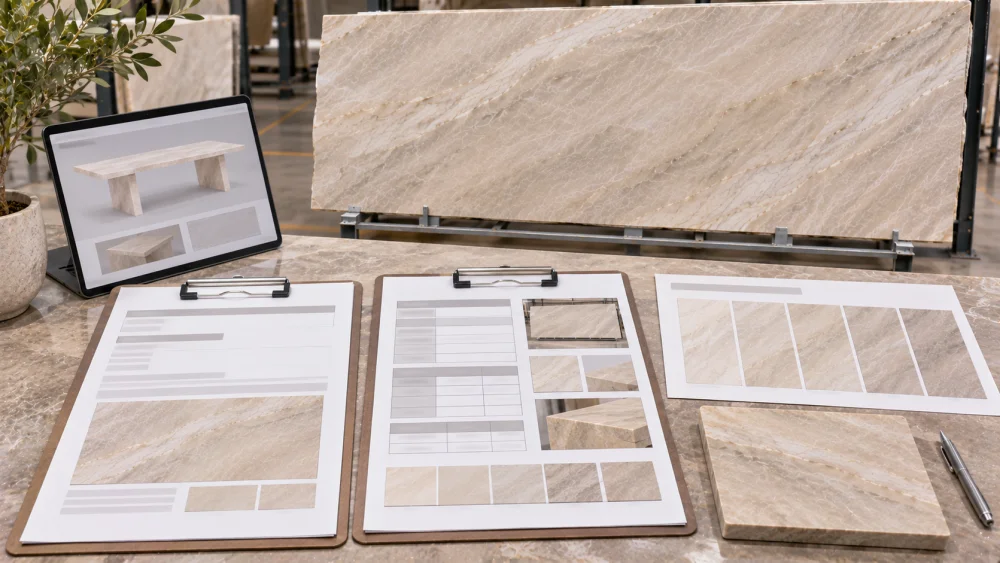
Which commercial stone is being supplied?
Does the buyer expect a pure-white field or a warm off-white appearance?
Do the offered slabs contain grey, beige or taupe movement?
Has the buyer reviewed any current physical material?
Is the quotation tied to reserved slabs or general future availability?
Illustrative Quotation Description — Not a Live Stock OfferCommercial Material: Taj Mahal Quartzite.
Descriptive Colour: Warm pale beige / greige background with soft taupe movement, subject to the current material reference.
Stone Type: Natural Quartzite, subject to the confirmed material specification.
Acabado superficial: Polished.
Physical Reference: Current slab photographs and identified board numbers to be provided or attached before slab-specific approval.
Visual Variation: Natural differences in tone, movement and mineral distribution to be reviewed against the agreed reference or current slab set.
Approval Status: Material direction proposed; final physical slab selection remains pending unless separately recorded.
Substitution: Any proposed replacement of approved physical slabs requires a new review under the agreed project procedure.
The second version does not promise that every Taj Mahal Quartzite slab is identical.
It tells the buyer what is being described, what evidence supports the description and which decision remains open.
When preparing the actual commercial document, quantity, dimensions, thickness, price, currency, payment terms, delivery basis and validity should also appear in the relevant quotation fields.
Colour language should complement those commercial details rather than replace them.
A quotation can contain a useful visual description and still remain ambiguous if nobody can identify the reference being described.
The evidence should match the procurement stage.
At an early stage, the supplier may only have a mood board, product photographs or an approximate colour direction.
That information can support candidate material selection.
It should not be presented as final approval of an unidentified physical slab.
El Quartzite material-brief guide explains how to turn broad visual preferences into observable sourcing criteria before requesting a quotation.
A sample can establish a reference for colour, finish or local texture.
Where relevant, record:
A small sample does not automatically represent the full movement or colour range of a large slab.
Once current slabs are available for quotation or approval, the evidence can become much more specific.
Useful references include:
Photographs should identify the real slab and should not be edited to force its colour to resemble a reference image.
When lighting, camera white balance or display conditions limit comparison, record that limitation.
No. A broad colour name does not, by itself, establish an exact match across every natural Quartzite slab.
However, natural variation should not be used as an unlimited excuse to supply materially different stone from the agreed reference.
The project should determine what was actually offered and accepted.
Three situations need different wording.
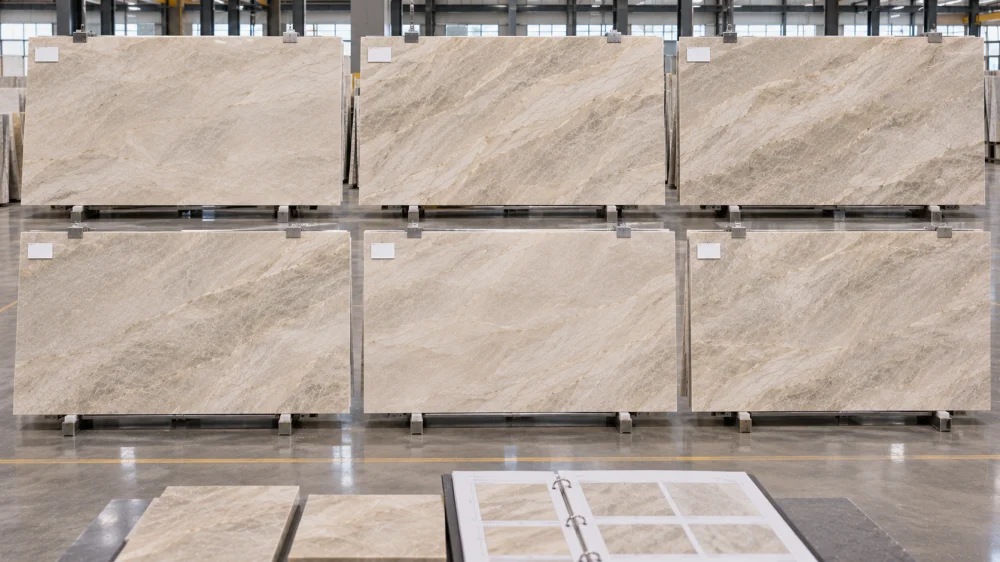
The buyer accepts a broad visual intention, such as light warm-beige Quartzite.
The quotation should state that current slab selection remains open.
The buyer has reviewed several identified slabs or representative range references and accepts a defined variation in appearance.
The offer should identify the range record and its approval scope.
The buyer has approved specific physical boards.
The commercial record should identify those boards and connect them to the corresponding selection or reservation information.
These are not interchangeable approval stages.
Where the actual boards are selected, the Quartzite slab reservation guide explains why commercial material name, exact board numbers, reservation status, expiry and substitution permission must remain separate controls.
What the Colour Name Does Not Prove“Beige Quartzite” does not identify an exact board.
“Approved beige range” should refer to a defined comparison record.
“Approved slabs” should identify the physical pieces covered by that approval.
The stronger the project-specific approval claim, the stronger its supporting evidence should be.
International Quartzite quotations may pass between designers, purchasing teams, overseas suppliers, fabricators and installation contractors.
During that process, the same material may be described using:
Do not assume these names are identical identifiers.
If a supplier calls a material “Ivory White” and the buyer’s schedule calls for “Light Beige,” the two descriptions may be compatible—but that compatibility should be established from the physical reference rather than inferred from the words alone.
The safest method is to preserve one controlling material reference throughout the commercial documents.
Por ejemplo:
Project Material Code: ST-07
Quoted Trade Name: [Supplier’s Confirmed Material Name]
Buyer Description: [Approved Visual Direction]
Alternate / Translated Name: [Reference Only, If Applicable]
Physical Reference: [Current Slab / Sample / Range Record]
The same project material code can then appear on the quotation, purchase order, sample approval, slab reservation and fabrication record.
A translated or alternative commercial name should not silently replace the controlling material identity.
Natural-stone colour is not always well represented by one numerical value.
A Quartzite slab may contain several colours and mineral structures across a single face.
Even if a colour measurement is available, it may not capture the full visual relationship between broad crystalline fields, directional veins and high-contrast areas.
Unless the project has an agreed measurement method, sampling locations, conditions and acceptance criteria, do not invent a universal colour-difference limit or claim that every slab must match one digital colour code.
For many visually sensitive projects, it is more practical to define the accepted variation through:
For example, the buyer may accept a warm greige range but require separate review of unusually dark or strongly directional slabs for a quiet wall elevation.
That is a project-specific acceptance decision.
It should not be confused with a universal technical grading system for Quartzite colour.
The quotation may remain commercially similar while the physical material changes.
That creates a new approval question.
Por ejemplo:
Original Offer: Taj Mahal Quartzite, warm pale greige, quoted against a particular identified slab set.
Revised Offer: Taj Mahal Quartzite, same commercial name, but a different current set with stronger taupe movement.
The material name may be unchanged.
The physical appearance may not be.
The revised offer should identify:
El Quartzite slab substitution guide addresses the commercial revision required when exact boards, quantity or other offer details change before a deposit.
A replacement should not be described as identical simply because the invoice can retain the same material name.
The first response should be to establish what was actually agreed.
Do not begin by debating which colour word is objectively correct.
Instead, reconstruct the commercial and approval record.
Was the buyer’s requirement simply “beige,” or did it specify a warm cream background, low-contrast movement and limited grey veins?
Did it identify a trade name, descriptive colour, physical reference or variation allowance?
Was a particular sample, range or slab set approved?
Were the actual supplied boards included in that approval?
Compare identified material under appropriate, consistent conditions.
Consider whether the difference is caused by actual slab variation, lighting, photography, finish or an entirely different physical board.
Did a substitution, batch change or stock replacement occur after quotation or approval?
If so, was the change disclosed and accepted through the agreed procedure?
The outcome may be acceptance, a request for additional physical evidence, a revised selection, a commercial amendment or further technical or contractual review.
Do not automatically conclude that the buyer is unreasonable or that the supplier is at fault solely from the descriptive colour word.
The correct decision depends on the actual offer, accepted references and applicable contract terms.
Colour Dispute Evidence ChainOriginal Request → Quotation → Referenced Sample / Slab → Buyer Approval → Reserved or Supplied Boards → Delivered Material
The purpose is to determine whether the current stone corresponds to the agreed physical and visual reference, not to decide whether beige or grey is the more persuasive adjective.
A carefully written quotation has limited value if the accepted colour reference disappears from the purchase order.
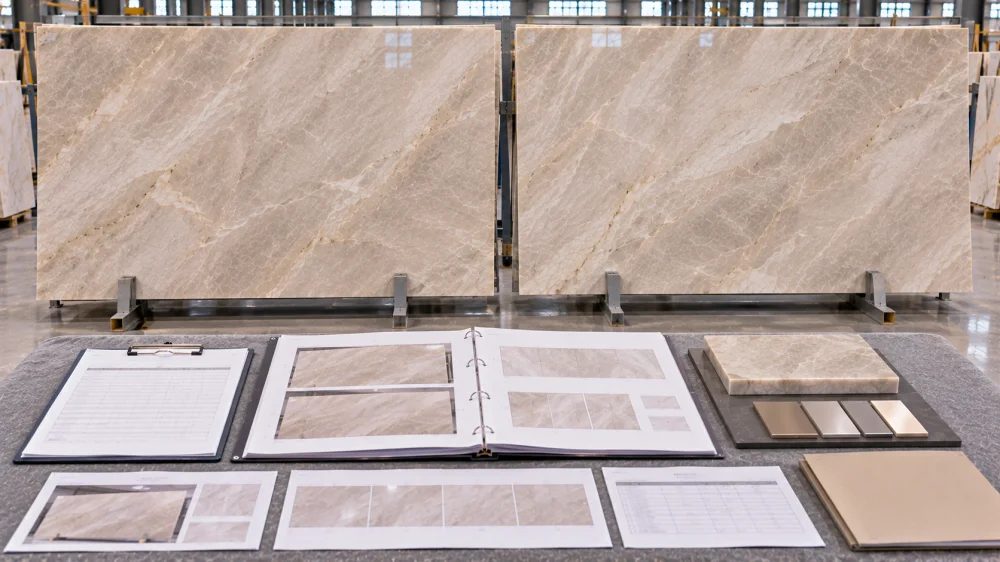
Before commercial confirmation, align the relevant identifiers across:
Where the purchase order uses a different material description, confirm whether this is simply a wording difference or a change in the requested stone.
For example, do not allow one document to say “White Quartzite” and another to say “Beige Taj Mahal Quartzite” without a shared physical or project reference explaining the relationship.
Once the final physical boards are approved, use their confirmed identities in the appropriate production and handover documents.
Commercial colour language, actual slab approval and production release should remain distinct decisions unless the project documentation expressly combines them.
Not necessarily. Beige and white are broad visual descriptions rather than exact natural-stone specifications. A pale warm Quartzite may be described as ivory, off-white, cream or beige by different parties. Use the commercial material name and identified physical references to establish what is being offered.
Yes. Commercial stone names and descriptive colour terms can differ between suppliers and markets. Confirm whether the suppliers are referring to the same physical material or simply offering visually related stones. Do not treat similar descriptions as proof of identical slabs.
No, not from the colour word alone. The actual obligation depends on the agreed specification, samples, slab references and commercial terms. If a near-pure-white background is essential, state that requirement explicitly and establish a suitable approval reference before purchase.
Include current board numbers when specific physical slabs are being offered or reserved. At an earlier sourcing stage, identify the material and visual direction while clearly stating that exact slab selection remains pending.
Use a more specific description such as warm grey-beige or greige, then identify the actual background tone, undertone and mineral movement shown by the current stone. Attach a representative physical reference or current slab photographs rather than relying only on the word greige.
A different slab may be proposed, but the same colour or trade name does not automatically transfer approval of a specific physical board. Follow the agreed substitution procedure and review material differences, board identities and any commercial changes.
Usually not by itself. Natural Quartzite contains variable mineral fields and patterns that may not be represented by one colour value. If measurable colour limits are required, the project must establish the measurement method, sampling conditions and acceptance criteria; otherwise use controlled physical references and a defined visual range.
Send the intended application, commercial material name if known, preferred background colour and undertone, acceptable movement and contrast, finish, dimensions, quantity, project references, delivery destination and any approved sample or slab photographs. State whether the request is for an indicative material quotation or an offer against identified current slabs.
Quotation Colour Control — Final DecisionA Quartzite quotation should not depend on the buyer and supplier interpreting one colour word in exactly the same way.
Keep the commercial stone name, descriptive colour, physical reference and accepted variation scope distinct but connected. When the actual slabs change, update the evidence and approval instead of relying on the original colour name.
Buyer Next Step: Before accepting a colour-sensitive natural-stone quotation, ask the supplier to identify the controlling material reference, describe the visible colour range and state whether exact slab approval is included or still pending.