
PORTUGUESE BEIGE LIMESTONE FLOORING
Porto Beige Limestone Indoor Flooring
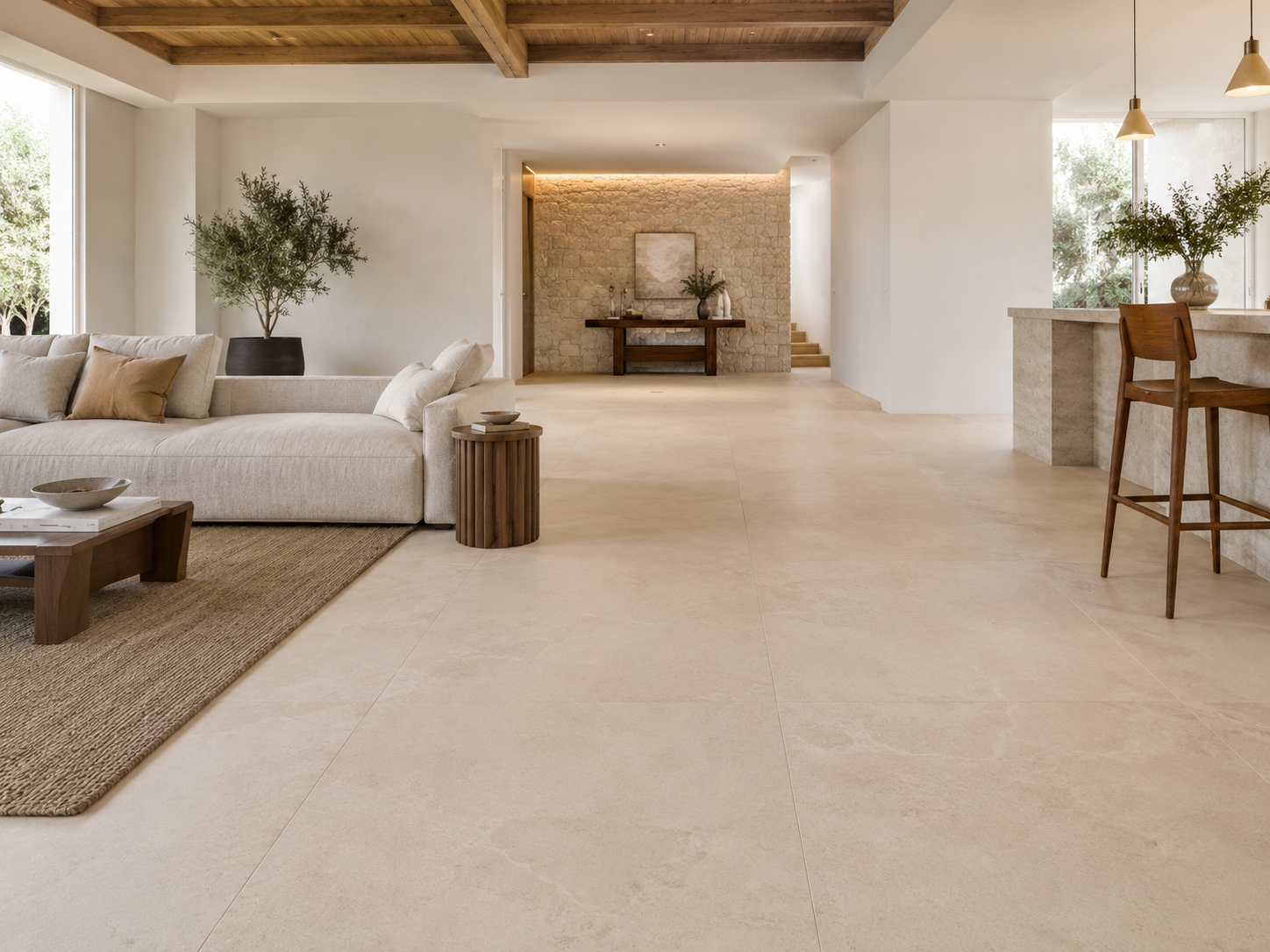
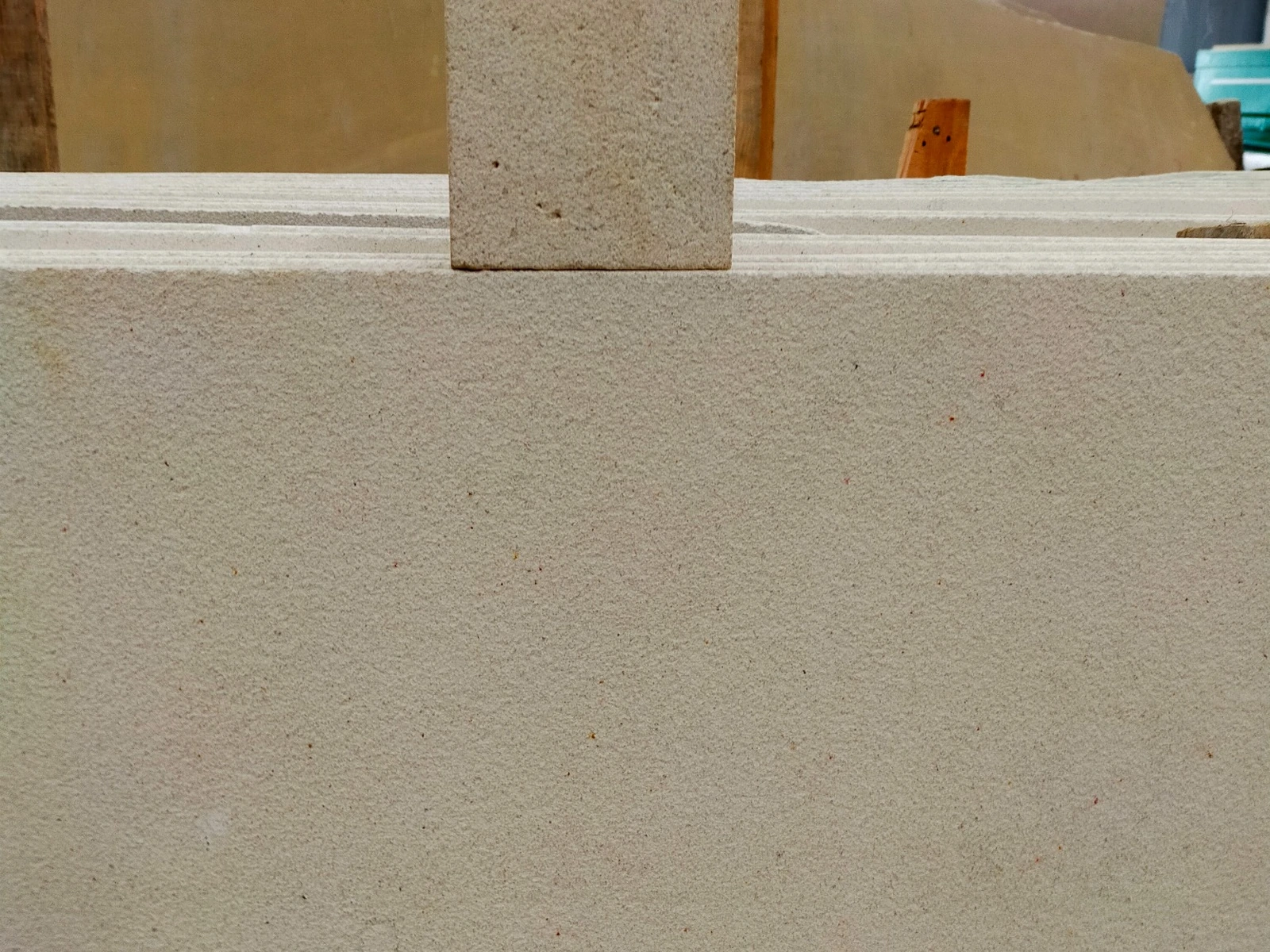
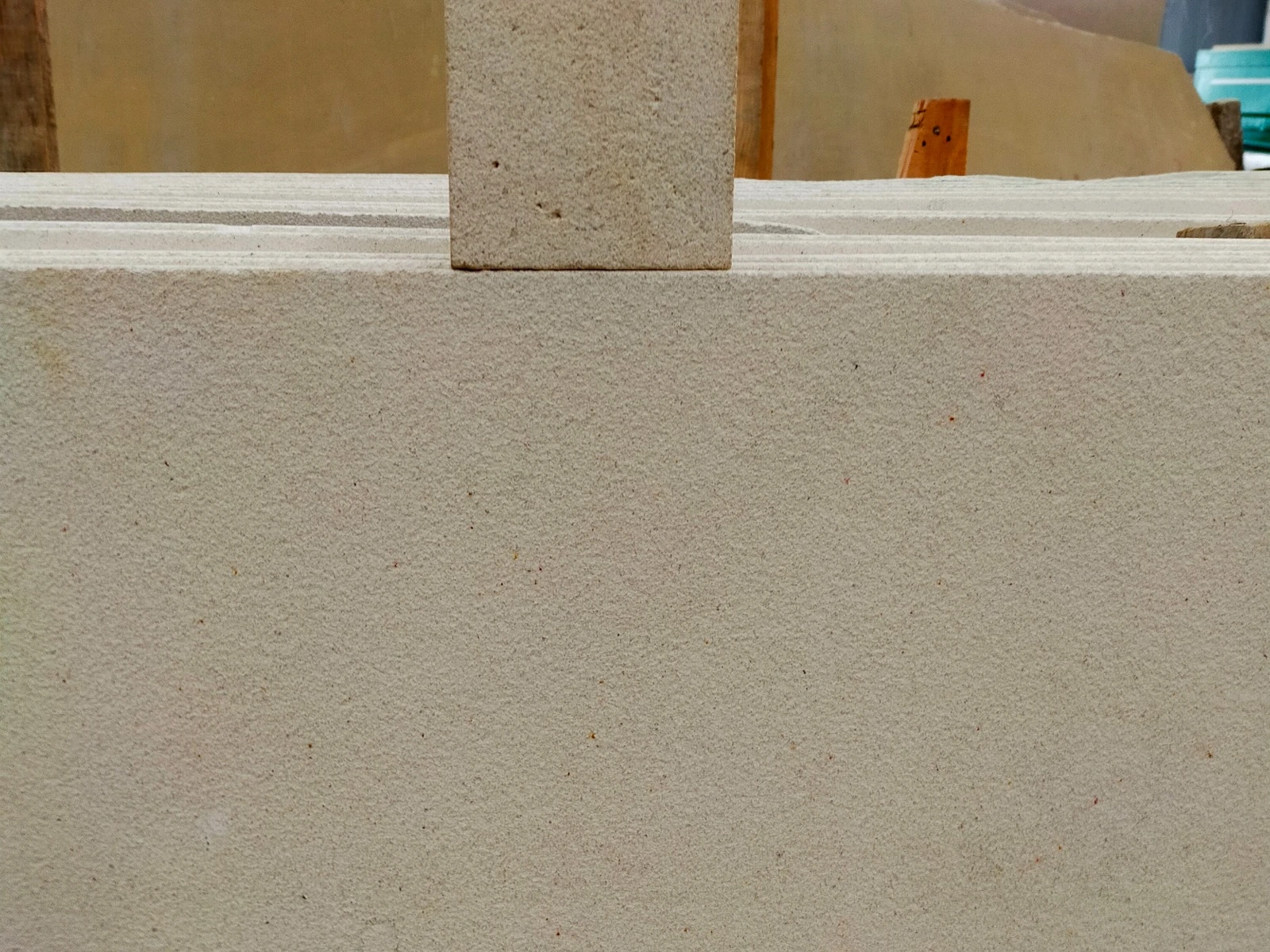
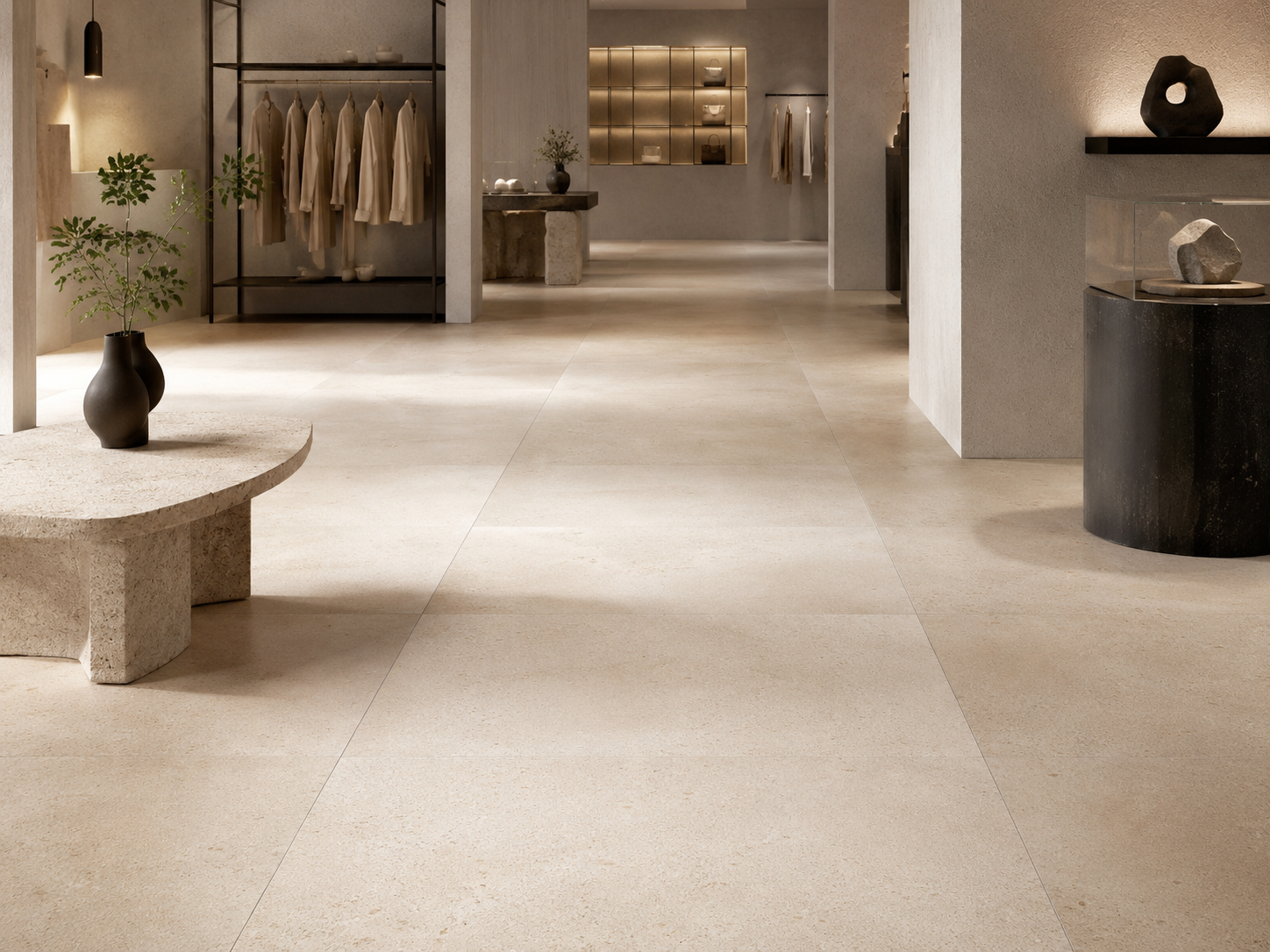
Porto Beige Limestone is a warm Portuguese natural stone with a soft cream-to-beige background, subtle fossil markings and restrained tonal movement. It is widely selected for indoor limestone floors that require a calm, architectural and visually continuous surface.
Available as Porto Beige tile, cut-to-size flooring, large floor tiles, stair components, skirting, wall panels and coordinated interior stone products for villas, hotels, apartments, reception areas, living rooms, corridors and commercial projects.
Main supply formats
Floor tiles · Large-format panels · Cut-to-size flooring · Stair treads · Risers · Skirting · Wall panels · Project-matched pieces
Flooring Supply Scope
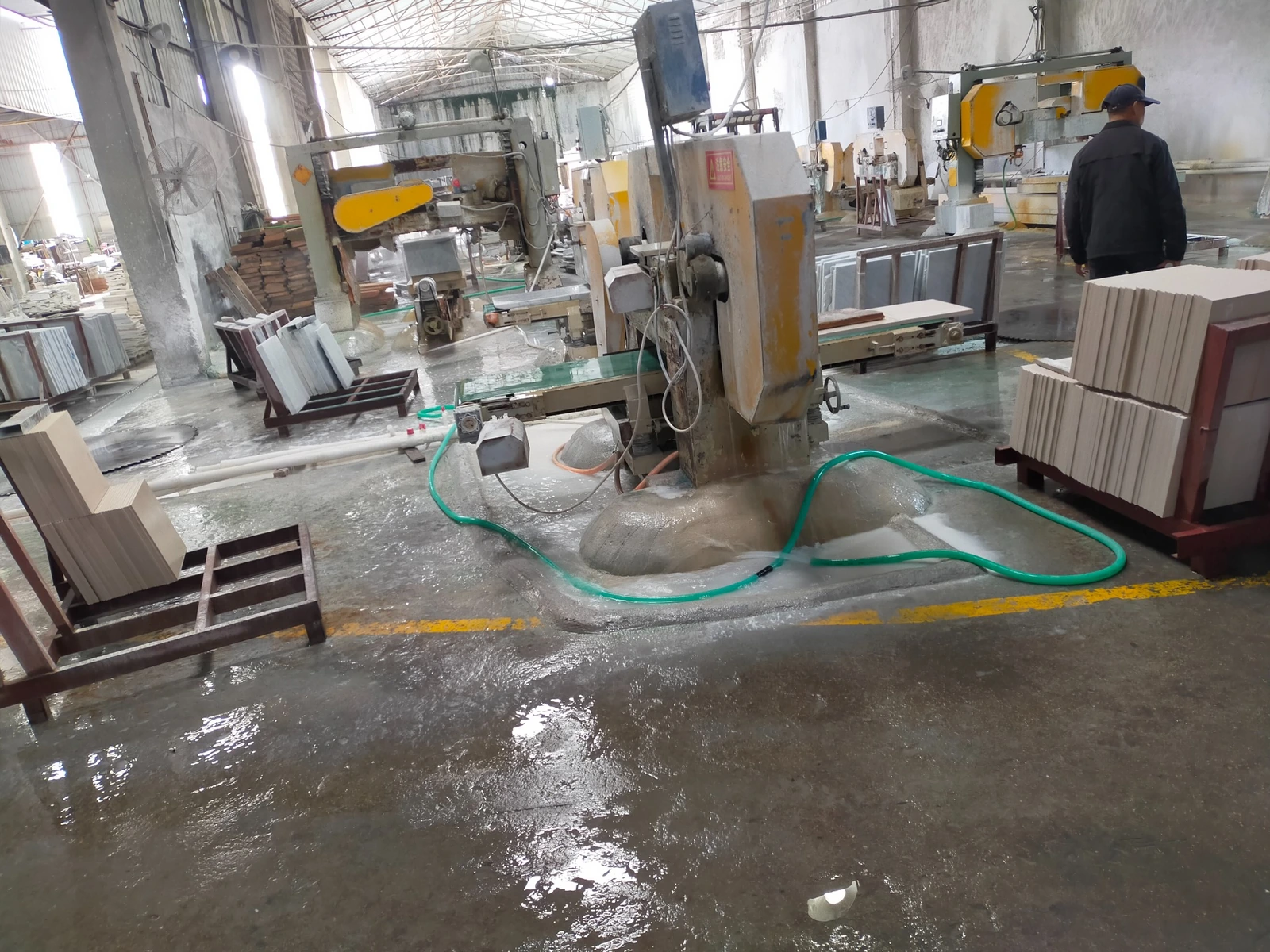
Material selection, tile sizing, cutting schedules, finish approval, sorting, dry lay, numbering, quality control and export packing.
Before ordering: confirm the floor plan, tile size, finish, acceptable tone range, joint width and installation sequence.
Portuguese natural beige limestone
Warm beige, cream and subtle fossil movement
Tiles, slabs, cut-to-size floors and stairs
Living rooms, hotels, villas, halls and lobbies
Warm Portuguese Limestone for Indoor Floors
Porto Beige Limestone is valued for its understated cream and beige color direction. Unlike highly veined decorative stones, its surface usually presents a quieter architectural character that can cover a large floor area without overwhelming surrounding furniture, joinery or wall finishes.
A Porto Beige floor can create visual continuity between living areas, corridors, entrance halls and adjoining rooms. The neutral surface coordinates naturally with oak, walnut, cream plaster, bronze, brushed metal, warm-grey paint and soft neutral fabrics.
The material may be supplied as standard Porto floor tile, custom-cut panels or project-specific flooring packages. For larger developments, the buyer should define the acceptable background range and determine whether subtle natural fossil markings should be evenly mixed or reserved for selected areas.
Because natural limestone varies between quarry sections and production batches, final approval should be based on current material photographs, finish samples and a representative range rather than one small reference piece.
Suitable Interior Categories
- Living room floors
- Hotel lobby floors
- Villa entrance halls
- Apartment common areas
- Interior corridors
- Reception areas
- Dry bathroom floors
- Dining-room flooring
- Coordinated stairs and skirting
Material Character and Interior Coordination
A successful beige limestone floor depends on the relationship between material tone, fossil density, finish, tile scale, grout color, lighting and adjacent interior finishes.
Color Direction
Porto Beige Stone generally presents a light cream-to-warm beige base. Lighter pieces can support bright interiors, while warmer pieces create more depth beside timber and bronze details.
Natural Markings
Fine shells, fossil traces, pores and tonal clouds may appear in natural limestone. The permitted range should be reviewed during material approval and tile sorting.
Lighting Response
Polished limestone reflects more light and deepens the beige tone. Honed limestone provides a softer, more natural appearance with lower reflection.
Interior Compatibility
The neutral surface works with contemporary, minimalist, Mediterranean, classic and hospitality interiors without creating excessive visual contrast.
Porto Beige Material Range and Floor Selection
Natural material approval should cover the complete beige range, fossil distribution, repaired areas, pores and finish response. Large flooring orders should be selected and sorted as coordinated batches.
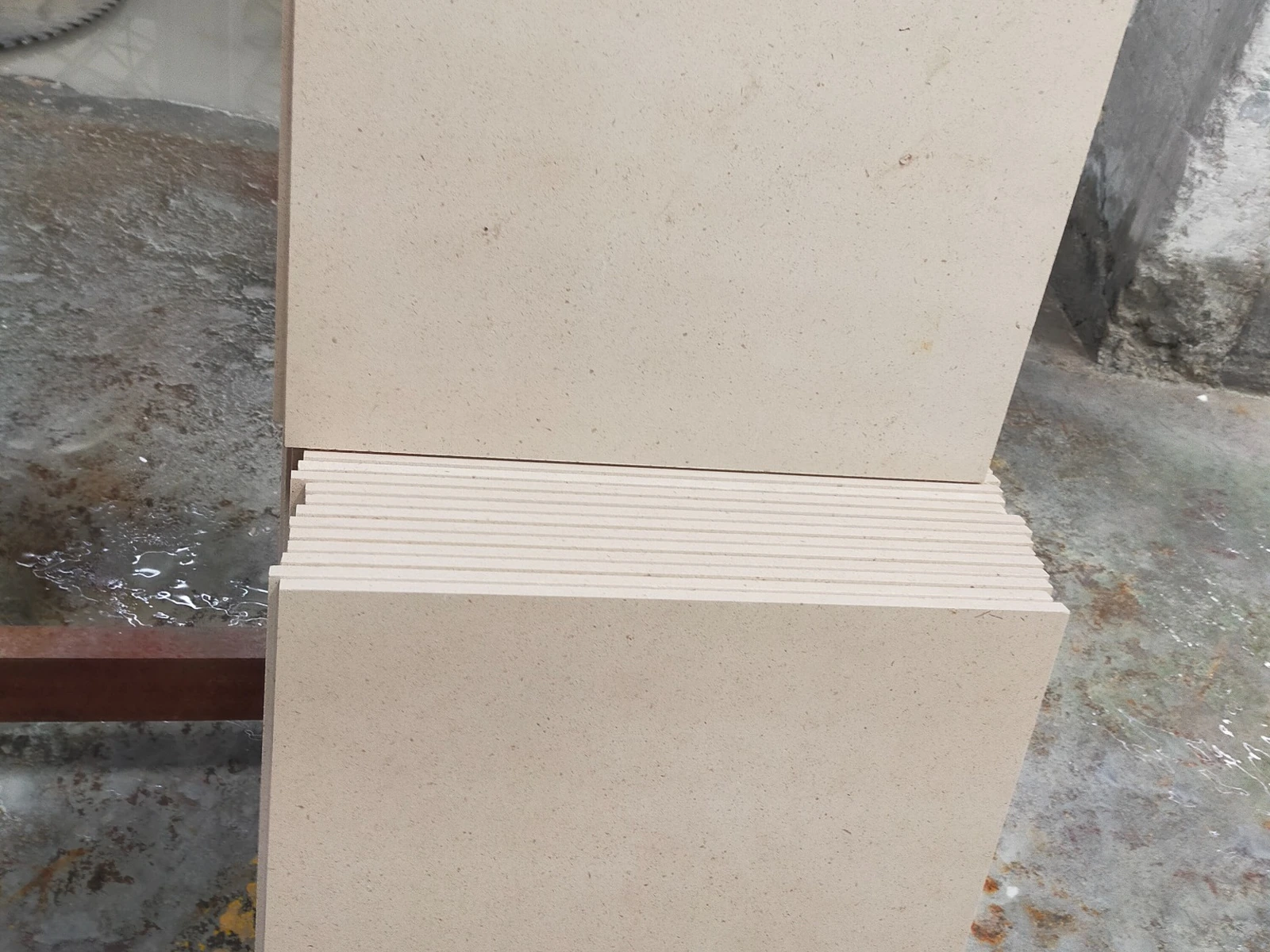
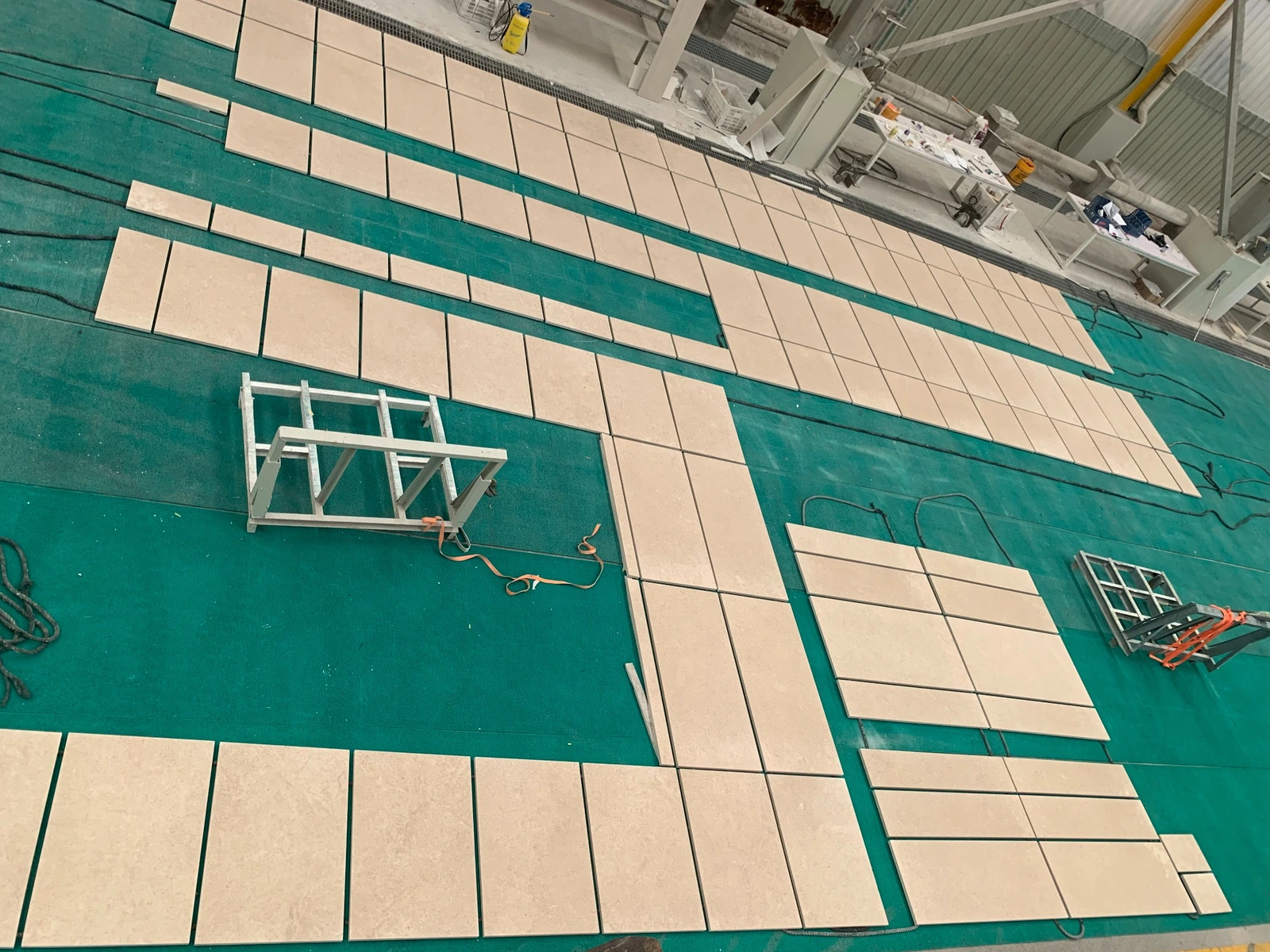
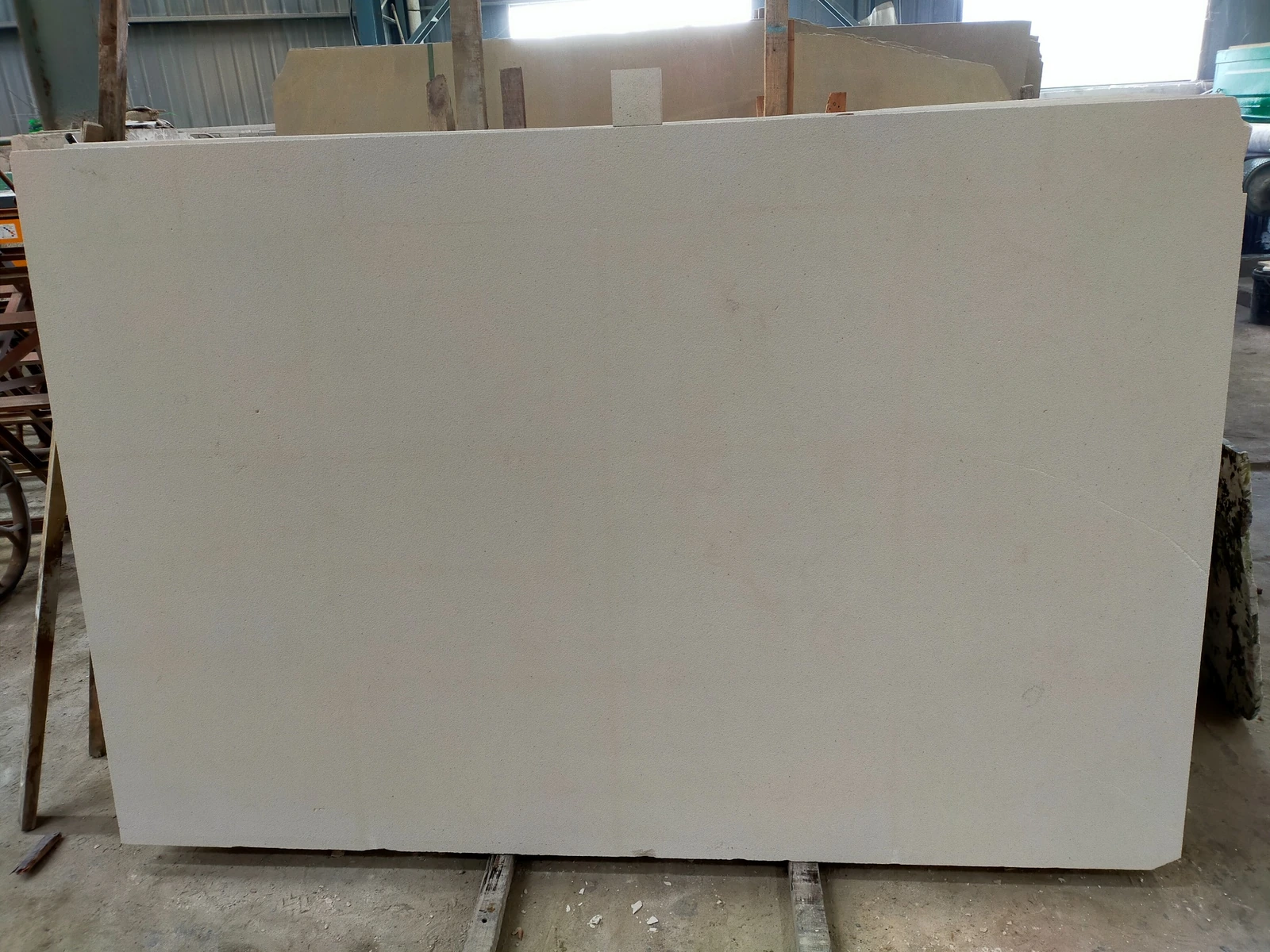
Material approval should define the acceptable color range, natural fossil markings, pore filling, surface finish and available quantity from one coordinated production lot.
01 — Approve the Range
Review representative light, medium and darker beige pieces rather than approving only one ideal tile.
02 — Define Fossil Limits
Confirm whether stronger fossils and natural markings may be mixed throughout the floor or placed in secondary areas.
03 — Confirm the Finish
Approve the actual honed, polished or textured surface because each finish changes the apparent color and pore visibility.
04 — Review Dry Lay
Inspect the limestone dry lay to identify sudden color patches, repeated markings and unsuitable adjacent pieces.
Porto Beige Limestone Flooring Specifications
Final tile dimensions, thickness, finish, tolerance, filling and quantity should be confirmed against current material availability and the approved floor plan.
| Especificación | Typical Supply Option | Confirmación del Comprador |
|---|---|---|
| Nombre del producto | Porto Beige Limestone | Use the same commercial name in the quotation, drawings and packing list. |
| Tipo de material | Natural Portuguese limestone | Approve natural color, fossil and pore variation. |
| General color | Cream, light beige and warm neutral tones | Define the acceptable background range before production. |
| Common formats | Tiles, slabs, cut-to-size panels, stairs and skirting | Provide a complete floor and piece schedule. |
| Tile dimensions | Standard and custom rectangular or square sizes | Confirm the floor module, joint width and perimeter cuts. |
| Common thickness | 15 mm, 18 mm and 20 mm, project-dependent | Match the thickness to tile size, substrate and installation method. |
| Common finishes | Honed, polished, brushed and selected textured finishes | Match the finish to appearance, traffic and slip requirements. |
| Surface filling | Natural pores may be filled according to the approved finish | Approve filling color, pore visibility and sample quality. |
| Edge finish | Machine-cut, calibrated and selected finished edges | Confirm visible stair, threshold and border edges separately. |
| Custom processing | Cut-to-size, profiling, drilling, waterjet, sorting and dry lay | Approve CAD or PDF layouts before custom cutting. |
| Tile calibration | Controlled according to project tolerance | Confirm thickness tolerance and substrate requirements. |
| Color sorting | Project-specific light, medium and warm beige mixing | Approve sorting logic and sample dry lay. |
| Quantity allowance | Calculated from layout, cutting waste and spare requirements | Include installation waste and future replacement pieces. |
| Control de calidad | Material, dimension, finish, sorting, dry-lay and packing inspection | Request pre-shipment photos and videos. |
| Export packing | Reinforced fumigated wooden crates | Crates should support the tile size, weight and unloading method. |
Recommended Indoor Uses and Use-with-Caution Areas
Porto Beige Limestone performs well in many indoor applications, but finish selection, traffic, water exposure and maintenance expectations must be reviewed for each area.
| Aplicación | Suitability | Recommended Control |
|---|---|---|
| Living room floor | Altamente adecuado | Use coordinated sorting, consistent joint widths and a layout aligned with the room geometry. |
| Hotel lobby floor | Suitable with planning | Confirm traffic level, finish, maintenance schedule and replacement-piece allowance. |
| Villa entrance hall | Altamente adecuado | Reserve visually balanced pieces for the main entrance axis and focal areas. |
| Interior corridor | Suitable | Use consistent tile orientation and avoid narrow perimeter cuts where possible. |
| Dry bathroom floor | Suitable | Match the finish and sealing system to cleaning and water exposure. |
| Wet bathroom floor | Use with caution | Use an appropriate finish and verify local slip-resistance requirements. |
| Commercial entrance | Project-specific | Evaluate grit exposure, traffic, cleaning frequency and entrance-mat systems. |
Porto Beige Limestone for Living Rooms
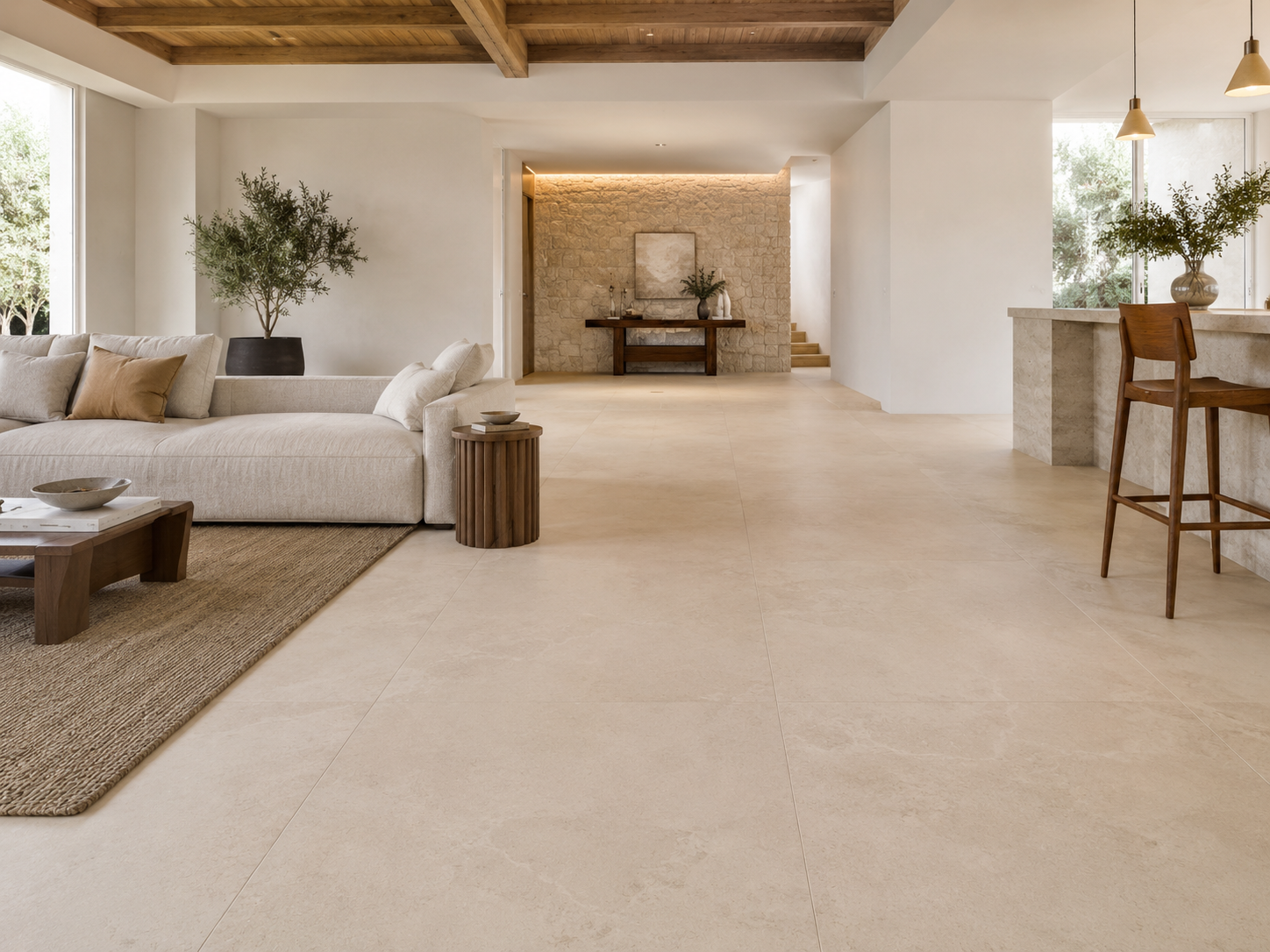
A Porto Beige floor provides a quiet foundation for residential interiors and allows furniture, lighting and architectural details to remain visually prominent.
Residential Floor Planning
In a large living room, the tile layout should respond to the main viewing direction, door openings, window lines and furniture arrangement. A centred or symmetrical floor layout can reduce awkward perimeter cuts and improve the appearance of the completed room.
Large floor tiles reduce the number of visible joints and create a calmer surface. Smaller formats may be more practical for irregular rooms, complex floor plans or areas with multiple thresholds.
- Align the tile grid with the main room axis
- Confirm transitions to timber or other flooring
- Coordinate skirting and stair materials
- Select a grout color close to the stone tone
- Reserve spare tiles from the same batch
Hotel Lobby and Villa Flooring Applications
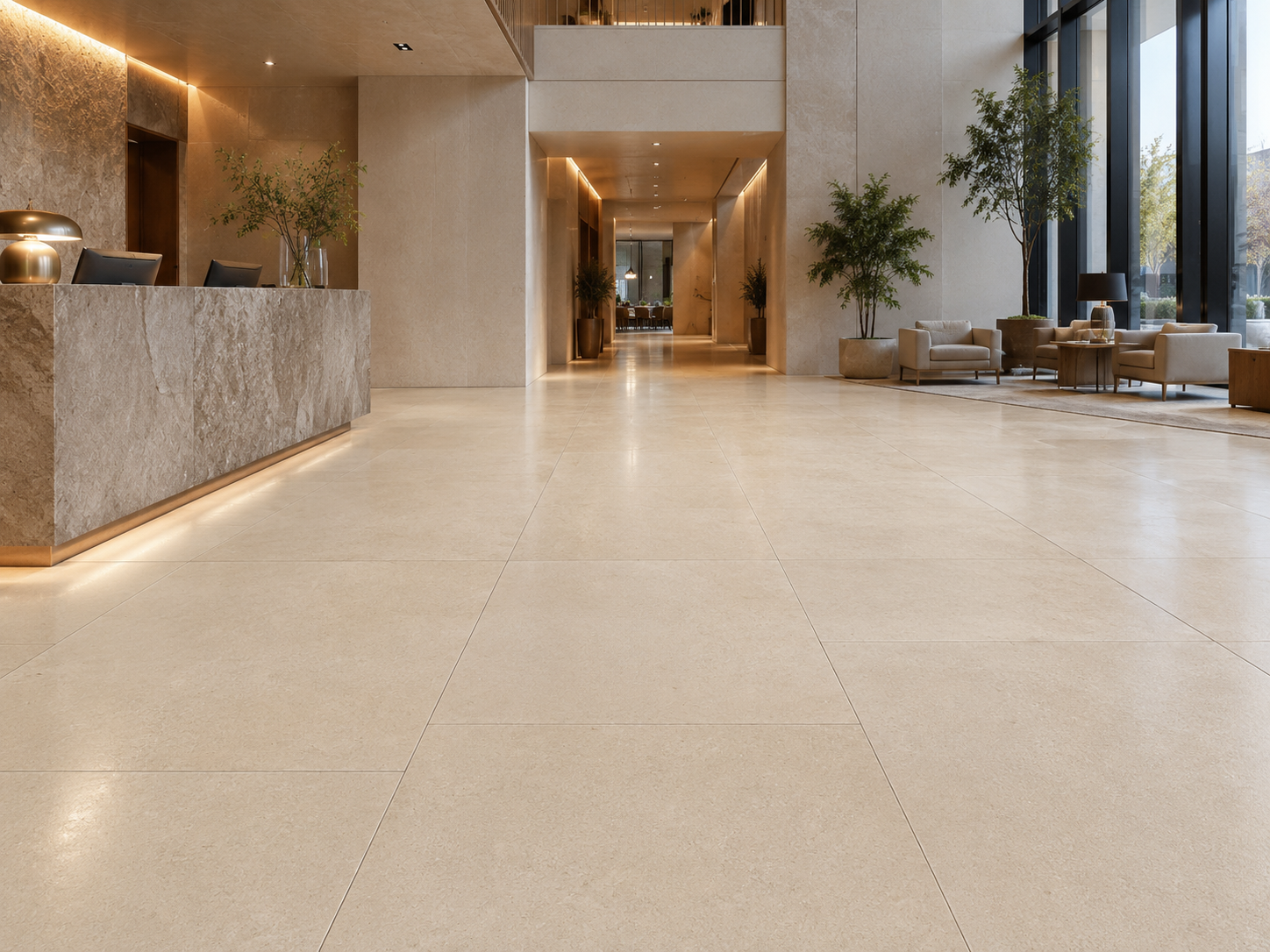
For hospitality and villa projects, one coordinated Porto Limestone batch can be allocated across lobbies, corridors, guest areas, entrance halls and stair components.
Hotel Lobby Floor
A hotel lobby floor requires controlled color distribution, suitable traffic performance, replacement-piece planning and a clear installation sequence. High-visibility entrance zones should receive the most coordinated pieces, while naturally stronger markings can be positioned in less prominent areas.
Villa Stone Floor
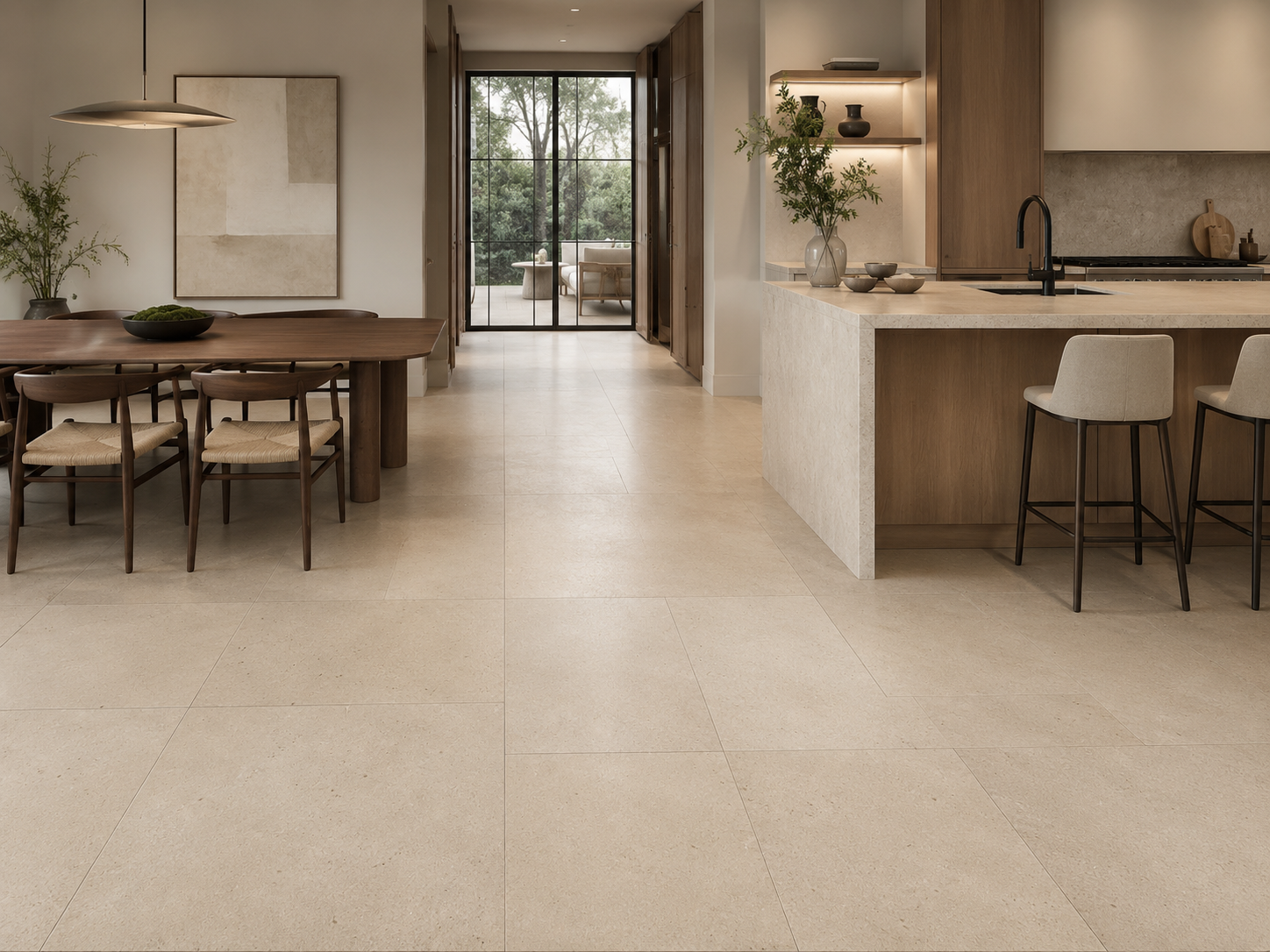
A villa project may combine the same beige limestone across the entrance hall, living room, dining area, stairs and selected bathrooms. Coordinated material planning creates a consistent architectural language throughout the residence.
Hall Floors, Corridors and Coordinated Stairs
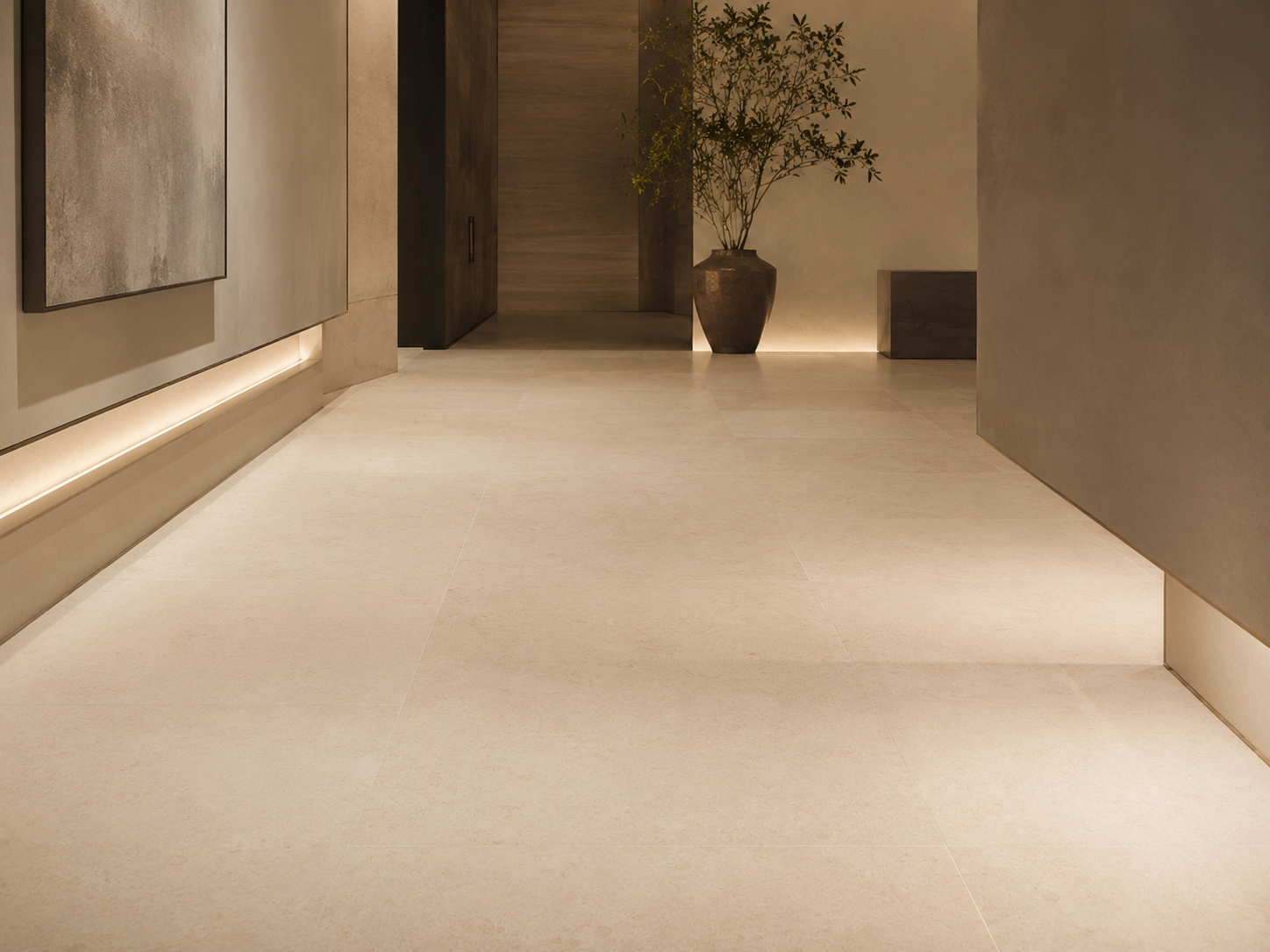
A hall stone floor often connects several rooms and therefore requires careful alignment of tile joints, door openings, stair landings and adjoining floor finishes.
Continuous Interior Stone Planning
When the same Porto Beige tile continues through several rooms, the main grid should be established before individual room layouts are approved. This prevents misaligned joints at door openings and reduces visually awkward transitions.
Stair treads, risers, landings and skirting can be produced from the same material range. The drawings should show finished dimensions, nosing profiles, visible edges and piece numbering.
Project control:
Confirm the relationship between floor tiles, stair joints, thresholds and wall lines before cutting custom pieces.
Tile Sizes and Stone Tile Layout Planning
The correct tile module depends on room dimensions, joint pattern, material yield, handling limits and the desired visual scale.
| Flooring Format | Best Suited For | Planning Consideration |
|---|---|---|
| Standard square tile | Apartments, bathrooms, corridors and regular rooms | Confirm the starting point and perimeter-cut balance. |
| Rectangular floor tile | Living rooms, halls and directional layouts | Select straight, offset or running-bond installation patterns. |
| 12×24 limestone | Residential and light commercial interior floors | Confirm actual metric dimensions and joint width. |
| Large floor tiles | Hotel lobbies, villas and open-plan living areas | Review slab yield, handling, substrate flatness and replacement access. |
| Custom cut-to-size | Project-specific rooms, borders, stairs and feature layouts | Approve CAD drawings and piece numbering before cutting. |
| Border and field layout | Formal halls, foyers and luxury residences | Confirm border width, corner details and material contrast. |
Honed and Polished Limestone Finish Comparison
| Finalizar | Apariencia | Suitable Applications | Procurement Consideration |
|---|---|---|---|
| Aburrido | Smooth matte appearance with restrained reflection | Living rooms, villas, corridors and contemporary interiors | Approve the honing level, filling and surface consistency. |
| Pulido | Deeper beige color with stronger light reflection | Formal halls, dry interiors and selected hotel areas | Review slip requirements and maintenance expectations. |
| Brushed | Soft textured surface with an aged character | Mediterranean interiors and decorative areas | Approve texture depth and cleaning requirements. |
| Textured | More tactile surface with lower reflection | Selected wet or transition areas | Verify the required slip performance for the final location. |
Floor Plan and Cut-to-Size Drawing Requirements
A project flooring order should not be calculated only from the net room area. The final cutting schedule must consider tile direction, perimeter cuts, columns, thresholds, stairs, waste and spare material.
| Drawing Item | Qué confirmar | Risk if Missing |
|---|---|---|
| Room dimensions | Wall lengths, diagonals, columns, recesses and floor openings | The tile quantity and perimeter cuts may be calculated incorrectly. |
| Tile module | Finished tile size, joint width and installation pattern | The completed grid may not align with doors or room axes. |
| Starting point | Main centre line, entrance axis or architectural datum | Narrow and unbalanced cuts may appear along visible walls. |
| Thresholds | Door openings, transitions and adjoining material heights | Floor levels or joints may not align between rooms. |
| Movement joints | Locations determined by the installer and project requirements | The finished stone may be exposed to avoidable movement stress. |
| Piece numbering | Room, zone, row, orientation and crate number | Installation becomes slower and dry-lay sequences may be lost. |
| Spare material | Extra pieces from the same batch for installation and future replacement | Matching replacement material may not be available later. |
If X → Choose Y: Practical Flooring Selection
Choose the finish, tile size and material range according to the visual goal, traffic level and maintenance requirement.
| If the Project Requires | Choose |
|---|---|
| A soft contemporary interior | Honed Porto Beige Limestone with controlled low reflection. |
| A brighter formal floor | A polished finish in a dry interior area, subject to slip requirements. |
| A calm open-plan floor | Large-format tiles with a balanced beige material range. |
| An irregular room layout | A smaller tile module that reduces complex cutting and waste. |
| A hotel lobby floor | A coordinated batch with traffic-appropriate finish, spare tiles and dry-lay approval. |
| A continuous villa interior | One material batch allocated across halls, living rooms, corridors and stairs. |
| A wet-area floor | An appropriate textured finish supported by local slip-resistance requirements. |
| Strict budget control | Standard tile sizes, efficient layouts and a clearly defined acceptable material range. |
Procurement Risks and Common Flooring Mistakes
Key Procurement Risks
- Approving only one ideal sample
- Mixing unrelated production batches
- Ignoring fossil and pore variation
- Selecting a finish by appearance alone
- Ordering only the net floor area
- Skipping tile sorting and dry lay
- Using inconsistent grout joints
- Not reserving spare pieces
- Insufficient export packing
| Common Mistake | Possible Consequence | Control Method |
|---|---|---|
| Approving a small sample only | The delivered floor may show a wider color and fossil range. | Approve representative material-range photographs and samples. |
| Ordering exact net area | There may be insufficient material for cuts, breakage or replacement. | Calculate waste and spare quantities from the floor layout. |
| Skipping dry lay | Sudden dark patches or repeated markings may appear. | Complete limestone dry lay and sorting before packing. |
| Ignoring tile calibration | Installation levels and joint alignment may become inconsistent. | Confirm thickness tolerance and substrate preparation. |
| Choosing polished stone for wet zones | The floor may not meet the required slip performance. | Select the finish according to local safety requirements. |
| Underestimating packing | Corners and tile edges may chip during transport. | Use reinforced crates with foam, separators and rigid support. |
Flooring Production and Quality Control
Large limestone flooring orders should be managed as coordinated project packages. The material range, tile dimensions, finish, sorting and packing must follow the approved specifications.
Recommended Inspection Sequence
- Raw material and color-range inspection
- Tile-size and thickness confirmation
- Surface finish and filling inspection
- Dimensional and diagonal measurement
- Edge and corner inspection
- Color and fossil sorting
- Dry-lay arrangement and review
- Piece numbering and quantity check
- Pre-shipment photos and videos
- Reinforced export packing inspection
Surface Detail and Natural Variation
Natural limestone may contain fossils, shell traces, pores, tonal clouds, filled areas and minor differences in crystal or sediment structure. These features should be assessed as part of the approved material range.
Flooring buyers should approve:
- Overall beige background
- Fossil density and distribution
- Natural pores and filling quality
- Differences between light and warm pieces
- Surface finish consistency
- Acceptable material placement in focal areas
Installation and Maintenance Planning
The long-term performance of a limestone floor depends on substrate preparation, adhesive selection, movement-joint planning, grout, sealing, cleaning and the actual traffic environment.
The stone supplier can provide sorted, numbered and inspected flooring pieces, but installation specifications should be confirmed by the local installer and project team according to site conditions and applicable requirements.
Natural limestone should be cleaned with products suitable for calcium-based stone. Acidic cleaners, harsh chemicals and abrasive methods may damage or dull the surface.
Before Installation
- Check crate, room and piece numbers
- Review tiles under site lighting
- Confirm substrate flatness and level
- Dry-lay visible areas before fixing
- Verify joints and movement locations
- Protect edges during handling
After Installation
- Use pH-neutral stone cleaners
- Remove spills and grit promptly
- Avoid acidic cleaning products
- Use suitable entrance mats
- Follow approved sealing guidance
- Keep spare tiles from the same batch
B2B Flooring Order Workflow
01 — Project Review
Confirm the project area, floor plan, total quantity, tile size, finish and schedule.
02 — Material Approval
Review the current Porto Beige range and define acceptable color and fossil variation.
03 — Quotation
Separate material, custom cutting, sorting, packing and shipping costs.
04 — Floor Layout
Confirm tile module, joint pattern, thresholds, borders, stairs and spare quantities.
05 — Production and QC
Complete cutting, finishing, calibration, sorting, measurement and dry lay.
06 — Export Packing
Number and pack tiles by room, floor area and installation sequence.
Information Required for a Porto Beige Flooring Quote
An accurate Porto Beige price requires more than a total square-metre quantity. The quotation should consider tile dimensions, thickness, finish, cutting waste, sorting, spare pieces, packaging and transportation.
The final limestone flooring price may change according to material grade, fossil range, format, finish, dimensional tolerance and custom processing requirements.
For faster quotation review, send one package containing the floor plan, area schedule, tile size, finish, quantity, reference images, destination and required delivery date.
- Project type and application area
- Floor plan and net area
- Tile dimensions and thickness
- Required surface finish
- Joint width and installation pattern
- Stair, threshold and skirting details
- Required spare-piece percentage
- Destination or delivery address
- Trade term and required schedule
Preguntas frecuentes
1. Is Porto Beige Limestone suitable for indoor flooring?
Yes. Porto Beige Limestone is suitable for many indoor floors, including living rooms, villa halls, hotel lobbies, corridors, reception areas and selected bathrooms. The finish, tile thickness and installation system should match the traffic and exposure of the final area.
2. What color is Porto Beige Limestone?
The material generally has a cream-to-warm beige background with subtle tonal clouds, fine fossils, shell traces and natural pores. The exact background and fossil distribution vary between production batches and individual pieces.
3. Is honed or polished limestone better for floors?
Honed limestone provides a soft matte appearance and is commonly selected for contemporary indoor floors. Polished limestone creates a deeper color and stronger reflection but should be evaluated carefully where slip resistance is important.
4. Can Porto Beige Limestone be used in hotel lobbies?
Yes, it can be used for hotel lobby floors when the finish, tile thickness, substrate, cleaning system and traffic conditions are properly evaluated. Large hotel projects should include coordinated material sorting, dry-lay approval and spare tiles from the same production batch.
5. Which tile sizes are available?
Porto Beige Limestone can be supplied in standard square and rectangular tiles, large-format flooring and custom cut-to-size pieces. The final size should be confirmed according to current material yield, room dimensions, handling limits and the intended floor layout.
6. How should color variation be controlled?
Buyers should approve a representative material range rather than one small sample. For larger floors, the supplier should sort light, medium and warmer pieces, complete a limestone dry lay and distribute natural fossil markings evenly throughout the approved layout.
7. How much extra flooring should be ordered?
The extra quantity depends on the tile size, room shape, installation pattern, diagonal cuts, borders and replacement requirements. The final allowance should be calculated from the approved floor plan rather than using one fixed percentage for every project.
8. Does Porto Beige Limestone need sealing?
Natural limestone may require a suitable penetrating sealer depending on the finish, installation environment and expected exposure. Sealing requirements should be confirmed with the installer and tested on the actual material before full application.
9. How should Porto Beige Limestone floors be cleaned?
Use cleaning products suitable for natural calcium-based stone. Remove grit and spills promptly, avoid acidic or abrasive products and follow the approved maintenance and sealing recommendations for the selected finish.
10. What information is needed for a flooring quotation?
Provide the floor plan, total area, tile size, thickness, finish, installation pattern, stair and skirting requirements, spare-piece allowance, destination and delivery schedule. A reliable quotation should separate material, custom processing, packing and shipping costs whenever possible.
Nota final / Conclusión práctica
Porto Beige Limestone is a practical indoor flooring material for projects that require a warm, calm and coordinated beige surface. It works particularly well in living rooms, hotel lobbies, villa halls, corridors, reception areas and continuous residential interiors.
Its main buying advantages are neutral color, architectural versatility and compatibility with wood, bronze, cream and warm-grey finishes. Its main procurement risks are uncontrolled natural variation, unsuitable surface selection, inaccurate quantity calculations, poor tile sorting and insufficient packaging.
For a reliable result, approve the current Porto Beige material range, define the acceptable fossil and pore characteristics, match the finish to the actual traffic and safety requirements, calculate quantities from the floor layout and require sorting, dry-lay review, numbering and export-packing inspection before shipment.