
“Dashu is not just the hottest time of year—it’s when resilience, tradition, and nature meet.”

On July 22, the Chinese calendar reaches Dashu (大暑), o Great Heat, the 12th of the 24 términos solares. As the name implies, this period is the climatic peak of summer—hot, humid, and buzzing with energy. It is also a deeply cultural phase, rooted in both survival and celebration.
From ancient agricultural society to today’s wellness-oriented living, Great Heat represents adaptation: to nature’s extremes, to the human body’s limits, and even to how we shape our surroundings.
🌿 What Is Dashu (Great Heat)?
In Chinese, “大 (Da)” means “great” or “intense,” and “暑 (Shu)” means “heat.” Combined, Dashu refers to the hottest days of the year, typically accompanied by scorching sun, high humidity, and monsoon rains in parts of East Asia.
Historically, it was a critical time for rice harvesting in southern China and preparing for fall planting in northern regions. Farmers adjusted their routines to avoid heatstroke, and families adapted their diets, schedules, and homes to remain cool and nourished.
Today, Dashu is a seasonal checkpoint—a reminder that well-being requires strategy, especially in the face of extremes.
🔍 Dashu Customs: Time-Tested Wisdom for Heat and Health
While not a festival, Dashu is marked by rituals that reflect a people’s enduring relationship with climate. Let’s explore five meaningful traditions that continue to shape summer life in China:
1. Drinking “Fu Tea” (伏茶)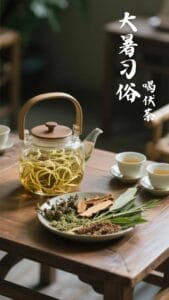
One of the most iconic Dashu traditions is drinking Fu Tea, a cooling herbal infusion made from mint, chrysanthemum, honeysuckle, or other traditional Chinese herbs. The tea is often prepared during the “Sanfu Days”—the three hottest periods between mid-July and mid-August.
Symbolically, Fu Tea represents inner balance. While the world outside burns, the body and mind stay calm.
In a design context, this echoes the use of natural cooling elements like piedra de cuarcita, which remains cool underfoot and visually soft in tone—ideal for high-temperature environments like tropical homes, spas, or sunlit courtyards.
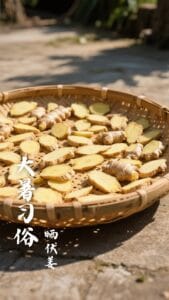
2. Sun-Drying Ginger (晒伏姜)
In rural China, slices of ginger are laid out under the sun during Dashu. The intense heat is believed to enhance its medicinal value, strengthening its warming properties for winter use.
It’s a seasonal act of preservation and foresight—making the most of the current conditions for future benefit.
Designers and architects can relate to this idea: choosing materials with long-term resilience, like weather-resistant natural stone, prepares structures for years of performance under both heat and moisture.
3. Eating Lychees (吃荔枝)
 Lychees, sweet and hydrating, are at their seasonal best during Dashu. In southern China, eating lychees is not just indulgence—it’s hydration and nourishment in their most natural form.
Culturally, lychee is associated with luxury, freshness, and celebration. Serving it during Great Heat reflects an appreciation for nature’s peak offerings.
4. Eating “Fu Yang” (伏羊)
In northern provinces like Shaanxi and Shandong, people eat mutton (yang) during Dashu—despite the heat. The practice may seem contradictory, but according to traditional Chinese medicine, consuming warm foods like mutton strengthens internal energy and helps the body adapt to climate extremes.
It’s a lesson in strategic contrast—sometimes, we face heat with heat.
Stone materials like marble or granite, known for absorbing and regulating heat, also work on this principle: they don’t fight the environment but rather integrate with it to offer stable, comfortable interiors.
5. Floating Dashu Boats (送大暑船)
A lesser-known but beautiful folk tradition from parts of Fujian and Zhejiang involves making small paper boats—symbolizing the removal of illness and bad luck—and sending them down rivers.
These boats carry away heat-related fatigue and misfortune, inviting cleansing rains and cooler winds.
For HRST STONE, this gesture aligns with the idea of designing flow into space—letting air, light, and intention move freely through carefully selected layouts and materials.


🏛 Summer Materials and Environmental Design
As the mercury rises during Dashu, smart design becomes survival. In both ancient Chinese homes and modern sustainable architecture, we find consistent themes:
-
Thick stone floors that stay cool even in high temperatures
-
Courtyards and cross-ventilation that reduce the need for air conditioning
-
Natural tones that psychologically cool a space
Cuarcita, with its strength, heat resistance, and textural elegance, is especially well-suited for summer-facing facades, pool surrounds, and minimalist interiors that prioritize health and harmony.
At HRST STONE, we provide material solutions that are not only beautiful but seasonally intelligent—designed to work with nature, not against it.
💬 Final Thoughts from HRST STONE
Great Heat isn’t something to conquer—it’s something to move through, thoughtfully. Whether you’re working in agriculture, wellness, or architectural design, Dashu teaches us to:
-
Respect the intensity of nature
-
Prepare rather than panic
-
Use time-tested materials and traditions to build resilience
With every slab of quartzite or marble we deliver, we carry this seasonal wisdom forward—creating surfaces that speak of clarity, cooling, and cultural depth.
📞 Let’s Talk About Stone & Summer
Looking to build spaces that stay cooler, feel calmer, and last longer? We’re here to help.
📩 Correo electrónico: assistant@hrststone.com
📱 WhatsApp: +86 13685922793
🌐 Sitio web: www.quartzite-stone.com


