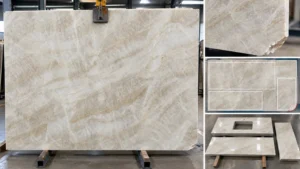
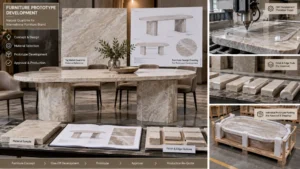
Resumen rápido: Los paneles curvos de mármol no pueden producirse doblando la piedra directamente. En cambio, se utilizan métodos de fabricación ingenieriles como el tallado CNC, el ensamblaje segmentado, el corte por kerf y sistemas compuestos en panal para transformar losas planas en superficies arquitectónicas curvas.

Introducción: Por qué los paneles curvos de mármol son populares en la arquitectura moderna
Los paneles curvos de mármol se utilizan cada vez más en hoteles de lujo, interiores comerciales y fachadas escultóricas de edificios. Las superficies curvas crean una sensación de movimiento y elegancia que los paneles de piedra planos no pueden lograr. Sin embargo, las losas de mármol natural no pueden doblarse simplemente para darles forma. Debido a su estructura cristalina, las losas de mármol son frágiles y se agrietarán si se les fuerza a tomar una curvatura.
Para crear superficies curvas de mármol, los fabricantes recurren a procesos de fabricación ingenieriles que remodelan o ensamblan las losas planas en geometrías curvas. Estos métodos permiten a diseñadores y arquitectos lograr formas complejas manteniendo al mismo tiempo la integridad estructural.
Por qué el mármol no puede doblarse
El mármol tiene una alta resistencia a la compresión pero relativamente baja resistencia a la tracción. Cuando una losa se dobla, se genera tensión en la superficie exterior de la curva. Como el mármol no puede soportar tensiones significativas de tracción, se producirán grietas antes de que ocurra un doblado significativo.
Por lo tanto, los paneles curvos de piedra se producen utilizando estrategias de fabricación como las siguientes:
- Eliminación de material mediante tallado CNC
- Ensamblaje segmentado de tiras estrechas
- Corte por kerf en la parte trasera para reducir la rigidez
- Sistemas de respaldo compuestos como paneles de panal de aluminio
Cuatro métodos principales para producir paneles curvos de mármol
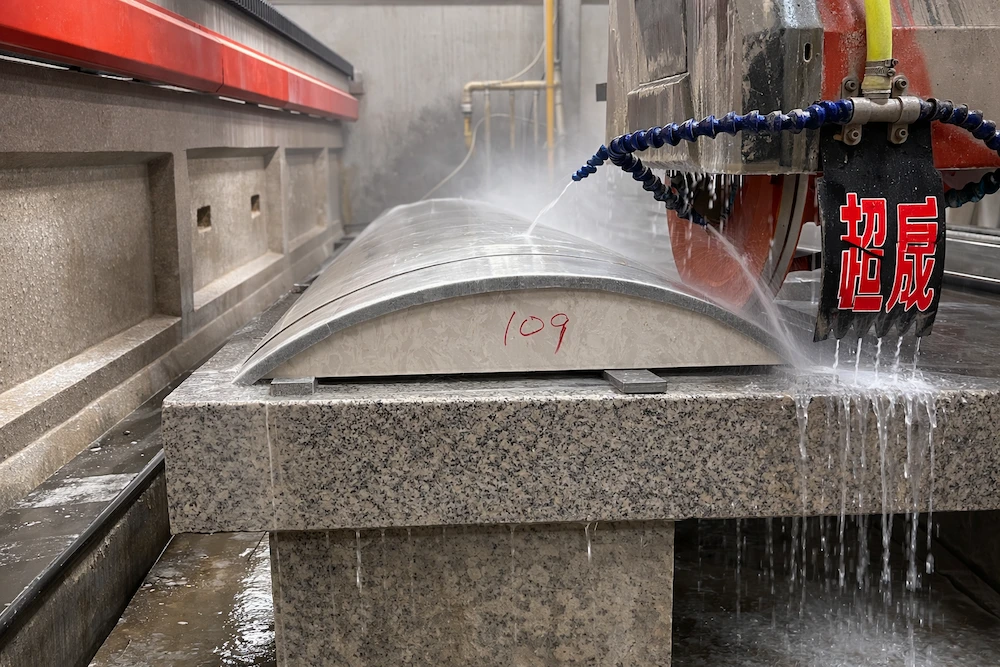
1. Tallado sólido CNC
Las máquinas CNC eliminan material de la parte posterior de una gruesa losa de mármol para producir una superficie curva. Este método permite que la cara visible del mármol permanezca continua y sin juntas.
Ventajas:
- Apariencia sin juntas
- Alta resistencia estructural
- Calidad visual premium
Limitaciones:
- Gran desperdicio de material
- Mayor costo de mecanizado
- Normalmente requiere losas más gruesas de 20 mm
2. Ensamblaje segmentado
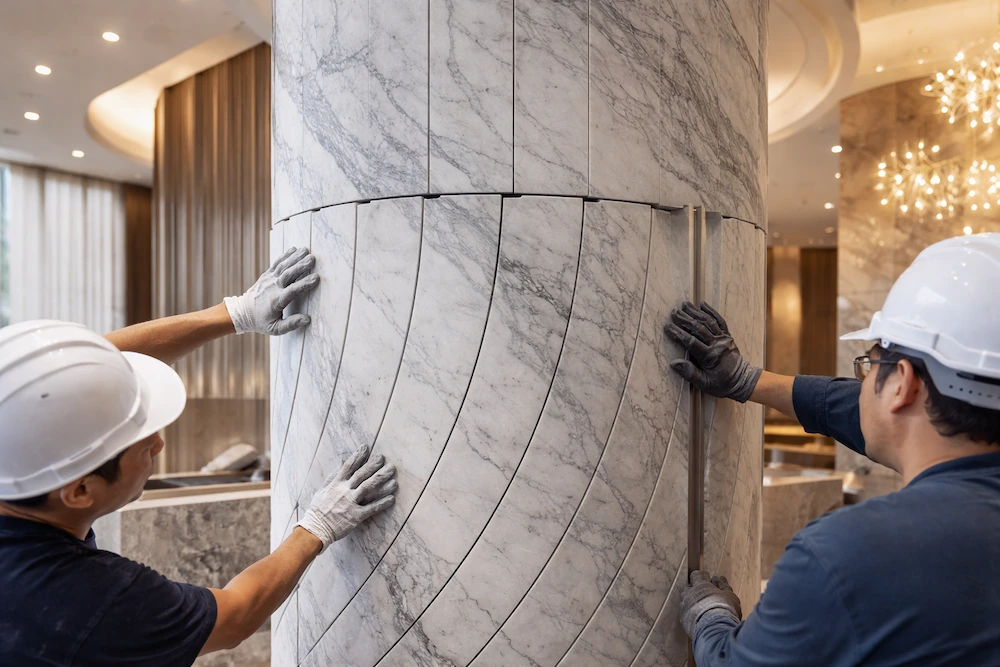
El ensamblaje segmentado divide una superficie curva en múltiples piezas rectas estrechas. Cada pieza se corta de losas planas de mármol e instalarse una al lado de la otra para aproximar una curva suave.
Ventajas:
- Eficiente en costos
- Diseño flexible de radios
- Menor desperdicio de material
Esta es la técnica más utilizada para columnas curvas de mármol y muros decorativos interiores.
3. Corte por kerf en la parte posterior
El corte por kerf implica fresar ranuras en forma de V en la parte posterior de una losa de mármol. Estas ranuras reducen la rigidez, permitiendo que la losa se flexione ligeramente cuando se instala.
Aunque este método permite curvas más cerradas, debilita significativamente la piedra y debe reforzarse con malla de fibra de vidrio o sistemas de respaldo.
4. Paneles compuestos en panal
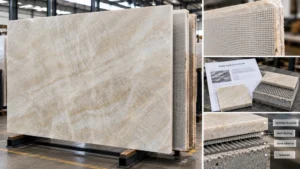
En los paneles compuestos en panal, láminas finas de mármol (3–5 mm) se unen a paneles de panal de aluminio. La estructura compuesta es ligera y puede moldearse para obtener geometrías curvas.
Este sistema se utiliza comúnmente en fachadas arquitectónicas a gran escala donde la reducción de peso es crucial.

Tabla de comparación técnica
| Método |
Costo |
Resistencia |
Flexibilidad de radio |
Aplicación típica |
| Tallado CNC |
Alto |
Alto |
Radio grande |
Muros decorativos de lujo |
| Ensamblaje segmentado |
Medio |
Medio |
Flexible |
Columnas y interiores curvos |
| Corte por kerf en la parte posterior |
Bajo |
Bajo |
Radio pequeño |
Muros decorativos |
| Compuesto en panal |
Medio |
Alto |
Gran escala |
Fachadas exteriores |
Flujo de trabajo para la toma de decisiones ingenieriles
- Determinar el radio de curvatura requerido.
- Seleccionar el grosor adecuado de la losa.
- Evaluar los requisitos estructurales e instalación.
- Elegir el método de fabricación.
- Crear muestras maquetas antes de la producción.
Conclusión
Los paneles curvos de mármol no se crean doblando la piedra, sino mediante procesos de fabricación ingenieriles. El tallado CNC, el ensamblaje segmentado, el corte por kerf y los sistemas compuestos en panal ofrecen soluciones para diferentes necesidades arquitectónicas. Seleccionar el método adecuado depende del radio, el grosor, los requisitos estructurales y el presupuesto del proyecto.
Preguntas más frecuentes
1. ¿Se pueden doblar las losas de mármol sin cortar?
No. El mármol es un material frágil y se agrietará si se le fuerza a doblarse.
2. ¿Cuál es el método más común para paneles curvos de mármol?
El ensamblaje segmentado es la técnica más utilizada en proyectos comerciales.
3. ¿Es el mármol compuesto en panal más fuerte que el mármol sólido?
Para paneles grandes, los sistemas compuestos de panal de abeja ofrecen un mejor rendimiento peso-resistencia.
4. ¿Cuál es el radio mínimo para paneles curvos de mármol?
El radio mínimo depende del grosor de la losa y del método de fabricación.
5. ¿Son seguros los paneles de mármol con ranuras para uso en exteriores?
Por lo general, se recomiendan los paneles con ranuras únicamente para aplicaciones decorativas en interiores.
Referencias