Ultimativer Leitfaden zu Quarzit versus Porzellanplatte für Küchenarbeitsplatten: Kosten, Design, Leistung und Beschaffung
Post navigation
Kurze Zusammenfassung
Dieser Leitfaden hilft Projektkäufern, natürlichen Quarzit und Porzellanplatten anhand von Anwendungsbereichen, Aussehen, Spezifikationen, Fertigung, Wartungsplanung sowie einem dokumentierten Genehmigungsablauf miteinander zu vergleichen.
Der ultimative Leitfaden zum Vergleich von Quarzit und Porzellanplatten für Küchenarbeitsplatten – Kosten, Design, Leistung und Beschaffung – sollte vor allem als eine Entscheidung hinsichtlich der spezifischen Anforderungen betrachtet werden, nicht als bloßes Schlagwort. Für Importeure, Verarbeiter, Architekten, Bauunternehmer oder Projektbeschaffungsteams stellt sich die entscheidende Frage: Wie passen die beiden Materialoptionen zu den konstruktiven Plänen, zur vorgesehenen Nutzung und zum Genehmigungsprozess? Der Vergleich sollte zwischen natürlichem Quarzit, einem Naturstein, und porzellanplattenbasierten Produkten unterscheiden, die als künstlich hergestellte Oberflächenmaterialien gelten. Natürlicher Quarzit und andere Natursteine sind nicht einfach austauschbar, nur weil ein Muster im Showroom ähnlich aussieht.
HRST STONE, auch bekannt als XIAMEN HRST STONE CO., LTD., unterstützt Anfragen zu natürlichem Quarzit mit einem dokumentenbasierten Ansatz. Käufer können mit dem Materialnamen, der beabsichtigten Anwendung, den Abmessungen, der Menge, den Kanten‑ oder Oberflächenanforderungen, den Zeichnungen sowie dem Lieferort beginnen. Dies schafft eine klarere Grundlage für die Plattenprüfung, die Fertigungsdiskussion, die Packungs‑Erwartungen und die kommerzielle Bestätigung – ohne Annahmen über Verfügbarkeit, Preis, Testergebnisse oder Lieferzeiten.
Vergleich von Quarzit und Porzellanplatte bei Küchenarbeitsplatten
Beginnen Sie mit der Anwendung, nicht mit einer Schlagzeilenbehauptung
Bevor Sie natürlichen Quarzit und Porzellanplatten vergleichen, definieren Sie die Anwendung in praktischen Begriffen. Eine Kücheninsel, ein Waschtisch in der Hotellerie, ein Empfangstresen, eine Wandverkleidung und eine trockene Dekorationsfläche stellen unterschiedliche Anforderungen an Optik, Fertigung, Reinigung, Tragfähigkeit und Übergabe. Fragen Sie das Designteam, welche Eigenschaften unverzichtbar sind und welche lediglich Vorlieben darstellen. Eine Entscheidung wird verlässlicher, wenn sie an eine Zeichnung und einen Musterfreigabepfad gebunden ist, statt an eine generische Rangliste.
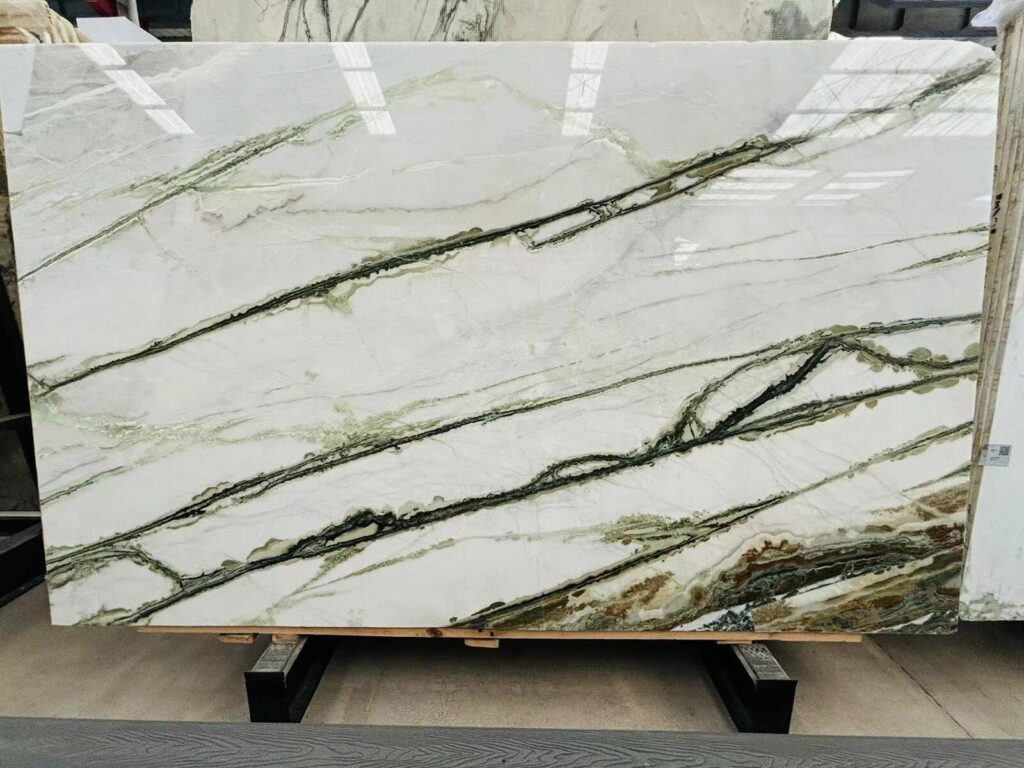
Für natürlichen Quarzit können Handelsnamen Steine umfassen, die deutliche Unterschiede in Farbe, Maserung, Bewegung, Transluzenz und Struktur aufweisen. Prüfen Sie die tatsächliche Platte oder eine vereinbarte Freigabe‑Darstellung, wenn diese Variationen von Bedeutung sind. Bei Vergleichsmaterialien fordern Sie dieselbe Klarheit hinsichtlich des gelieferten Produktformats und der Oberflächenbearbeitung. Betrachten Sie keinen kleinen Splitter, kein digitales Bild oder ein generisches Katalogetikett als vollständigen Ersatz für eine projektspezifische Freigabe.
Eingabe für die Entscheidung
What to confirm
Warum das wichtig ist
Anmeldung
Standort, Exposition, Nutzungsverhalten und Reinigungsregime
Hilft, die Materialwahl an die Einsatzbedingungen anzupassen
Optische Zielsetzung
Hintergrund, Bewegung, Ausrichtung, Fugenlogik und Beleuchtung
Verhindert eine Materialwahl, die sich allein auf den Namen stützt
Umfang der Fertigung
Dicke, Kantenbearbeitung, Ausschnitte, Fugen und Tragfähigkeit
Ermöglicht dem Verarbeiter eine praxisnahe Einschätzung der Umsetzung
Freigabeweg
Plattenprüfung, Kontrollmuster, Layout und Sign-off durch den Auftraggeber
Schafft eine nachvollziehbare Grundlage für Entscheidungen
Natürlicher Quarzit und Porzellanplatte gehören unterschiedlichen Materialkategorien an
Natürlicher Quarzit ist ein Naturstein. Sein Erscheinungsbild kann Bewegung und Variation aufweisen, die bei der individuellen Materialauswahl und der Projektgestaltung sorgfältig geprüft werden sollten. Porzellanplatte hingegen ist ein künstlich hergestelltes Oberflächenprodukt. Ein Vergleich darf diese Kategorien nicht gleichsetzen oder das Wort „Quarz“ verwenden, als würde es automatisch technisch bearbeiteten Quarz beschreiben. Technisch bearbeiteter Quarz ist eine weitere künstliche Materialkategorie und unterscheidet sich vom natürlichen Quarzit.
Für Einkäufer besteht die erste Aufgabe darin, die gewünschte Materialkategorie im Leistungsverzeichnis und in den eingereichten Unterlagen klar zu definieren. Anschließend sind das spezifische Handelsprodukt oder der genaue Name des natürlichen Quarzits, die geforderte Oberflächenbearbeitung, das vorgesehene Bauteil sowie die entsprechende Genehmigungsreihenfolge festzulegen. So lässt sich ein häufiger Fehler in der Beschaffung vermeiden: die Genehmigung einer allgemeinen Beschreibung, während das Projektteam eigentlich ein anderes Materialsystem erwartet.
Vergleichen Sie visuelle Absichten und Layout‑Logik
Bei der visuellen Auswahl sollte die gesamte Zusammensetzung berücksichtigt werden, nicht nur ein einzelnes Muster. Bei natürlichem Quarzit sind Hintergrundfarbe, Maserung oder Struktur, Ausrichtung, angrenzende Elemente, Fugen, Rückläufe, Beleuchtung sowie das Zusammenspiel mit anderen Oberflächen zu prüfen. Eine Akzentwand oder eine Kücheninsel kann einen anderen Genehmigungsweg erfordern als eine kleine Waschtischplatte. Wenn das Design auf markante Musterbewegungen oder Buchmatching setzt, sollte die Überprüfung des Layouts explizit als Projektschritt festgehalten werden.
Bei der Auswahl von Porzellanplatten sind das Produktdesign, die Ausrichtung, Erwartungen hinsichtlich der Wiederholung sowie die Fugenstrategie gemeinsam mit dem Projektteam abzustimmen. Es geht nicht darum, eine der beiden Optionen pauschal als überlegen zu erklären, sondern zu bestätigen, dass die verfügbare visuelle Sprache die gestalterischen Absichten unterstützt und sowohl fertiggestellt als auch installiert werden kann – so wie es das Team akzeptiert.
Vergleichsgebiet
Fragen zum natürlichen Quarzit
Fragen zur Porzellanplatte
Materialkategorie
Ist der ausgewählte Naturstein klar benannt und genehmigt?
Sind das spezifizierte künstliche Produkt und die Oberflächenbearbeitung eindeutig identifiziert?
Erscheinungsbild
Wie werden natürliche Variationen und das Layout geprüft?
Wie werden Musterorientierung und Wiederholung bewertet?
Verarbeitung
Welche Dicken-, Kanten-, Naht- und Handhabungsdetails gelten?
Welcher produktspezifische Schnitt- und Handhabungsansatz kommt zum Einsatz?
Projektsteuerung
Wer unterzeichnet Muster, Layouts und endgültige Abmessungen?
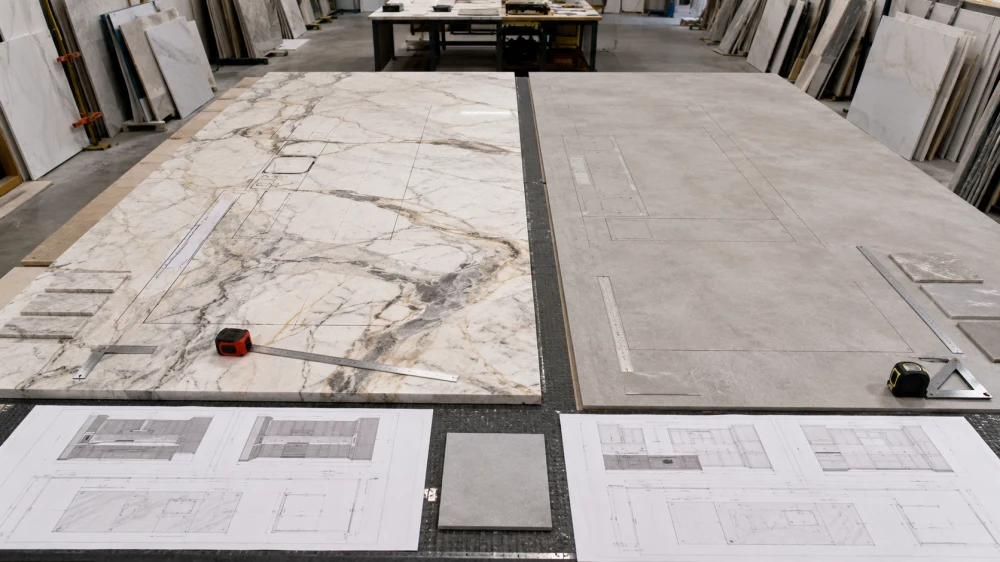
quarzit-porzellan-kücheninsel-layout-planung
Verwenden Sie einen Käufer‑Workflow, der überprüfbar ist
1. Übersetzen Sie den Brief in messbare Fragen
Listen Sie Raum, Element, Dickenpräferenz, fertige Abmessungen, Kantenprofil, Ausschnittplan, Fugenstandorte, Oberflächenbearbeitung und Lieferziel auf. Wenn die Zeichnungen noch in Entwicklung sind, markieren Sie, was vorläufig ist. Das ist nützlicher, als nach einer pauschalen Behauptung zu fragen, ob natürlicher Quarzit oder Porzellanplatte immer besser sei. So kann das Gespräch über das Material anschließend den konkreten Projektbeschränkungen folgen.
2. Trennen Sie die visuelle Freigabe von Leistungsannahmen
Natürlicher Quarzit kann eine charakteristische natürliche Optik bieten, doch der Käufer sollte daraus keine unbewiesene Zusage für jeden kommerziellen Steinamen oder jede Installation ableiten. Besprechen Sie sichtbare Merkmale, Ausrichtung, Buchmatching und zulässige Abweichungen mit den Personen, die das Design freigeben. Diskutieren Sie Nutzungsbedingungen, Wartungsplanung, Installationsdetails und alle erforderlichen Projektunterlagen mit den zuständigen Fachkräften.
3. Erstellen Sie eine schriftliche Vergleichsakte
Eine kompakte Matrix erleichtert die interne Freigabe. Dokumentieren Sie die beabsichtigte Anwendung, das visuelle Ziel, die gewünschte Oberflächenbearbeitung, Fertigungseinschränkungen, Inspektionsschritte, Packungsbedürfnisse und Lieferanforderungen. Außerdem hilft dies, zu vermeiden, dass ein Materialvergleich als reine Preisentscheidung behandelt wird. Wo eine Behauptung Tests, Zertifizierungen oder lieferantenspezifische Nachweise erfordert, fordern Sie diese Dokumente beim jeweiligen Verantwortlichen an, statt sich auf allgemeine Aussagen zu verlassen.
Bewerten Sie die Koordination von Fertigung und Installation
Das Gespräch über die Fertigung sollte auf Basis der aktuellen Zeichnungen und eines klaren Zeitplans für Öffnungen, Rückläufe, Kanten und Übergänge beginnen. Bestätigen Sie die fertigen Abmessungen und die Verantwortlichkeit für die Messungen, bevor mit dem Zuschneiden begonnen wird. Ein Verarbeiter sollte das ausgewählte Material, die Dicke, die Oberflächenbearbeitung, die Geometrie, die Handhabung sowie die erforderlichen Stützmaßnahmen für das jeweilige Projekt gründlich prüfen. Verwenden Sie keine allgemeinen Empfehlungen als Garantie für ein anderes Layout oder andere Standortbedingungen.
Installateure und Bauunternehmer sollten Substratbereitschaft, Zugang, Reihenfolge, Schutzmaßnahmen, Fugenbehandlung und Übergabe abstimmen. Sollte das Projekt besondere Bedingungen erfordern, sollten diese schriftlich im Leistungsverzeichnis festgehalten und mit den zuständigen Fachkräften abgestimmt werden. Eine gute Koordination macht aus einem Materialvergleich eine umsetzbare Projektentscheidung.
Berücksichtigen Sie Reinigung, Wartung und betriebliche Nutzung
Betriebsteams benötigen einen praktischen Pflegeplan, der zum ausgewählten Material und zur Oberflächenbearbeitung passt. Definieren Sie die erwartete Nutzung, Reinigungsfrequenz, Reinigungsprodukte, Zuständigkeiten des Personals sowie Schutzmaßnahmen während der Innenausbauarbeiten. Natürlicher Quarzit und Porzellanplatte dürfen nicht automatisch dieselben Pflegeanforderungen haben, nur weil sie ähnliche Anwendungsbereiche aufweisen. Bitten Sie um fachgerechte Beratung, die auf die bestätigte Auswahl abgestimmt ist, und lassen Sie diese vom Eigentümer oder Betreiber in die Übergabedokumentation einfließen.
Eine durchdachte Wartungsdiskussion legt außerdem die Verantwortung für Risiken fest. Der Käufer kann die beabsichtigte Nutzung festlegen; das Planungs- und Technikteam kann die relevanten Leistungskriterien benennen; und die zuständigen Lieferanten können je nach Verfügbarkeit einschlägige Projektunterlagen bereitstellen. Das ist zuverlässiger als eine allgemeine Aussage zur Haltbarkeit ohne konkreten Kontext.
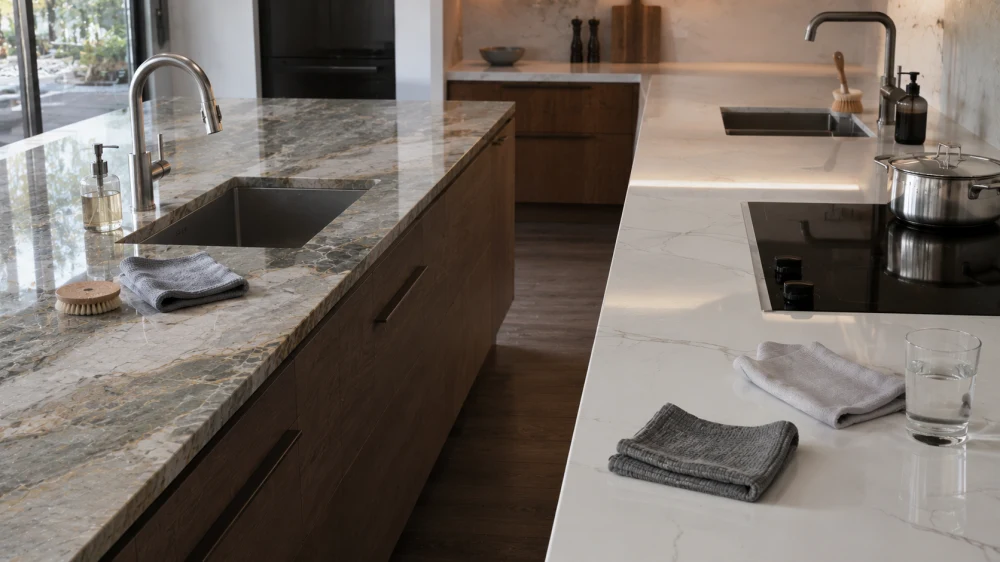
quarzit-porzellan-küche-wartung-vergleich
Erstellen Sie ein Genehmigungspaket vor der endgültigen Festlegung
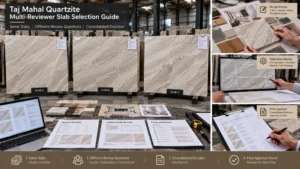
Ein kompaktes Genehmigungspaket enthält normalerweise die Materialbeschreibung, Farb- oder Oberflächenabsichten, Zeichnungen, endgültige Abmessungen, Details zu Kanten und Fugen, Protokolle zur Muster- oder Plattenprüfung, Notizen zum Layout, falls erforderlich, Verpackungsanforderungen, Zielort der Lieferung sowie Ansprechpartner für die Unterschrift. Halten Sie die Änderungsdaten stets sichtbar. Ändert sich das Projekt nach der Genehmigung, wiederholen Sie den betroffenen Prüfschritt, statt anzunehmen, dass die ursprüngliche Genehmigung die überarbeitete Geometrie abdeckt.
Bei grenzüberschreitender Beschaffung sollten Sie frühzeitig nach den Informationen fragen, die für das Zielland und den Transportplan benötigt werden. HRST STONE kann eine Anfrage im Kontext der gewünschten natürlichen Quarzitauswahl und der Projektangaben prüfen. Jegliche kommerziellen Bedingungen, Verfügbarkeit, Tests, Zertifizierungen oder Lieferverpflichtungen sollten separat für die jeweilige Anfrage bestätigt werden.
Entscheidungsdetails für Projektteams
Definieren Sie das Nutzungsszenario
Notieren Sie, was nach der Übergabe an der Oberfläche geschehen soll. Berücksichtigen Sie dabei den Raum, die Nutzergruppe, gegebenenfalls den Kontakt mit Lebensmitteln oder Wasser, die Reinigungsverantwortung, benachbarte Gewerke, den Verkehr rund um das Bauteil sowie die Frage, ob die Oberfläche hauptsächlich visuell wahrgenommen oder aktiv genutzt wird. Dies ersetzt keine technische Bewertung, bietet jedoch dem Planungs-, Fertigungs- und Beschaffungsteam einen gemeinsamen Ausgangspunkt. Je konkreter das Szenario, desto leichter lassen sich sinnvolle Fragen zu natürlichem Quarzit und Porzellanplatten stellen, statt sich auf einen allgemeinen Ruf des Materials zu verlassen.
Bestätigen Sie die visuellen Kontrollpunkte
Sichtbare Entscheidungen bezüglich Stein profitieren von einer benannten Genehmigungsinstanz und einer schriftlichen Reihenfolge. Legen Sie fest, ob das Projekt eine Kontrollprobe, Plattenbilder, eine persönliche Begutachtung, einen Layoutvorschlag oder ein Mock-up benötigt. Geben Sie an, welche Seite eines Elements die Ansichtsseite ist, in welche Richtung die Bewegung erfolgen soll, wo Fugen liegen können und welche Variation akzeptabel ist. Bei einem hergestellten Vergleichsmaterial sind Produktgestaltung und Ausrichtung ebenso sorgfältig zu definieren. So wird aus einer ästhetischen Präferenz ein Genehmigungsprotokoll, das bereits vor dem Schneiden oder der Installation diskutiert werden kann.
Trennen Sie Auswahl und Fertigung
Ein Material mag in einer Probe ansprechend wirken, erfordert jedoch möglicherweise einen anderen Fertigungsansatz für die gewählte Geometrie. Stellen Sie dem Fertiger die aktuellsten Zeichnungen sowie einen Zeitplan für Kanten, Gehrungen, Löcher, Ablaufschalen, Rückläufe, Nähte, Radien und Tragbedingungen zur Verfügung. Bitten Sie den verantwortlichen Fertiger, die projektspezifischen Auswirkungen zu prüfen. Ein Einkäufer sollte vermeiden, eine allgemeine Blog‑Aussage in eine Fertigungsanweisung umzuwandeln. Die Materialauswahl, das endgültige Design und die Fertigungsprüfung sind miteinander verbunden, aber unterschiedliche Entscheidungen.
Machen Sie Beschaffungsinformationen nutzbar
Eine Anfrage lässt sich leichter prüfen, wenn sie bestätigte Fakten von offenen Fragen trennt. Nennen Sie den Materialnamen oder die Vergleichsroute, die Abmessungen, die Menge, die Oberflächenbearbeitung, Zeichnungen, den Lieferort sowie den gewünschten Zeitpunkt, sofern bekannt. Kennzeichnen Sie, ob das Projekt eine Probenbegutachtung, eine Packpräferenz, eine Layout‑Eingabe oder einen formellen Genehmigungs‑Checkpunkt benötigt. Dies hilft Josh und dem HRST STONE‑Team, die Anfrage zu verstehen, ohne unbestätigte Angaben zu Lagerbestand, Preis, Herkunft, Zertifizierung, Prüfung oder Lieferbedingungen einzubringen.
Weisen Sie bei Schnittstellen Verantwortlichkeiten zu
Die meisten vermeidbaren Probleme entstehen zwischen verschiedenen Leistungsbereichen: Planungsgenehmigung, Vermessung, Fertigung, Transport, Baustellenzugang, Montage und Reinigung. Legen Sie fest, wer für jeden einzelnen Prüfpunkt verantwortlich ist und wie Änderungen kommuniziert werden. Der Architekt oder Designer kann die visuelle Freigabe innehaben; der Fertiger die Schnitt‑Details; der Auftragnehmer die Koordination von Untergrund und Zugang; der Einkäufer die Kontrolle über die Bestellunterlagen. Eine einfache Verantwortlichkeitsliste schafft mehr Wert als eine generische Aussage, dass ein Material einem anderen überlegen sei.
Halten Sie den abschließenden Vergleich ehrlich
Es gibt keinen Ersatz für eine projektspezifische Bestätigung, wenn eine Anforderung kritisch ist. Benötigt ein Team eine bestimmte Leistung, ein Compliance‑Dokument, eine kommerzielle Klausel oder eine Installationsmethode, sollte es diese Informationen bei den verantwortlichen Parteien anfordern und zusammen mit der Projektdokumentation aufbewahren. Dieser Leitfaden unterstützt ein diszipliniertes Gespräch unter Einkäufern über natürlichen Quarzit und Porzellanplatten. Er erhebt nicht den Anspruch, universelle Ergebnisse für jeden Steinnamen, jedes Produkt, jede Gestaltung oder jede Baustellenbedingung zu liefern.
Praktische Prüfungen vor Auftragsbestätigung
Bevor ein Auftrag weiterbearbeitet wird, vergleichen Sie die aktuellste Anfrage mit den neuesten Zeichnungen. Prüfen Sie, ob sich Mengenangaben, Maße, Dickenwünsche, Oberflächenbeschaffenheit, Kanteninformationen, Ausschnittsdaten sowie der Lieferort seit dem vorherigen Gespräch geändert haben. Sollten Änderungen vorliegen, klären Sie, ob auch die visuelle Freigabe, die Fertigungsprüfung, die Verpackung oder die Transportplanung entsprechend aktualisiert werden müssen. Diese sorgfältige Überprüfung ist sowohl bei Naturquarzit als auch bei Porzellanplatten hilfreich, da Projektinformationen nach dem ersten Auswahlgespräch häufig weiterentwickelt werden.
Verwenden Sie bei Freigaben einfache, klare Sprache. Eine kurze Notiz, die das genehmigte Material, den zuständigen Freigebenden, die Zeichnungsrevision sowie offene Punkte nennt, hilft dem Team, akzeptierte Details von Annahmen zu unterscheiden. Bleibt eine Information vorläufig, kennzeichnen Sie sie entsprechend. So schützen Sie alle davor, eine Marketingbeschreibung, ein vorläufiges Bild oder einen allgemeinen Artikel als endgültige Projektanweisung zu betrachten.
Schließlich sollten Sie die Entscheidung an die wirklichen Prioritäten des Auftraggebers knüpfen. Ein Projekt mag natürliche Bewegung, einen bestimmten visuellen Rhythmus, ein spezifisches Produktsystem, praktische Aspekte der Fertigung, einen Reinigungsplan oder einen bestimmten Beschaffungsworkflow wertschätzen. Die gewählte Lösung sollte diesen Prioritäten entsprechen, wie sie für das Projekt dokumentiert wurden. HRST STONE kann dann eine Anfrage zu Naturquarzit mit Josh anhand klarer Angaben statt Vermutungen prüfen.
Eine sinnvolle Abschlussprüfung stellt jeweils eine Frage aus jeder Disziplin. Der Planer kann bestätigen, dass das genehmigte Erscheinungsbild weiterhin zum Raumkonzept passt. Der Verarbeiter kann sicherstellen, dass Geometrie und Details gemäß den aktuellen Zeichnungen umsetzbar sind. Der Bauunternehmer kann prüfen, ob Installationsschritte und Baustellenbedingungen berücksichtigt wurden. Der Käufer kann überprüfen, ob Anfrage und Freigabeprotokoll denselben Umfang festlegen. Diese Gegenprüfung fügt keine unnötige Komplexität hinzu; sie macht die Materialwahl verständlich, nachvollziehbar und bereit für den nächsten Projektschritt. Zudem bietet sie dem Team einen dokumentierten Moment, um offene Fragen anzusprechen, bevor Fertigung oder Baustelle Änderungen erschweren. Teams können diese Abschlussprüfung ihrem internen Freigabeprotokoll beifügen und während Beschaffung, Fertigungsabstimmung und Übergabegesprächen darauf zurückgreifen. So wird eine bessere Nachverfolgung unterstützt.
Checkliste für den Vergleich von Küchenarbeitsplatten
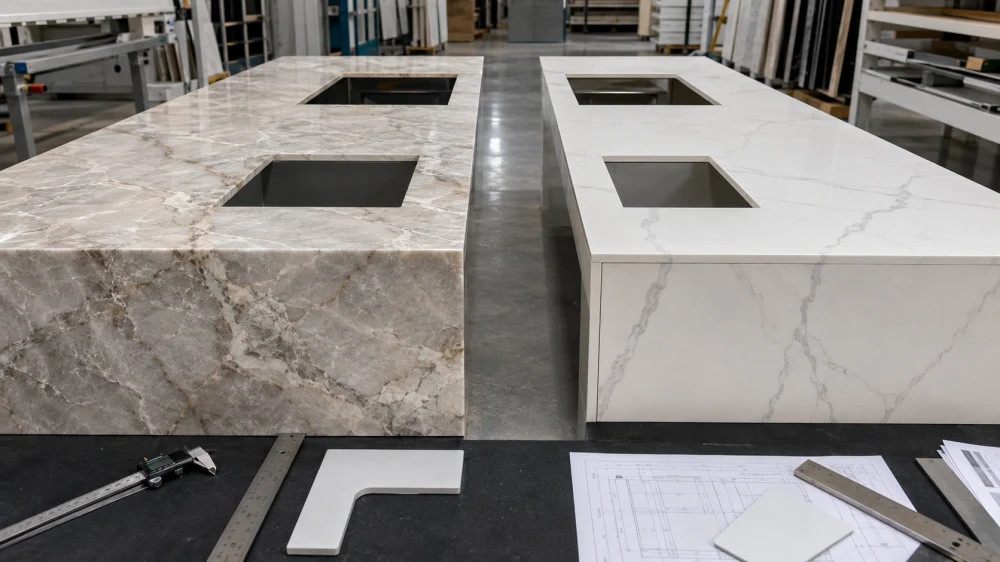
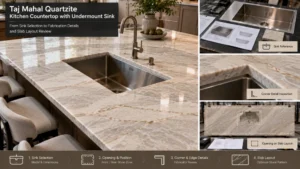
Küchenarbeitsplatten sind ein anschauliches Beispiel dafür, dass eine einfache Materialrangierung irreführend sein kann. Das Projektteam sollte klären, ob das Hauptelement eine Insel, eine Randarbeitsplatte, eine Rückwand, ein integrierter Tisch, eine Bar oder eine Kombination davon ist. Jedes dieser Elemente kann unterschiedliche visuelle, dimensionale, Fugen-, Zugangs- und Montageaspekte aufweisen. Die Zeichnungen sollten Öffnungen für Geräte, Spülen, Armaturen, Überstände, Stützen, Wandbeschaffenheiten sowie die Schnittstellen zu Schränken und anderen Oberflächen darstellen. Die Auswahl kann anschließend im Rahmen eines konkreten Fertigungspakets diskutiert werden.
Bei der Variante aus natürlichem Quarzit fragen Sie, wie der ausgewählte Stein visuell geprüft wird und wie sich die Bewegung zwischen den einzelnen verbundenen Teilen gestaltet. Bei der Variante mit Porzellanplatten erkundigen Sie sich, wie Produktmuster, Ausrichtung, Format und Fugenplanung bewertet werden. In beiden Fällen sollten Sie klären, wer die endgültige Verantwortung für die Maßangaben trägt und wann die Baustelleninformationen als vollständig gelten. So vermeiden Sie, dass der Einkäufer ein frühes Konzept wie eine endgültige Fertigungszeichnung abnimmt.
Kosten, Design, Leistung und Beschaffung sind miteinander verbunden, sollten jedoch nicht auf eine unbestätigte Behauptung reduziert werden. Nutzen Sie den Anfrageprozess, um den konkreten Umfang zu klären und bei Bedarf projektspezifische kaufmännische oder technische Informationen anzufordern. Halten Sie diese Bestätigungen getrennt von diesen allgemeinen Hinweisen. Ein transparenter Nachweis ermöglicht es der Beschaffung, die tatsächlichen Angebote und Entscheidungen anhand desselben Leistungsverzeichnisses zu vergleichen.
Während der Entwurfsentwicklung dokumentieren Sie das Profil der Arbeitsplattenkante, die Rückführung der Rückwand, die Fugenbearbeitung, die Entwässerungsdetails sowie etwaige spezielle Übergänge zu anderen Materialien. Diese Details beeinflussen die Gespräche mit dem Hersteller und dem Installateur. Wenn das Küchenkonzept mehrere Räume oder wiederholte Einheiten umfasst, legen Sie fest, welche Details standardmäßig vorgesehen sind und welche individuell angefertigt werden. Eine einheitliche, strukturierte Dokumentation erleichtert einen fairen Vergleich zwischen natürlichem Quarzit und Porzellanplatten und hält das Projektteam fokussiert auf das genehmigte Zeichnungspaket.
Vor der Übergabe können Auftragnehmer und Eigentümer den Schutz- und Pflegeprozess für die ausgewählte Oberfläche abklären. Reinigungshinweise sollten von der jeweils zuständigen Quelle für das bestätigte Material und die Oberflächenbehandlung stammen. Notieren Sie den Kontaktweg für spätere Rückfragen und bewahren Sie die endgültigen Genehmigungsdokumente zusammen mit der Projektdatei der Küche auf. Dieser ordentliche Abschluss ist sowohl für Hausbesitzer, Betreiber, Planer als auch für Beschaffungsteams wertvoll, da er die ursprüngliche Auswahlentscheidung mit dem installierten Ergebnis verknüpft.
Die endgültige Wahl sollte in der Projektdokumentation weiterhin sichtbar bleiben. Nennen Sie die genehmigte Materialkategorie, den ausgewählten Namen oder das Produkt, die Anforderungen an die Oberfläche, die Revision der Zeichnung sowie etwaige spezielle Layouthinweise. Wird später eine Substitution oder eine Änderung des Designs vorgeschlagen, kehren Sie zum Genehmigungsworkflow zurück und legen Sie fest, was erneut geprüft werden muss. Diese einfache Disziplin hilft allen Beteiligten, die aktuelle Entscheidung nachvollziehen zu können, und verringert das Risiko, sich auf veraltete Annahmen zu verlassen. Zudem bietet sie eine klare Referenz, wenn Projektteams später Beschaffungsmeilensteine, Fabrikgespräche, Lieferplanungen und die abschließende Installationskommunikation koordinieren. Bewahren Sie alle aktuellen Unterlagen für die zuständigen Projektansprechpartner zugänglich auf.
Fragen, die Käufer vor der Freigabe klären sollten
1. Ist natürlicher Quarzit dasselbe wie Porzellanplatte für Küchenarbeitsplatten?
Nein. Natürlicher Quarzit ist ein Naturstein, während eine Porzellanplatte ein künstlich hergestelltes Oberflächenmaterial ist. Bei einem Küchenprojekt sollten die erforderliche Kategorie und das gewählte Finish klar angegeben werden.
2. Welche visuellen Details sollten vor der Fertigung genehmigt werden?
Genehmigen Sie das ausgewählte Material oder Produkt, die Oberflächenbearbeitung, die Ausrichtung, die Verbindungen, die Nahtstellen, die Kanten, Ausschnitte, Rückläufe sowie alle Layouthinweise, die das beabsichtigte Erscheinungsbild der Küche beeinflussen.
3. Sollten Kosten der einzige Vergleichspunkt sein?
Nein. Vergleichen Sie den gesamten Projektumfang, einschließlich der Materialauswahl, der Fertigungsdetails, der Koordination der Installation, der Genehmigungsverfahren, der Pflegeplanung, der Verpackungsanforderungen sowie des Lieferortes.
4. Was muss ein Hersteller prüfen?
Ein Fertiger benötigt aktuelle Zeichnungen, Endmaße, Materialstärke, Kantenprofile, Ausschnitte, Nähte, Lagerungsbedingungen, Handhabungseinschränkungen sowie die bestätigte Material- oder Produktauswahl.
5. Was sollten Einkäufer an Josh bei HRST STONE senden?
Senden Sie den Namen des natürlichen Quarzitmaterials, die Abmessungen, die Menge, Zeichnungen, die geforderte Oberflächenbeschaffenheit, die vorgesehene Küchenanwendung sowie das Lieferziel, um eine praktische Anfrage zu prüfen.
Schlussbemerkung
Der ultimative Leitfaden zum Vergleich von Quarzit und Porzellanplatten für Küchenarbeitsplatten – Kosten, Design, Leistung und Beschaffung – sollte anhand des Projektbriefs, der Muster- und Plattenprüfungen, der Fertigungsbesprechungen sowie schriftlicher Genehmigungsschritte entschieden werden. Ein sorgfältiger Vergleich ist zuverlässiger als eine pauschale Materialbehauptung.
Besprechen Sie Ihren Bedarf an natürlichem Quarzit mit Josh
Kontaktieren Sie Josh bei HRST STONE und nennen Sie den Materialnamen, die Abmessungen, die Menge, entsprechende Zeichnungen, die gewünschte Oberflächenbearbeitung sowie den Lieferort. Geben Sie zudem die beabsichtigte Anwendung sowie etwaige Genehmigungs- oder Verpackungsanforderungen an, damit Ihre Anfrage in einer praxisorientierten Reihenfolge geprüft werden kann.
Copyright (c) HRST STONE / XIAMEN HRST STONE CO., LTD.
Hi, I am the author of this article. I have been working in the field of Natural Stone for more than 15 years. If you need customized Natural Stone services, please feel free to contact me.