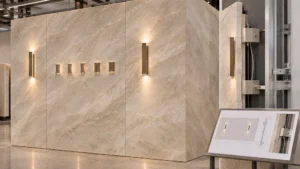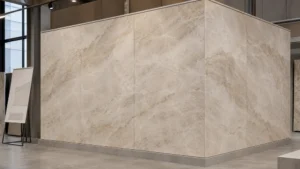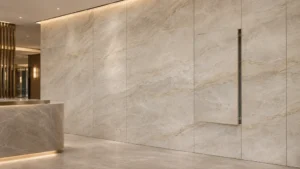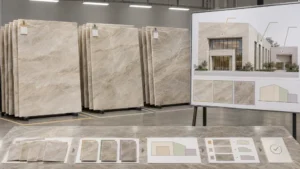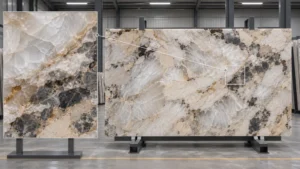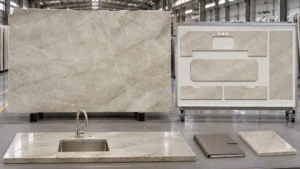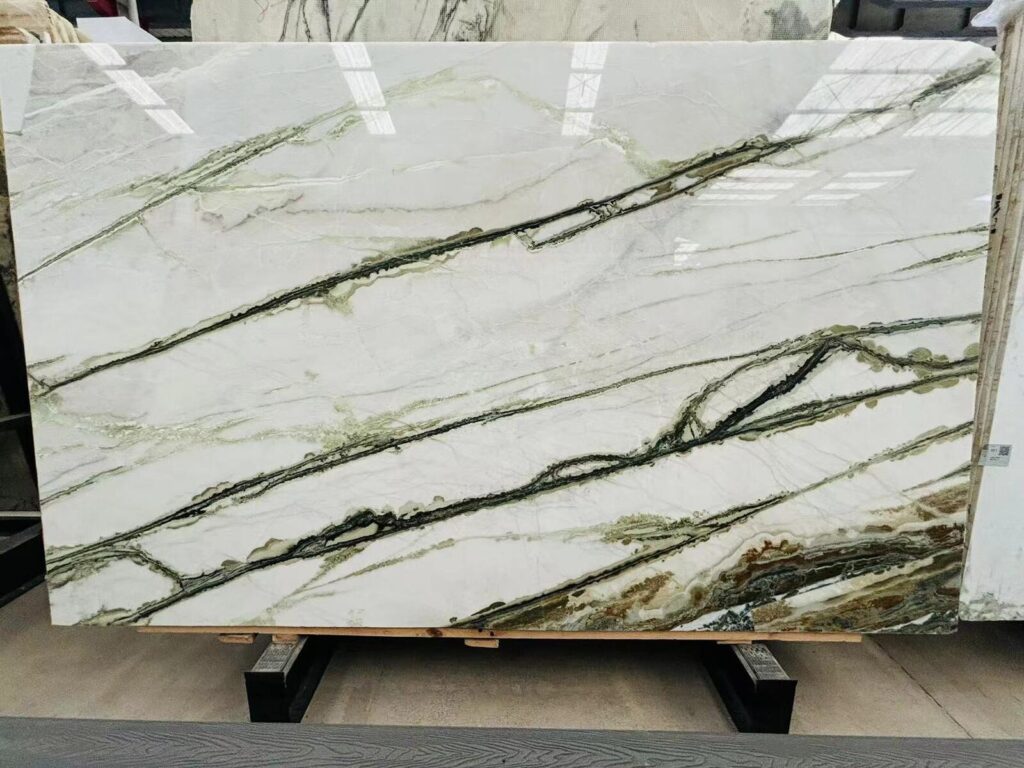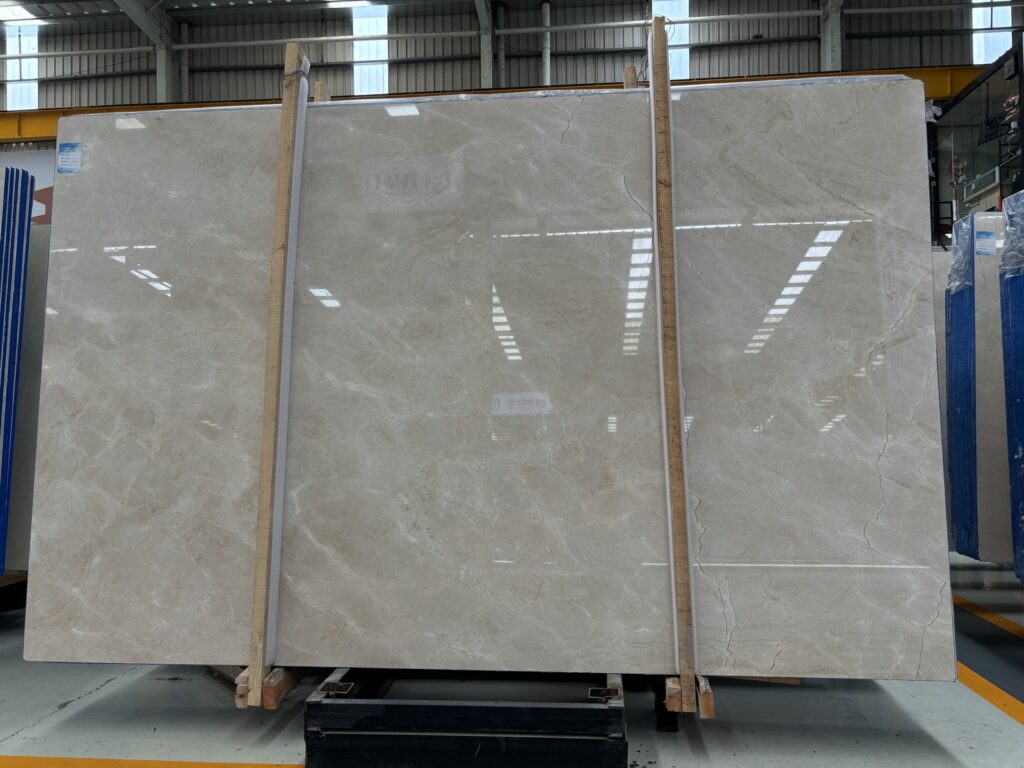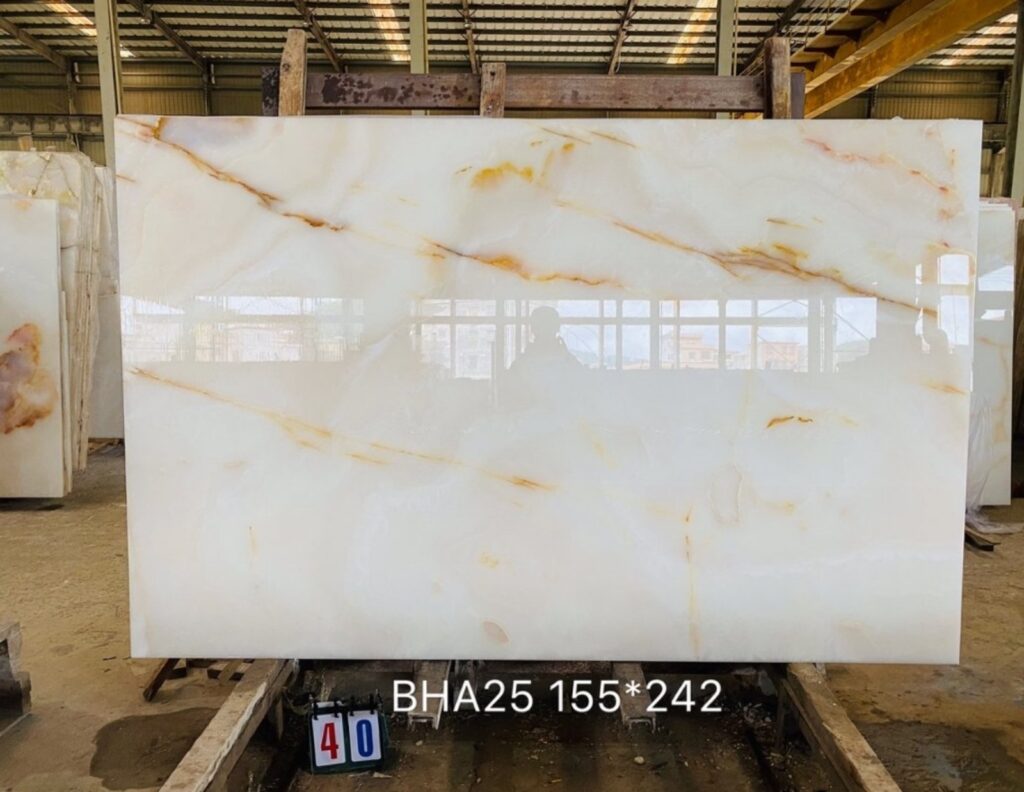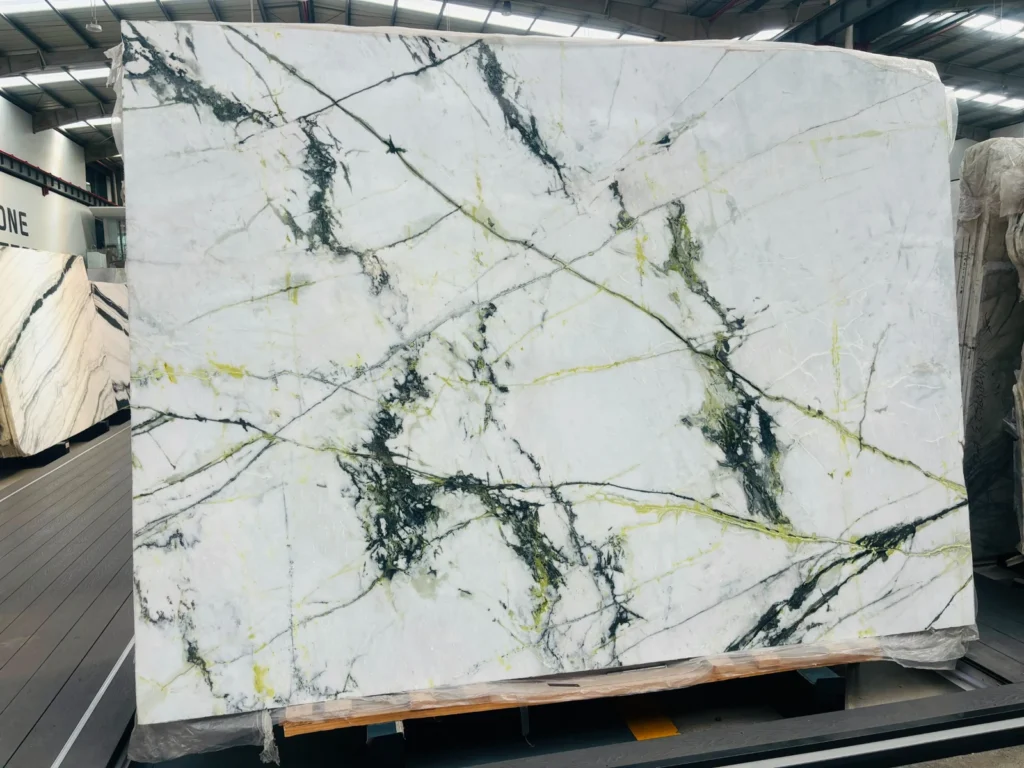

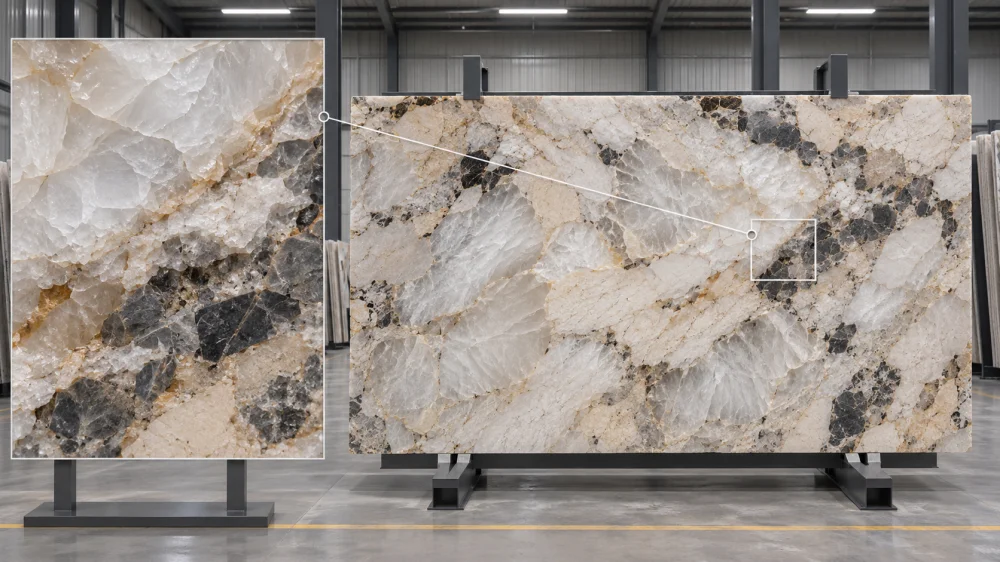
Quartzite texture close-ups are useful for showing local mineral structure, surface finish, repairs and other small details, but a macro photograph should not be treated as a complete representation of the slab. Close framing removes scale and location, while short shooting distance, shallow depth of field and directional light can make very small texture differences visually dominant. A useful remote review therefore connects every important close-up to a wider context image, a scale reference where needed, the complete slab and the actual project application.
Kurze ZusammenfassungA macro photograph answers “What does this small area look like up close?” It does not automatically answer “How does the whole Quartzite slab look?” or “Will this feature dominate the finished project?” Review texture close-ups together with a wider surface photograph, physical scale where useful, complete slab imagery and the expected viewing distance. Keep finish texture, natural mineral structure, photographed lighting and actual project significance separate so a dramatic close-up does not become an unsupported slab-level conclusion.
A Quartzite macro photo is a close or highly enlarged photograph used to document a small area of the natural stone surface in greater visual detail than a normal full-slab image.
It can be extremely useful.
It can also remove almost all context.
A tiny crystal boundary, subtle leathered relief, resin-filled point or naturally textured mineral zone may fill an entire phone screen even though it occupies only a small portion of a full slab.
The question is therefore not whether close-ups should be used.
Sondern:
What decision is this close-up actually qualified to support?
Close-up photography is intentionally designed to emphasize small visual details.
When the camera moves very close to the stone, small ridges, crystal boundaries, polish differences, pits and mineral transitions occupy a much larger percentage of the final image.
That changes visual emphasis.
A feature that appears subtle from normal standing distance may become the dominant subject in the photograph.
Lighting can intensify this effect.
Low or directional light creates highlights on raised areas and shadows in recessed areas. This can be useful when the purpose is to reveal texture, but it can also make a mild tactile difference look much deeper than it appears under general interior lighting.
The photograph may be accurate as a close-up while still being misleading as a representation of the complete material.
Macro-Photo RuleA close-up can be visually truthful and contextually misleading at the same time.
Use it to understand local detail. Do not automatically use it to judge the visual dominance of that detail across the whole slab or finished room.
A targeted detail photograph is useful when one specific local question needs to be reviewed.
Beispiele hierfür sind:
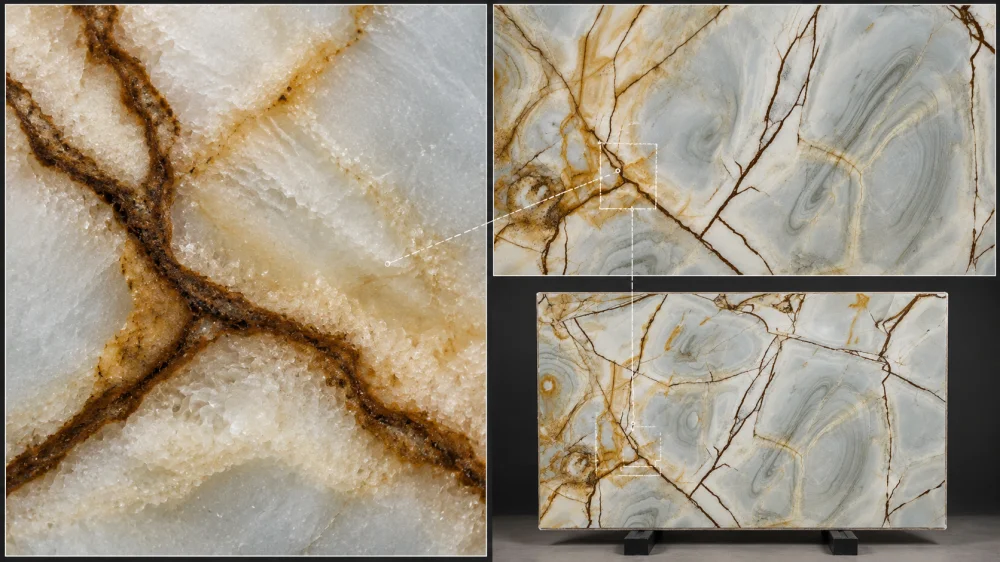
In these situations, the close-up does something that the full-slab image cannot do well.
It gives enough detail for the reviewer to describe the visible condition more precisely.
The mistake occurs when the detail photograph becomes disconnected from its location and scale.
A close-up typically removes several pieces of information that matter to a buyer.
| Informationen | Macro Photo | Better Evidence |
| Exact slab location | Often unclear | Full-slab reference + condition ID |
| Physical scale | Usually absent | Nearby scale reference |
| Overall slab movement | Cannot establish | Vollständiges Plattenfoto |
| Feature frequency | Cannot establish reliably | Wider views across several slab areas |
| Project significance | Usually unknown | Cutting layout / installed context |
| Normal viewing appearance | Can overemphasize detail | Normal-distance surface / project image |
This is why a dramatic close-up should trigger a context request, not an immediate slab-level conclusion.
Without scale, the buyer may not know whether the photograph covers 20 mm of stone, 100 mm or a much larger section.
This matters when evaluating:
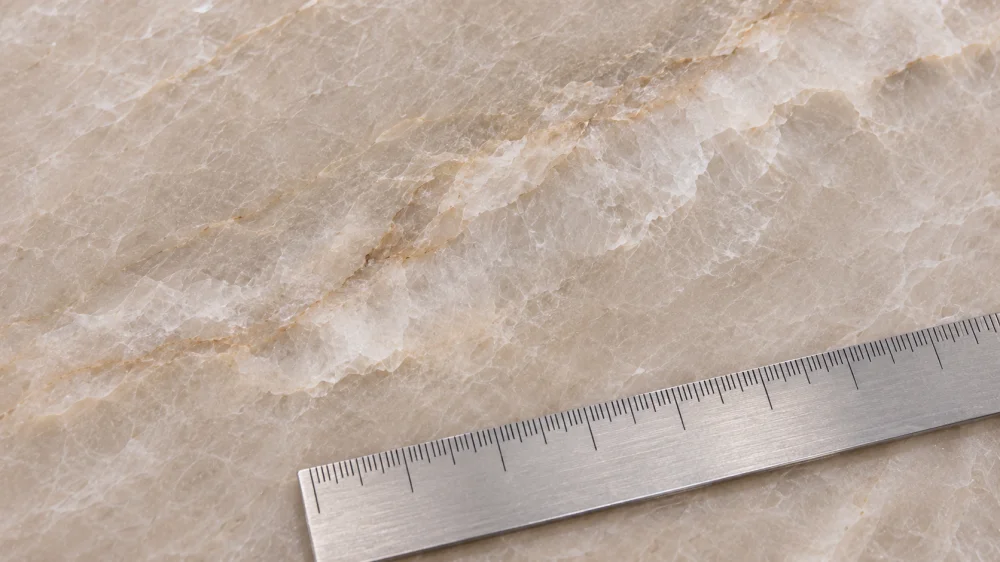
Where physical size affects the decision, include a ruler or other controlled scale reference close to the observed feature.
The scale should support visual understanding rather than become an improvised fabrication measurement.
A useful sequence is:
Close Detail → Detail + Scale → Wider Context → Full Slab
If the project also requires an exact measurement, obtain that measurement separately.
A close-up is strongest when its source remains obvious.
Zum Beispiel:
Board TM-218 → Condition C-04 → Full-Slab Location → Detail Photo P-04
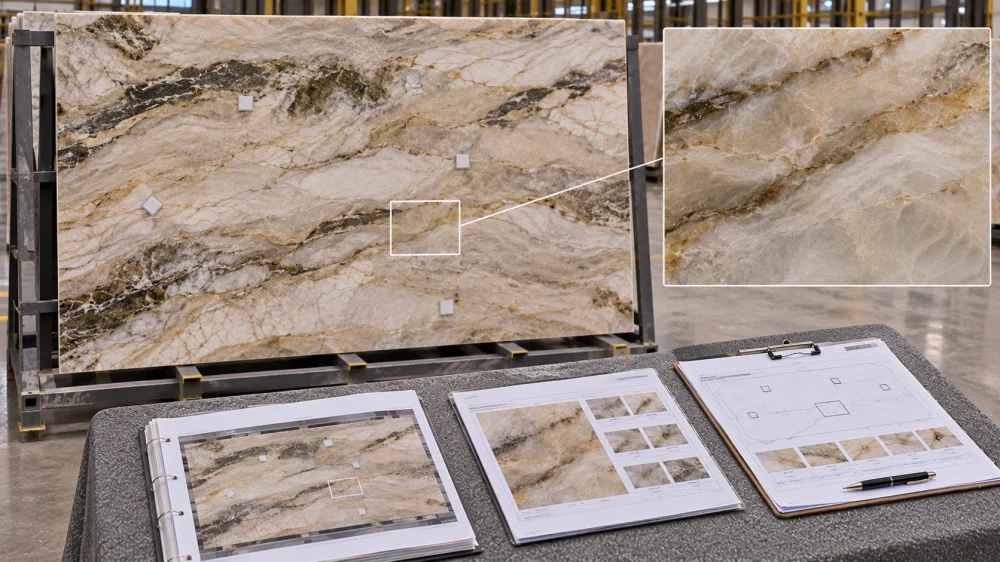
Now the buyer knows:
which physical slab is being discussed, where the observation is located and which detailed photograph belongs to it.
Die Baustelle’s Quartzite slab condition-map guide uses this exact two-scale principle:
LEVEL 1 — Full-Slab Reference
shows location.
LEVEL 2 — Detail Image
shows local appearance.
One should not replace the other.
Context ChainBoard ID → Full Slab → Marked Location → Wider Context → Macro Detail
If one link is missing, the buyer may understand the detail while losing its importance to the complete slab.
Yes, particularly when terminology is assigned before context is restored.
A very close image may show a line, filled area, pore, mineral boundary or surface irregularity in great detail.
The photograph alone may not establish whether the condition is:
Describe what is visible first.
Zum Beispiel:
“Visible linear condition with local colour change across the photographed area.”
is stronger than:
“Major crack in the slab.”
unless the available evidence actually supports that classification.
The next useful question is often location:
Where is this condition relative to the finished component?

A feature positioned completely inside a sink opening asks a different project question from the same feature crossing the narrow bridge beside that opening.
Texture is especially sensitive to light direction.
Broad frontal light reduces shadows and can make a textured finish look relatively flat.
Low-angle light creates stronger highlights and shadows across small surface relief.
Neither photograph is automatically wrong.
They answer different questions.
| Photo Condition | Useful For |
| Neutral frontal light | General colour and overall finish appearance |
| Low-angle / raking light | Surface relief, polishing marks and local texture |
| Strong direct reflection | Sheen behavior, but may obscure colour |
| Backlight where relevant | Project-specific translucent areas only |
For a finish dispute, use more than one lighting condition rather than selecting only the photograph that makes the texture look strongest.
Close photography often produces a shallow depth of field.
Only a narrow zone may appear sharply focused while areas slightly closer or farther from the lens become soft.
This creates visual emphasis.
The sharp crystal ridge or texture peak can attract most of the viewer’s attention while surrounding material becomes blurred.
That can be useful when documenting one specific surface condition.
It is less useful when the buyer is trying to judge overall surface uniformity.
For technical texture review, try to keep the camera reasonably parallel to a flat sample where practical and include at least one image with sufficient depth of field to show a broader surface area clearly.
Do not use deliberate artistic blur as the only evidence for a production finish approval.
Whenever the decision concerns how the finish or feature will actually read in the project.
Consider a leathered Quartzite reception counter.
A macro image can show individual textured mineral zones.
A normal-distance photograph can show whether those differences combine into a visually calm or strongly textured overall surface.
Similarly, a detail image of a Patagonia Quartzite crystal boundary may look extremely dramatic.
A wider photograph may show that the same area occupies a small portion of a complex slab.
Use both.
Eine praktische Reihenfolge lautet:
Macro Detail → 300–600 mm Context Area → Larger Surface → Full Slab → Installed / Mock-Up View Where Required
The exact photograph distances do not need to be standardized universally.
The point is to move progressively from local detail back to the actual viewing context.
Usually not.
Natural Quartzite can contain several mineral zones within one physical board.
The local surface response of one area may differ from another because the mineral structure itself changes.
This is particularly important with materials that contain:
A close-up should therefore be described as:
“Detail from this identified slab location.”
rather than:
“This is exactly how the entire slab surface looks.”
Natural Stone Institute selection guidance treats samples, visual appearance and full material selection as related but separate issues because natural stone inherently varies.
A useful remote slab package does not need dozens of images.
It needs the correct hierarchy.
Der bestehende Showroom-Auswahlhilfe für Quarzitplatten recommends keeping targeted close-ups connected to complete identified slab photographs rather than creating an anonymous camera roll of stone details.
A practical photo package is:
Shows which physical slab is under review.
Shows overall tone, movement and major mineral areas.
Shows where the local feature sits within a meaningful slab section.
Shows the local texture or condition.
Shows approximate physical scale.
Shows whether that observed slab area falls inside an island, waterfall, cutout, waste zone or another finished component.
This gives each photograph one clear job.
A macro photo can be an excellent communication tool when one surface condition needs fabricator attention.
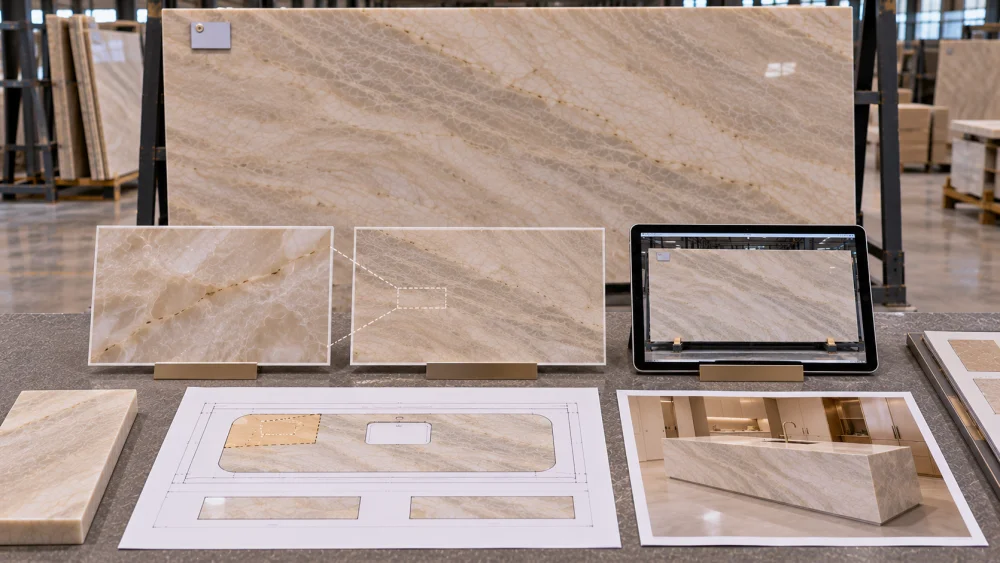
But it should remain tied to the current piece and drawing.
Die Baustelle’s guide to briefing a Quartzite fabricator with annotated photos uses a useful hierarchy:
Master Context View → Material / Layout View → Fabrication Detail → Exception View Only Where Needed
For a macro photograph, add:
Zum Beispiel:
Useful Texture-Photo BriefSlab: Identified project board
Standort: C-04 on current full-slab reference
Beobachtung: Locally stronger surface relief visible in the marked mineral zone under low-angle light
Project Position: Proposed vanity top
Request: Please confirm whether the production finish will maintain this local texture relationship and return a wider finish photograph before final approval.
This is more useful than sending the macro photograph alone with:
“Is this normal?”
It can make small surface relief visually much more prominent because the photograph enlarges a small area and may use directional lighting that emphasizes highlights and shadows. The photograph may accurately show the detail while still overstating its importance to the normal overall view.
Not from the close-up alone. First identify the actual slab, location, physical scale and nature of the visible condition. Then compare it with wider slab views and the proposed finished-piece position before deciding what further review is required.
Scale helps the buyer understand whether the photographed feature is physically small or large. Use the scale for visual context rather than treating an ordinary photograph as a precise fabrication measurement.
Usually not. Natural Quartzite can contain different mineral zones and visual conditions within the same board. Keep the close-up linked to its actual slab location and review complete slab imagery before making slab-level conclusions.
Lighting direction changes the visibility of surface relief and reflection. Low-angle light can emphasize ridges and recesses, while broad frontal light can make the same surface appear flatter. Use comparable lighting when reviewing finish differences.
Yes, especially for texture, sheen, local processing and edge details, but pair them with wider photographs. A highly magnified image should not be the only evidence used to judge the overall appearance or uniformity of a production finish.
Ask for the current board ID, complete slab image, wider context photograph, targeted macro image, scale reference where physical size matters, finish information and a current project layout where the location of the observed area affects the fabrication decision.
Photo Review TakeawayA Quartzite close-up should increase detail without destroying context.
Use macro photography to understand local texture and mineral structure. Then step back: restore physical scale, show the wider surface, identify the location on the full slab and compare the observation with the actual finished-piece position. A dramatic detail deserves context before it becomes a purchasing or fabrication conclusion.
Buyer Next Step: Whenever a close-up raises a concern, ask for the corresponding wider view and full-slab location before accepting or rejecting the material.