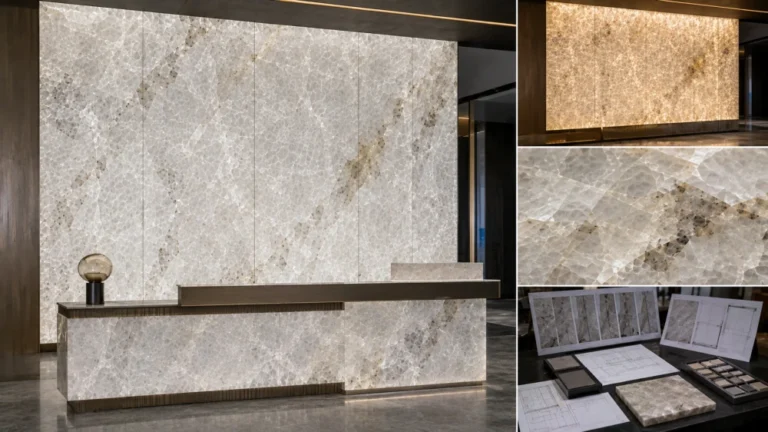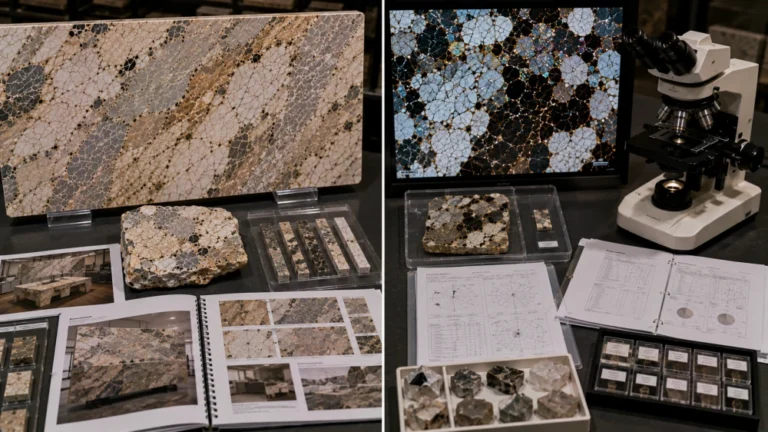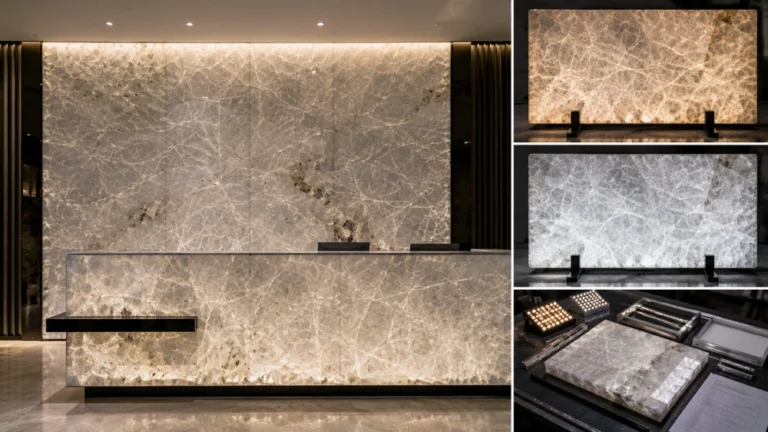


NATÜRLICHE ITALIENISCHE BEIGE-MARMORARBEITSPLÄTTE
Diano Beige Marble Countertop
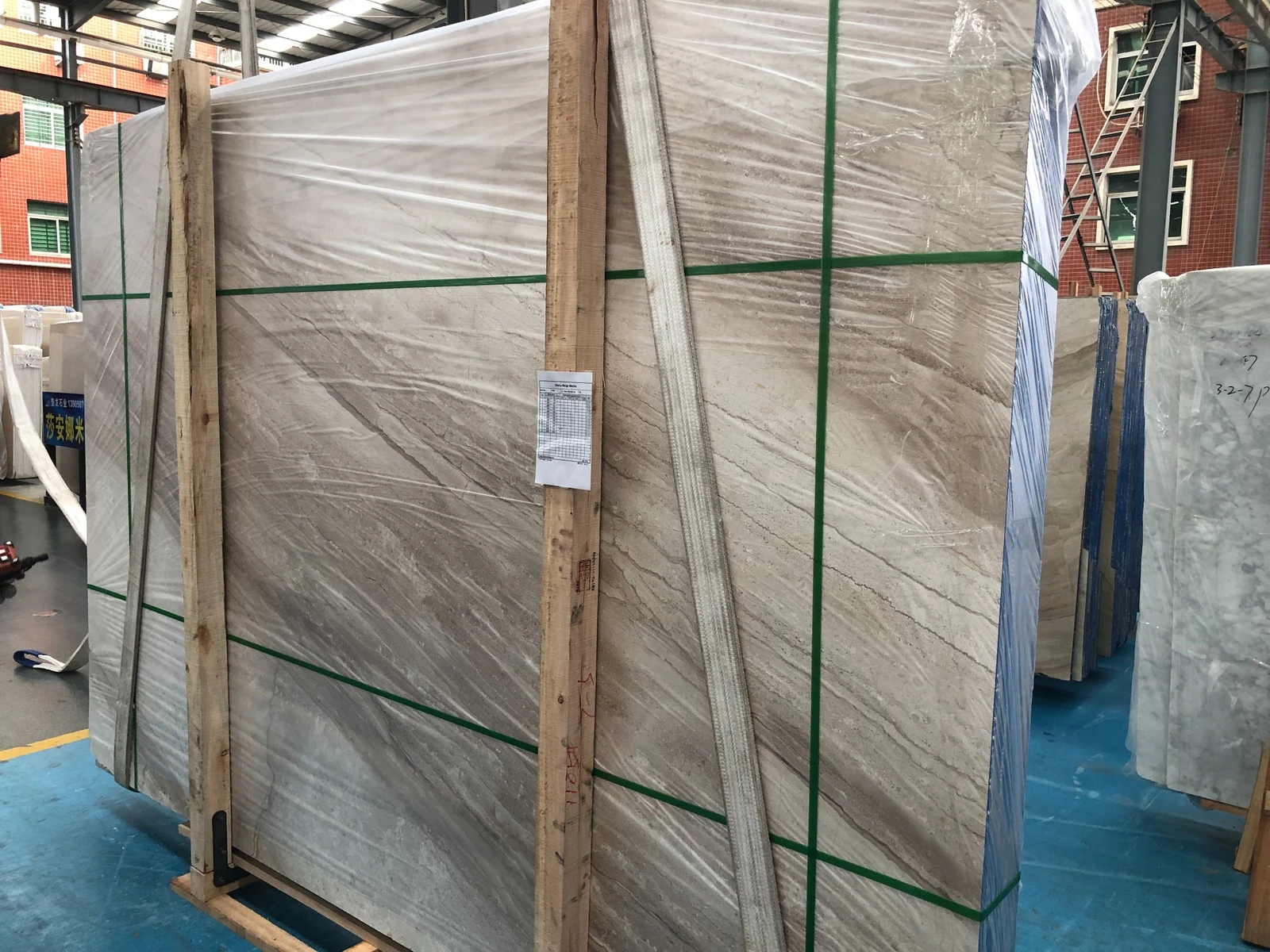
Eine Diano-Beige-Marmorarbeitsplatte vereint einen warmen Cremetön und einen beigen Hintergrund mit unregelmäßigen Einschlüssen in Elfenbein, Taupe und hellem Braun. Das Material erzeugt einen sanfteren visuellen Effekt als kontrastreicher weißer Marmor und fügt sich natürlich in Holzschrankmöbel, Bronzebeschläge sowie warme, neutrale Innenräume ein.
Auch als Daino-Beige-Marmor, Daino-Reale-Marmor oder Diano-Reale-Marmor vermarktet, kann er zu Küchenarbeitsplatten, Marmorinseloberflächen, Waschtischplatten, Bartheken, Empfangstheken, Rückwänden sowie maßgefertigten Steinelementen verarbeitet werden.
Hauptlieferformate
Ganze Platten · Marmorarbeitsplatten · Küchenarbeitsplatten · Inseloberflächen · Waschtischplatten · Baroberflächen · Rückwände · Gehrungspaneele · Zuschnitte nach Maß

Lieferumfang für Arbeitsplatten
Plattenwahl, Schnittlayouts, Aussparungen für Spülen, Öffnungen für Kochfelder, Kantenbearbeitung, Verstärkung, Trockenverlegung sowie Exportverpackung.
Vor der Bestellung: die aktuellen Platten, fertigen Zeichnungen, Nahtpositionen, sichtbaren Kanten und Stützanforderungen genehmigen.
Natürlicher italienischer Beigemarmor
Creme-, Elfenbein-, Taupe- und Brauntöne mit natürlicher Maserung
Platten, Arbeitsplatten und maßgefertigte Teile
Küchen, Inseln, Badezimmer und Gastronomie-Theken
Warme Beige-Marmorarbeitsplatten für abgestimmte Innenräume
Diano-Beige-Marmor weist einen creme‑bis‑beigen Hintergrund auf, durchzogen von unregelmäßigen taupefarbenen, elfenbeinfarbenen und hellbraunen Einschlüssen. Als Marmorarbeitsplatte verarbeitet, bietet das Material mehr Wärme als viele graue Steine und wirkt ruhiger als stark marmoriertes Weiß.
Der gleiche Stein kann als Daino-Beige-Marmor, Daino-Reale-Marmor oder Diano-Reale-Marmor verkauft werden. Die kommerzielle Bezeichnung sollte die materielle Genehmigung nicht ersetzen. Ein Käufer, der eine Diano-Arbeitsplatte mit einer Daino-Arbeitsplatte vergleicht, sollte die tatsächlichen Platten, deren Nummern, Dicke sowie die verfügbare passende Menge prüfen.
Eine maßgefertigte Marmoroberfläche lässt sich nahtlos über die Hauptküchenarbeitsplatte, die Insel, die Rückwand, die Bar, den Waschtisch und die Essmöbel hinweg koordinieren. So können Designer in einer Villa, einem Hotelsuite, einer Wohnung oder einem Gastronomieprojekt eine einheitliche Materialsprache bewahren.
Da natürlicher Marmor anders reagiert als Granit, Quarzit oder gesinterte Steine, sollte der Endkäufer vor der endgültigen Materialbestätigung dessen natürliche Patina, Versiegelungsanforderungen sowie Empfindlichkeit gegenüber säurehaltigen Flüssigkeiten verstehen.
Geeignete Arbeitsplattenprojekte
- Residentielle Küchenarbeitsplatten
- Kücheninsel und Marmor-Wasserfall‑Paneele
- Badwaschtischplatten
- Hotelsuite-Theken
- Bar‑ und Getränketheken
- Empfangs‑ und Concierge‑Theken
- Konsol‑ und Esstischplatten
- Maßgefertigte Marmorarbeitsplattenprojekte
Materialcharakter und Koordination im Arbeitsplattendesign
Eine beige Arbeitsplatte sollte nicht nur nach ihrer allgemeinen Farbe ausgewählt werden. Ton der Platte, Maserungsstärke, Oberflächenbearbeitung, Nahtposition, Kantenkonstruktion, Schrankmöbel und Beleuchtung beeinflussen alle die fertige Oberfläche.
Hintergrundton
Hellere Platten erzeugen eine heller wirkende beige Marmor-Küche, während Platten mit stärkerer Taupe‑ und Brauntönung mehr Tiefe für große Inseln, Bars und Empfangstheken bieten.
Schrankkoordination
Eine Diano-Beige-Küche harmoniert besonders gut mit Nussbaum, Eiche, dunkelbrauner Lackierung, warmem Grau, Creme, gedecktem Grün sowie gebürsteten Metallschränken.
Adernrichtung
Richtungsgebende Maserungen sollten über die Hauptarbeitsfläche, die Insel, die Frontschürze und die Seitenpaneele hinweg geplant werden. Eine Übereinstimmung der Marmormaserung kann die visuelle Kontinuität zwischen angrenzenden Oberflächen verbessern.
Mustergröße
Breite Maserungen sind besonders effektiv auf Inseln und langen Arbeitsflächen. Kleinere und gleichmäßigere Maserungen lassen sich leichter auf kompakte Theken, Waschtische und Rückwände verteilen.
Ganzplattenwahl für Diano-Marmorarbeitsplatten
Eine kleine Probe kann die vollständige Farbpalette, Maserungsrichtung oder natürlichen Markierungen einer ganzen Platte nicht abbilden. Die Genehmigung einer Arbeitsplatte sollte auf aktuellen Plattenfotos, Videos sowie einem geschätzten Schnittlayout basieren.


Genehmigen Sie den Plattenhintergrund, die natürlichen Markierungen, die verfügbare passende Menge sowie die Schnittzonen vor der Produktion.
01 — Plattenmenge bestätigen
Berechnen Sie die Gesamtfläche von Arbeitsplatte, Rückwand und Insel, bevor Sie Platten aus einer einzigen koordinierten Charge reservieren.
02 — Schwerpunktbereiche zuweisen
Reservieren Sie die ausgewogensten Steinzonen für die Inseloberfläche, die Wasserfallseite, die Barfront oder andere besonders sichtbare Flächen.
03 — Öffnungen positionieren
Vermeiden Sie es, Ausschnitte für Spülen oder Kochfelder entlang schwacher natürlicher Linien anzubringen, wenn eine sicherere Schnittposition verfügbar ist.
04 — Venenfluss überprüfen
Bestätigen Sie die Ausrichtung der Oberseite, der Vorderkante, der Seitenwand und des Rückwandelements, bevor mit dem Schneiden begonnen wird.
Spezifikationen für Diano Beige Marmor-Arbeitsplatte
Fertige Abmessungen, Plattenstärke, Kantenprofile, Öffnungen und Toleranzen sind gemäß aktuellem Lagerbestand sowie den genehmigten Werkzeichnungen zu bestätigen.
| Spezifikation | Typische Lieferoption | Bestätigung durch den Käufer |
|---|---|---|
| Produktname | Diano Beige Marble Countertop | Bestätigen Sie den im Angebot, in den Zeichnungen und auf der Packliste angegebenen Namen. |
| Alternative Bezeichnungen | Daino Beige, Daino Reale und Diano Reale Marmor | Genehmigen Sie die tatsächlichen Platten, anstatt sich ausschließlich auf die handelsübliche Bezeichnung zu verlassen. |
| Materialtyp | Naturmarmor | Natürliche Variationen und Markierungen sollten bei der Plattenfreigabe berücksichtigt werden. |
| Allgemeine Farbe | Warmer Cremeton, Beige, Elfenbein, Taupe und helles Braun | Definieren Sie den akzeptablen Hintergrund und den zulässigen Bewegungsbereich. |
| Übliche Dicke | 18 mm, 20 mm und 30 mm | Bestätigen Sie die Rohplattendicke sowie die fertige Toleranz. |
| Arbeitsplattenformate | Küchenarbeitsplatten, Inseln, Bararbeitsplatten, Waschtischplatten und Empfangstheken | Legen Sie für jeden Raum oder jede Ansicht eine separate Stückliste vor. |
| Gängige Oberflächen | Polierte, geschliffene und ausgewählte strukturierte Oberflächen | Genehmigen Sie nach Möglichkeit ein echtes Oberflächenmuster. |
| Kantenprofile | Abgerundete, abgeschrägte, Bullnose-, laminierte und gefräste Kanten | Zeigen Sie jedes sichtbare Marmorkantenprofil im Werkzeichnung an. |
| Sichtbare Dicke | Standard-Plattendicke oder aufgebaute sichtbare Kanten | Bestätigen Sie, ob das Design eine gefräste Marmorkante erfordert. |
| Ausschnitte | Untertischspülen, Oberseitenspülen, Kochfelder, Wasserhähne und Steckdosen | Stellen Sie Herstellervorlagen sowie verifizierte Baustellendimensionen bereit. |
| Sonderbearbeitung | CNC-Schneiden, Bohren, Profilieren, Polieren und Trockenverlegung | Genehmigen Sie die endgültigen Zeichnungen vor der Produktion. |
| Rückseitenverstärkung | Netze, Glasfaserstäbe, Unterlage oder anwendungsspezifische Stützung | Bestätigen Sie die Verstärkung um Ausschnitte und schmale Verbindungsabschnitte. |
| Nahtplanung | Projektspezifisch je nach Plattengröße und Zugangsmöglichkeiten | Genehmigen Sie die Nahtposition, den Venenübergang und den Installationszugang. |
| Rückwandoptionen | Niedrige Rückwand, durchgehende Wandplatte oder separates Wandelement | Bestätigen Sie Steckdosenlöcher, Fugen und die Ausrichtung der Adern. |
| Dimensionstoleranz | Kontrolliert gemäß Zeichnungen und Fertigungstyp | Identifizieren Sie kritische Abmessungen und Installationsfreiheiten. |
| Qualitätskontrolle | Material-, Maß-, Oberflächen-, Kanten-, Ausschnitt- und Verpackungsinspektion | Fordern Sie Inspektionsfotos und -videos vor dem Versand an. |
| Exportverpackung | Reinforced fumigated wooden crates | Use vertical or horizontal support according to the finished shape. |
Recommended Countertop Uses and Use-with-Caution Areas
A stone countertop should be selected according to exposure, maintenance expectations, structural support and user behavior rather than color alone.
| Anmeldung | Suitability | Empfohlene Kontrolle |
|---|---|---|
| Bathroom vanity top | Sehr gut geeignet | Confirm basin templates, tap holes, backsplashes, sealing and visible edges. |
| Kitchen countertop | Suitable with maintenance awareness | Explain marble acid sensitivity and reinforce all openings. |
| Kücheninsel | Highly suitable for visual impact | Plan slab yield, overhang support, edge construction and vein direction. |
| Bar counter | Suitable with care planning | Use coasters, wipe spills promptly and define support for projecting sections. |
| Reception counter | Sehr gut geeignet | Coordinate the top, front face, mitred returns and service openings. |
| Outdoor countertop | Project-specific | Confirm climate, exposure, drainage, finish and local installation standards. |
| Heavy commercial kitchen | Use with caution | Compare granite, quartzite or sintered stone when chemical resistance is critical. |
Diano Beige Kitchen Countertops
A Diano Beige kitchen creates a warm, residential appearance that works well with natural timber, painted cabinetry, brass details and soft neutral architectural finishes.

Main Kitchen Worktop
A marble kitchen top can be fabricated with sink cutouts, cooktop openings, tap holes, sockets, drainage grooves and finished edges. All openings should be positioned from approved appliance templates and verified site measurements.
The narrow stone sections in front of and behind a marble sink cutout require particular attention. Adequate stone width, rod reinforcement and rigid packing reduce the risk of breakage during fabrication and transport.
- Confirm sink and cooktop models
- Mark polished and unfinished edges
- Approve seam positions
- Check cabinet and wall clearances
- Define on-site support requirements
Marble Island Top and Waterfall Panels
A marble island top is often the largest and most visible piece in the kitchen. The best slab area should therefore be reserved for the island before secondary pieces are assigned.
For a marble waterfall design, the top and side panel should be positioned together on the slab layout. This makes it easier to create a visually connected corner and control changes in vein direction.
A thick edge can be created from a standard slab by using a mitred construction. The mitered marble edge requires accurate cutting, stable internal support, controlled bonding and protection during transport.
Buyer decision:
Choose a Diano marble top when warm natural character is more important than perfect resistance to acids and staining. Compare granite, quartzite or sintered stone when very low maintenance is the main requirement.

Edge Profiles, Cutouts and Structural Support
The countertop appearance depends on details that may not be visible in a slab photograph. Edge profiles, overhangs, openings, joints and underside support should be resolved before the marble is cut.
Eased Edge
A clean and practical profile suitable for contemporary kitchens, bathrooms, bar tops and commercial counters.
Mitred Edge
Creates the appearance of a thicker countertop while using standard slab material. Internal support and corner protection are important.
Sink Cutout
Requires accurate templates, smooth internal corners, sufficient surrounding stone width and reinforcement through narrow sections.
Overhang Support
Breakfast-bar overhangs and projecting island sections should be supported according to their depth, span and expected use.
Bathroom Vanity Tops and Integrated Basins
The warm color of Diano Beige Marble coordinates with cream wall finishes, natural timber cabinetry, bronze taps and brushed metal bathroom fittings.
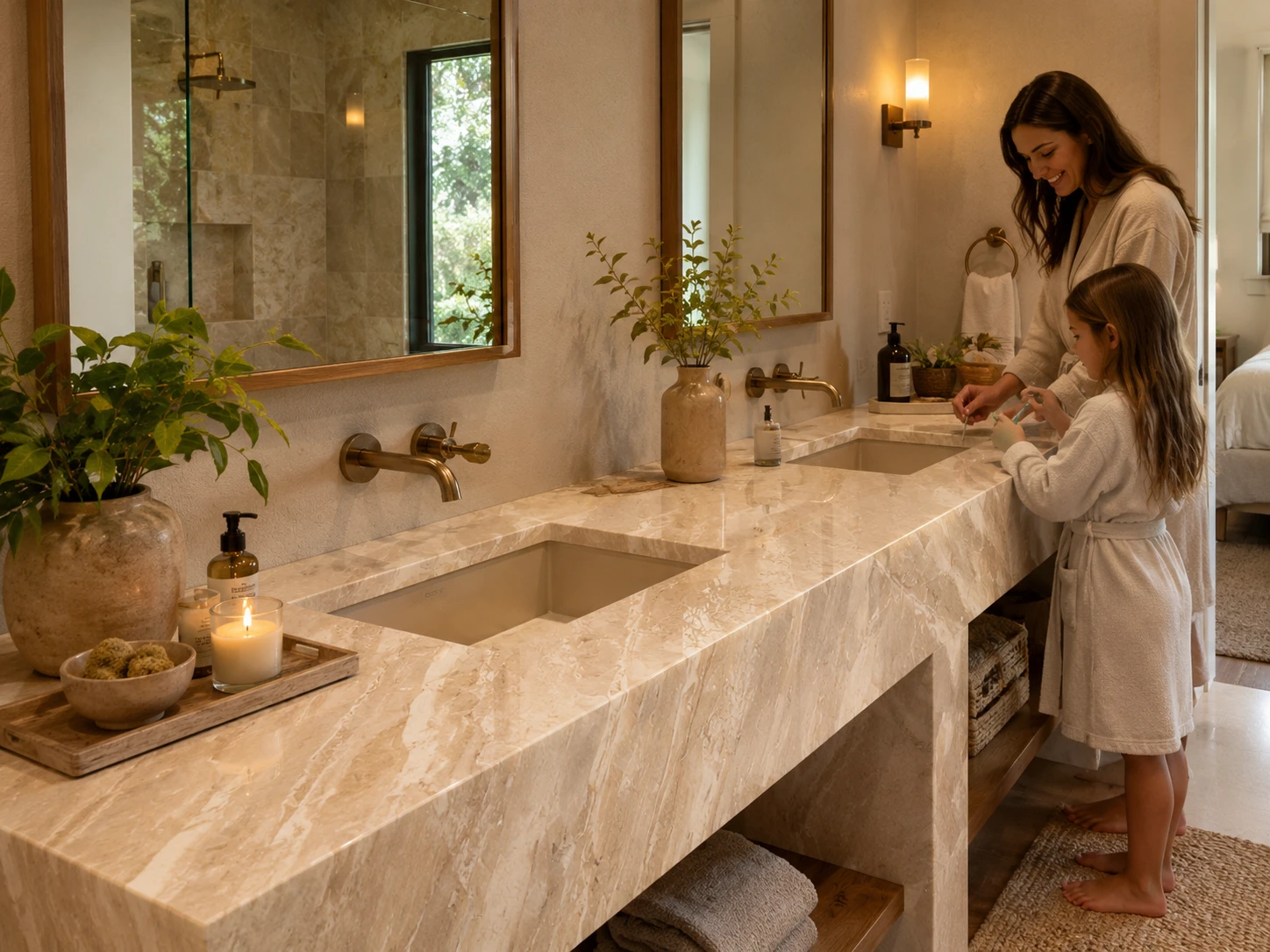
Custom Marble Vanity Top
A vanity top may include undermount or top-mount basin openings, tap holes, backsplashes, side splashes, drainage grooves and mitred edges. The basin and tap specifications should be supplied before CNC fabrication.

Integrated Marble Basin
A custom basin can be carved from thicker stone or assembled from precision-cut panels. Drainage slope, internal joints, wall thickness, waterproof bonding, access and structural support must be shown on the production drawing.
Additional Countertop and Furniture Applications
Diano Beige Marble can be used beyond the main kitchen when the project requires coordinated warm stone surfaces across several rooms.
Bar Tops
Suitable for residential bars, hotel lounges and hospitality counters where warm marble character is desired. Spills should be removed promptly.
Reception Counters
The top, front panel, side returns and accessible counter section can be planned as one coordinated stone composition.
Table Tops
A selected slab area can be fabricated into dining, console, coffee or side-table tops with customised edge profiles and support frames.
Full-Height Backsplashes
Backsplashes can be cut from adjacent slab areas to coordinate with the main worktop and preserve a controlled vein direction.
Hotel Suite Counters
One batch can be allocated across vanity tops, minibar counters, desks and selected public-area surfaces.
Custom Furniture
Furniture drawings should define the frame, fixing points, underside reinforcement, assembly sequence and transport limitations.
Countertop Shop Drawing Requirements
A marble cut-to-size order should not be released from a rough sketch or total square-metre quantity. Detailed drawings reduce remake risk and allow the factory to calculate slab yield correctly.
| Drawing Item | Was zu bestätigen ist | Risk if Missing |
|---|---|---|
| Finished dimensions | Length, width, thickness, diagonal and installation clearance | The countertop may not fit the cabinets or walls. |
| Sink and cooktop | Opening size, model number, corner radius and fixing method | The appliance may not fit or the opening may weaken the stone. |
| Tap and socket holes | Diameter, centre position and distance from edges | Incorrect holes may make the finished piece unusable. |
| Visible edges | Eased, bevelled, bullnose, laminated or mitred edges | Unfinished or incorrectly profiled edges may remain visible. |
| Seam positions | Joint location, installation access and adjoining vein direction | Joints may become visually prominent or difficult to install. |
| Overhangs | Projection depth, support frame and expected load | Unsupported stone may crack during use. |
| Backsplash details | Height, thickness, joints, sockets and polished edges | The backsplash may not align with the worktop or wall services. |
| Piece identification | Room, elevation, piece number, left-right direction and crate number | Installation becomes slower and matching pieces may be misplaced. |
If X → Choose Y: Countertop Selection Logic
Use the final application, visual priority and maintenance expectation to choose the slab, finish and construction method.
| If the Project Requires | Wählen Sie |
|---|---|
| A bright and reflective kitchen | A lighter polished marble top with a controlled cream background. |
| A softer contemporary surface | A honed marble top with lower reflection and subtle movement. |
| A statement island | A slab with stronger movement and a planned marble waterfall return. |
| A thick countertop appearance | Standard slab material with a mitred edge and internal support. |
| A calm vanity top | A consistent beige area with moderate veins and carefully positioned openings. |
| Strong vein continuity | A digital layout that positions adjoining pieces next to each other. |
| High acid resistance | Compare granite, natural quartzite or sintered stone before choosing marble. |
| Strict budget control | Standard dimensions, efficient slab yield and a simple edge profile. |
Countertop Finish Comparison
| Beenden | Erscheinungsbild | Suitable Applications | Procurement Consideration |
|---|---|---|---|
| Poliert | Stronger color, deeper contrast and higher reflection | Kitchen tops, islands, vanities and formal counters | Etching, scratches and wear can become more visible. |
| Geschliffen | Soft matte appearance with lower reflection | Modern kitchens, bathrooms and furniture | Sealing and regular maintenance remain important. |
| Leathered | Low-gloss textured appearance | Bar tops, furniture and selected counters | Approve an actual sample and confirm availability. |
| Brushed | Textured and visually aged surface | Decorative counters and custom furniture | Review texture consistency and cleaning requirements. |
Procurement Risks and Common Countertop Mistakes
Wesentliche Beschaffungsrisiken
- Approving only a small sample
- Mixing unrelated slab batches
- Cutting before drawing approval
- Incorrect sink templates
- Weak areas around openings
- Unsupported island overhangs
- Poor vein continuity
- Unrealistic maintenance expectations
- Insufficient export packing
| Häufiger Fehler | Mögliche Konsequenz | Control Method |
|---|---|---|
| Choosing from a catalogue image | The delivered slab may have a different background or vein pattern. | Approve current full-slab photographs and slab numbers. |
| Ordering only by square metres | The slab quantity may not cover the actual cutting layout. | Calculate consumption from the finished piece schedule. |
| Using unverified sink dimensions | The basin may not fit the finished opening. | Use the final manufacturer template. |
| Ignoring weak natural lines | The stone may crack around the sink or cooktop. | Adjust the layout and add appropriate reinforcement. |
| Poor seam planning | Joints may interrupt the vein pattern or create installation problems. | Approve seam positions on the shop drawing. |
| Underestimating packing | Edges, corners or narrow sections may break. | Use reinforced crates and rigid internal supports. |
| Comparing only slab prices | The total project cost may be misunderstood. | Separate material, fabrication, packing and shipping costs. |
Custom Fabrication and Countertop Quality Control
A professional marble top factory should manage the selected slabs, shop drawings, cutting layout, dimensions, edge profiles, openings and packing as one coordinated production process.
Recommended Inspection Sequence
- Full-slab inspection and reservation
- Finished drawing approval
- Slab-yield and cutting-layout review
- CNC cutting and opening fabrication
- Edge profiling and polishing
- Reinforcement around weak sections
- Dimensional and diagonal measurement
- Surface and vein-direction inspection
- Piece numbering and trial arrangement
- Reinforced export packing inspection
Surface Detail and Natural Variation
Natural marble may contain tonal movement, fine veins, fossil-like markings, crystal changes, small filled areas and differences between adjoining slabs. These characteristics should be reviewed as part of the approved material.
Countertop buyers should approve:
- Overall slab background
- Vein density and direction
- Natural markings and filled areas
- Color differences between slabs
- Cutting zones for the main countertop
- Areas assigned to islands and visible fronts
Installation and Maintenance Planning
The final performance of a beige marble top depends on cabinet support, installation, joint treatment, sealing, cleaning and user expectations as well as factory fabrication.
Marble can react to acidic liquids such as lemon juice, vinegar and some cleaning products. Sealing may help manage absorption, but it does not make marble completely resistant to etching.
The installer should check all pieces before installation and follow the approved drawings, local requirements and product-specific support recommendations.
Before Installation
- Check crate and piece numbers
- Inspect the surface before lifting
- Confirm cabinet level and support
- Verify seams and wall clearances
- Check sink and cooktop openings
- Protect finished edges during handling
After Installation
- Use pH-neutral stone cleaners
- Remove spills promptly
- Avoid acidic and abrasive products
- Use boards, trays and coasters
- Do not place extreme heat directly on the surface
- Review sealing according to use and installer guidance
B2B Countertop Order Workflow
01 — Project Review
Confirm the application, dimensions, quantity, finish, edge profile and delivery schedule.
02 — Slab Selection
Review current slabs and define the acceptable background and vein range.
03 — Quotation
Separate the material, fabrication, reinforcement, packing and shipping costs.
04 — Shop Drawings
Confirm dimensions, openings, seams, visible edges, overhangs and vein direction.
05 — Fabrication and QC
Complete cutting, profiling, polishing, reinforcement and dimensional inspection.
06 — Packing and Shipping
Pack each piece according to its size, shape, openings, weight and transport method.
Information Required for a Diano Countertop Quote
An accurate quotation requires more than a total square-metre figure. The supplier must calculate slab consumption, cutting waste, openings, edges, reinforcement, packing and transportation.
The Diano marble price can vary according to the selected slab batch, slab quality, thickness, finished dimensions, edge construction and fabrication complexity.
For faster quotation review, send the drawing files, piece schedule, appliance information, finish requirement, reference images, destination and expected delivery date in one package.
- Project and application type
- Finished dimensions and quantity
- Required thickness and finish
- Edge profiles and visible thickness
- Sink, cooktop and tap information
- Backsplash and waterfall requirements
- CAD, PDF or shop drawings
- Destination or delivery address
- Required trade term and schedule
Häufig gestellte Fragen
1. Is Diano Beige Marble suitable for kitchen countertops?
Yes. Diano Beige Marble can be used for residential kitchen countertops and islands when the end user accepts the natural patina and maintenance requirements of marble. It should be sealed when appropriate, cleaned with pH-neutral products and protected from prolonged exposure to acidic liquids.
2. What is the difference between Diano Beige and Daino Reale Marble?
Diano Beige, Daino Beige, Daino Reale and Diano Reale are commercial names used for closely related beige marble materials. Naming may vary between suppliers, so the buyer should approve the current full slabs, origin information, thickness and batch rather than relying only on the product name.
3. Which finish is best for a Diano Beige Marble Countertop?
A polished finish strengthens the cream and brown colors and creates more reflection. A honed finish provides a softer, lower-gloss appearance. The best option depends on the project style, maintenance expectations and desired surface character.
4. Can a Diano Beige island have waterfall panels?
Yes. The island top and side panel can be fabricated as a coordinated marble waterfall. The pieces should be positioned together on the slab cutting layout so that the vein direction remains visually connected across the corner.
5. What thickness is normally used for marble countertops?
Common thicknesses include 18 mm, 20 mm and 30 mm. A thicker visual edge can also be created with mitred strips. The final construction should consider the countertop span, cutouts, support, transport and installation method.
6. How should sink cutouts be reinforced?
Sink cutouts should maintain sufficient stone width around the opening and use suitable reinforcement through narrow sections. Internal corners should be processed carefully, and the finished piece should receive rigid support during packing and installation.
7. Can the countertop and backsplash be vein-matched?
Yes. The countertop, backsplash, front apron and side panels can be arranged from adjacent slab areas when sufficient material is available. Buyers should approve a digital cutting layout or factory trial arrangement before production.
8. How should a Diano Beige Marble Countertop be cleaned?
Use a soft cloth and pH-neutral stone cleaner. Remove spills promptly and avoid acidic cleaners, abrasive pads and untested stain-removal products because they may etch, dull or discolor the marble surface.
9. What should be checked before countertop shipment?
The inspection should cover finished dimensions, diagonals, thickness, surface finish, visible edges, cutouts, reinforcement, seam pieces, vein direction, piece numbers and packing construction. Photographs and videos should show both the finished worktops and the internal crate support.
10. What information is needed for an accurate quotation?
Provide the application, finished dimensions, quantity, thickness, finish, edge profile, sink and cooktop models, cutout positions, backsplash requirements, waterfall panels, drawing files, destination and required trade term. Material, fabrication, packing and shipping costs should be separated whenever possible.
Schlussbemerkung / Praktische Hinweise
A Diano Beige Marble Countertop is a suitable choice for buyers who want a warm beige surface with natural movement and coordinated applications across kitchens, islands, bathrooms, bars, reception counters and custom furniture.
The main purchasing risks are not limited to the marble itself. Incorrect slab quantities, weak cutting layouts, unverified sink templates, poor seam positions, unsupported overhangs and inadequate packing can all affect the finished result.
For dependable project supply, approve the current full slabs, calculate consumption from the finished piece schedule, confirm every opening and edge through shop drawings, review the vein layout and require dimensional, surface and packing inspection before shipment. When very high acid resistance and minimal maintenance are more important than natural marble character, compare alternative countertop materials before making the final selection.