Quick Summary
Major Cold (Dàhán, 大寒), arriving in late January, is the final and most severe test within the 24 Solar Terms—where extreme
cold, dry air, and relentless winter gales expose the true limits of building materials.
Under the combined pressure of wind abrasion and thermal contraction, natural stone stands apart. Its low thermal expansion,
high density, and physical inertia allow granite, quartzite, and similar stones to remain dimensionally stable when lighter
or synthetic materials fatigue and deform.
Aesthetically, stone embodies the “Suihan” (岁寒) philosophy—finding richness in winter austerity. Its texture, mass, and
natural luminosity provide visual and psychological anchoring during the bleakest season.
Strategically, Major Cold is a critical window for stone selection and “winter storage,” ensuring materials are vetted
against the harshest natural conditions before spring construction begins.
In the grand circularity of the 24 Solar Terms, Major Cold, or Dàhán (大寒), stands as the final gatekeeper. Arriving around the 20th of January, it marks the dramatic transition from the year’s deepest freeze to the nascent spark of spring. In traditional Chinese wisdom, this is a time of extreme duality: the “hidden Yang” is at its most vulnerable, while the “invading Yin” reaches its aggressive peak.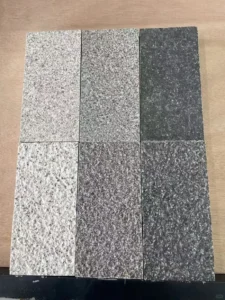
If a structure can emerge from the frost of Major Cold without compromise, it is a testament to the quality of its bones. In this cycle of endings and beginnings, Naturstein is more than a sovereign material; it is the immutable bedrock upon which we confidently build the future, right at the threshold of the new year.
The Physics of Permanence: Stone vs. The Final Frontier of Wind
The defining challenge of Major Cold is not merely the plummeting temperature, but the relentless, biting gale. Ancient texts describe this period as the “Great Gale,” where wind-driven frost acts as a mechanical abrasive against the built environment.
Synthetic panels and timber cladding often struggle with the coefficient of thermal expansion during these erratic shifts. As temperatures drop sharply at night and rise under the winter sun, materials undergo frantic contraction and expansion, leading to warping and fatigue. Naturstein, however, possesses a physical inertia that is almost absolute. If Major Cold is the “Final Frontier” of building performance, then the stone’s low thermal expansion is the silent, steadfast sentry guarding that frontier. A granite facade or a quartzite staircase remains dimensionally stable, proving that true architectural integrity is found in materials that refuse to move.
The “Suihan” Aesthetic: Natural Stone as the Anchor of Winter
There is a profound beauty in the “Suihan” (岁寒) aesthetic—the elegance found in desolation. This aesthetic reached its zenith in the cold-forest landscapes of Song Dynasty paintings, where, after stripping away the ephemeral foliage, the rugged structure of the mountains became the sole spiritual anchor.
In a modern luxury space, Naturstein inherits this Eastern wisdom of “richness in simplicity.” During the greyest days of Major Cold, stone serves as the visual and psychological anchor:
-
Texture Over Colour: When the world is monochromatic, the tactile richness of leathered or flamed stone provides a sensory depth that synthetic surfaces lack.
-
The Silent Fourth Friend: Alongside the “Three Friends of Winter” (Pine, Bamboo, and Plum), stone acts as the silent fourth companion, providing a permanent backdrop that captures and amplifies the rare, weak winter light, combatting the seasonal gloom with its natural luminosity.
The TCM of the Home: A Material “Winter Tonic”
Just as Traditional Chinese Medicine (TCM) prescribes warming tonics like ginger and mutton to “nourish the hidden Yang” during Major Cold, choosing the right materials is a form of “Winter Tonic” for the home.
Incorporating a bespoke stone fireplace or a central stone core wall is the architectural equivalent of an internal energy boost. Because stone is a superior thermal mass, it absorbs heat and releases it with a gentle, consistent frequency. This radiant warmth is the physical manifestation of “storing Yang.” Unlike the abrasive, dry air of mechanical heating, a stone hearth provides a soft, “nutritional” heat that sustains the comfort of the inhabitants through the harshest nights of the year.
Strategic Selection: The Ritual of the Major Cold Window 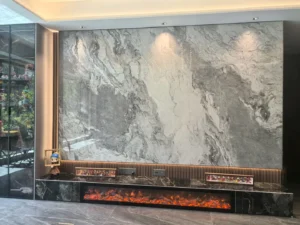
In the stone trade, the Major Cold period is far more than a lull in construction; it is a high-stakes strategic window. This is the time for deliberate selection and “Winter Storage” of materials.
This is not merely a purchase; it is a strategic ritual of foresight. In the quietude of the deep winter, completing your stone selection means that when the first bugle of spring sounds, your project already holds the most reliable “military tally” (Bīngfú)—materials that have been vetted against the highest standards of the frost. By securing your inventory now, you gain a dual advantage of time and guaranteed quality, ensuring your project begins its life on a foundation that has already survived the worst nature can offer.
FAQ: Maintaining Stone Excellence in the Deepest Winter
1. Can Major Cold cause natural stone to crack? Only in inferior or improperly installed materials. High-density Naturstein with a water absorption rate of less than 0.5% is virtually immune to frost. Ensuring proper sealing before the Major Cold threshold is the best way to maintain this immunity.
2. Is it safe to use de-icing salts on stone steps? We advise against harsh chemical salts, which can cause pitting in porous stones. For Major Cold maintenance, we recommend sand for traction or the use of slip-resistant flamed finishes that provide natural grip without chemical intervention.
3. Why is stone considered more “eco-friendly” during a freeze? Its thermische Trägheit means a stone house requires less frequent heating cycles. It retains its “charge” of warmth longer than any other common building material, significantly lowering carbon footprints during the peak energy-demand month of January.
4. How does the “Great Gale” of Major Cold affect stone cladding? Stone’s mass makes it naturally resistant to wind-driven vibrations. While lighter materials might rattle or “hum” in a gale, stone provides a silent, vibration-free environment, which is a key component of psychological comfort in luxury dwellings.
5. Compared to Minor Cold, what should I prioritise when selecting stone for Major Cold? While Minor Cold tests “freeze-thaw” cycles, Major Cold demands stability against wind erosion and dry-cold sensory comfort. Focus on structural density to resist wind-blown grit and consider matte or honed finishes that feel grounded and substantial under the winter sun.
Conclusion: A Philosophy of Absolute Confidence
Major Cold is the full stop at the end of the year’s sentence, but it is also the colon that introduces the spring. It is not an ending, but a solemn pressure test designed to filter out the ephemeral and leave only the eternal.
Naturstein, with its memory stretching back across geological eons, meets this seasonal interrogation with absolute composure. It teaches us not how to fight the cold, but how to possess the inner stability to transform every trial into a proof of value. When you choose stone, you are not merely choosing a building material; you are adopting a philosophy of endurance and an absolute confidence in the future.