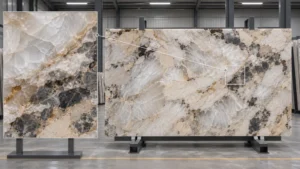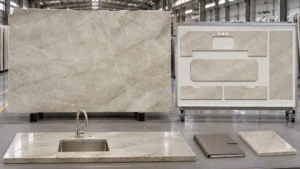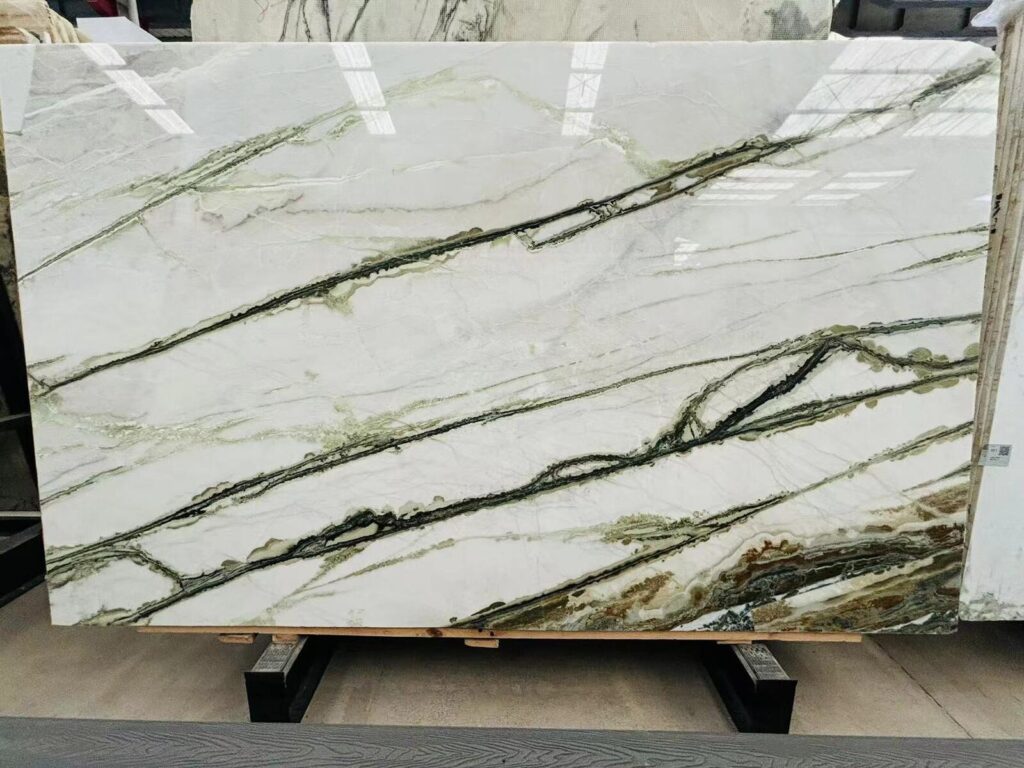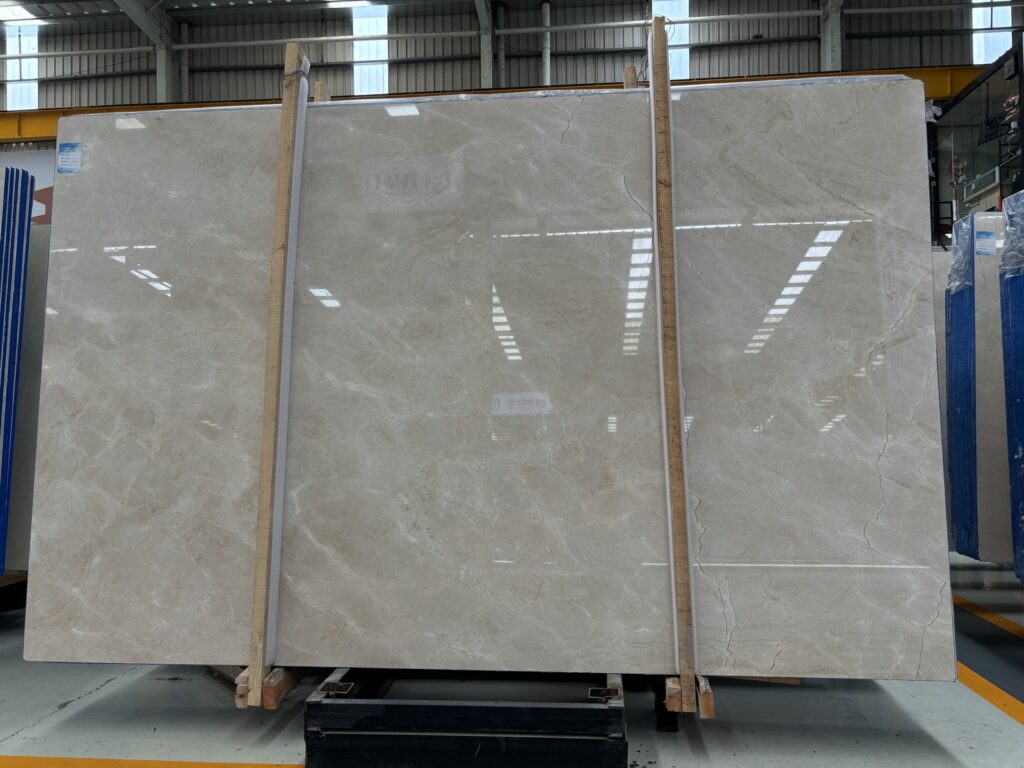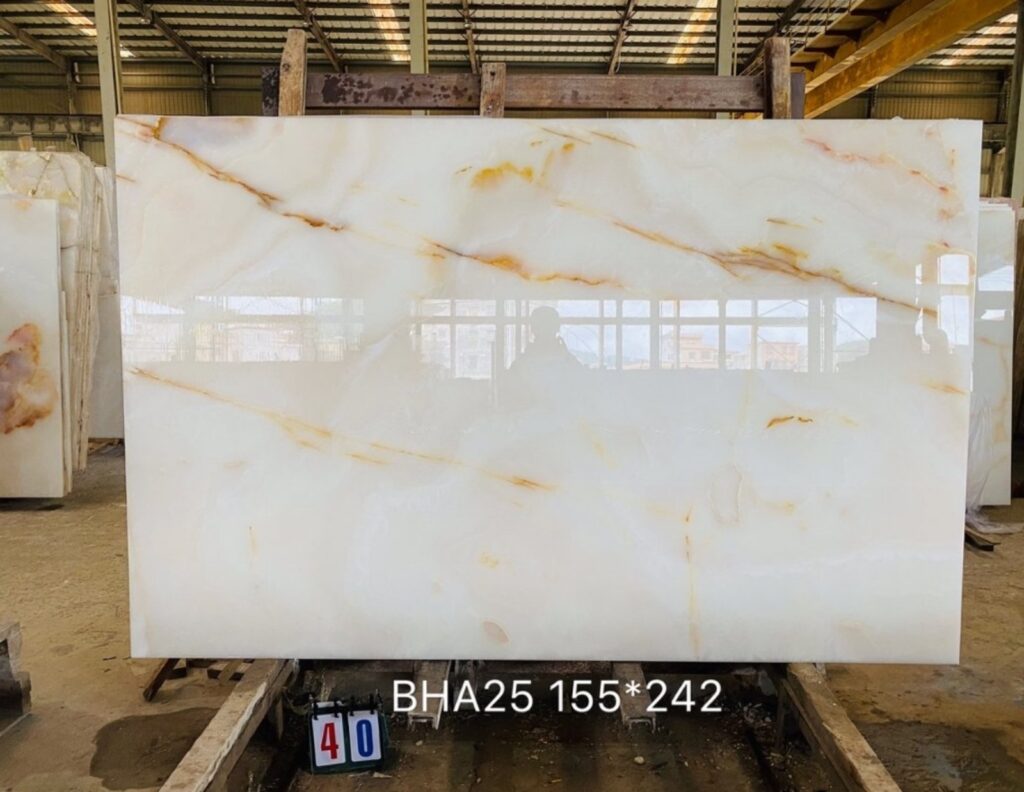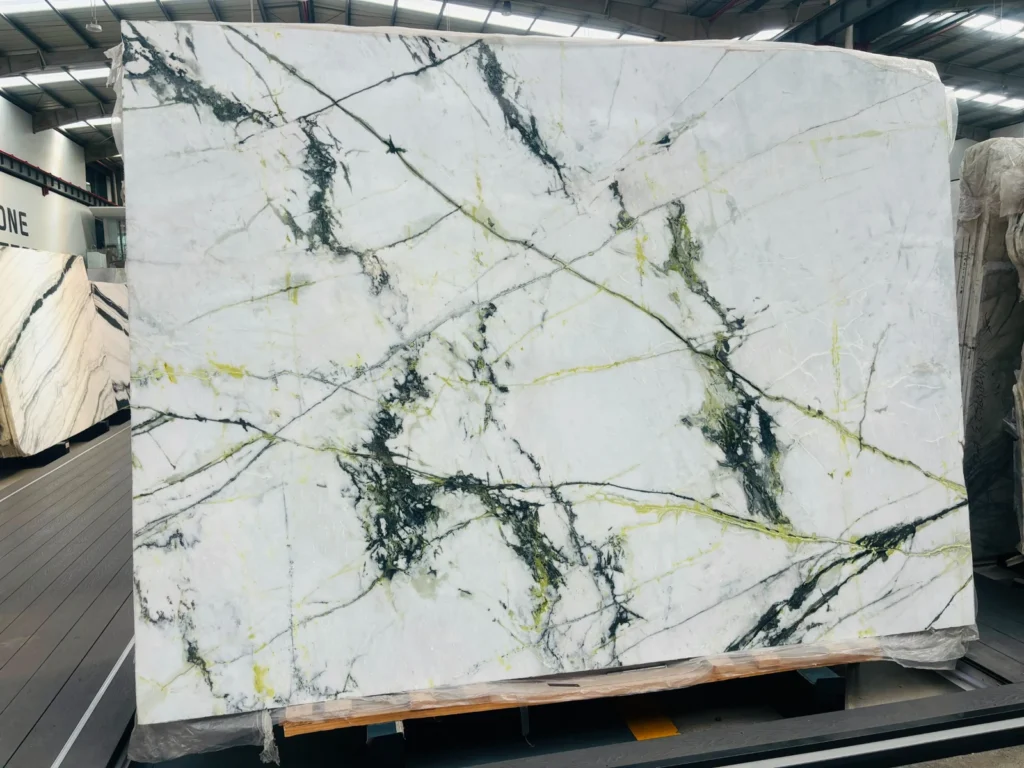


Kurze ZusammenfassungEin Moodboard aus Quarzit ist nützlich, um Atmosphäre, Farbrichtung, angrenzende Oberflächen und visuelle Präferenzen zu vermitteln, doch es stellt noch kein vollständiges Beschaffungsbriefing dar. Bevor Sie einen Lieferanten für natürlichen Quarzit bitten, Materialien zu empfehlen, sollten Sie das Moodboard in projektspezifische Informationen übersetzen, die die Suche tatsächlich steuern: Anwendungsbereich, fertige Abmessungen, Menge, gewünschte Oberflächenbearbeitung, bevorzugter Hintergrundton, Mustergroß, Bewegungsrichtung, Kontrastgrad, angrenzende Schrank- oder Bodenoberflächen, sichtbare Kanten, relevante Flächen, Lichtverhältnisse, festgelegte Budget‑ oder kommerzielle Vorgaben sowie die nächste Entscheidung, die getroffen werden muss. Trennen Sie zwingend erforderliche Anforderungen von flexiblen Präferenzen. Nutzen Sie anschließend das Materialbriefing, um eine Shortlist potenzieller Quarzite zu erstellen, gefolgt von einer konkreten Plattenprüfung, wenn eine plattenspezifische Freigabe erforderlich ist. Das Moodboard sollte die Suche leiten; es darf nicht stillschweigend zur Genehmigung eines Steins werden, der niemals physisch identifiziert wurde.
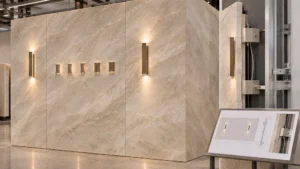
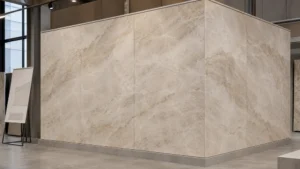
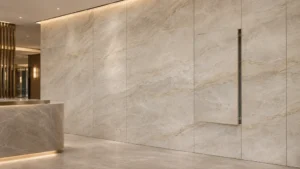
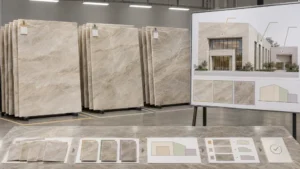
Ein Kunde sendet ein Innenraum‑Moodboard.
Es enthält:
Die Nachricht lautet:
“Wir wünschen uns Quarzit wie diesen. Bitte unterbreiten Sie ein Angebot.”
Die visuelle Ausrichtung ist nachvollziehbar.
Die Kaufanfrage hingegen nicht.
Was bedeutet “wie dieser”?
Warmer, cremefarbener Hintergrund?
Kontrastarme Maserung?
Große, fließende Musterbewegung?
Fast kein Grau?
Eine polierte Oberfläche?
Ein Stein, der sich für eine große Kücheninsel eignet?
Drei aufeinander abgestimmte Platten?
Oder einfach nur die allgemeine Raumatmosphäre?
Dies ist das zentrale Problem hinter Quarzit‑Kundenanfragen: Vom Moodboard zum Materialbrief.
Ein Moodboard ist ein hervorragendes Werkzeug zur Designkommunikation.
Doch bevor natürlicher Quarzit in die engere Auswahl gelangt, probiert, angeboten, reserviert, verlegt oder verarbeitet wird, muss der Lieferant die Designintention in Informationen überführen, die mit echten, physischen Platten verknüpft werden können.
Ein Moodboard kann mehrere Dinge sehr effizient kommunizieren.
Es kann zeigen:
Diese Informationen sind nützlich.
Doch sie lassen in der Regel wichtige Fragen der Beschaffung unbeantwortet.
Ein Designer kann ein Quarzitbild einfügen, weil es:
Das Projekt benötigt möglicherweise nicht genau den genannten Handelsnamen des Steins.
Fragen Sie, welcher Teil des Referenzbildes wirklich relevant ist.
A completed kitchen photograph shows a fabricated crop of stone under one lighting environment.
It may not reveal:
Phone brightness, image processing, white balance, filters, website compression, artificial lighting, and the original camera can all influence how a material reference appears.
The mood board should therefore communicate design direction rather than promise an exact physical stone colour from a screen image.
Mood-Board Rule
Use the mood board to explain what the client likes. Use the material brief to explain what the Natural Quartzite must do.
Clients and designers often describe stone emotionally.
That language is valuable, but the sourcing team needs to translate it into observable variables.

Ask whether “warm” means:
This might mean:
This may refer to:
This is still too broad.
Ask whether the desired direction is:
If the reference shows horizontal, diagonal, flowing, linear, clustered, or non-directional movement, record that preference.
Do not assume that finding the correct colour automatically produces the correct movement.
| Mood-Board Language | Translate into Material-Brief Questions |
| Warm | Background undertone? Warm mineral movement? Relationship to wood? |
| Quiet | Low contrast? Large soft movement? Few dark focal features? |
| Dramatic | High contrast? Strong band? Crystal structure? Large focal feature? |
| Minimal | Uniform overall field? Limited colour count? Low-frequency movement? |
| Natural / Organic | Visible geological variation? Flowing movement? Crystal or mineral zones? |
A strong material brief does not treat every note on the mood board as equally important.
Create two groups.

These are requirements that materially affect whether a candidate can remain in the shortlist.
Examples may include:
These are important visual targets but may allow reasonable alternatives.
Examples:
This can be equally useful.
Zum Beispiel:
These are project preferences, not statements that the excluded stone characteristics are universally undesirable.
Brief StructureMust Have — required for the candidate to work.
Prefer — helps rank suitable options.
Avoid — visual or project conditions the client does not want in important finished areas.
A supplier cannot responsibly shortlist Natural Quartzite from colour direction alone when the project contains large or fabrication-sensitive pieces.
State where the stone will be used:
Total square footage alone is not enough.
One large uninterrupted island can control the slab search more strongly than several smaller countertop pieces with the same total area.
Send the key finished dimensions or current drawing.

Identify whether the project needs:
Record which surfaces matter visually.
A standard horizontal countertop and a double-waterfall island do not ask the same question of the slab.
Large sinks, cooktops, basins, access openings, and other cutouts can remove the exact geological feature shown in a preferred slab area.
The material brief does not need to finalize the cutting layout, but it should alert the supplier when the project contains geometry likely to affect material selection.
If the mood board depends on directional movement, state it as design intent.
Later shop drawings should connect that intent to identifiable pieces, visible faces, and actual slab layouts rather than relying on an isolated arrow.
Der Quarzit-Adern-Richtungssymbole für Ausführungszeichnungen guide explains how those direction marks should be controlled during later fabrication stages.
The mood board may already contain these materials.
The brief should identify which references are real project selections and which remain inspiration only.
Record the current physical or specified cabinet finish where available.
For Natural Quartzite, cabinetry may influence:
Flooring can occupy a very large field around an island.
A mood board photograph may suggest the relationship, but a real flooring sample is more useful for final colour-sensitive comparison.
These can matter particularly when Quartzite continues vertically as a backsplash or feature wall.
Brass, bronze, stainless steel, black metal, nickel, and other finishes can influence the overall warm/cool balance, but do not overfit the stone to a tiny hardware sample.
Record whether the project uses white oak, walnut, stained timber, veneer, or another selected wood finish where this relationship is visually important.
Natural wood itself varies, so final review should use the actual project reference where possible.
Der Quarzit-Platten-Showrooms: Was Sie zu einem Auswahltermin mitbringen sollten guide recommends bringing physical cabinet, flooring, paint, metal, or other adjacent-material samples when they materially affect the stone decision.
The supplier does not necessarily need a 50-page interior-design presentation.
A focused one-page summary can often produce a much better first shortlist.
Dokumentieren Sie:
State exactly where Natural Quartzite is being considered.
Summarize the desired appearance.
Zum Beispiel:
Warm pale cream to light greige Natural Quartzite, low-to-medium contrast, broad soft movement, limited dark features, suitable for a large focal island.
Attach or summarize:
State:
Polished / Honed / Leathered / To Be Confirmed.
Do not silently assume that the finish shown in the mood-board photograph is known.
Provide the current estimated or confirmed quantity and identify its status.
A useful brief can state:
Primary Priority: warm, calm overall field.
Secondary Priority: broad natural movement.
Avoid in Main Focal Area: large black fragments.
Flexible: minor grey / taupe mineral variation.
Attach labelled project samples or controlled reference photographs.
This is essential.
State whether you need:
| Material-Brief Field | Beispiel |
| Anmeldung | Large kitchen island + perimeter countertops |
| Material | Natürlicher Quarzit |
| Background direction | Warm cream / pale greige |
| Muster | Broad soft movement; low-to-medium contrast |
| Avoid | Strong black fragments in main focal area |
| Beenden | Polished preferred; final confirmation required |
| Geometrie | Current island / countertop drawing attached |
| Adjacent finishes | Warm-white cabinets + white oak + brushed metal |
| Requested supplier action | Recommend 2–4 candidate material directions and provide current slab evidence |
Once the material brief is clear, the supplier can respond much more efficiently.
The objective is not to send 30 attractive slab photographs.
It is to build a controlled shortlist.
The supplier may first suggest several Natural Quartzites that fit the brief at a broad level.
At this stage, the project can compare:

Once a material direction is preferred, request the physical slab evidence relevant to the current project.
Useful evidence can include:
An attractive close-up should remain connected to the full slab from which it came.
The project may love one small mineral area that occupies only a minor part of the board.
For large components, the complete slab movement matters more than one isolated detail photograph.
A material name can identify the general Quartzite selection.
It does not uniquely identify the physical slab.
For slab-specific projects, final visual selection should progress to exact identifiable boards.
A mood-board enquiry can become inefficient when several people receive the same message:
“Please approve the stone.”
Different project roles should review different questions.
Fragen Sie:
Does this candidate support the intended tone, movement, pattern scale, and relationship with the adjacent materials?
Fragen Sie:
Is this visual direction acceptable for the finished space?
Fragen Sie:
Can the current component geometry be allocated within the usable areas of the identified slabs?
Fragen Sie:
Are quantity, exact boards, commercial status, destination, and current project scope aligned?
Fragen Sie:
Is this identified selection approved to move to the stated next stage?
Der Quartzite Slab Selection with Multiple Decision Makers guide explains why preference, technical review, commercial confirmation, and final approval should remain distinguishable.
Approval Question Rule
Do not send one vague “Please approve” request to every stakeholder. Connect each reviewer to the decision they actually own.
This is the most important control point in the process.
A mood board may be approved.
That does not mean:
A useful sequence is:
Mood Board → Material Brief → Candidate Quartzites → Material Direction → Actual Slabs → Slab Selection → Reservation / Commercial Confirmation → Cutting Layout → Fabrication Approval → Production Release.
The project may initially request:
Warm white + quiet movement.
After reviewing physical slabs, the designer may discover that a slightly stronger taupe movement improves the room.
That is not necessarily a failed sourcing process.
It is design development.
Update the brief rather than keeping outdated language attached to a changed decision.
Zum Beispiel:
Approved: warm cream / greige Quartzite direction with broad low-contrast movement.
Pending: exact slab selection.
Pending: island pattern placement.
Pending: final edge sample.
This is much more useful than:
“Mood board approved.”
The final test of a material brief is simple:
Can the stone supplier understand what to do next without guessing?
□ Project and application identified.
□ Natural Quartzite confirmed as the requested material category where required.
□ Mood-board images labelled as inspiration, actual selected finish, or other reference.
□ Preferred background colour / undertone described.
□ Preferred pattern scale and contrast described.
□ Directional movement preference identified where relevant.
□ Must-have requirements separated from flexible preferences.
□ Unwanted visual conditions identified without turning them into universal material judgments.
□ Current drawings or key finished dimensions supplied.
□ Important visible faces, waterfalls, openings, edges, or other geometry identified.
□ Current quantity or estimated quantity stated.
□ Required or preferred finish stated.
□ Cabinet, floor, wood, paint, metal, or other important adjacent finishes attached where useful.
□ Lighting or viewing context included when visually important.
□ Delivery destination identified.
□ Supplier action clearly requested: recommend materials, provide samples, send slab options, quote, or review a layout.
□ Approval owner or next reviewer identified where applicable.
□ Mood-board approval kept separate from actual slab and production approval.
A concise but complete enquiry may therefore read:

Projekt: Private residential kitchen.
Anwendung: Large island with two visible waterfall ends plus perimeter countertops.
Material: Natural Quartzite.
Visual Direction: Warm cream to pale greige background, broad soft movement, low-to-medium contrast, natural taupe-grey detail, no dominant dark fragments in the main island focal area.
Oberfläche: Polished preferred.
Adjacent Finishes: Warm-white cabinetry, natural white oak, restrained brushed metal.
Geometry: Current plan and island dimensions attached.
Menge: Current project estimate attached; final slab requirement to be confirmed after layout review.
Request: Please recommend a short list of suitable Natural Quartzite directions and provide available full-slab photographs, board references, dimensions, finish information, and related slabs where available.
That gives the supplier something actionable.
The mood board can remain attached.
But now it has been translated into a sourcing decision.
Sie können ein Moodboard verwenden, um die Diskussion zu beginnen; eine noch fundiertere Anfrage erfasst jedoch zusätzlich die Anwendung, die wichtigsten Abmessungen, die Menge, die bevorzugte Oberflächenbearbeitung, die Farb- und Musterausrichtung, angrenzende Materialien, die maßgeblichen sichtbaren Flächen, den Lieferort sowie die nächste Entscheidung, bei der Sie die Unterstützung des Lieferanten benötigen. Dies verringert das Raten und führt zu einer nützlicheren Shortlist.
Fügen Sie das Projekt und die Anwendung hinzu, sofern zutreffend die Anforderung an natürlichen Quarzit, den bevorzugten Hintergrundton, die Musterskala, den Kontrast, die Ausrichtung, die Oberflächenbeschaffenheit, die wichtigsten Abmessungen, die Menge, sichtbare Kanten oder Rückläufe, wichtige Öffnungen, angrenzende Materialien, visuelle Prioritäten, zu vermeidende Bedingungen, den Bestimmungsort sowie die gewünschte Maßnahme des Lieferanten ein. Trennen Sie zwingend erforderliche Anforderungen von Vorlieben.
Ist das Material bekannt, geben Sie dessen Name als Referenz an. Wenn das Moodboard hauptsächlich ein Erscheinungsbild vermittelt, erläutern Sie, welche Eigenschaften von Bedeutung sind, anstatt davon auszugehen, dass der abgebildete Handelsname die einzige akzeptable Option ist. Bei finalen, slab-spezifischen Projekten sollten dennoch die tatsächlich verfügbaren Platten geprüft werden.
Eine exakte visuelle Übereinstimmung kann anhand eines Bildschirmbildes nicht zugesichert werden. Natürlicher Quarzit variiert von Platte zu Platte, während Fotografie, Beleuchtung, Bildbearbeitung und Bildschirmdarstellung Farbe und Kontrast beeinflussen können. Nutzen Sie das Moodboard als visuelle Orientierung und vergleichen Sie anschließend identifizierbare physische Platten oder repräsentative Muster, je weiter das Projekt voranschreitet.
Die Nummern der Platten oder Flächen werden dann von Bedeutung, wenn das Projekt von der allgemeinen Materialausrichtung zur plattenspezifischen Auswahl übergeht. In diesem Stadium sollten die Fotos der vollständigen Platten sowie deren Kennzeichnungen, Abmessungen, Oberflächenbeschaffenheit, Stückzahl und aktueller Handelsstatus stets miteinander verknüpft bleiben, damit die genehmigten physischen Platten nicht mit einer anderen Charge unter demselben Handelsnamen verwechselt werden.
Nein. Ein Materialbrief definiert, wonach das Projekt sucht. Die eigentliche Plattenfreigabe erfolgt erst später und basiert auf den identifizierten physischen Platten sowie den Projektanforderungen. Reservierung, Schnitt‑Layout‑Freigabe, Fertigungsfreigabe und Produktionsfreigabe sind ebenfalls separate Projektphasen.
Senden Sie Josh das Moodboard, den Projektantrag, die aktuellen Zeichnungen oder die wichtigsten Abmessungen, die benötigte Menge, die gewünschte Farbe und Musterorientierung des Quarzits, die Oberflächenbeschaffenheit, Referenzen zu angrenzenden Schränken oder Bodenbelägen, wichtige sichtbare Flächen und Kanten, eine Wasserfall- oder andere spezielle Geometrie, den Lieferort sowie den konkreten nächsten Schritt, den Sie benötigen. Geben Sie an, ob Sie Materialempfehlungen, Musteroptionen, aktuelle Plattenfotos, ein Angebot oder eine spätere Überprüfung der Plattenanordnung wünschen.
Material-Brief TakeawayA Quartzite mood board should begin the sourcing conversation, not end it. Translate visual references into observable stone criteria, separate mandatory requirements from preferences, add the actual project geometry, quantity, finish, adjacent materials, and destination, then state exactly what you need the supplier to do next. Use that brief to create a controlled shortlist. When the project becomes slab-specific, move from inspiration images to identifiable physical boards, full-slab evidence, current drawings, and defined approval records. Mood-board approval, material-direction approval, slab selection, reservation, cutting-layout approval, and production release should remain separate decisions.
For Natural Quartzite sourcing enquiries, HRST STONE can help convert design references into candidate material directions, provide available full-slab photographs and board references, coordinate physical samples where appropriate, review adjacent finishes, support CAD/shop drawing and cutting-layout discussions, document selected slabs, and prepare project-specific fabrication and export information according to the confirmed scope. Send Josh the mood board, application, drawings, dimensions, quantity, preferred finish, visual priorities, adjacent-material references, required next step, and delivery destination.