

How to Source Quartzite from China for Kitchen Countertops Without Quality Surprises is a practical decision guide for importers, distributors, fabricators, designers, contractors, and project buyers. The objective is to convert a visual stone selection into a controlled procurement process with clear approvals, inspection evidence, packing requirements, and document checks. Natural stone is inherently variable, so the advice below emphasizes the actual material, documented approvals, qualified fabrication, and project-specific judgment rather than absolute promises.
Throughout this guide, “quartzite” means natural stone, not engineered quartz. Commercial names can vary between suppliers and markets. When geological identity, structural behavior, absorption, chemical response, or another performance characteristic is critical, define the requirement and arrange appropriate representative evaluation instead of relying on the trade name alone.
Many disputes begin with an incomplete specification rather than a single production error. A trade name may cover visibly different lots, and photographs may not communicate fissures, mesh, resin, color range, or scale. The purchase package must translate expectations into observable acceptance points.
For importers, distributors, fabricators, designers, contractors, and project buyers, the useful question is not whether why quality surprises usually begin before shipping is generally recommended, but what evidence will make the choice defensible for this order. Record the assumption, the person responsible for confirming it, the approval format, and the stage after which a change becomes costly. This turns a broad preference into a controlled project decision.
At the approval stage, ask four practical questions: what exactly is being accepted, what evidence supports it, who owns the next action, and how will a deviation be handled? For convert a visual stone selection into a controlled procurement process with clear approvals, inspection evidence, packing requirements, and document checks, these questions create a repeatable trail from selection through installation. They also make it easier to compare proposals without assuming that similar names or photographs represent identical material and service.
Natural quartzite and engineered quartz are different product categories. Ask the supplier to describe the material consistently across quotation, pro forma invoice, packing list, labels, and technical discussion. If geological identification is essential, arrange suitable independent testing rather than relying on a name alone.
Apply this point to the actual natural quartzite slabs sourced from China for kitchen countertops, not to an idealized sample. Compare full-scale appearance, measurements, drawings, and practical handling constraints. Where uncertainty remains, use a representative test, mock-up, fabricator review, or third-party inspection appropriate to the consequence of failure. Avoid inventing numerical acceptance limits unless the contract names a method and tolerance.
At the approval stage, ask four practical questions: what exactly is being accepted, what evidence supports it, who owns the next action, and how will a deviation be handled? For convert a visual stone selection into a controlled procurement process with clear approvals, inspection evidence, packing requirements, and document checks, these questions create a repeatable trail from selection through installation. They also make it easier to compare proposals without assuming that similar names or photographs represent identical material and service.
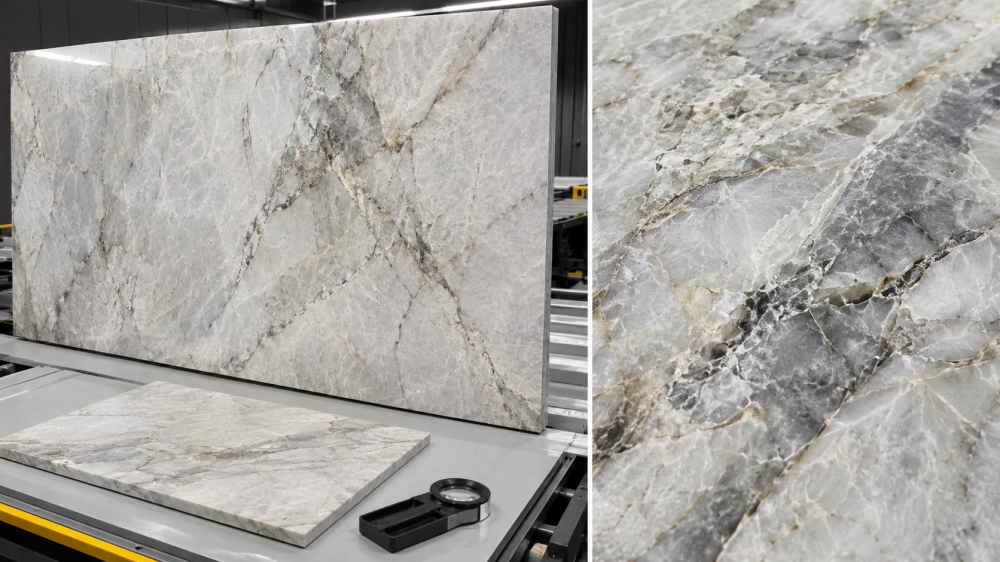
State intended use, finish, target dimensions, thickness basis, quantity, edge or fabrication scope, tolerances to be agreed, packaging, destination, delivery terms, and required documents. Separate assumptions from confirmed requirements so competing offers can be compared on the same basis.
The commercial documents should support the technical decision. Quotations, approvals, shop drawings, piece labels, packing records, and change notices need consistent terminology. If build a comparable request for quotation changes after approval, document the effect on price, yield, timing, appearance, and responsibility before work continues.
At the approval stage, ask four practical questions: what exactly is being accepted, what evidence supports it, who owns the next action, and how will a deviation be handled? For convert a visual stone selection into a controlled procurement process with clear approvals, inspection evidence, packing requirements, and document checks, these questions create a repeatable trail from selection through installation. They also make it easier to compare proposals without assuming that similar names or photographs represent identical material and service.
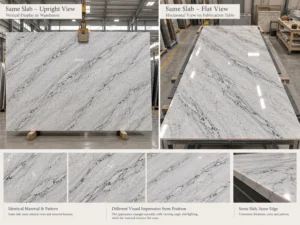
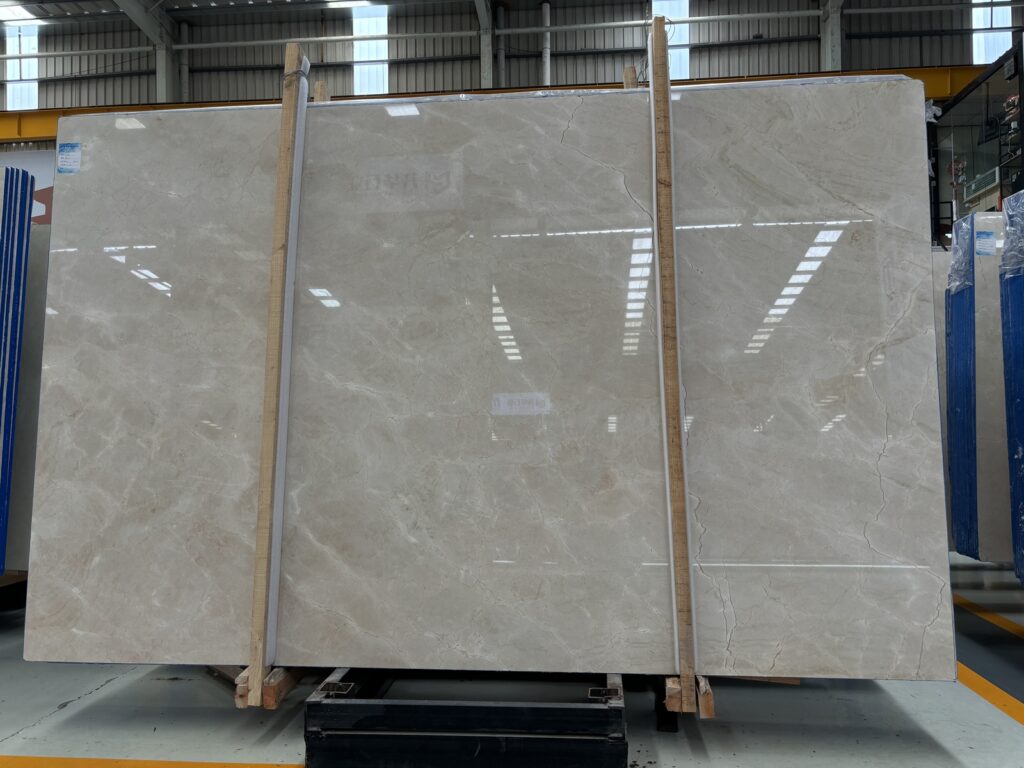
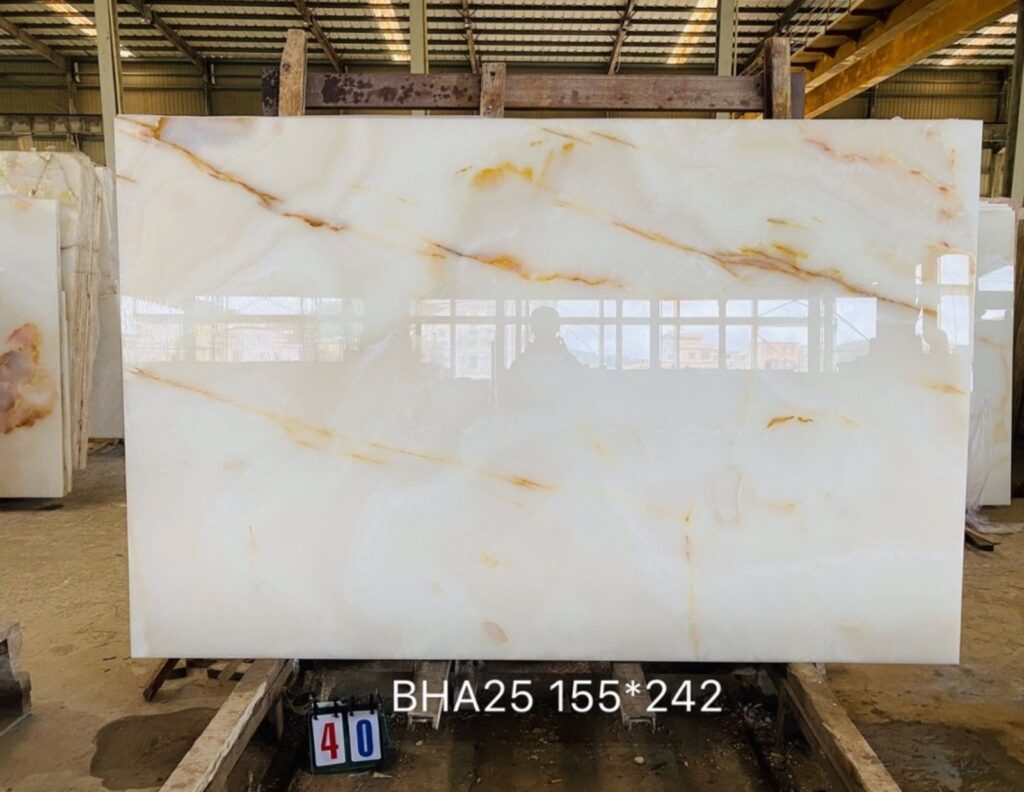
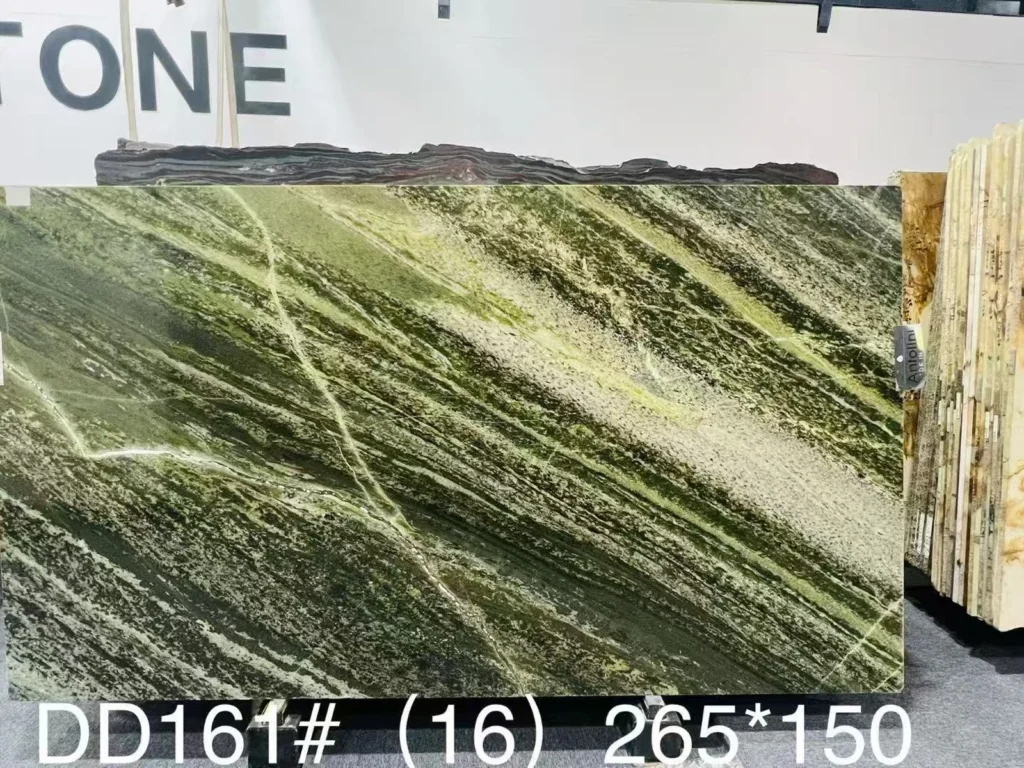
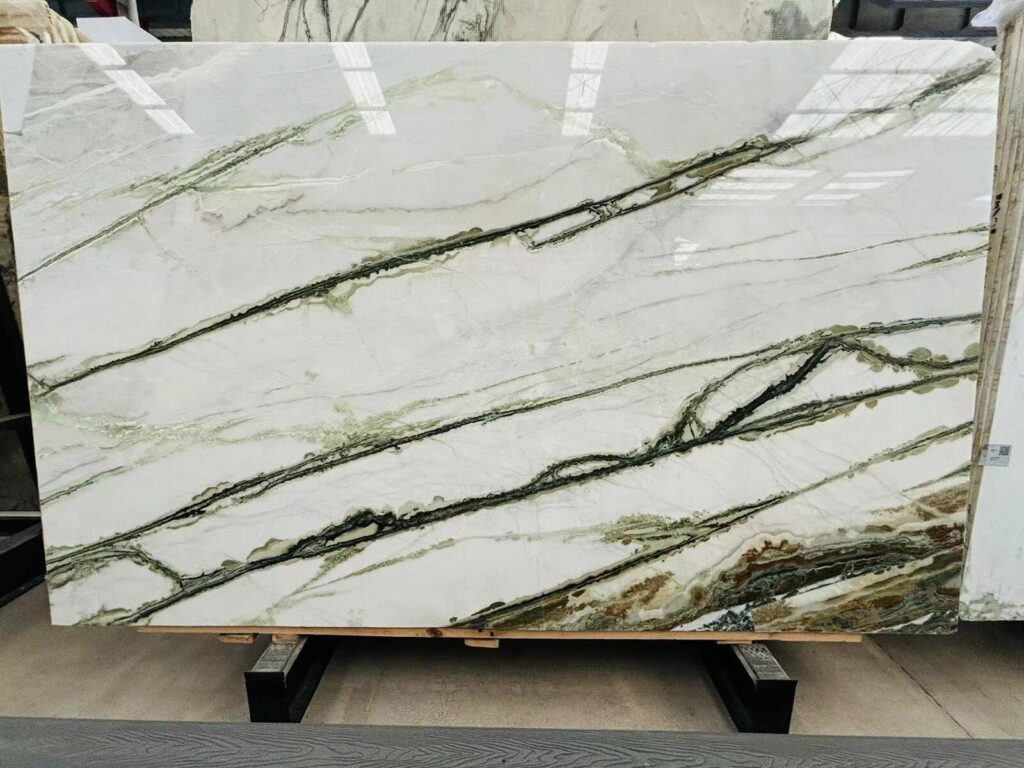
Request current, traceable images or video of the available slabs with identifiers and a scale reference. For visually sensitive work, require full-slab views, close-ups, raking-light views where useful, and a clear explanation of repairs or backing. Approval should identify the exact lot, not just a commercial color name.
Visual communication matters because natural stone is variable and cameras, screens, lighting, and wet surfaces can distort perception. Use identifiers and scale references, show both overall views and relevant details, and keep original files. Evidence should help the team understand range and placement rather than create an unrealistic promise of perfect uniformity.
At the approval stage, ask four practical questions: what exactly is being accepted, what evidence supports it, who owns the next action, and how will a deviation be handled? For convert a visual stone selection into a controlled procurement process with clear approvals, inspection evidence, packing requirements, and document checks, these questions create a repeatable trail from selection through installation. They also make it easier to compare proposals without assuming that similar names or photographs represent identical material and service.
Quartzite can contain veins, tonal transitions, fissures, mineral concentrations, and structural features. The team should distinguish acceptable natural character from conditions that conflict with fabrication or the design intent. A written range standard is more useful than vague terms such as premium or best quality.
Risk should be allocated to the party able to control it. The stone supplier can document the selected material; the fabricator controls cutting methods and shop execution; the installer controls site placement; designers coordinate intent; and the buyer confirms commercial acceptance. Clear interfaces reduce gaps where every party assumed someone else had checked evaluate natural variation fairly.
At the approval stage, ask four practical questions: what exactly is being accepted, what evidence supports it, who owns the next action, and how will a deviation be handled? For convert a visual stone selection into a controlled procurement process with clear approvals, inspection evidence, packing requirements, and document checks, these questions create a repeatable trail from selection through installation. They also make it easier to compare proposals without assuming that similar names or photographs represent identical material and service.
Define how length, width, thickness, finish, and any relevant flatness observations will be measured. Use calibrated tools where appropriate and record multiple readings. Gloss numbers or other test values should only be requested when a method and acceptance basis are agreed.
For importers, distributors, fabricators, designers, contractors, and project buyers, the useful question is not whether check dimensions, finish, and flatness is generally recommended, but what evidence will make the choice defensible for this order. Record the assumption, the person responsible for confirming it, the approval format, and the stage after which a change becomes costly. This turns a broad preference into a controlled project decision.
At the approval stage, ask four practical questions: what exactly is being accepted, what evidence supports it, who owns the next action, and how will a deviation be handled? For convert a visual stone selection into a controlled procurement process with clear approvals, inspection evidence, packing requirements, and document checks, these questions create a repeatable trail from selection through installation. They also make it easier to compare proposals without assuming that similar names or photographs represent identical material and service.
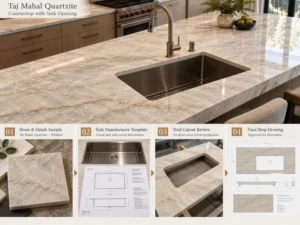
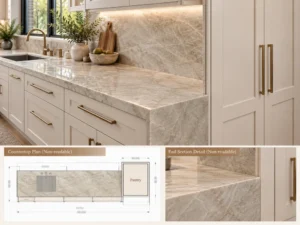
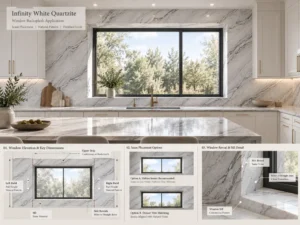
Share preliminary layouts, minimum piece sizes, vein-direction goals, sink and cooktop details, seam constraints, and edge requirements with the fabricator. Yield calculations should include realistic exclusions and pattern placement rather than assuming every square unit of a slab is usable.
Apply this point to the actual natural quartzite slabs sourced from China for kitchen countertops, not to an idealized sample. Compare full-scale appearance, measurements, drawings, and practical handling constraints. Where uncertainty remains, use a representative test, mock-up, fabricator review, or third-party inspection appropriate to the consequence of failure. Avoid inventing numerical acceptance limits unless the contract names a method and tolerance.
At the approval stage, ask four practical questions: what exactly is being accepted, what evidence supports it, who owns the next action, and how will a deviation be handled? For convert a visual stone selection into a controlled procurement process with clear approvals, inspection evidence, packing requirements, and document checks, these questions create a repeatable trail from selection through installation. They also make it easier to compare proposals without assuming that similar names or photographs represent identical material and service.

Crates or frames should be appropriate to the product, route, and handling method, with pieces restrained and protected from damaging contact. Labels should link slabs, crates, packing records, and approval evidence. Ask the supplier for packing photographs before dispatch.
The commercial documents should support the technical decision. Quotations, approvals, shop drawings, piece labels, packing records, and change notices need consistent terminology. If specify packing and identification changes after approval, document the effect on price, yield, timing, appearance, and responsibility before work continues.
At the approval stage, ask four practical questions: what exactly is being accepted, what evidence supports it, who owns the next action, and how will a deviation be handled? For convert a visual stone selection into a controlled procurement process with clear approvals, inspection evidence, packing requirements, and document checks, these questions create a repeatable trail from selection through installation. They also make it easier to compare proposals without assuming that similar names or photographs represent identical material and service.

Names, quantities, package counts, weights, marks, product descriptions, consignee details, and trade terms should be consistent across documents. Import requirements vary by destination, so the buyer or appointed broker should confirm current customs, treatment, labeling, and documentary rules.
Visual communication matters because natural stone is variable and cameras, screens, lighting, and wet surfaces can distort perception. Use identifiers and scale references, show both overall views and relevant details, and keep original files. Evidence should help the team understand range and placement rather than create an unrealistic promise of perfect uniformity.
At the approval stage, ask four practical questions: what exactly is being accepted, what evidence supports it, who owns the next action, and how will a deviation be handled? For convert a visual stone selection into a controlled procurement process with clear approvals, inspection evidence, packing requirements, and document checks, these questions create a repeatable trail from selection through installation. They also make it easier to compare proposals without assuming that similar names or photographs represent identical material and service.
Before unpacking, photograph the container or vehicle condition, seals where applicable, visible movement, crate condition, and labels. Record damage immediately and follow the carrier, insurer, and contract notice procedures. Do not discard packing evidence while a claim may be open.
Risk should be allocated to the party able to control it. The stone supplier can document the selected material; the fabricator controls cutting methods and shop execution; the installer controls site placement; designers coordinate intent; and the buyer confirms commercial acceptance. Clear interfaces reduce gaps where every party assumed someone else had checked inspect on arrival and preserve evidence.
At the approval stage, ask four practical questions: what exactly is being accepted, what evidence supports it, who owns the next action, and how will a deviation be handled? For convert a visual stone selection into a controlled procurement process with clear approvals, inspection evidence, packing requirements, and document checks, these questions create a repeatable trail from selection through installation. They also make it easier to compare proposals without assuming that similar names or photographs represent identical material and service.
Use one controlled specification and record every accepted change. Verbal messages about substitutions, quantity, finish, repairs, timing, or packing should be reflected in a revised document. This protects both parties and prevents different teams from acting on different instructions.
For importers, distributors, fabricators, designers, contractors, and project buyers, the useful question is not whether supplier communication and change control is generally recommended, but what evidence will make the choice defensible for this order. Record the assumption, the person responsible for confirming it, the approval format, and the stage after which a change becomes costly. This turns a broad preference into a controlled project decision.
At the approval stage, ask four practical questions: what exactly is being accepted, what evidence supports it, who owns the next action, and how will a deviation be handled? For convert a visual stone selection into a controlled procurement process with clear approvals, inspection evidence, packing requirements, and document checks, these questions create a repeatable trail from selection through installation. They also make it easier to compare proposals without assuming that similar names or photographs represent identical material and service.
| Decision area | What to confirm | Main control |
|---|---|---|
| Material identity | Consistent description and actual-lot evidence | Trade-name confusion or engineered-quartz substitution |
| Visual selection | Traceable full-slab images and range approval | Unexpected movement, color, or features |
| Fabrication fit | Layouts, piece sizes, cutouts, and yield review | Short pieces, poor vein flow, avoidable waste |
| Logistics | Packing specification, labels, photos, document check | Transit damage or identification disputes |
This workflow is deliberately evidence-based. It does not eliminate natural variation or every project risk, but it exposes assumptions early, when the team still has options. The most valuable approval is one that another person can understand later without reconstructing informal conversations.
Образец может быть полезен при обсуждении цвета и отделки, однако он редко отражает движение материала по всей плите или диапазон вариаций в пределах одной партии. Используйте его совместно с поддающимися проверке образцами целых плит и, для требовательных проектов, проведите осмотр фактического материала.
Одна лишь цена за единицу товара может скрывать различия в полезной площади, диапазоне выбора, толщине основы, условиях ремонта, упаковке, проверке, условиях оплаты и логистике. Сравнивайте полные поставляемые технические характеристики и распределение рисков, а не лишь ключевую цифру.
Ask for visible slab identifiers, date-specific instructions, scale references, continuous video, and a list connecting images to the quotation or packing record. An independent inspection can provide additional evidence when project risk justifies it.
Responsibility depends on the contract and destination rules. The importer should confirm current requirements with its customs broker, authorities, carrier, and other qualified advisers. The supplier should provide agreed documents accurately but should not replace destination-specific advice.
Quarantine the affected material, preserve packaging, photograph labels and conditions, compare against the approved specification, and notify relevant parties within contractual time limits. Avoid fabrication until disposition and responsibility are documented.
Every natural quartzite or marble project should be assessed using the actual stone, finish, drawings, and local fabrication and installation conditions. This article is general purchasing and specification guidance, not a substitute for geological, engineering, legal, customs, or site-specific professional advice.
For slab selection, project discussion, and export coordination, contact Josh at XIAMEN HRST STONE CO., LTD. Share the application, approximate sizes, finish, quantity, destination, and desired visual direction so the conversation can begin with a clear brief.
© 2026 XIAMEN HRST STONE CO., LTD. All rights reserved.