
“While modern life rushes toward instant results, White Dew—China’s 15th solar term—invites us to pause: its quiet beauty lies in slow transitions, a lesson even reflected in the enduring nature of natural materials like stone.”
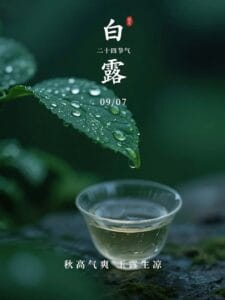
As a UNESCO-listed intangible cultural heritage, China’s 24 solar terms offer a 2,000-year-old lens into how humans live in harmony with nature. White Dew (September 7-9 annually) marks summer’s end and autumn’s arrival—not with dramatic storms, but with delicate dew drops that form overnight, glistening on grass, leaves, and even stone surfaces at dawn. For international friends curious about Chinese culture, this subtle 节气 (jiéqì, solar term) reveals the depth of China’s connection to the seasons.
What Is White Dew, Exactly?
The term “White Dew” (Bailu in Mandarin) comes from ancient observations: as temperatures drop, nighttime moisture thickens into pale, pearl-like dew. Unlike summer’s fleeting dew, it lingers into the morning—nature’s quiet signal that “cooler days are here.”
Ancient texts describe three key signs of White Dew (called “three phenological phases”):
- Migratory geese fly south to warmer climates
- Swallows return to their nests to prepare for migration
- Birds begin storing food for winter
Today, White Dew remains a practical guide: farmers in northern China harvest millet and soybeans, while southern regions prepare for autumn rice crops. For families, it’s a reminder to swap light summer clothes for warmer layers—especially at night.
Beloved White Dew Traditions (Across China)
White Dew’s customs are deeply regional, reflecting China’s diverse cultures. While practices vary, they all share a focus on gratitude for nature’s gifts:
These traditions aren’t just rituals—they’re ways to stay connected to nature’s rhythm in a fast-paced world.


When White Dew Meets Natural Stone: A Quiet Connection
You might wonder: what does a solar term about dew have to do with stone? For us at HRST Stone, the link is simple: both celebrate nature’s lasting beauty.
 White Dew’s dew drops fade by noon, but the natural materials we work with—quartzite, marble, and granite—endure for decades. Like the solar term’s focus on “slow, intentional living,” our stone solutions for luxury projects (hotels, mansions, clubs) are crafted to stand the test of time. We’ve brought this philosophy to projects across Europe and America, South America, and North Africa, where clients value both cultural respect and durable design.
Stone, like White Dew, tells a story of nature’s patience. A slab of quartzite forms over millions of years; a well-designed stone space becomes a legacy for families and businesses. It’s why we prioritize “one-stop solutions”—from material selection to delivery—so clients can focus on their vision, not logistics.
Why This Matters for Global Designers
For our clients—designers, project managers, and discerning homeowners—White Dew’s wisdom resonates: great design isn’t about trends. It’s about choosing materials that honor nature, last through seasons, and feel authentic.
Whether you’re designing a hotel lobby in Europe or a private residence in South America, stone from HRST brings that “timeless quality.” We understand the unique needs of international projects: consistent quality, clear communication, and support from design to delivery. No shortcuts—just the same care nature puts into every White Dew morning.
As the Chinese saying goes: “Each night after White Dew grows cooler.” Nature changes, but quality endures.
“White Dew teaches us to notice the small things. Great stone design? It turns those small moments into a lifetime of beauty.”


