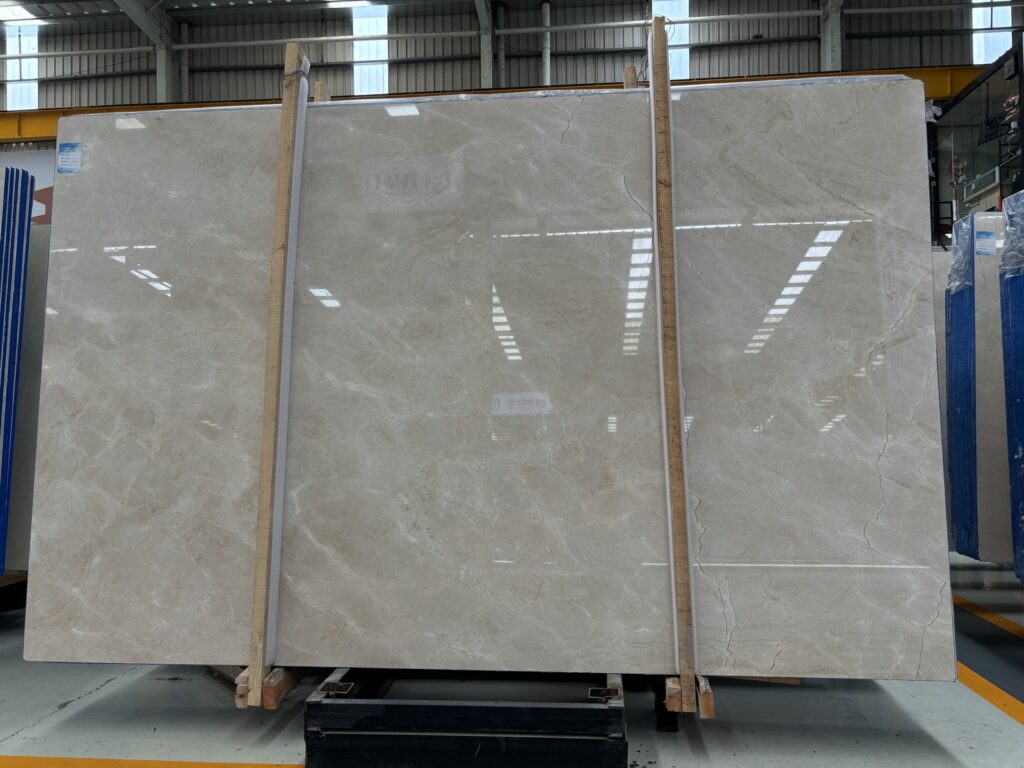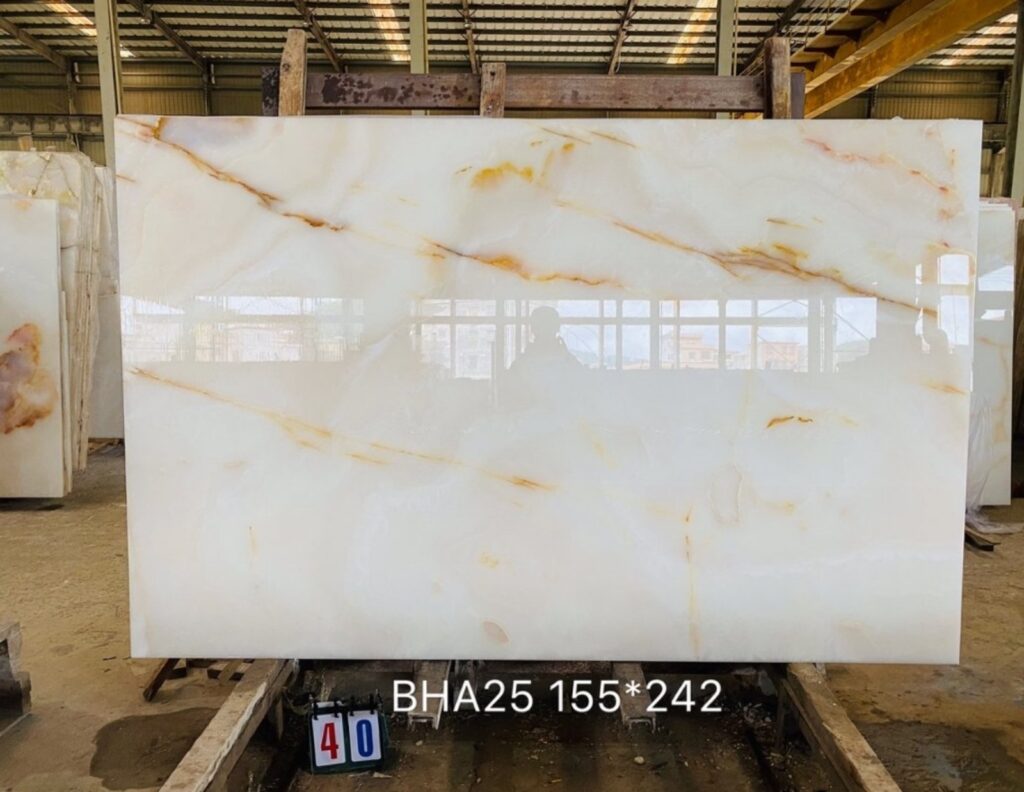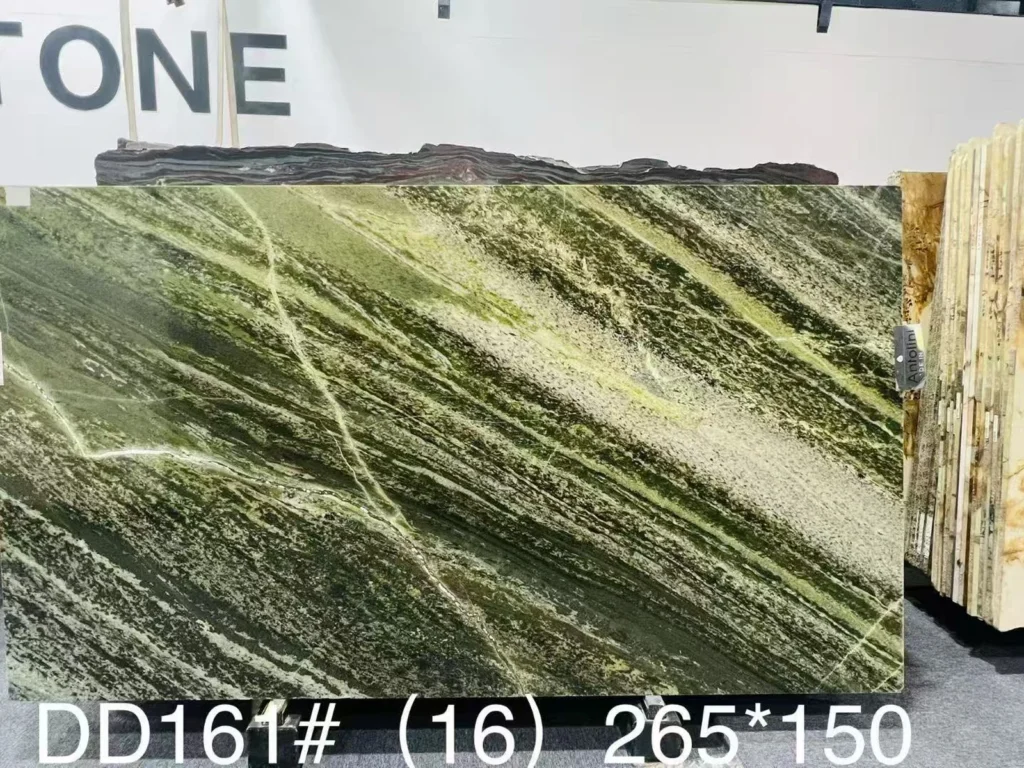
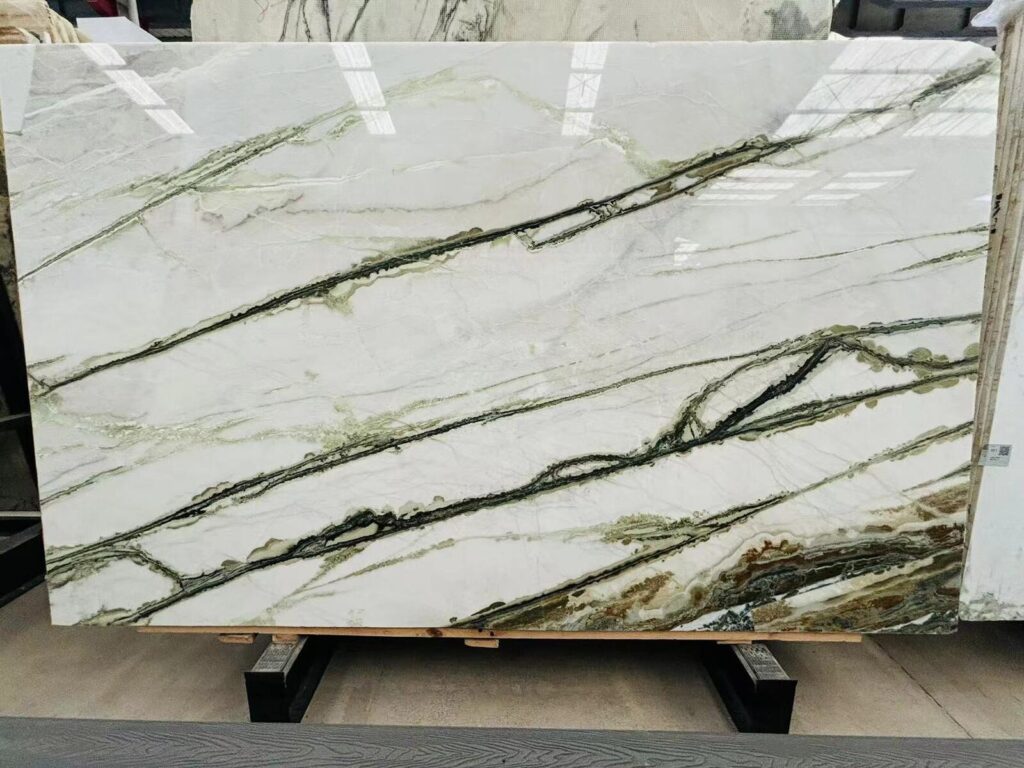

첫 번째로 보이는 판재가 겉보기에는 합격처럼 보인다고 해서 석영암 묶음 전체를 완전한 로트로 승인해서는 안 됩니다. 중간에 있는 판재들이 가려져 있다면, 구매자는 정확히 어떤 부분이 검사되었는지 명시하고 나머지 순서에 대한 추적 가능한 증거를 요청해야 하며, 필요한 시각적, 치수 및 제작 검사가 완료될 때까지 전체 로트 승인을 조건부로 유지해야 합니다.
빠른 요약여러 개의 석영암 판재가 묶음으로 함께 보관되어 있을 때, 앞쪽 판재가 그 뒤에 있는 모든 판재를 대표하는 것은 아닙니다. 자연적인 변동성, 지역적인 광물 특징, 수리 여부, 메쉬 백킹, 가장자리 손상, 색조 변화 및 방향성 움직임 등은 판재 순서마다 다를 수 있습니다. 전체 로트를 승인하기 전에, 묶음의 구성, 판재 수량 및 판재 순서를 파악하고, 필요한 경우 전체 판재의 모습을 확보하며, 아직 보이지 않는 부분을 명확히 규정하고, 승인이 전체 묶음 전체를 포함하는지, 일부 선택된 판재만을 포함하는지, 아니면 최종 검사가 완료될 때까지 조건부로 예약되는 것인지 명시해야 합니다.
ㅏ 석영암 판재 묶음 는 함께 보관, 취급 또는 공급되는 천연 석영암 판재들의 집합체로, 종종 관련 생산에서 나온 것이지만, 실제 자재를 검토하지 않고는 판재의 수나 시각적 유사도 정도를 결코 단정해서는 안 됩니다.
이러한 구분은 원거리에서 천연 석영암을 구매하는 수입업자, 가공업체, 디자이너 및 시공업체에게 중요합니다. 공급업체가 묶음의 첫 번째 판재 사진을 훌륭하게 보내올 수 있습니다. 그 사진은 완전히 진짜일 수 있지만, 그럼에도 불구하고 몇 장 뒤에 위치한 판재에 대해서는 구매자에게 거의 정보를 제공하지 못합니다.
그렇다고 해서 가려진 판재들이 자동으로 문제가 있다는 뜻은 아닙니다. 다만 승인을 위한 현재 이용 가능한 증거가 불완전하다는 의미입니다.
따라서 구매 결정 과정에서는 세 가지 질문을 구분해야 합니다: 실제로 어떤 판재들을 확인했는가? 어떤 판재들을 식별하고 추적할 수 있는가? 그리고 오늘날 이용 가능한 증거로 볼 때 어느 정도의 승인이 정당한가?
천연 석영암은 완벽하게 반복되는 패턴으로 만들어지는 제품이 아닙니다. 같은 블록에서 절단된 판재들조차도 정맥의 위치, 광물 농도, 결정 분포, 배경 색조 또는 자연 균열과 수리된 부분의 위치에서 차이를 보일 수 있습니다.

관련된 판재들이 전체적으로 매우 비슷해 보일 수 있지만, 여전히 중요한 국부적 차이를 내포하고 있습니다. 이러한 차이는 특히 프로젝트에서 대형 주방 아일랜드, 워터폴 엔드, 포인트 벽, 리셉션 프런트, 북매치 패널 또는 서로 시각적으로 연관되어야 하는 여러 조각을 필요로 할 때 더욱 중요해집니다.
앞쪽 판재 사진은 다음과 같은 유용한 정보를 확인할 수 있습니다:
그러나 이 사진만으로는 가려진 모든 판재가 동일한 사용 가능 면적, 동일한 주요 움직임, 동일한 수리 분포 또는 전체 표면에 걸쳐 동일한 상태를 가지고 있음을 확인할 수 없습니다.
승인 경계“앞쪽 판재 승인” 그리고 “전체 묶음 승인” 는 두 가지 다른 결정입니다.
만약 한두 개의 판재만이 완전히 검토되었다면, 승인 기록에 이를 명시해야 합니다. 보이지 않는 판재들은 암묵적으로 승인된 것으로 처리되기보다는 합의된 검사 요건의 적용을 받도록 해야 합니다.
이는 특히 원거리 구매에서 매우 중요합니다. 고해상도 사진과 영상은 전문적인 의사결정을 지원할 수 있지만, 구매자는 각 이미지가 어떤 판재를 나타내는지 보여주는 추적 가능한 기록이 여전히 필요합니다.
가려진 판재란 다른 판재들이 앞에 위치해 있거나, 검사를 위해 묶음을 충분히 열지 못해 현재로서는 전체 사용 가능한 표면을 검토할 수 없는 판재를 말합니다.
이 용어는 공급업체의 은폐를 자동으로 암시해서는 안 됩니다.
대형 석재 판재는 무거운 제품으로, 관리된 장비와 숙련된 인력이 있어야만 보관되고 이동할 수 있습니다. 활발한 공장이나 판재 야드에서는 모든 묶음을 개봉하는 데 공간, 취급 시간 및 적절한 안전 절차가 필요할 수 있습니다.
따라서 조달 문제는 단순히 판재가 물리적으로 가려져 있는지 여부가 아닙니다. 문제는 구매자가 승인을 내리기 전에 아직 검토되지 않은 부분이 무엇인지 이해하고 있는지 여부입니다.
예를 들어, 한 묶음에 여러 개의 관련 판재가 들어 있고, 공급업체가 판재 1과 2의 전체 사진을 보내주었지만 나머지 판재들은 그 뒤에 포장된 상태라고 가정해 보겠습니다. 구매자는 판재 1과 2를 합리적으로 검토할 수 있습니다. 하지만 추가적인 증거가 제공되지 않는 한, 나머지 모든 판재를 시각적으로 승인했다고 주장할 수는 없습니다.
유용한 묶음 기록은 따라서 물리적 순서와 승인 증거를 연결해야 합니다.
다음을 명시할 수 있습니다:
정확한 라벨링 시스템은 공급업체마다 다를 수 있습니다. 라벨 자체의 모양보다는 일관성과 추적성이 더 중요합니다.
구매자가 “승인됨”이라고 기재하기 전에, 양측 모두 그 승인이 무엇을 의미하는지 이해하고 있어야 합니다.
전체 묶음 승인에는 시각적 승인, 치수 승인, 제작 적합성, 수량 확인 또는 이들의 조합이 포함될 수 있습니다. 이러한 결정들은 하나의 모호한 메시지로 통합되어서는 안 됩니다.
| 승인 범위 | 검토해야 할 사항 | 승인이 자동으로 의미하지 않는 것 |
| 재료의 정체성 | 재료명, 묶음 참조, 마감 및 판재 수량 | 모든 판재가 동일한 색상이나 움직임을 가짐 |
| 시각적 범위 | 완전한 판재 표면, 색조 범위, 방향성 움직임 및 주요 자연적 특징 | Every area of every slab is suitable for every finished piece |
| 상태 | Visible repairs, fissures, resin, mesh, edge condition and relevant surface observations | An unseen condition has been inspected |
| 치수 | Usable dimensions where required by the project | Nominal slab size guarantees every cutting layout |
| Fabrication release | Approved slab allocation and current cutting drawings | Material approval alone authorizes cutting |
This distinction protects both buyer and supplier.
A buyer may accept the overall natural variation of the bundle while still requiring project-specific slab allocation before cutting. Conversely, a slab may be visually attractive but unsuitable for one particular large finished piece because the required usable area conflicts with a natural feature or slab geometry.
The safest commercial record states exactly which decision has been made.
The evidence required depends on the project value, visual sensitivity, number of slabs and intended fabrication.
A small vanity project does not require the same inspection package as a multi-slab kitchen island or hospitality feature wall. However, the evidence should always be sufficient for the decision being requested.

For visual approval, a complete slab photograph is more useful than several decorative close-ups.
The image should show all or nearly all of the usable face, including the main boundaries of the slab. Lighting should be reasonably consistent between slabs so that differences are not created merely by photographing one slab in direct sunlight and another under dark warehouse lighting.
Close photographs can then document specific mineral zones, repairs or areas the buyer wants to discuss.
The buyer should be able to connect each photograph with a specific physical slab.
That does not require publishing readable factory labels in marketing images. During project control, however, the supplier and buyer need a stable internal reference such as Bundle A / Slab 01, Bundle A / Slab 02 and so on.
If revised photographs are issued later, the same identity should continue to follow the slab.
For a bundle where visual continuity matters, sequential review can help the buyer understand how the material changes through the stack.
A practical sequence may show:
Slab 01 → Slab 02 → Slab 03 → Slab 04 → remaining slabs
The goal is not to create a promotional slideshow. The goal is to establish which physical slab follows which and whether the pattern or tone changes materially through the bundle.
Some quartzite slabs may have mesh reinforcement, resin treatment or other processing visible from the back. Whether the back needs to be reviewed depends on the project and the material.
When it matters to fabrication, ask for relevant back-surface photographs rather than assuming all slabs in the bundle have identical reinforcement conditions.
Evidence LadderLevel 1: One visible front slab — useful for preliminary material discussion.
Level 2: Several identified slab faces — useful for understanding the developing range.
Level 3: Identified sequential slab photographs or controlled video — stronger evidence for bundle review.
Level 4: Full slab review plus project cutting layout — appropriate when the exact usable areas matter before fabrication.
The purpose of inspection is not to reject natural variation. It is to understand it before the stone is allocated to finished work.
Natural quartzite may contain changes that are expected characteristics of geological material as well as repaired or processed areas introduced during slab production. These should be reviewed in context rather than automatically described as defects.
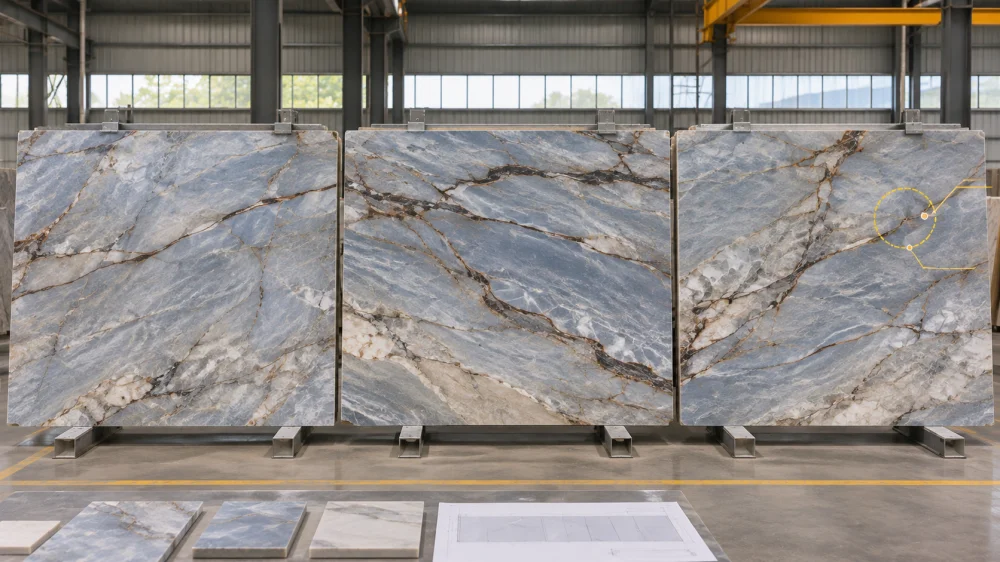
A slab positioned deeper in a bundle may be lighter, darker, warmer or cooler than the first slab.
For a single countertop this may be perfectly acceptable. For one continuous reception wall using several slabs, the same tonal change may need deliberate allocation.
Direction can matter more than colour.
A set of slabs may share a similar background but contain a major diagonal movement on one slab and a more horizontal movement on another. That becomes important when a project expects a visual flow across seams or waterfall returns.
This is why strongly directional stones should be reviewed as actual slabs rather than approved from a small sample.
For example, 블루 로마 규암 can show noticeable changes in dark mineral concentration, cloudy areas and dominant movement between individual slabs. The project layout should therefore use the actual selected slabs rather than assuming one photographed slab represents the entire supply.
Quartzite may contain natural fissures, crystal transitions, mineral lines or other geological features. Their significance depends on location, geometry and intended fabrication.
A feature near the edge of an unused slab area may have little project impact. The same feature positioned through a narrow bridge beside a sink cutout may require additional fabrication review.
Slab processing can include resin filling or local repair. Buyers should distinguish visible processing from geological variation and review any relevant areas against the acceptance criteria agreed for the order.
A photograph should document a significant repair rather than rely on vague descriptions such as “normal” or “not normal.” The useful question is whether the actual condition is acceptable for the intended finished piece.
Some natural stone slabs may use mesh reinforcement on the reverse side. Mesh presence alone does not establish whether a slab is suitable or unsuitable for a particular fabrication.
If the proposed project contains large cutouts, narrow sections or demanding handling conditions, the fabricator should review the actual slab and finished geometry before cutting.
Consecutive slabs can be valuable when a project requires related visual movement, but the word consecutive should not be interpreted as a guarantee of perfect matching.
Depending on how the block was cut and how the natural geology moves through it, two neighboring slabs may relate strongly or may show noticeable differences.
The buyer should therefore verify the relationship rather than approve based on terminology alone.
For projects where matching matters, place the slab images in physical sequence and review them at a comparable scale.

Look for:
If a design requires mirrored or bookmatched effects, confirm the actual slab relationship before promising the result.
Two consecutive slabs are not automatically a bookmatch pair.
The appropriate step is to review the real slabs together with the finished elevation or cutting layout.
This is where approval language becomes especially important.
There may be legitimate operational reasons why a full bundle cannot be completely opened at the first commercial stage. The buyer then has several options other than pretending the hidden slabs have already been inspected.
| Situation | Possible Buyer Decision | Recommended Record |
| Only front slabs visible | Preliminary material acceptance | Identify exactly which slabs were viewed |
| Bundle needs to be commercially reserved | Conditional reservation | Reservation subject to agreed slab inspection |
| Some slabs can be opened | Partial inspection | Record inspected and uninspected slab references separately |
| All slabs required for sensitive layout | Hold final visual approval | Release approval after complete slab evidence |
| Material accepted but layout unresolved | Approve material only | Fabrication remains on hold pending slab allocation |
There is no need to create a universal sampling percentage for every order.
A low-risk repetitive cut-to-size project and a five-slab feature wall do not require the same review depth. The buyer, supplier and fabricator should establish an inspection level appropriate to the actual risk.
The important point is that a partial review should remain clearly described as partial.
Bundle approval is only one step in the purchasing process.
Once the stone is intended for fabricated work, the next decision is how finished pieces will be positioned on the approved slabs.
This is where hidden-slab inspection becomes commercially valuable. If all required slabs have already been identified and reviewed, the fabricator can build a layout around actual vein direction, usable areas and local features.
Without that information, a design team may approve a material family but discover later that its preferred large island cannot be positioned on the available slabs in the expected way.
The cutting layout should identify the relevant finished pieces, orientation, visible edges, major openings and seam relationships.
For visually sensitive projects, compare the proposed layout with complete slab photographs before cutting.
The process should be:
Bundle Identification → Slab Review → Slab Selection → Cutting Layout → Drawing Approval → Fabrication Release
Not:
Front Slab Photo → Whole Bundle Approved → Cutting Begins
HRST STONE describes its production workflow as beginning with material selection before slab processing and cut-to-size fabrication. Its inspection and production-control service also covers stone production through dry laying and packing. For project procurement, that inspection workflow is most useful when the buyer’s required approval points are defined before fabrication starts.
Fabrication Hold PointDo not treat a commercial stone reservation as permission to cut.
If finished-piece placement depends on the actual slab movement, repairs or usable zones, keep fabrication on hold until the required slabs and cutting layout have been approved.
A useful final approval record is short enough to understand but specific enough to prevent later disagreement.
It should identify the material and bundle, what was reviewed, what was accepted and which decisions remain separate.
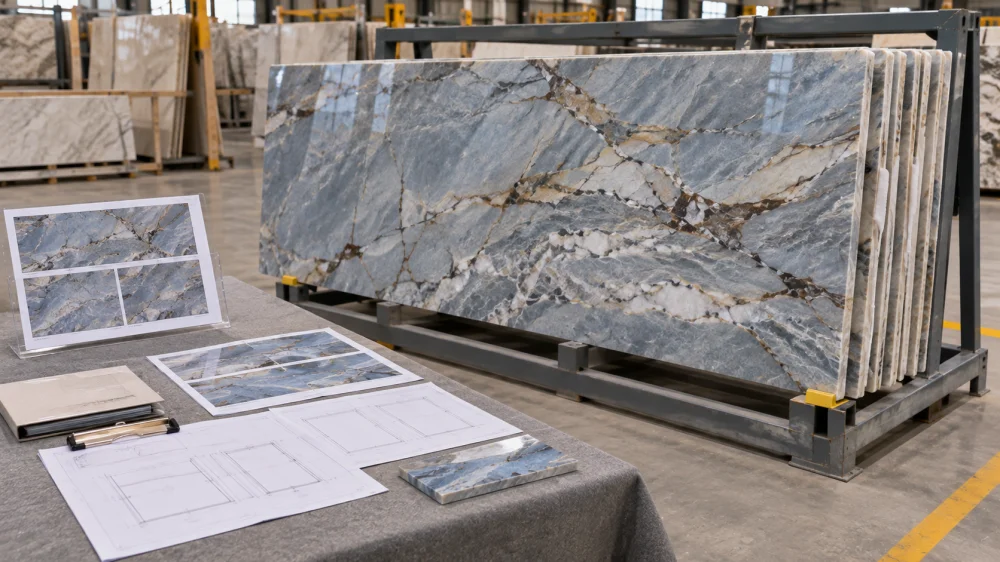
For example, a procurement record may state that all identified slabs in a particular bundle have been visually reviewed from complete front-face photographs and accepted for the agreed natural variation range, while final allocation for the kitchen island remains subject to cutting-layout approval.
Another project may record that only three of six offered slabs were inspected and that the remaining slabs must be photographed before final purchase approval.
These statements are more useful than the single word “approved.”
If the project is still at the purchasing stage, avoid requesting guarantees for information that has not yet been verified. Ask instead for the current stock evidence, offered quantity, slab references, condition records and commercial reservation terms.
For a project-specific quartzite inquiry, buyers can send the required material, quantity, slab dimensions, finish, drawings and delivery destination through the HRST STONE contact page. Where complete slab approval is required, state that requirement at the beginning of the enquiry rather than after cutting has already been scheduled.
전체 판재 사진 한 장으로는 초기 자재 승인을 받을 수 있지만, 그 뒤에 있는 모든 판재의 외관이나 상태를 보여주는 것은 아닙니다. 전체 번들 승인이 필요한 경우, 프로젝트에 적합한 수준으로 추가 판재를 식별하고 검토한 증빙 자료를 요청하십시오.
아닙니다. 연속된 판재는 서로 관련된 지질과 이동을 가질 수 있지만, 자연적인 변이로 인해 전체 시퀀스에서 차이가 발생할 수 있습니다. 색상 균형, 무늬의 방향, 북매칭 또는 연속성이 중요한 경우에는 실제 판재를 검토해야 합니다.
모든 프로젝트에 동일한 검사 방법이 필요한 것은 아닙니다. 시각적 감수성이 중요한 제작의 경우, 전체 슬래브 증거가 필요할 수 있습니다. 다른 주문의 경우, 구매자는 정해진 부분 검사 또는 조건부 예약에 동의할 수 있습니다. 승인 기록에는 실제로 검토된 슬래브가 명확히 기재되어야 합니다.
합리적으로 일정한 조명 하에서 관련 슬래브의 전면을 촬영하고, 슬래브 식별이 안정적으로 이루어지도록 한 뒤, 논의가 필요한 상태에 대해서는 근접 촬영을 수행하십시오. 또한 보강재 또는 제작 상태가 중요한 경우 후면 사진도 유용할 수 있습니다.
아니요. 메시 배면은 일부 자연석 슬래브의 보강재로 사용될 수 있습니다. 관련성이 있는 경우 이를 문서화해야 하며, 제작자는 메시만을 자동 거부 기준으로 삼기보다 실제 슬래브 상태와 최종 제품의 형상을 평가해야 합니다.
네, 두 결정 사항이 명확히 구분되는 경우에 한합니다. 구매자는 자재와 선정된 판재는 수령하되, 실제 절단 배치도, 이음 위치, 방향 및 중요 사용 가능 영역이 승인될 때까지 가공은 보류할 수 있습니다.
석영암의 이름, 필요 슬래브 수량, 대략적인 치수, 마감 처리, 프로젝트 도면, 최종 가공 부재 및 배송 목적지를 보내 주십시오. 사전 재고 검토, 완전한 슬래브 사진, 연속 슬래브 검토, 프로젝트 레이아웃 승인 또는 최종 제작 발주가 필요한지 여부를 명시해 주시기 바랍니다.
구매자 의사결정A hidden slab should not automatically be rejected, but it should not automatically be approved either.
The correct decision depends on what evidence is available and what the project requires. Identify the bundle, connect photographs to real slabs, define the inspection boundary and keep cutting separate from material reservation. When the design depends on vein continuity or large usable areas, review the actual slab sequence and proposed layout before fabrication.
Buyer Next Step: Ask the supplier to show which slabs are included in the offered bundle, which have been fully reviewed and which still require evidence before whole-lot approval.