ブログ

冬至:中国における陰の極致と光の再生

In the grand cycle of the Chinese lunar calendar, no solar term carries as much emotional and philosophical weight as the Winter Solstice. Known in Mandarin as Dōngzhì (冬至), meaning “the Arrival of Winter”, this is the 22nd of the 24 Solar Terms. While many cultures celebrate the shortest day of the year with a sense of trepidation, the Chinese tradition views the Winter Solstice as a pivotal turning point—a moment where the extreme cold begins its slow retreat, making way for the inevitable return of warmth and vitality. Indeed, there is an ancient saying: “Dōngzhì dà rú nián“, which translates to “the Winter Solstice is as significant as the Lunar New Year.”

The Astronomy of the Winter Solstice

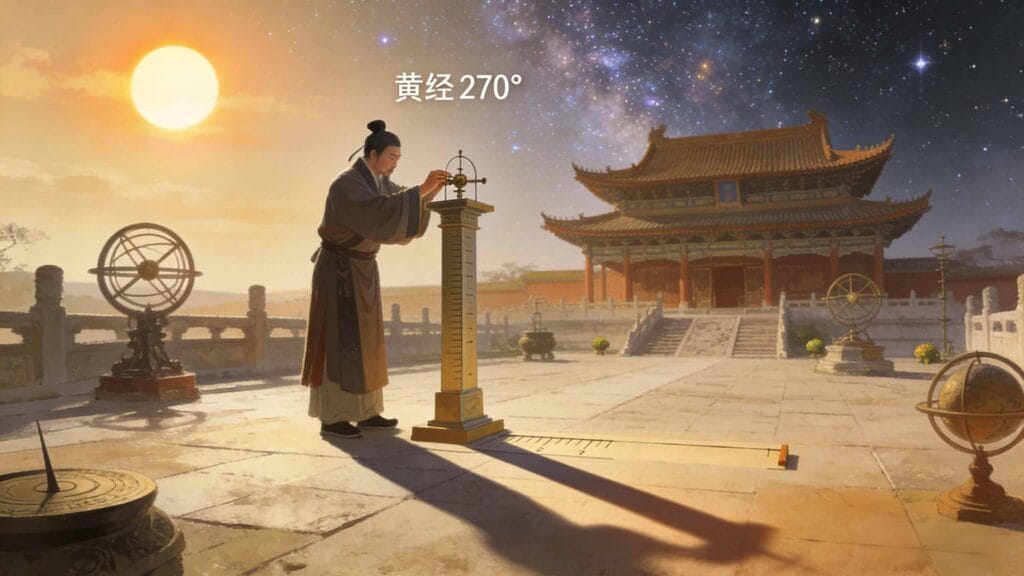
Scientifically speaking, the Winter Solstice occurs when the sun reaches a celestial longitude of $270^\circ$. In the Northern Hemisphere, this results in the shortest day and the longest night of the year. For the ancient Chinese astronomers, who were meticulous observers of the heavens, this was the moment when the Yin energy (representing darkness, cold, and stillness) reached its absolute zenith.

However, the beauty of Chinese philosophy lies in its duality. At the very second Yin peaks, it begins to wane, and the first spark of Yang (light and heat) is reborn. This makes the Winter Solstice a celebration of hope. From this day forward, the days will gradually lengthen, and the journey toward spring officially begins. In 2025, we observe this shift on the 21st or 22nd of December, marking a period where the “Nine Nine-Day Units” of winter begin their countdown.


Culinary Traditions: The Great Dumpling-Tangyuan Divide

If you want to understand the cultural geography of China, look no further than the dinner table during the Winter Solstice. The country is famously divided by a friendly culinary rivalry between the North and the South.

1. Northern China: Dumplings and Ear Protection

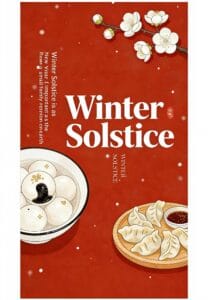
In the north, the Winter Solstice is synonymous with Dumplings (Jiǎozi). This tradition is steeped in medical folklore. Legend has it that the famous physician Zhang Zhongjing once saw poor villagers suffering from frostbitten ears during a particularly harsh winter. He cooked a batch of lamb, peppers, and warming herbs, wrapped them in dough scraps shaped like ears, and fed them to the people. Today, Northerners eat dumplings to “warm their ears,” believing that skipping this meal might lead to frostbite during the “Three Nine-Day” cold spells.

2. Southern China: Tangyuan and Family Unity

Travel south of the Yangtze River, and you will find families gathering to roll Tangyuan—sweet, glutinous rice balls filled with black sesame or red bean paste. The round shape of the Tangyuan and the bowls they are served in symbolise Tuányuán (reunion) and wholeness. In some regions, these treats are even used as sacrificial offerings to ancestors before being enjoyed by the living, reinforcing the bond between generations during the darkest night of the year.

3. Mutton Soup and Red Beans

Beyond the “big two,” other regional delicacies include the mutton soup of Suzhou and Ningxia, which provides a blast of heat to the internal organs. In some parts of the Jiangnan region, people consume red bean porridge to ward off “evil spirits” and plagues that were traditionally thought to roam during the solstice.

The “Nine Nine-Day” Countdown

A unique cultural feature of the Winter Solstice is the “Counting of the Nines” (Shùjiǔ). The 81 days following the solstice are divided into nine periods of nine days each. Ancient Chinese folk songs describe the progression of winter through these units:

  • 1st and 2nd Nines: It is so cold that people keep their hands in their pockets.

  • 3rd and 4th Nines: One can walk on the ice of the frozen rivers.

  • 7th Nine: The rivers begin to thaw and the wild geese return.

  • 9th Nine: The winter has passed, and “the cattle are in the fields.”

This ritualistic counting served as a psychological tool to help people endure the “Bitterness of Winter,” reminding them that spring is always a mathematical certainty.


TCM and Wellness: Cultivating the “Yang” Spark

In 中国伝統医学(TCM), the Winter Solstice is the most critical time for health maintenance. Because the Yang energy is just being reborn—fragile like a flickering candle—it must be protected and nurtured.

  • Avoid Over-Exertion: This is not the time for high-intensity interval training or marathon running. TCM advises “closing and storing” (Shōu cáng). Gentle movement like Tai Chi is preferred to prevent the loss of essence through excessive sweating.

  • Moxibustion: Many practitioners recommend Moxibustion (burning dried mugwort near the skin) during the solstice. Applying heat to the Shenque (navel) or Zusanli points is believed to stimulate the nascent Yang and boost the immune system for the coming year.

  • Dietary Tonics: The period following the Winter Solstice is considered the “Golden Window” for taking herbal tonics. Ingredients like Goji berries, Ginseng, and Astragalus are often stewed with meats to fortify the body’s “original Qi.”


FAQ: Common Questions about the Winter Solstice

1. Is the Winter Solstice a public holiday in China?

It is not an official public holiday like the Mid-Autumn Festival or Golden Week, meaning schools and offices remain open. However, it is a significant “folk festival,” and many people leave work early to enjoy a family dinner.

2. Why is the Winter Solstice called “the Arrival of Winter” when it’s already cold?

In the Chinese system, the solstice represents the peak of winter’s astronomical power. While “Minor Snow” and “Major Snow” describe the weather, Winter Solstice describes the solar cycle. It marks the start of the most intense cold period, known as the “Three Nine-Day” period.

3. Do people still “count the nines” today?

While modern heating has made the ritual less about survival, many people still follow the “Nine Nine-Day” songs as a way to stay connected to nature and traditional weather forecasting.

4. Can I eat both dumplings and Tangyuan?

Absolutely! In modern, cosmopolitan cities like Shanghai or Beijing, many families embrace both traditions—savoury dumplings for the main course and sweet Tangyuan for dessert.

The Cultural Legacy of Dongzhi

Winter Solstice reminds us that life is cyclical. In a world that often demands constant growth and “summer-like” productivity, DàxuěDōngzhì offer a permit to rest. It is a time for 祖先崇拝, for gratitude, and for the quiet joy of a warm meal shared with loved ones while the wind howls outside. Whether you are biting into a steaming dumpling or a sweet rice ball, you are participating in a ritual that has sustained the Chinese spirit for over 2,000 years.


参考文献と外部リンク

関連製品

パラダイスブルーマーブル 1662174401200 4

スカイブルーマーブル

スカイブルーマーブルは、淡いアイスブルーの大理石に独特の淡い色合いを混ぜ合わせたもので、筋が波打っていて繊細で、全体が流れる水のように見えます。多くの人がこの美しい石と、カウンタートップなどのインテリア装飾に使用されるバリエーションに魅了されてきました。

続きを読む "

ドーバーホワイト大理石

ドーバー・ホワイト大理石は、微妙なグレーとベージュの脈理を持つ多用途でエレガントな大理石で、インテリアとエクステリアの両方のデザイン・プロジェクトに適しています。明るくニュートラルな色合いは、伝統的なスタイルにもコンテンポラリーなスタイルにも適しています。ドーバーホワイト大理石は、耐久性に優れ、熱に強く、お手入れが簡単なため、住宅や商業施設で人気があります。長持ちさせ、自然の美しさを保つためには、評判の良い業者から仕入れ、倫理的な慣習に従うことが不可欠です。定期的なシーリングと研磨剤を含まない製品でのクリーニングをお勧めします。

続きを読む "

ビトリア レジア クォーツァイト

ヴィトーリア・レジアは、大理石の特性と美観を持ちながら、花崗岩の硬度と多孔性を持つエキゾチックな天然石です。インテリア・デザイン・プロジェクト、バスルームのクラッディング、キッチンの天板、テーブルトップ、ブックマッチのフローリングに最適です。ポリッシュ仕上げでもサテン仕上げでも、ヴィトーリア・レジアは美しいブラジルの石です。

続きを読む "