簡単なまとめ
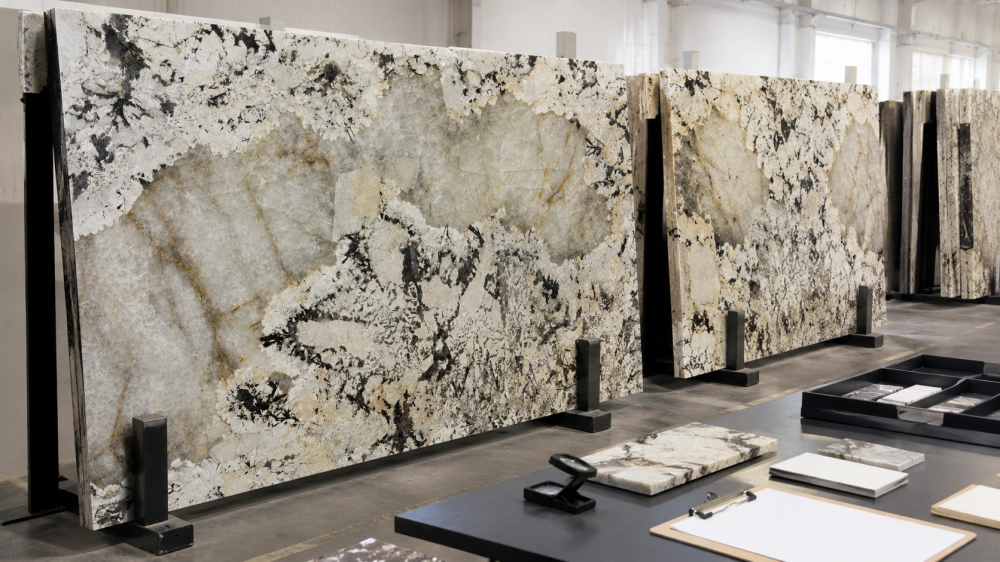
Ultimate Patagonia Quartzite Guide for Statement Walls And Islands: Design, Cost, Sourcing, Fabrication, and Maintenance is best approached as a buyer decision, not a label-only selection. This guide explains a practical way to evaluate Patagonia Quartzite while keeping Natural Quartzite, slab variation, fabrication coordination, and project documentation in view.
For international importers, fabricators, designers, architects, contractors, and procurement teams, the useful question is not whether a commercial stone name sounds suitable. The useful question is whether the selected slabs, planned layout, fabrication details, and handover requirements are aligned before work begins. A reliable review connects appearance with the practical decisions that affect cutting, transport, installation, and future care.Natural Quartzite should be assessed as natural stone, not as a uniform industrial product. Tone, movement, translucency, fissures, and the way a surface reads under light can vary from slab to slab. That variation can be desirable, particularly in feature applications, but it needs a documented approval process. Buyers should use the actual proposed slabs and a clear layout conversation as the reference point for the order.

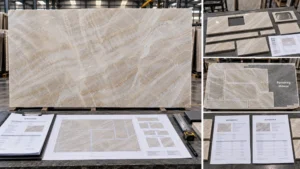
Start the specification with the room and the interface conditions. Record finished dimensions, substrate or support assumptions, access constraints, joint locations, lighting direction, adjacent finishes, and the required surface treatment. This information gives the design team and fabricator a shared basis for deciding how the material will be used, rather than treating slab selection as an isolated purchasing task.Commercial names are useful for communication, but they do not replace slab-by-slab review. Ask what is visibly present in the proposed material and discuss it in precise terms: background tone, vein direction, areas of stronger movement, open or filled natural features, and finish. A careful description avoids promising a perfectly repeated pattern where natural material will not behave that way.
| 意思決定領域 | 確認すべき事項 | Why it matters |
|---|---|---|
| Visual approval | Actual slab photos, tone, movement, and orientation | Natural variation should be approved before cutting. |
| 加工 | Sizes, thickness, seams, edges, and cut-outs | These details affect allocation and coordination. |
| 物流 | Packing requirements, access, and delivery destination | Handling needs influence the practical order plan. |

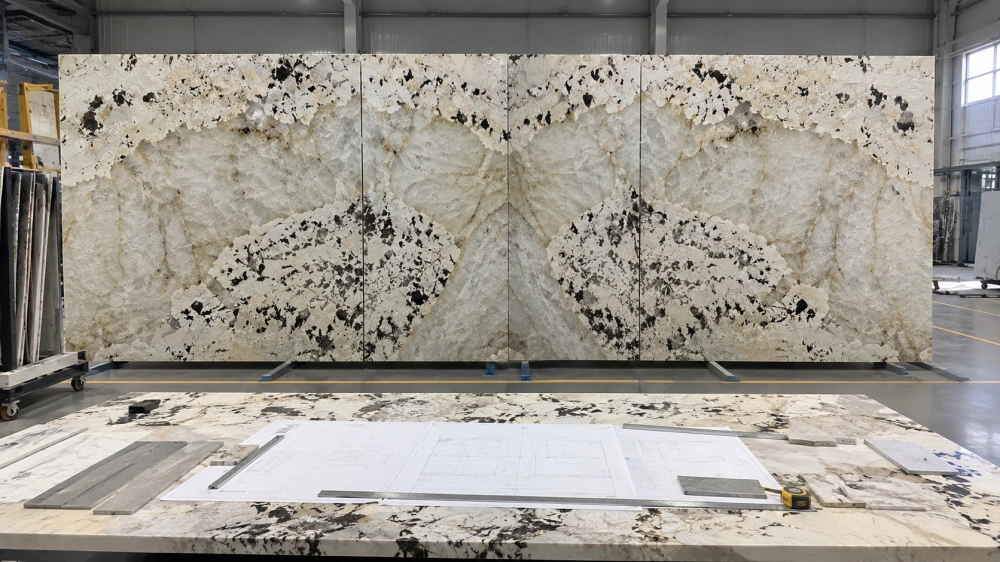
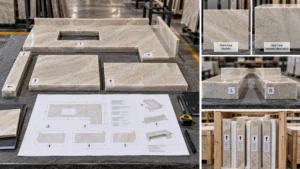
Fabrication planning should begin before final approval. A drawing can identify panel sizes, thickness, returns, edge details, cut-outs, seams, and bookmatched faces. The goal is not to over-engineer every order; it is to identify the details that change how a slab must be allocated and handled. Clear drawings also let a project team compare alternatives without assuming that every visual concept has the same practical path.For projects that cross borders, documentation is part of quality control. Confirm the material description, finish, quantities, finished-size schedule, packing expectations, contact points, and delivery destination. When the decision record is clear, later questions can be answered against approved information instead of recollection. This is especially valuable where purchasing, fabrication, and installation are handled by different organizations.

Do not use generic performance claims as a substitute for application review. Natural stone performance depends on the specific material, finish, fabrication, support, exposure, care routine, and installation conditions. Where a project has demanding technical or code-related requirements, the responsible project professionals should define the applicable criteria and request the appropriate project-specific documentation.A sample can help establish a design direction, but it cannot fully show the movement or scale of a full slab. Use samples for initial material conversations, then move to slab photographs, video, or in-person inspection for final visual approval. Include a scale reference and consistent lighting wherever possible, because a surface that reads quietly in a small sample can be much more active across a large wall or island.
| Buyer document | Useful content | Responsible decision |
|---|---|---|
| Slab approval record | Slab identification, images, variation notes, layout direction | Visual acceptance |
| Fabrication drawing | Finished sizes, joints, edges, cut-outs, interfaces | Cutting and installation coordination |
| Project brief | Quantity, surface, schedule context, delivery destination | Commercial and logistics review |
Handling and installation should be part of the conversation, not an afterthought. Confirm access routes, lifting constraints, panel weights, support strategy, sequencing with other trades, and protection after installation. These details are normally coordinated by the responsible fabricator and installer, but purchasers can reduce risk by ensuring that they are raised early enough to influence panelization and packing.Care guidance should be limited to what can be supported by the selected material, finish, and installation context. Discuss the expected use, cleaning routine, and any sealer or maintenance approach with the responsible stone-care professional or fabricator. Avoid treating a single generic care statement as a promise for every Natural Quartzite slab or every site condition.

A well-run approval process makes room for questions. It records what is known, what is still to be confirmed, and who owns each decision. This approach protects the aesthetic intent while respecting the reality of natural variation, fabrication tolerances, and site coordination. It also gives procurement teams a more useful audit trail than a list of broad marketing claims.The strongest buyer brief is concise but specific. It identifies the material name, intended application, dimensions, quantity, drawings, surface, edge or panel requirements, delivery destination, and target decision date. With that information, the project team can focus its review on choices that are actually relevant to the order.
For international importers, fabricators, designers, architects, contractors, and procurement teams, the useful question is not whether a commercial stone name sounds suitable. The useful question is whether the selected slabs, planned layout, fabrication details, and handover requirements are aligned before work begins. A reliable review connects appearance with the practical decisions that affect cutting, transport, installation, and future care. Fabrication planning should begin before final approval. A drawing can identify panel sizes, thickness, returns, edge details, cut-outs, seams, and bookmatched faces. The goal is not to over-engineer every order; it is to identify the details that change how a slab must be allocated and handled. Clear drawings also let a project team compare alternatives without assuming that every visual concept has the same practical path.
Natural Quartzite should be assessed as natural stone, not as a uniform industrial product. Tone, movement, translucency, fissures, and the way a surface reads under light can vary from slab to slab. That variation can be desirable, particularly in feature applications, but it needs a documented approval process. Buyers should use the actual proposed slabs and a clear layout conversation as the reference point for the order. For projects that cross borders, documentation is part of quality control. Confirm the material description, finish, quantities, finished-size schedule, packing expectations, contact points, and delivery destination. When the decision record is clear, later questions can be answered against approved information instead of recollection. This is especially valuable where purchasing, fabrication, and installation are handled by different organizations.
Start the specification with the room and the interface conditions. Record finished dimensions, substrate or support assumptions, access constraints, joint locations, lighting direction, adjacent finishes, and the required surface treatment. This information gives the design team and fabricator a shared basis for deciding how the material will be used, rather than treating slab selection as an isolated purchasing task. Do not use generic performance claims as a substitute for application review. Natural stone performance depends on the specific material, finish, fabrication, support, exposure, care routine, and installation conditions. Where a project has demanding technical or code-related requirements, the responsible project professionals should define the applicable criteria and request the appropriate project-specific documentation.
Commercial names are useful for communication, but they do not replace slab-by-slab review. Ask what is visibly present in the proposed material and discuss it in precise terms: background tone, vein direction, areas of stronger movement, open or filled natural features, and finish. A careful description avoids promising a perfectly repeated pattern where natural material will not behave that way. A sample can help establish a design direction, but it cannot fully show the movement or scale of a full slab. Use samples for initial material conversations, then move to slab photographs, video, or in-person inspection for final visual approval. Include a scale reference and consistent lighting wherever possible, because a surface that reads quietly in a small sample can be much more active across a large wall or island.
Fabrication planning should begin before final approval. A drawing can identify panel sizes, thickness, returns, edge details, cut-outs, seams, and bookmatched faces. The goal is not to over-engineer every order; it is to identify the details that change how a slab must be allocated and handled. Clear drawings also let a project team compare alternatives without assuming that every visual concept has the same practical path. Handling and installation should be part of the conversation, not an afterthought. Confirm access routes, lifting constraints, panel weights, support strategy, sequencing with other trades, and protection after installation. These details are normally coordinated by the responsible fabricator and installer, but purchasers can reduce risk by ensuring that they are raised early enough to influence panelization and packing.
For projects that cross borders, documentation is part of quality control. Confirm the material description, finish, quantities, finished-size schedule, packing expectations, contact points, and delivery destination. When the decision record is clear, later questions can be answered against approved information instead of recollection. This is especially valuable where purchasing, fabrication, and installation are handled by different organizations. Care guidance should be limited to what can be supported by the selected material, finish, and installation context. Discuss the expected use, cleaning routine, and any sealer or maintenance approach with the responsible stone-care professional or fabricator. Avoid treating a single generic care statement as a promise for every Natural Quartzite slab or every site condition.
Do not use generic performance claims as a substitute for application review. Natural stone performance depends on the specific material, finish, fabrication, support, exposure, care routine, and installation conditions. Where a project has demanding technical or code-related requirements, the responsible project professionals should define the applicable criteria and request the appropriate project-specific documentation. A well-run approval process makes room for questions. It records what is known, what is still to be confirmed, and who owns each decision. This approach protects the aesthetic intent while respecting the reality of natural variation, fabrication tolerances, and site coordination. It also gives procurement teams a more useful audit trail than a list of broad marketing claims.
A sample can help establish a design direction, but it cannot fully show the movement or scale of a full slab. Use samples for initial material conversations, then move to slab photographs, video, or in-person inspection for final visual approval. Include a scale reference and consistent lighting wherever possible, because a surface that reads quietly in a small sample can be much more active across a large wall or island. The strongest buyer brief is concise but specific. It identifies the material name, intended application, dimensions, quantity, drawings, surface, edge or panel requirements, delivery destination, and target decision date. With that information, the project team can focus its review on choices that are actually relevant to the order.
Handling and installation should be part of the conversation, not an afterthought. Confirm access routes, lifting constraints, panel weights, support strategy, sequencing with other trades, and protection after installation. These details are normally coordinated by the responsible fabricator and installer, but purchasers can reduce risk by ensuring that they are raised early enough to influence panelization and packing. For international importers, fabricators, designers, architects, contractors, and procurement teams, the useful question is not whether a commercial stone name sounds suitable. The useful question is whether the selected slabs, planned layout, fabrication details, and handover requirements are aligned before work begins. A reliable review connects appearance with the practical decisions that affect cutting, transport, installation, and future care.
Care guidance should be limited to what can be supported by the selected material, finish, and installation context. Discuss the expected use, cleaning routine, and any sealer or maintenance approach with the responsible stone-care professional or fabricator. Avoid treating a single generic care statement as a promise for every Natural Quartzite slab or every site condition. Natural Quartzite should be assessed as natural stone, not as a uniform industrial product. Tone, movement, translucency, fissures, and the way a surface reads under light can vary from slab to slab. That variation can be desirable, particularly in feature applications, but it needs a documented approval process. Buyers should use the actual proposed slabs and a clear layout conversation as the reference point for the order.
A well-run approval process makes room for questions. It records what is known, what is still to be confirmed, and who owns each decision. This approach protects the aesthetic intent while respecting the reality of natural variation, fabrication tolerances, and site coordination. It also gives procurement teams a more useful audit trail than a list of broad marketing claims. Start the specification with the room and the interface conditions. Record finished dimensions, substrate or support assumptions, access constraints, joint locations, lighting direction, adjacent finishes, and the required surface treatment. This information gives the design team and fabricator a shared basis for deciding how the material will be used, rather than treating slab selection as an isolated purchasing task.
The strongest buyer brief is concise but specific. It identifies the material name, intended application, dimensions, quantity, drawings, surface, edge or panel requirements, delivery destination, and target decision date. With that information, the project team can focus its review on choices that are actually relevant to the order. Commercial names are useful for communication, but they do not replace slab-by-slab review. Ask what is visibly present in the proposed material and discuss it in precise terms: background tone, vein direction, areas of stronger movement, open or filled natural features, and finish. A careful description avoids promising a perfectly repeated pattern where natural material will not behave that way.
For international importers, fabricators, designers, architects, contractors, and procurement teams, the useful question is not whether a commercial stone name sounds suitable. The useful question is whether the selected slabs, planned layout, fabrication details, and handover requirements are aligned before work begins. A reliable review connects appearance with the practical decisions that affect cutting, transport, installation, and future care. Fabrication planning should begin before final approval. A drawing can identify panel sizes, thickness, returns, edge details, cut-outs, seams, and bookmatched faces. The goal is not to over-engineer every order; it is to identify the details that change how a slab must be allocated and handled. Clear drawings also let a project team compare alternatives without assuming that every visual concept has the same practical path.
Natural Quartzite should be assessed as natural stone, not as a uniform industrial product. Tone, movement, translucency, fissures, and the way a surface reads under light can vary from slab to slab. That variation can be desirable, particularly in feature applications, but it needs a documented approval process. Buyers should use the actual proposed slabs and a clear layout conversation as the reference point for the order. For projects that cross borders, documentation is part of quality control. Confirm the material description, finish, quantities, finished-size schedule, packing expectations, contact points, and delivery destination. When the decision record is clear, later questions can be answered against approved information instead of recollection. This is especially valuable where purchasing, fabrication, and installation are handled by different organizations.
Start the specification with the room and the interface conditions. Record finished dimensions, substrate or support assumptions, access constraints, joint locations, lighting direction, adjacent finishes, and the required surface treatment. This information gives the design team and fabricator a shared basis for deciding how the material will be used, rather than treating slab selection as an isolated purchasing task. Do not use generic performance claims as a substitute for application review. Natural stone performance depends on the specific material, finish, fabrication, support, exposure, care routine, and installation conditions. Where a project has demanding technical or code-related requirements, the responsible project professionals should define the applicable criteria and request the appropriate project-specific documentation.
Commercial names are useful for communication, but they do not replace slab-by-slab review. Ask what is visibly present in the proposed material and discuss it in precise terms: background tone, vein direction, areas of stronger movement, open or filled natural features, and finish. A careful description avoids promising a perfectly repeated pattern where natural material will not behave that way. A sample can help establish a design direction, but it cannot fully show the movement or scale of a full slab. Use samples for initial material conversations, then move to slab photographs, video, or in-person inspection for final visual approval. Include a scale reference and consistent lighting wherever possible, because a surface that reads quietly in a small sample can be much more active across a large wall or island.
Fabrication planning should begin before final approval. A drawing can identify panel sizes, thickness, returns, edge details, cut-outs, seams, and bookmatched faces. The goal is not to over-engineer every order; it is to identify the details that change how a slab must be allocated and handled. Clear drawings also let a project team compare alternatives without assuming that every visual concept has the same practical path. Handling and installation should be part of the conversation, not an afterthought. Confirm access routes, lifting constraints, panel weights, support strategy, sequencing with other trades, and protection after installation. These details are normally coordinated by the responsible fabricator and installer, but purchasers can reduce risk by ensuring that they are raised early enough to influence panelization and packing.

Start with the intended application, overall dimensions, visual direction, and the performance expectations that matter to the project. Then review representative slab photos or in-person slabs, including variation, finish, thickness, edge treatment, and the fabrication approach before approving a purchase.
No. Natural Quartzite is a natural stone; engineered quartz is a manufactured surface made from mineral aggregate and binders. Their appearance, fabrication planning, seam strategy, care requirements, and technical documentation should be assessed separately for each project.
Use the actual slabs selected for the order as the visual reference. Ask for clear slab identification, orientation notes, and layout discussion before cutting. Natural stone variation is part of the material, so approvals should address tone, veining, fissures, and bookmatching expectations rather than rely only on a commercial name.
Provide finished sizes, thickness preference, drawings, edge profiles, cut-outs, seam locations, supporting conditions, finish, packing requirements, and delivery destination. Early detail coordination reduces avoidable revisions and helps the team evaluate handling, yield, and installation interfaces.
Contact Josh with the material name, dimensions, quantity, drawings, desired surface, and delivery destination. HRST STONE can review the request with the project team and identify the slab-selection and fabrication information needed for a practical next step.
最後に
For a practical review, contact Josh with the material name, dimensions, quantity, drawings, surface, and delivery destination. HRST STONE / XIAMEN HRST STONE CO., LTD. will use that brief to identify the next slab-selection and fabrication questions for your project.
今すぐ無料見積もりをして、夢の石材プロジェクトを始めましょう!