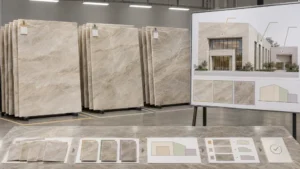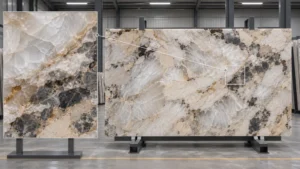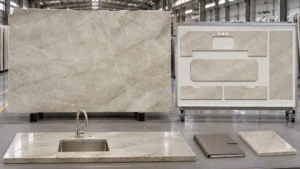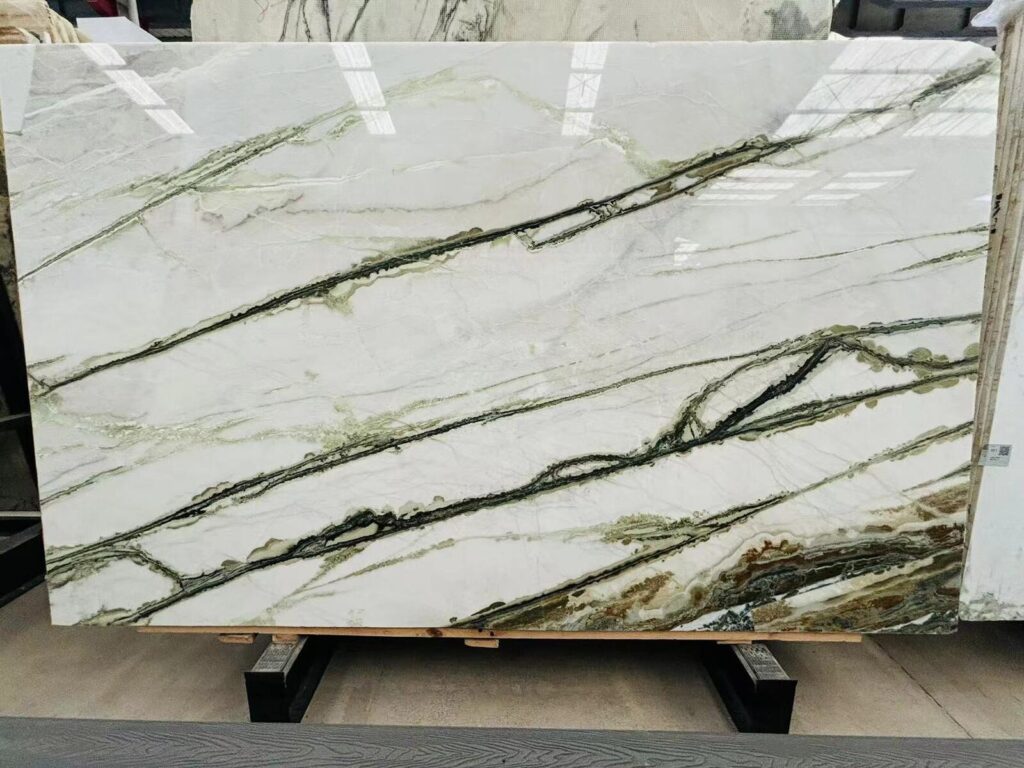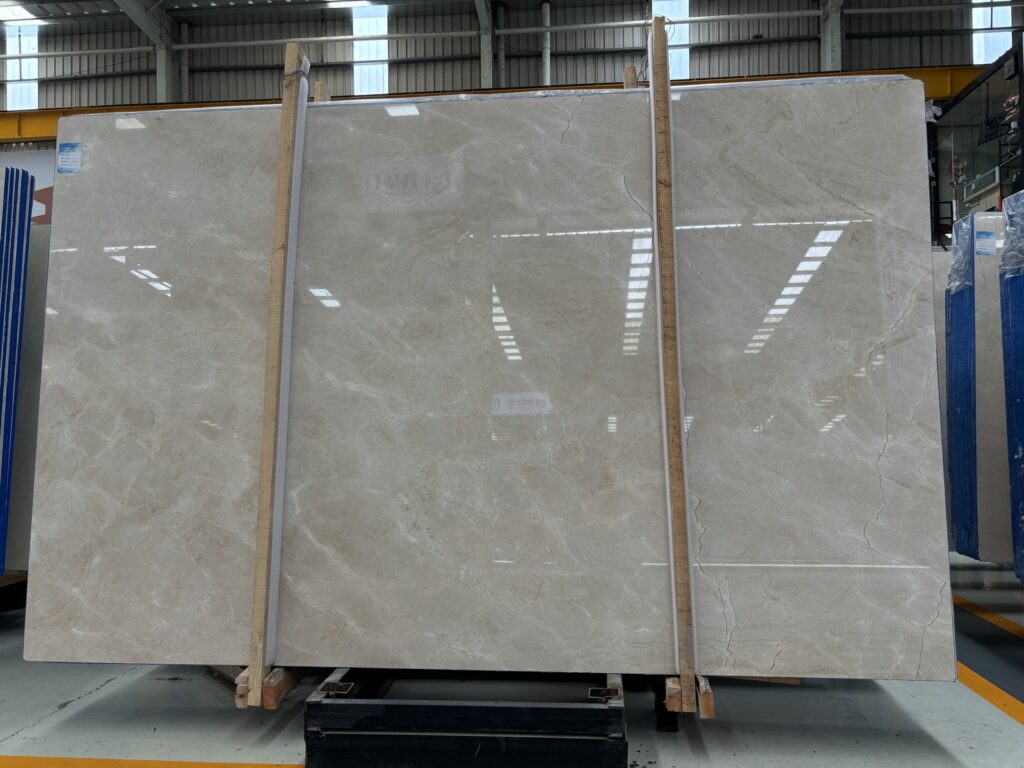

簡単なまとめ同一の特定スラブまたは関連するスラブ群から採れた、自然石クォーツァイトの端材であれば、洗面台脇のサイドスプラッシュとして優れた素材となり得ます。ただし、現状で使用可能な形状を備え、意図した仕上げが施されており、洗面トップの隣で見た目に調和のとれた切り出しとなることが条件です。「同一スラブ」というだけで「最も仕上がりの良い部材」とは限りません。サイドスプラッシュは垂直方向に配置される一方で洗面トップは水平であり、そのため模様の向きや反射、エッジの露出具合、石材の視覚的なスケール感などが変化します。洗面トップを切断する前に、実用的な範囲でサイドスプラッシュになりそうな部分を確保しておきましょう。実際のスラブまたは保管された端材上で完成後のサイドスプラッシュのテンプレートを確認し、壁面およびバックパネルとの接合部を確定し、露出するエッジを特定した上で、狙いが局所的な脈理の連続性か、全体的な色合いの調和か、あるいは単なる控えめな補助的な役割かを見極めます。後日の使用のために端材を残しておく場合は、その出所のスラブ、現在の寸法、仕上げ、写真、保管状況、そして残存物としての識別情報を追跡可能にしておきましょう。
自然石クォーツァイト製の洗面トップは、すでにスラブ上にレイアウトされています。
シンクの開口部が位置決めされています。
水栓穴が調整されています。
メインの石材パターンはバランスが取れています。
続いて、バスルームの設計図に壁面に沿ったサイドスプラッシュを追加します。
最初の直感としては、次のような考えが浮かぶでしょう:
“「洗面台のスラブから出た余り材を使えば、ぴったり合うはずだ。」”
場合によっては、それがまさに最適な判断であることもあります。
しかし、そうでない場合もあります。
残されたクォーツァイトは、総面積としては十分でも、実際に使える形状ではないことがあります。
端材には、縦にすると過度に主張してしまう模様が含まれている可能性があります。
強い脈理が望ましくない方向に走っている場合もあります。
有用なストリップには、既に不規則な切り欠きや損傷したエッジがあるかもしれません。
あるいは、最も魅力的な残存エリアが、幅の狭いサイドスプラッシュとして使うよりも、将来の交換用パーツとして価値が高い場合もあります。
これが、背後にある実務上の問いです。 クォーツァイト製洗面台側面の跳ね上げ部:補修用端材が有効なケース.
プロジェクトは、単に次のように問うべきではありません:
“「この端材は同じ石材から来ているのか?」”
次のように尋ねるべきです:
“「この特定された端材は、この洗面台の脇で実際に私たちが望む仕上げ済みのサイドスプラッシュになることができるのか?」”
最初の訂正は簡単です。
マッチングする端材は、別の素材カテゴリではありません。
それは、自然石クォーツァイトの物理的に残された一片です。
これは最も強固な出所関係です。
端材は、洗面トップと同じ特定スラブから切り出されたものです。
これにより、次のような調整が可能です:
サイドスプラッシュは、同じプロジェクト内のスラブグループに属する別の板材から来ることもあります。
これらの板材を一緒に検討すれば、依然として良好な結果を得られる場合があります。
もし同一スラブでなければ、それを同一スラブと呼んではいけません。
単にラベル付けされているだけの端材:
“「タージマハル・クォーツァイト」”
または:
“「モンブラン・クォーツァイト」”
これらは、洗面台のスラブから来たものであるとか、少なくとも視覚的に関連する同じスラブグループに属していることを証明するものではありません。
出所が不明な場合は、その制約を記録しておきましょう。
自然石クォーツァイトは、同じ商品名を持つ異なる物理的スラブ間で品質が異なることがあります。
サイドスプラッシュが洗面トップに直接触れたり、すぐ隣に配置される場合、他の部屋に設置される石材よりも、局所的な視覚的整合性が重要になることがあります。
出所ルール
同一素材名 ≠ 同一スラブ。同一スラブ ≠ 自動的に最高のサイドスプラッシュ切り出し。出所の同一性を保持した上で、実際の仕上がりを確認しましょう。
“「サイドスプラッシュをマッチさせる」というのは、さまざまな意味を持ち得ます。
落ち着いたデザインの洗面台の場合、プロジェクトとしては、サイドスプラッシュが視覚的に穏やかで、全体的な色合いが洗面トップと近いものを求めるかもしれません。
正確な脈理の連続性は必ずしも重要ではありません。
プロジェクトとしては、両者の部材が次のような共通点を持つことを望むかもしれません:
一部のデザインでは、洗面台天板とサイドスプラッシュが、より連続した構成として見えるように意図されています。
これには、はるかに慎重なスラブ配置が必要です。
チームは次のことを把握する必要があります:
最も優れたデザインが、必ずしも最も近いベインマッチではない場合があります。
洗面台天板自体に既に主要な地質学的特徴が含まれている可能性があります。
より控えめなサイドスプラッシュは、構成と競合することなくそれを支えることができます。
実際の目標を明確に記述してください。
例えば:
目標: 同一スラブ、類似のクリーム色ベース、低コントラストのムーブメント、厳密なベインの継続は不要。
あるいは:
目標: サイドスプラッシュは、洗面台天板の後方隅から続く主要な方向性のムーブメントを継続する。
| マッチング目標 | 確認すべき項目 |
| 一般的なカラーマッチング | ベーストーン、仕上げ、局所的な鉱物色 |
| パターンの調和 | ムーブメントのスケール、コントラスト、地質学的特性 |
| 方向性の連続性 | 正確なカット位置、回転、ジョイント、仕上げ後の向き |
| 控えめな補助ピース | メインの洗面台天板との視覚的な競合を抑える |
サイドスプラッシュが視覚的に重要である場合、好ましいスラブエリアをすでに洗面台天板が消費してしまった後では待ってはいけません。
可能な限り、切断レイアウトには以下を示す必要があります:
洗面台天板+リアバックsplash+サイドスプラッシュ+その他の必要な部材。
これにより、プロジェクトはどのスラブエリアが最も視覚的に優先されるべきかを判断できます。
多くのプロジェクトにおいて、水平な洗面台天板は依然として主な目に見える石材表面です。
小さなサイドスプラッシュのマッチングだけのために、そのパターン配置を盲目的に犠牲にしてはなりません。
非常に狭い端材でも技術的には適合するかもしれませんが、次のような状態になることがあります:
これらの問題が重要であれば、メインレイアウト時に候補エリアを確保してください。
両側の壁に挟まれた位置に設置される洗面台は、左右両方のサイドスプラッシュを必要とする場合があります。
まず優れた一片を切り出し、その後で残りの端材では互換性のある二枚目のピースが作れないことに気づくようなことは避けてください。
管理されたレイアウトによって以下のことが特定できます:
V-01 — 洗面台天板
SS-L — 左側スプラッシュ
SS-R — 右側スプラッシュ
不可逆的な切断が始まる前に。
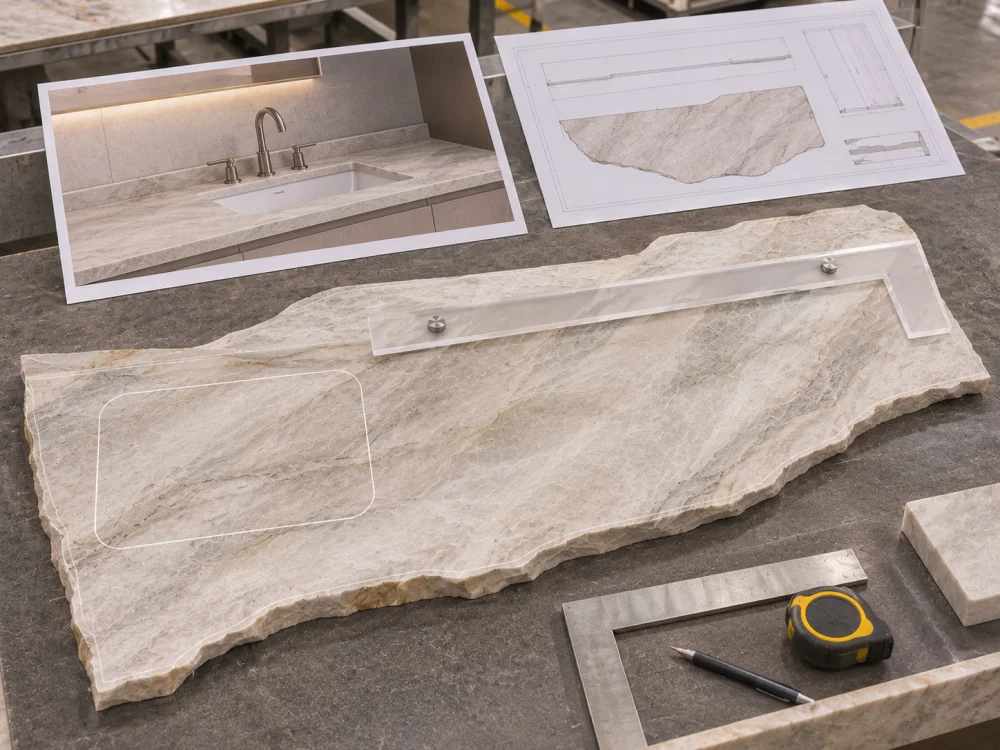
メインの洗面化粧台部材が切断されると、残った石材は新たな物理的オブジェクトとなります。
その現在の形状が重要です。
最大長;
名目上の矩形範囲内に収まる端材でも、仕上げ済みサイドスプラッシュのテンプレートが適用できない場合があります。
の 天然クォーツァイトの有効利用可能領域とスラブ全体の領域の違い ここでも同様の原則が適用されます:物理的な領域、有効な切断領域、および仕上げ後の部品領域はそれぞれ異なる量です。
加工業者は以下のためのスペースを必要とする場合があります:
理論上の仕上げ済みサイドスプラッシュの輪郭線を、加工検討なしに無効な生端材のエッジに直接当てないでください。
洗面台の穴周りに残された一部が、狭いサイドスプラッシュに適している場合があります。
その有用性は、実際に残された形状、模様、仕上げ、エッジ状態、および要求される仕上げ寸法によって決まります。
物理的に存在するからといって、すべてのシンク切り欠きの残存部分を再利用可能とみなさないでください。
端材適合ルール
現在の端材形状 → 仕上げ済みサイドスプラッシュテンプレート → 加工許容差 → パターン検討 → 利用可能か否か。総面積だけでは計算しないでください。
サイドスプラッシュは石材を水平面から垂直面へと変化させます。
素材自体は同じです。
しかし視覚的な印象は異なる場合があります。

洗面化粧台天板に沿って走る鉱物バンドは、サイドスプラッシュに合わせるために回転させる必要がある場合があります。
回転後、同じ特徴は次のように変化します:
研磨された水平な洗面化粧台は以下を反射する可能性があります:
垂直なサイドスプラッシュは別の方向からの光を受け、反射します。
したがって、同じ物理的なスラブから切り出されたものであっても、両者はわずかに異なる外観に見えることがあります。
A broad soft feature on a large vanity top may become almost the entire composition of a narrow side splash.
Review the actual finished crop, not only the surrounding slab context.
When reviewing candidate offcuts, show the side splash as it will actually be installed.
Do not approve it only while the offcut is lying in its original slab orientation.
The side splash usually interacts with more than the vanity top.
If the vanity also has a rear splash, define:

Confirm:
A mirror may:
Include this geometry in the elevation before final fabrication where it affects appearance.
Site walls may not match early design assumptions perfectly.
The exact field-measurement or templating method belongs to the responsible fabricator and project team.
The important point is that a side splash cut from a valuable matching offcut should use the current finished geometry rather than an outdated conceptual dimension.
A side splash can provide a designed transition at the vanity/wall interface.
It should not become an improvised solution for an unreviewed substrate, waterproofing, movement, or dimensional problem.
A narrow side splash may expose more finished edge proportionally than the vanity top.
If the side splash terminates below a mirror or wall finish, the top edge may remain visible.
レビュー:
The front termination is often seen directly from the bathroom entrance.
A strong feature ending abruptly at this point can become more noticeable than it appeared on the raw offcut.
A Natural Quartzite cut edge exposes another plane through the material.
It may appear visually different from the broad face.
This is normal material geometry, not automatic evidence that the offcut failed to match.
If the vanity top is polished, honed, leathered, or otherwise processed, confirm whether the side splash uses the same surface condition.
Do not assume an old remnant carries the current required finish merely because it came from the correct source slab.
Not every usable same-slab offcut should automatically become the side splash.
Some retained stone may have higher future value.
An original same-slab remnant can be valuable if a vanity component later needs:
A larger offcut may fit:
better than a narrow splash strip.
The opposite is also true.
There is little value in storing every small irregular fragment indefinitely.
Decide whether the remaining piece has a realistic future use.
The side splash may be the most logical use when:
関連する 端材から切り出した小型家具用天板における天然クォーツァイトと花崗岩の比較 guide applies the same principle: a remnant is valuable because of what finished geometry it can become, not merely because leftover stone exists.
A matching offcut is only useful in the future if the project still knows what it is.
Where retention is justified, connect:
Material → Source Board → Vanity Project → Remnant ID.
Do not keep only the dimensions of the rectangular area from which the vanity was cut.
Record the remaining physical piece as it exists now.
If the retained stone is polished on one face, honed, raw, partially finished, or contains worked edges, record the current condition.
A current photograph helps a future team understand:
The offcut can be:
Physical presence does not automatically mean commercial availability.
If part of the offcut later becomes a side splash, update the remaining remnant geometry rather than continuing to show the old dimensions.
Before fabrication is complete, review the two pieces together.

Confirm:
Confirm:
A factory dry review or controlled digital layout can show:
Vanity Top → Rear Splash → Side Splash → Wall Relationship.
The project does not need artificial perfect vein matching.
It needs the intended relationship to look deliberate.
例えば:
V-01 — 洗面台天板
BS-01 — Rear Backsplash
SS-01 — Side Splash
Where source traceability matters, keep those IDs connected to the actual slab or retained remnant.
同一のスラブを使用することは、色合い、仕上げ、地質的特徴において最も近いソースとの関係性を維持できるため、有力な選択肢となり得ます。ただし、それが必ずしも必要であるとか、常に最良であるとは限りません。端材には、依然として十分な使用可能な形状、適切な仕上げパターン、正しい向き、必要なエッジ処理に加え、洗面台天板や壁との適切な関係性が求められます。
いいえ。上面と側面のスプラッシュは異なる平面で観察されるため、反射や模様の方向、見た目のスケールが変化することがあります。また、天然珪岩の一枚板内でも、局所的に鉱物の特徴が著しく異なる場合があります。同一板材からの調達はトレーサビリティを向上させますが、最終的な仕上がりサンプルを実際に確認する必要性をなくすものではありません。
ただし、それが設計意図として明確に定められており、実際のスラブの配置がそれを支えている場合に限ります。多くのプロジェクトでは、正確な連続性よりも、色や模様の統一感や全体的な雰囲気を重視するだけで十分です。方向性のある連続性を求める場合は、洗面台用スラブを不可逆的に切断する前に、サイドスプラッシュ部分の切り取り位置を確保し、確認してください。
可能性があります。現在の実寸形状、厚み、仕上げ、パターン位置、不規則なエッジ、開口部、および加工余裕を確認してください。外形寸法上は十分に大きいように見えても、トリミングやエッジ仕上げ後に完成したサイドスプラッシュのテンプレートに収まらない場合があります。
それはプロジェクトの優先順位次第です。同じスラブから切り出された大きめの残材は、将来的な張り替えや家具としての価値を持つ場合がありますが、洗面台に隣接するサイドスプラッシュには、同じ産地の石材を用いることで大きなメリットが得られることがあります。すべての残材を一律に使用または保管するのではなく、現在のサイドスプラッシュのニーズと、将来の現実的な用途を比較検討してください。
安定した残存ID、天然珪岩の材種名、入手先のスラブまたは板材(分かっている場合)、現在の寸法および形状、厚み、仕上げ、表層面、写真、保管場所、現状、ならびにその後の再切断履歴を記録してください。元のスラブの出所が本当に不明な場合は、推測せずその旨を記録してください。
ジョシュに、ナチュラルクォーツァイトの素材サンプル、現行スラブまたは残材の参照資料、洗面台の図面、仕上げ済み洗面台およびサイドスプラッシュの寸法、シンクと蛇口の情報、背面スプラッシュのデザイン、数量、仕上げ、露出エッジの要件、該当する場合は壁や鏡との関係、優先するパターンマッチング戦略、プロジェクトの設置場所、および保管しておく端材に関する情報を送付してください。なお、優先事項が同一スラブによる色調の統一、筋目の方向性の連続性、残材の効率的な活用、それとも将来の予備材料確保のいずれであるかを明示してください。
Vanity Side-Splash Approval SummaryA matching Quartzite offcut is most useful when its physical source and current geometry are known and the finished side-splash crop supports the vanity design. Start by defining what “match” means: general colour coordination, similar pattern character, directional continuity, or a quiet supporting surface. Reserve likely splash zones before cutting the vanity top when that visual relationship matters, then recheck the actual offcut after fabrication rather than relying on its former slab envelope. Review the side splash in its vertical installed orientation, coordinate it with the rear backsplash, wall, mirror and visible edges, and decide deliberately whether the offcut should be consumed now or retained for future use. Same-slab origin is valuable evidence; it is not a substitute for finished-piece approval.
For custom Natural Quartzite vanity tops, backsplashes and side splashes, HRST STONE can coordinate full-slab photographs, board references, vanity CAD layouts, sink and faucet openings, side-splash templates, actual-slab or remnant allocation, pattern orientation, edge finishing, piece identification, remnant records, fabrication QC and export packing within the confirmed stone scope. Send Josh the material, slab or offcut reference, vanity drawing, finished dimensions, quantity, finish, matching priority and destination before final cutting release.