ホワイトオニキス
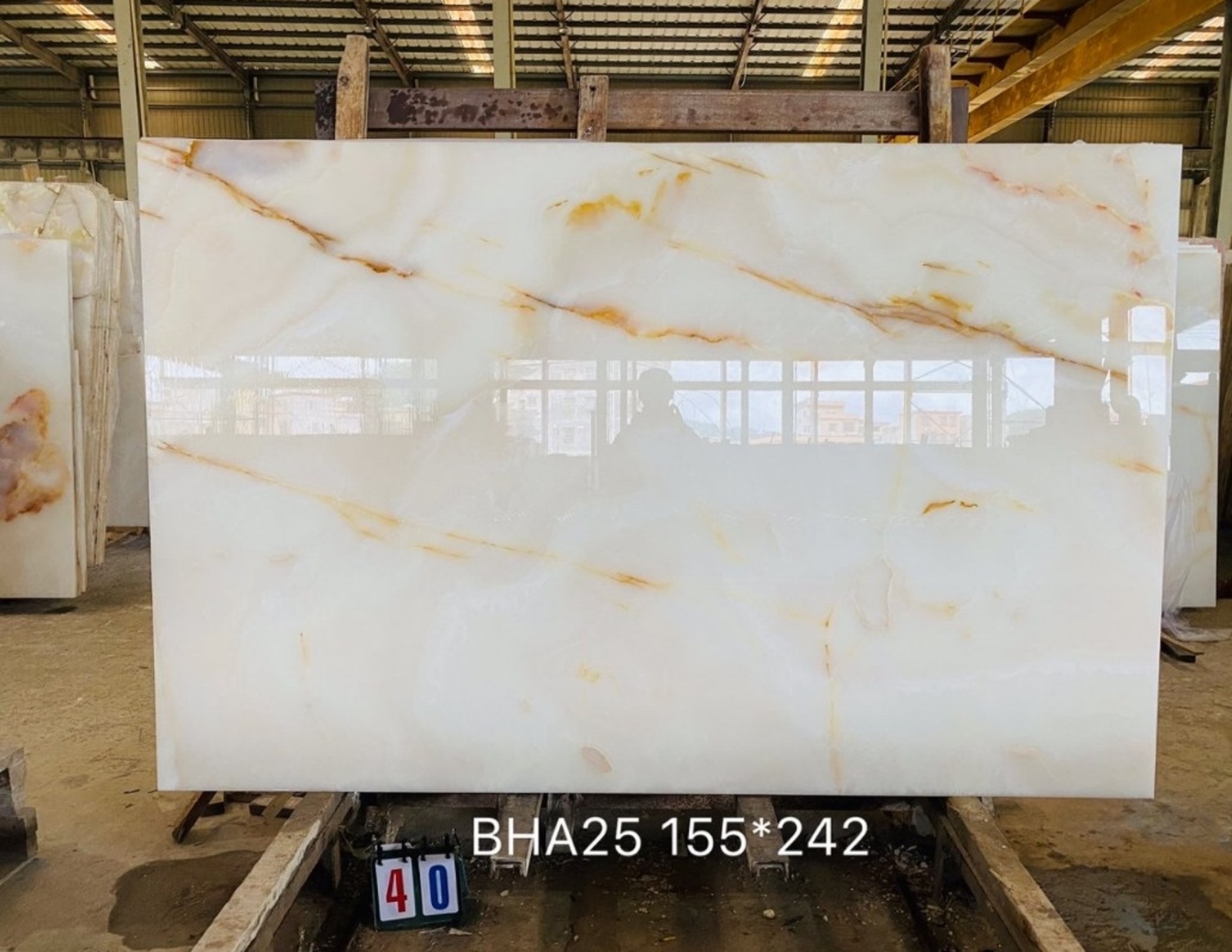
ホワイトオニキス is a translucent natural decorative stone characterized by milky white, ivory and softly crystalline mineral structures. Depending on the individual slab, its appearance can range from relatively clean and quiet to more visibly cloudy, layered or mineral-rich.
Its defining design characteristic is translucency. When light is introduced behind the stone, internal crystalline structures become more visible and the same panel can look substantially different from its appearance under normal front lighting.
This makes White Onyx particularly suitable for backlit feature walls, bar fronts, reception features, vanity tops, decorative panels and selected furniture applications. For B2B projects, material selection, lighting design and fabrication should therefore be coordinated rather than treated as separate purchasing decisions.
ナチュラルオニキス
Milky White · Ivory · Crystal
Natural Translucency
Slabs · Panels · Custom Work
製品仕様
| 仕様 | 詳細 |
| 素材名 | ホワイトオニキス |
| 素材タイプ | ナチュラルオニキス |
| 主な色合い | Milky white, ivory, cream and naturally occurring pale mineral tones |
| Visual Structure | Translucent crystalline, cloudy, layered and naturally variable mineral movement |
| 半透明性 | Varies by slab and by individual crystal, vein and cloudy zones; actual backlight testing recommended |
| 利用可能な厚さ | 15mm / 18mm; composite construction subject to project requirements |
| 利用可能な形状 | Slabs, cut-to-size panels, vanity components, decorative wall pieces and custom-fabricated products |
| 利用可能なスラブサイズ | 現在のブロックおよびスラブ在庫に応じて対応します。 |
| カスタムサイズ | According to approved drawings, panel layout and fabrication requirements |
| 表面仕上げ | Polished and project-specific finishing subject to sample confirmation |
| Composite Option | Honeycomb-backed composite construction can be evaluated according to project engineering and application requirements |
| 適用範囲 | Backlit walls, decorative panels, vanities, bar fronts, reception features and selected custom interior applications |
| 梱包詳細 | Protected according to component geometry and packed in reinforced fumigated wooden crates |
| MOQ(最小注文数量) | According to Slab, Panel or Custom Fabrication Requirements |
| 納期 | 素材の入手可能性、数量、加工範囲に応じて確定します |
White Onyx Appearance and Natural Variation
White Onyx should not be expected to look like a uniformly white engineered surface. Its visual character comes from the internal mineral structure: some areas can appear milky and relatively quiet, while others contain stronger cloudy formations, crystalline transitions or natural mineral lines.
This variation becomes even more important when the material is illuminated from behind. A visually subtle area under normal lighting may transmit significantly more light, while a denser crystal or mineral zone can appear darker when backlit.
Buyers should therefore evaluate both the visible surface pattern and the expected illuminated composition when selecting material for a backlit project.
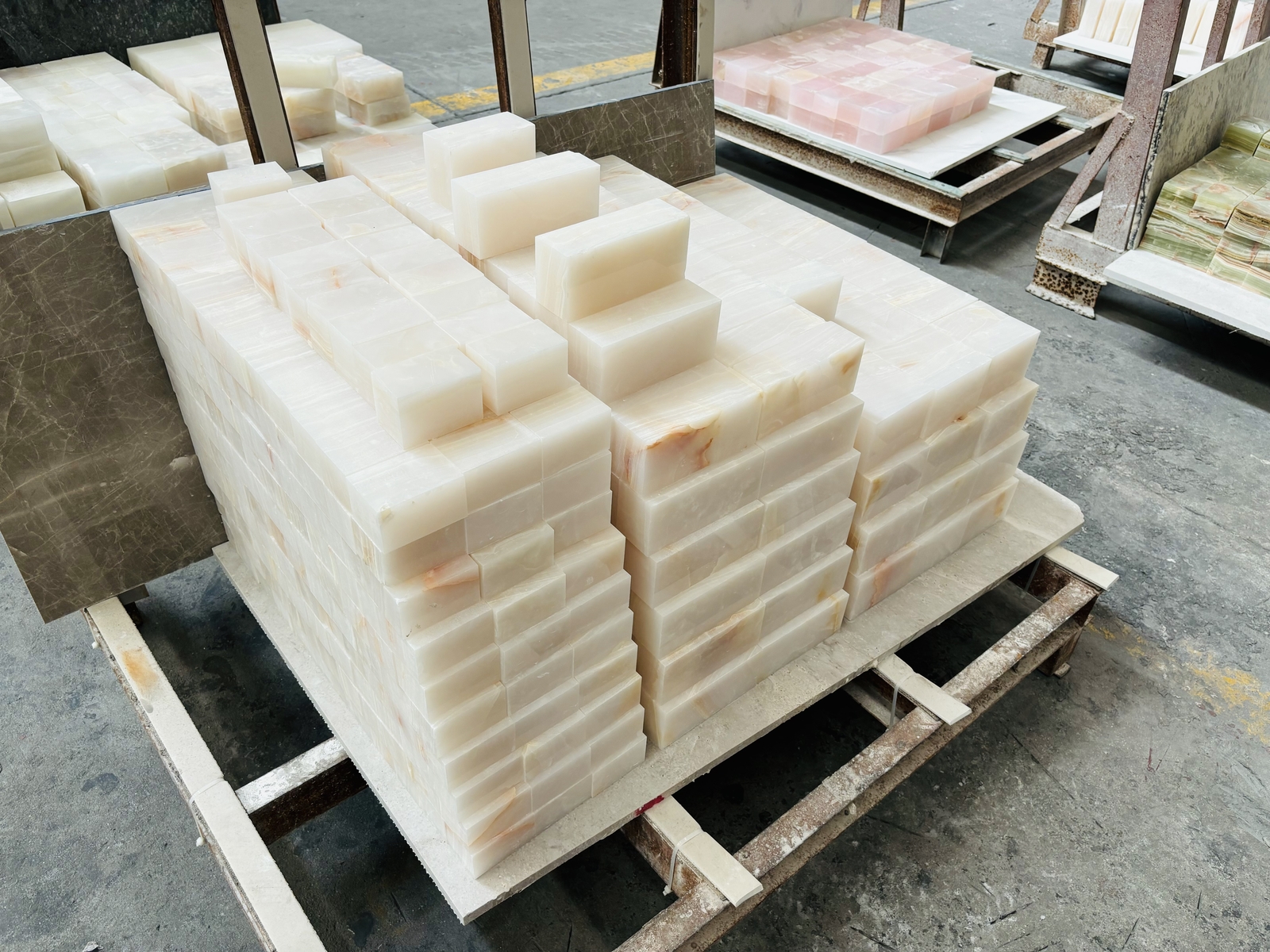
Backlighting: Translucency Is Not Uniform
The ability to transmit light is one of the main reasons White Onyx is specified for luxury interiors, but natural translucency is never perfectly uniform. Different mineral zones can transmit, diffuse or block light at different levels.
For this reason, choosing a White Onyx slab is only one part of designing a successful backlit surface. The lighting system behind the stone has a direct influence on the finished result.
Compare crystal density, cloudy zones and darker mineral areas across the selected panels.
Insufficient spacing behind the stone can increase the risk of visible hotspots or uneven illumination.
A suitable diffuser and lighting arrangement can help produce a more continuous illuminated surface.
Joint locations should be coordinated because shadows or brightness changes can become more visible when backlit.
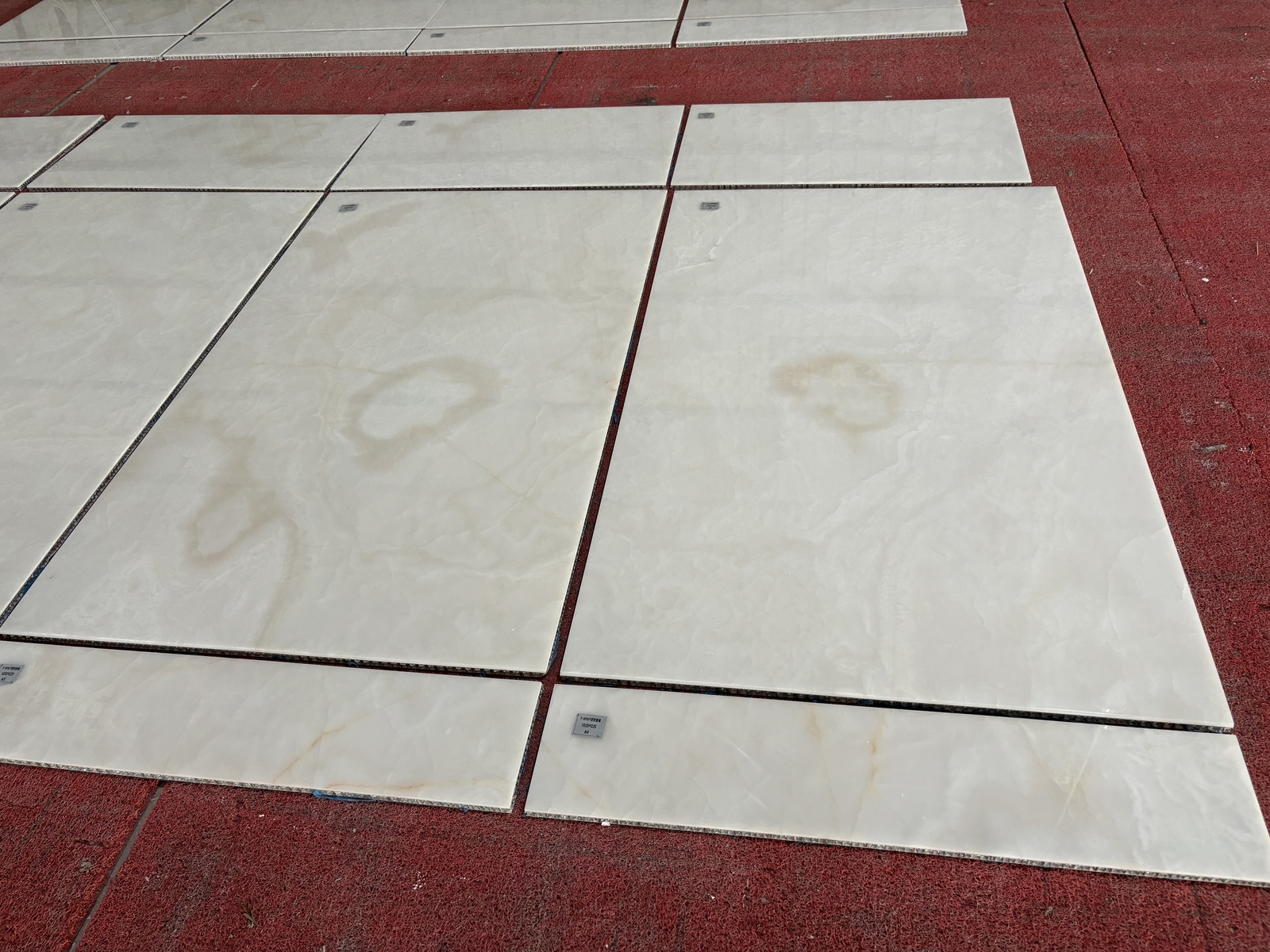
Panel Layout and Visual Continuity
Layout control is particularly important for White Onyx because panel relationships remain visible both during the day and when the lighting system is switched on.
Before cutting a multi-piece wall, vanity or decorative installation, the finished component outlines can be planned against the selected material. This helps control the location of cloudy areas, stronger mineral lines and major changes in translucency.
After fabrication, related components can be arranged again for visual review. This allows unexpected color jumps, incorrect orientation or undesirable joint relationships to be identified before packing.
White Onyx Vanity Tops and Bathroom Features
White Onyx can be fabricated into vanity tops and decorative bathroom components where its translucent mineral character becomes part of the interior design.
Vanity fabrication requires careful control around basin openings, faucet holes and narrow stone sections. The selected cutting zone should be reviewed before machining because natural mineral transitions or fissures may influence where critical openings should be positioned.
Where backlighting is incorporated into the vanity design, the stone layout must also be coordinated with the lighting cavity and supporting structure before production.
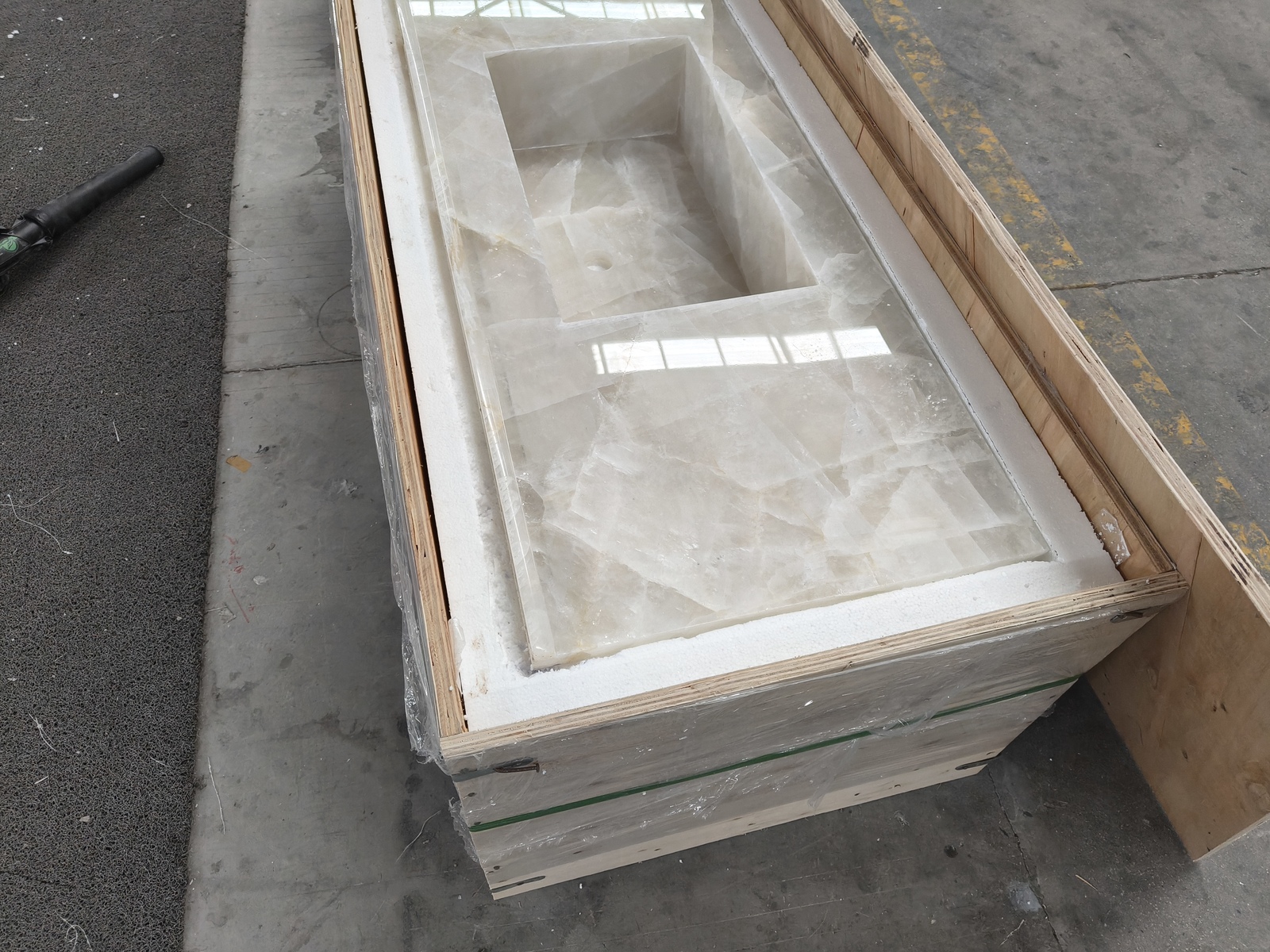
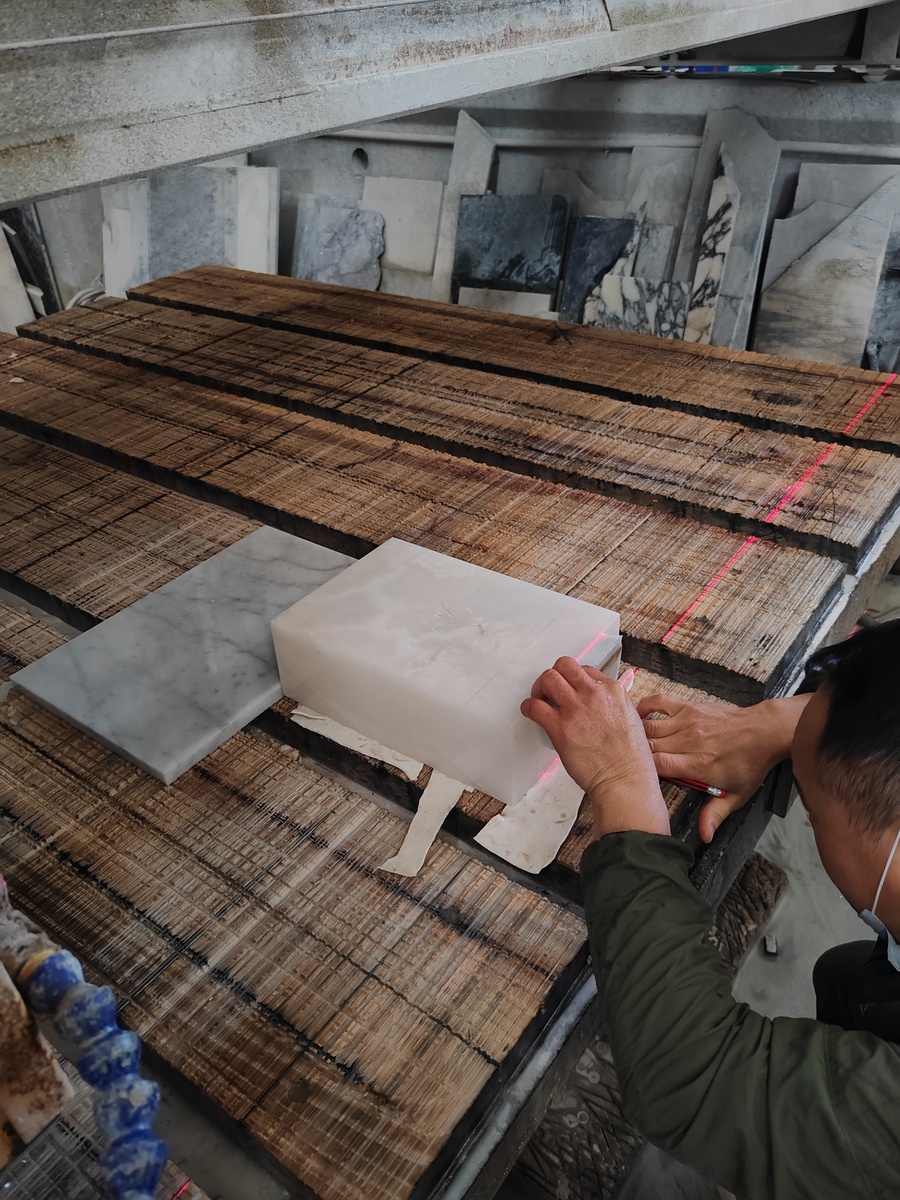
Machine Processing and Cutout Planning
White Onyx requires controlled fabrication because the natural material can contain changing crystal structures, mineral bands, fissures and repaired zones. These characteristics should be considered before positioning large openings or narrow finished sections.
CAD or shop drawings should define finished dimensions, sink openings, faucet holes, joints, visible edges and other processing details. Critical components can then be positioned on the selected material before machining.
This workflow reduces the risk of placing an important cutout through an unsuitable natural feature and helps preserve the intended pattern within the finished component.
White Onyx Honeycomb Composite Panels
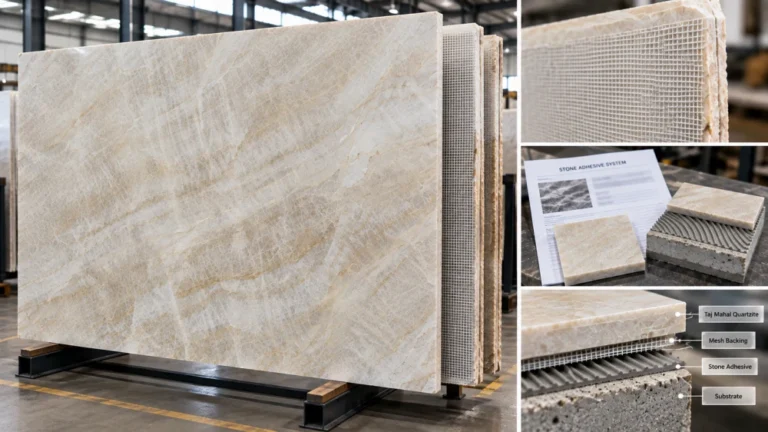
For selected architectural applications, White Onyx can also be considered as part of a composite panel system. A stone-facing layer combined with a honeycomb backing can provide a different panel construction from a conventional full-thickness stone piece.
This type of solution should be evaluated as an engineered project component rather than assumed to be interchangeable with a standard slab. Stone thickness, backing material, bonding system, panel size, fixing method, edge construction and intended application should all be confirmed before production.
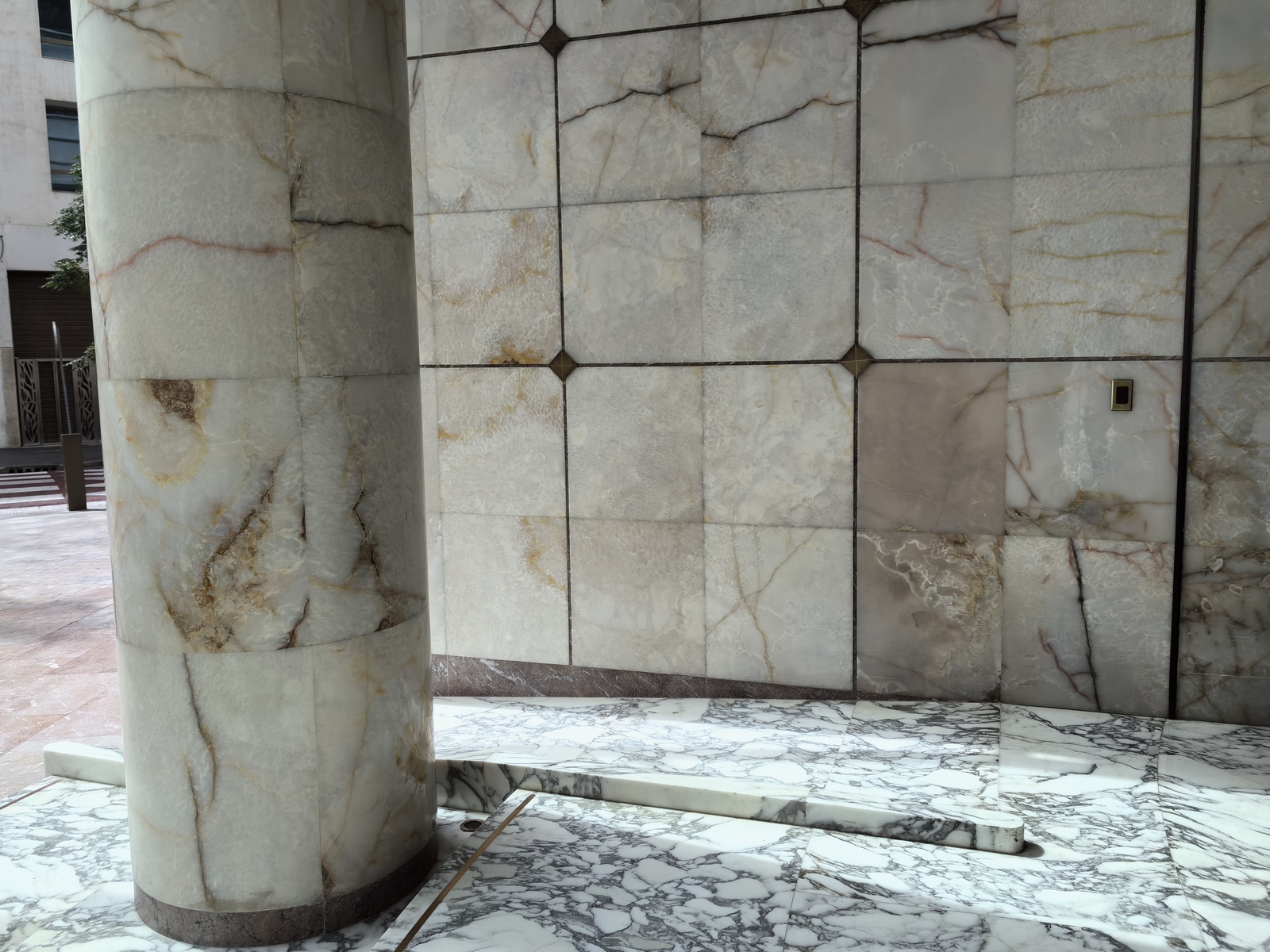
Polishing and Surface Inspection
A polished surface is commonly used to emphasize the depth and crystalline appearance of White Onyx. Surface reflection can increase visual contrast and make internal mineral movement more apparent.
Polishing should be inspected across the complete finished component rather than only at one small area. Surface consistency, edge quality, natural features and visible repairs should be checked before the product moves to final packing.
For illuminated pieces, visual inspection under normal factory lighting should be supplemented with a backlight test where the project specification requires it.
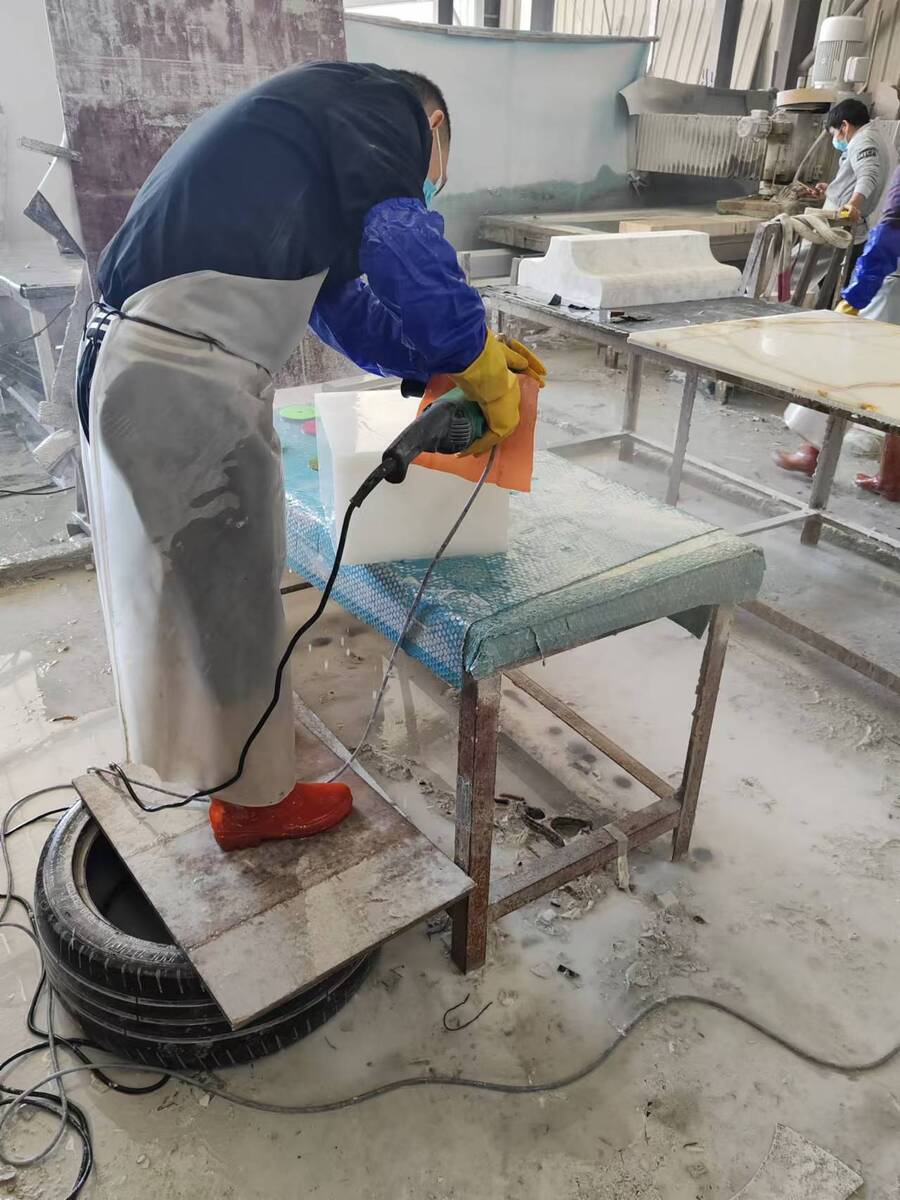
B2B調達におけるリスク管理
| 購入者リスク/プロジェクトリスク | 推奨される対策 |
| Different panels transmit different amounts of light | Review actual material under backlighting and group panels with compatible translucency where visual continuity is required. |
| LED points become visible through the stone | Test light spacing, cavity depth and diffusion using a representative project mock-up before final installation design. |
| Panel joints become dark lines when illuminated | Coordinate joint location, supporting structure and lighting arrangement before panel fabrication. |
| Resin repairs become more visible after backlighting | Inspect important slabs and repaired areas under transmitted light before allocating focal panels. |
| Basin cutouts intersect vulnerable natural zones | Review the actual slab and cutting layout before machining sink, faucet or other openings. |
| Thin or composite panels are specified without coordinated fixing details | Confirm panel construction, backing, edge treatment and installation interface through project-specific drawings. |
| Finished onyx components are damaged during transport | Use component-specific surface protection, edge guards, rigid separators, internal blocking and reinforced export crates. |
カスタム加工と品質管理
White Onyx QC needs to address both conventional fabrication quality and the additional variables created by translucency. A panel can meet its dimensional requirement while still being visually unsuitable if its crystal density or light transmission differs substantially from adjoining pieces.
Track approved slabs or panels through cutting and fabrication.
Verify dimensions, openings, joints, edge details and component relationships.
Review light transmission across critical visible panels where backlighting is required.
Check openings and surrounding material before and after machining.
Inspect polish consistency, natural fissures and repaired areas in visible positions.
Arrange related pieces to check orientation, cloudy zones and panel-to-panel continuity.
Where specified, evaluate representative pieces under transmitted light before shipment.
Check protection, separators, supports, component identity and crate stability.
Protective Packing for White Onyx
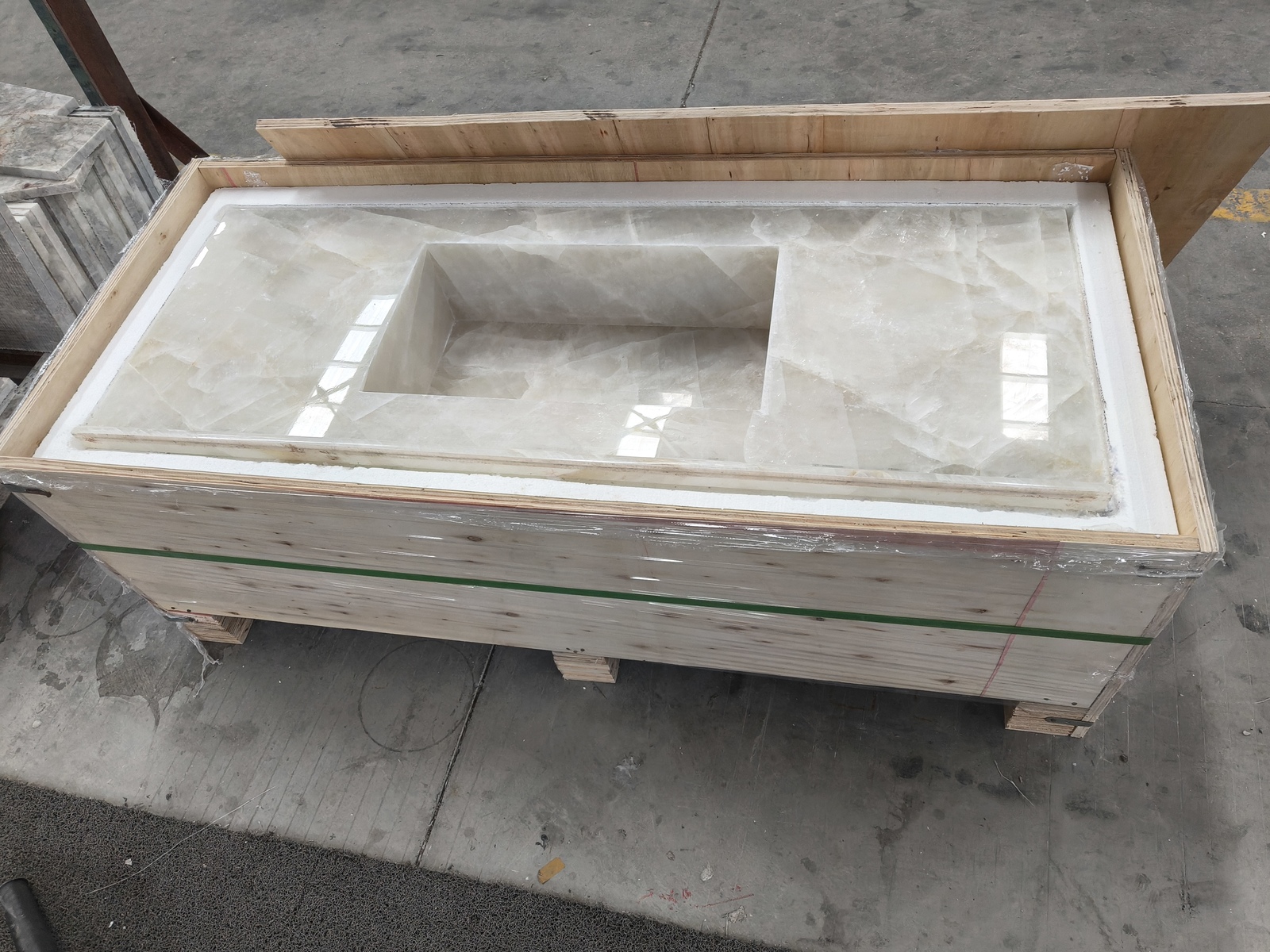
White Onyx requires careful handling because fabricated vanity tops, panels and other components can contain openings, narrow sections and vulnerable finished edges.
完成した表面は以下のもので保護されます。 柔らかく汚れにくい表面保護. Exposed edges and corners use エッジガードやコーナープロテクション, 一方で 堅牢なセパレーターと内部ブロック reduce movement between components.
Vanity tops and pieces containing cutouts can receive additional temporary support where appropriate. Related components can also be identified according to the approved drawing or installation sequence.
Production inspection is completed before packing, followed by final packing inspection. Export components are secured in 補強された燻蒸処理済みの木製ケース appropriate to their dimensions and breakage risk.
Why Choose HRST STONE for White Onyx Projects?
当社は 17年以上の of natural stone project experience, HRST STONE provides one-stop natural stone solutions covering material selection, CAD and shop drawing support, custom fabrication, quality control, layout review and international export packing.
For White Onyx projects, support can extend beyond conventional dimensional fabrication to include slab translucency review, panel allocation, backlight evaluation, vanity and decorative component processing, composite-panel coordination, surface inspection and project-specific packing.
This is particularly important for illuminated applications because stone selection, panel layout, fabrication and lighting design influence the same finished surface. Coordinating these factors before production reduces the risk of discovering uneven lighting or incompatible panels after installation.
見積書作成に必要な情報
- 製品形態: slab, wall panel, vanity top, bar panel, composite panel or custom component
- 寸法: finished dimensions or required slab/panel format
- 数量: 枚数、平方メートル数、またはスラブの数量
- 厚さ: required stone or composite-panel construction
- Backlight / Non-Backlight: confirm whether translucency is part of the design
- Lighting Requirement: provide available lighting details or mock-up requirements for backlit applications
- 仕上げ: polished or other requested finish
- 外観の好み: cleaner white, stronger crystal movement, cloudier pattern or other selection preference
- Fabrication: cutouts, edges, joints, composite construction or other custom processing
- 図面: CAD, PDF, elevations, lighting details or dimensional sketches where available
- 目的地: 物流評価のための目的港または納品先
White Onyx FAQ
1. Is every White Onyx slab equally translucent?
No. Light transmission varies naturally according to crystal density, cloudy mineral zones, veins and other internal structures. Two areas from the same slab can also transmit different amounts of light, so actual material should be tested when backlighting is important.
2. Why should White Onyx be tested with the actual backlighting system?
The final appearance depends on more than the stone. Light source, spacing, cavity depth, diffuser, supporting structure and panel joints can all affect brightness and uniformity. A representative mock-up helps identify hotspots, shadows and uneven transmission before the complete project is produced.
3. Can White Onyx be used for vanity tops?
Yes, White Onyx can be fabricated into decorative vanity tops and bathroom features. Basin openings, faucet holes, narrow sections and natural mineral zones should be reviewed before machining, and the intended use and maintenance expectations should be considered during specification.
4. Why can resin repairs become more noticeable when White Onyx is backlit?
Transmitted light can reveal differences between natural crystal zones and repaired areas that are less obvious under normal front lighting. Important illuminated panels should therefore be inspected under representative backlighting before final allocation.
5. What is a White Onyx honeycomb composite panel?
It is a project-specific composite construction combining a stone-facing layer with a honeycomb backing. The exact stone thickness, backing, adhesive, edge treatment, fixing system and application should be confirmed according to the approved project design rather than assumed from a standard specification.
6. What should buyers approve before White Onyx production starts?
Buyers should approve the actual material, visible pattern, translucency range, panel layout, surface finish, fabrication drawings and joint arrangement. For illuminated applications, the lighting mock-up and supporting system should also be coordinated before production.
7. How should multiple White Onyx panels be arranged for a backlit wall?
Panels should be planned as one elevation rather than selected independently. Crystal density, cloudy areas, major veins, orientation, joint positions and relative light transmission should be reviewed together so the illuminated wall has an intentional visual flow.
最後に
スラブの場合: evaluate both the normal surface appearance and the actual translucency of the material before reservation.
For backlit walls: coordinate panel sequence, joints, crystal density, lighting distance, diffuser and supporting structure before fabrication.
洗面台天板の場合: confirm basin cutouts, faucet holes, narrow stone sections, visible edges and natural features before machining.
For composite panels: confirm the complete stone-facing, backing, bonding, edge and fixing construction according to the project requirements.
For illuminated projects: use a representative lighting mock-up before mass production rather than judging the final effect from front-lit slab photos alone.
For custom White Onyx projects, the recommended control sequence is actual material approval → translucency review → CAD/shop drawing review → panel and cutting layout → lighting mock-up → custom fabrication → layout inspection → backlight check where required → final QC → protective export packing.