
簡単なまとめ
Natural Quartzite in hotels and restaurants needs a surface-specific maintenance record, clear staff ownership, controlled changes, and practical escalation for visible or high-contact areas.
For international buyers, Natural Quartzite care is not a generic cleaning task. It is a handover decision that connects the approved slab, its finish, the intended application, the fabrication details, and the people who will maintain the finished surface. The practical aim is simple: keep the agreed appearance visible while avoiding improvised treatments that create unnecessary risk.
Natural Quartzite is a natural stone, so practical care begins with identification rather than assumptions. The approved slab selection, surface finish, and final application should stay connected to the instructions handed to the owner, contractor, or facility team. A kitchen island, reception counter, wall panel, and exterior-adjacent surface may face different contact patterns even when they share a material name.
For an importer or project purchaser, the useful question is not which product has the strongest marketing claim. It is which routine can be documented, followed consistently, and reviewed when conditions change. That approach reduces the chance that a local workaround becomes the default process on a large installed area.
Natural Quartzite should also be distinguished from Engineered Quartz. They are different materials and should not be grouped under one cleaning rule. When a project contains more than one surface type, label the handover information clearly so daily-care teams do not transfer instructions from one material to another.
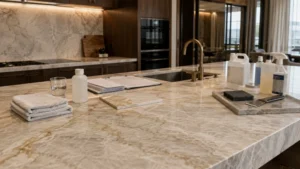
Hospitality teams manage changing shifts, outsourced cleaning, high-visibility guest areas, and variable contact patterns. That makes an approved Natural Quartzite care record more useful than a generic stone instruction. The record should connect each visible surface to its finish, location, routine owner, spill-response contact, and change-approval path.
| Decision point | 確認すべき事項 | Why it matters |
|---|---|---|
| Approved surface | Confirm the exact Natural Quartzite slab, finish, edge profile, and use area. | Care instructions should match the actual delivered material, not a generic stone label. |
| Cleaning method | Agree on a mild, non-abrasive routine and a separate spill-response process. | Routine cleaning and stain investigation have different goals and should not be confused. |
| Change control | Record any sealer, repair, or restoration proposal before it is applied broadly. | A small controlled trial supports a clearer approval decision. |

Begin with dry debris removal or a soft, clean method that suits the approved finish. Then use only the project-approved cleaning method according to its instructions. The objective is to remove ordinary surface soil without introducing a second problem such as residue, uneven appearance, or an untraceable product change.
A spill-response workflow should be short and clear: contain the contact, lift rather than spread it where practical, avoid mixing several products, and record the substance and location. If a mark remains, the next step is investigation. It is not a reason to immediately use stronger products, pads, blades, or unverified home remedies.
Sealing is a separate decision from cleaning. A project team should review the specific material, finish, expected use, and product instructions before deciding whether a treatment is appropriate. The record should state what was approved, where it was applied, and what result the team expected to observe.
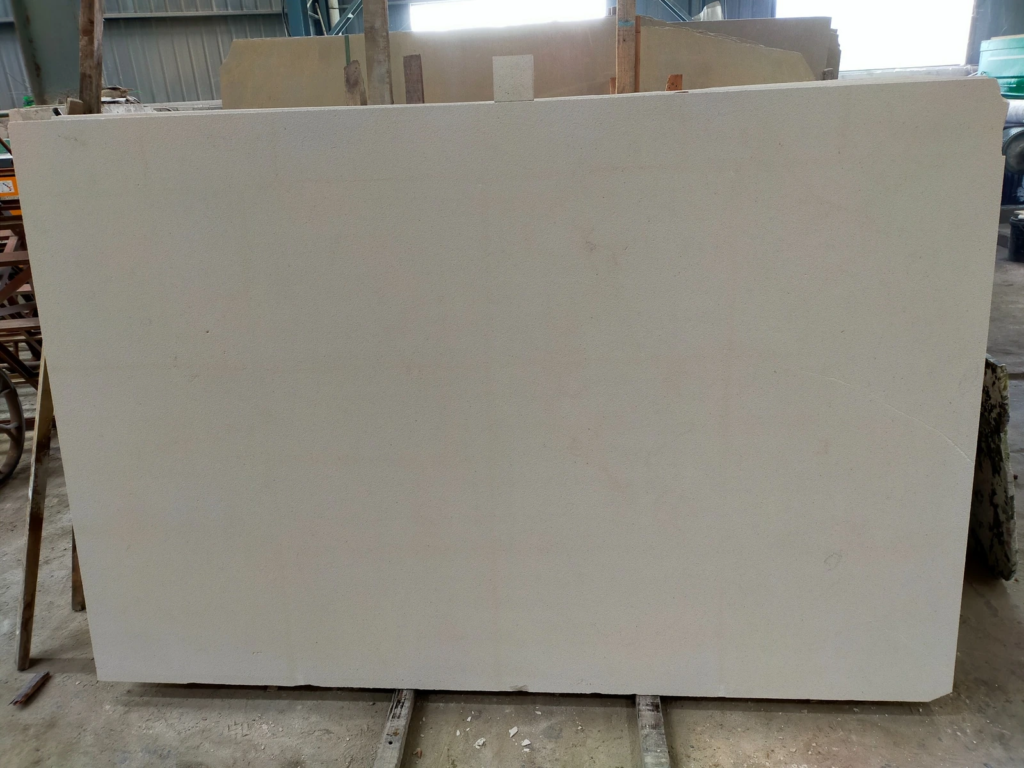
For supplied slabs and fabricated pieces, photographs and drawings help keep maintenance communication anchored to the purchased scope. They do not replace an on-site condition review, but they can help distinguish an appearance expectation from a later condition that needs a focused response.
A hospitality workflow should distinguish ordinary housekeeping from an event that needs escalation. For example, staff can follow the approved daily routine, while a persistent mark, residue, or proposed new product is documented and reviewed before a local response becomes a site-wide practice.
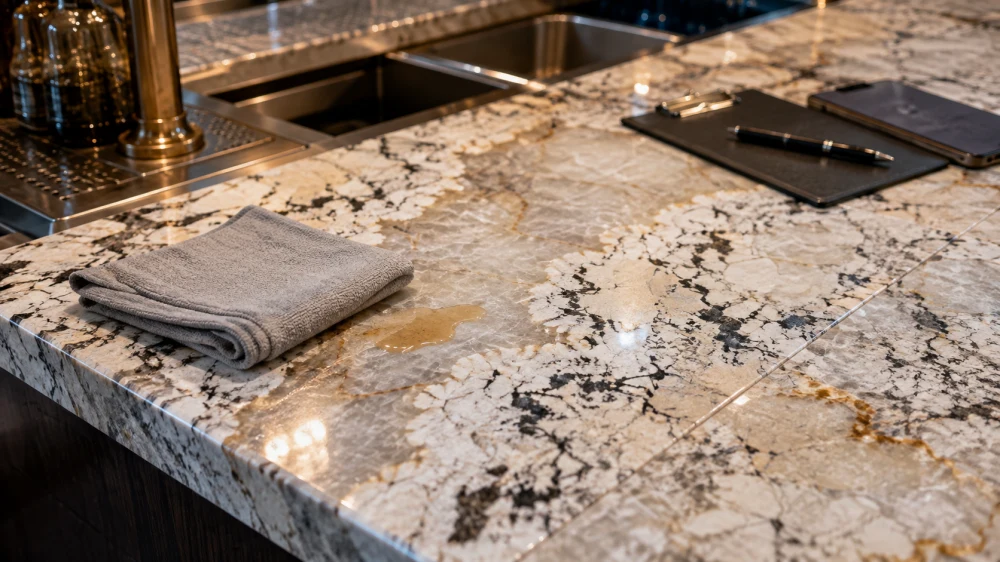
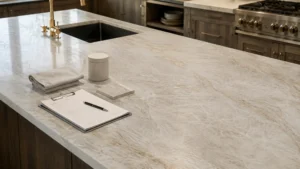
Start every care decision with a surface map. It can be a simple project sheet listing the room or elevation, the Natural Quartzite material name used in the approval record, the finish, and the person responsible for daily care. This map prevents a broad instruction from being applied without context and gives a facilities team a practical reference when staff or contractors change.
Use the handover period to demonstrate the approved routine in plain language. The purpose is not to turn an owner team into stone specialists. It is to make the normal sequence clear: remove ordinary loose soil carefully, use the approved method as directed, keep spill response separate, and report an unfamiliar condition before trying several competing remedies.
When a cleaning supplier suggests a new product, request enough information to evaluate the proposal against the installed surface. Confirm the stated use, the application method, any dwell-time instruction, rinse or removal steps, and the proposed test location. Record the decision. This disciplined check is more valuable than a vague assurance that a product is safe for stone.
Visual expectations deserve the same care as technical instructions. A highly visible counter, island, reception desk, or feature wall may require a faster review path because small appearance changes attract attention. The project team should agree who receives the first report and which photographs or observations are needed before a care method is changed.
Routine inspections do not need complicated scoring. A short review can look for residue, visible marks, changes in sheen, damaged joints, edge conditions, and unusual contact patterns. The point is to notice a condition early and establish facts. It is not to make an unverified claim about the cause of a mark or the performance of an entire batch of stone.
Cleaning contractors should receive the same surface-specific record as the owner team. This reduces the risk that a contractor uses an in-house default product because the material is described only as stone. If multiple natural materials appear in the project, label each zone clearly and do not transfer a Marble, Granite, Engineered Quartz, or Sintered Stone instruction to Natural Quartzite.
For a busy project, distinguish between an immediate containment action and a later corrective decision. Immediate action can protect a surface from further contact and document the event. A later decision can then consider the material, finish, prior care history, and any appropriate professional input. Combining both stages in one hurried response often makes review more difficult.
Keep procurement and maintenance communication connected. If the buyer asks a supplier about a care concern, provide the original material name, dimensions or relevant fabrication scope, finish, project drawings where useful, and delivery destination or installed location. These details help everyone identify the proper surface without inventing facts that the project has not documented.
A replacement or repair discussion should be bounded by approved evidence. Compare the reported area with the expected layout, photographs, and fabrication information. If a controlled sample or localized trial is considered, define who approves it and what appearance will be reviewed. This supports a transparent decision without presenting a hypothetical outcome as a guaranteed result.
Finally, review the guide when the project use changes. A private residence, a hospitality reception, and a food-service environment create different operating questions even if Natural Quartzite is the featured material. Updating the assigned contacts and care record keeps the routine useful over time while preserving the original purchase and design context.
Training should focus on the limits of the approved routine. Staff need to know what ordinary cleaning looks like, what a spill report includes, and when to stop. This is especially important where several contractors work on the same site, because an unrecorded product substitution can make later appearance review much less clear.
Good communication avoids unsupported absolutes. Do not call a surface permanently stain-proof, maintenance-free, or identical to another material merely because the names sound related. A buyer-first record states what was installed, how it is intended to be maintained, and which project contact can review a question that falls outside the documented routine.
The same care framework can support sourcing discussions before delivery. Buyers can include the required Natural Quartzite finish, the intended application, any relevant dimensions, and the project destination in their inquiry. This helps the supplier and fabrication team identify useful follow-up questions without promising inventory, delivery dates, certifications, or test results that have not been confirmed.
For long installations, a concise version of the care plan should be placed where the operating team can use it. The detailed record can remain with the project documents, while the working sheet gives a simple daily method, a spill-response contact, and a reminder to capture photos and product details before a condition is altered.
This level of documentation is also fair to every party. It gives designers a link to the approved appearance, contractors a clear handover reference, owners a manageable routine, and suppliers a fact-based starting point if a question is raised. The outcome is better decision quality, not a substitute for site-specific professional assessment.
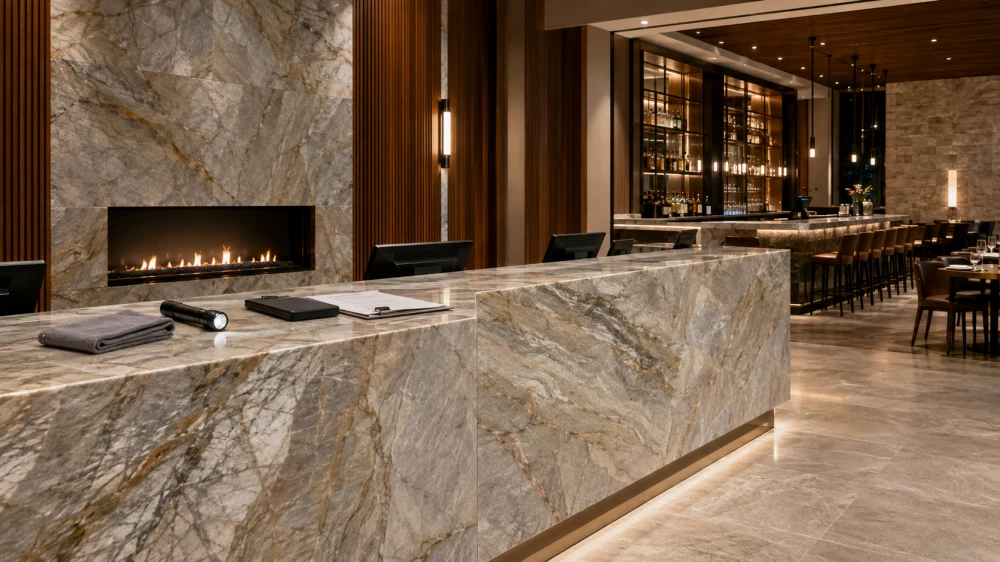
For hospitality procurement, map Natural Quartzite surfaces by operating condition rather than relying on one broad label. A reception desk, buffet surround, bar-facing counter, guest bathroom vanity, and feature wall may all require different handover notes because their contact patterns and visual expectations differ. This is a decision framework, not a promise that a specific treatment will resolve every condition.
Shift changes are a practical risk point. The handover sheet should state the approved routine, the storage location for relevant product information, the contact for exceptions, and the facts staff should capture before a visible condition is altered. A short, repeatable record prevents an unverified remedy from being repeated by the next team.
When an operator requests a faster or stronger process, separate the urgency of the business situation from the decision about the stone. Contain the contact, keep a factual record, and obtain an approved response for the actual Natural Quartzite finish and area. This protects both the visible surface and the project team from unsupported assumptions.
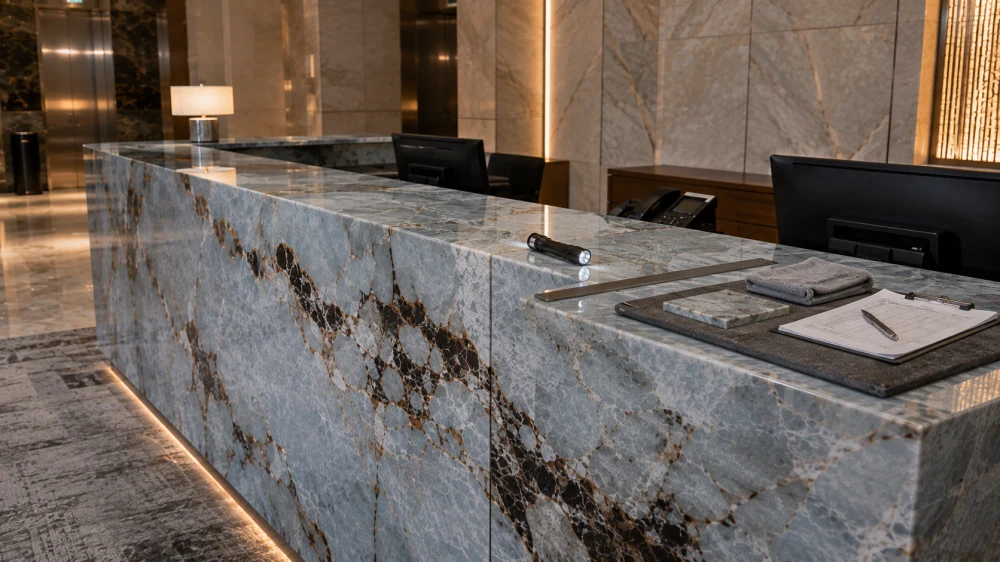
A useful handover pack names the installed surface, identifies the finish and location, lists the approved daily-cleaning method, and sets an escalation path for spills, dull areas, residue, or suspected damage. It should also say who can authorize a change to the care method. This is more useful than promising that one product or one schedule will suit every quartzite surface.
Before a broad treatment, ask for the product instructions, the intended surface, a small inconspicuous trial area where appropriate, and acceptance criteria for appearance. These are project controls, not claims about a universal result. They help importers, fabricators, designers, and facility teams communicate with the same reference point.
Avoid broad claims that a specific cleaner, sealer, or restoration method will produce the same outcome on every Natural Quartzite surface. Material variation, finish, application, and previous treatments matter. A careful article should help buyers ask for the right project facts instead of promising a uniform result.
Do not allow an urgent maintenance request to bypass approval. In a commercial environment, a clear escalation contact and condition record often saves time because the responsible team can see what happened before an intervention changes the evidence.
Maintenance planning also belongs in procurement. Ask for the final material name, approved finish, sizes, layout or fabrication information, and the intended delivery destination. These facts support better coordination between the stone supplier, fabricator, installer, and owner-side care team.
Do not call Natural Quartzite maintenance-free or treat a sealer as permission to ignore a spill or a change in appearance. In a hotel or restaurant, disciplined records and controlled product changes are more dependable than marketing shortcuts.

The material record, finish, location, contact patterns, and operating team should be reviewed together. A lobby counter and a food-service surface may require different documented routines.
No. Natural Quartzite should have its own approved care record. Do not transfer an instruction from Marble, Granite, Engineered Quartz, or Sintered Stone without review.
Contain the event, record the location and substance, avoid mixing products, and escalate the condition when it falls outside the approved routine.
Obtain the product instructions, identify the installed finish, define a controlled trial where appropriate, and record the approval before broad use.
Provide the material name, sizes, quantity, drawings, finish, intended use area, and delivery destination so the Natural Quartzite discussion can match the project scope.
最後に
Natural Quartzite performs best as a specified material with a clear approval trail. HRST STONE can help align slab review, finish expectations, fabrication information, and export-ready communication without making unsupported performance promises.
Contact Josh at HRST STONE with the material name, sizes, quantity, drawings, required finish, and delivery destination. This lets XIAMEN HRST STONE CO., LTD. prepare a more relevant Natural Quartzite discussion for your project.
Copyright (c) HRST STONE / XIAMEN HRST STONE CO., LTD.