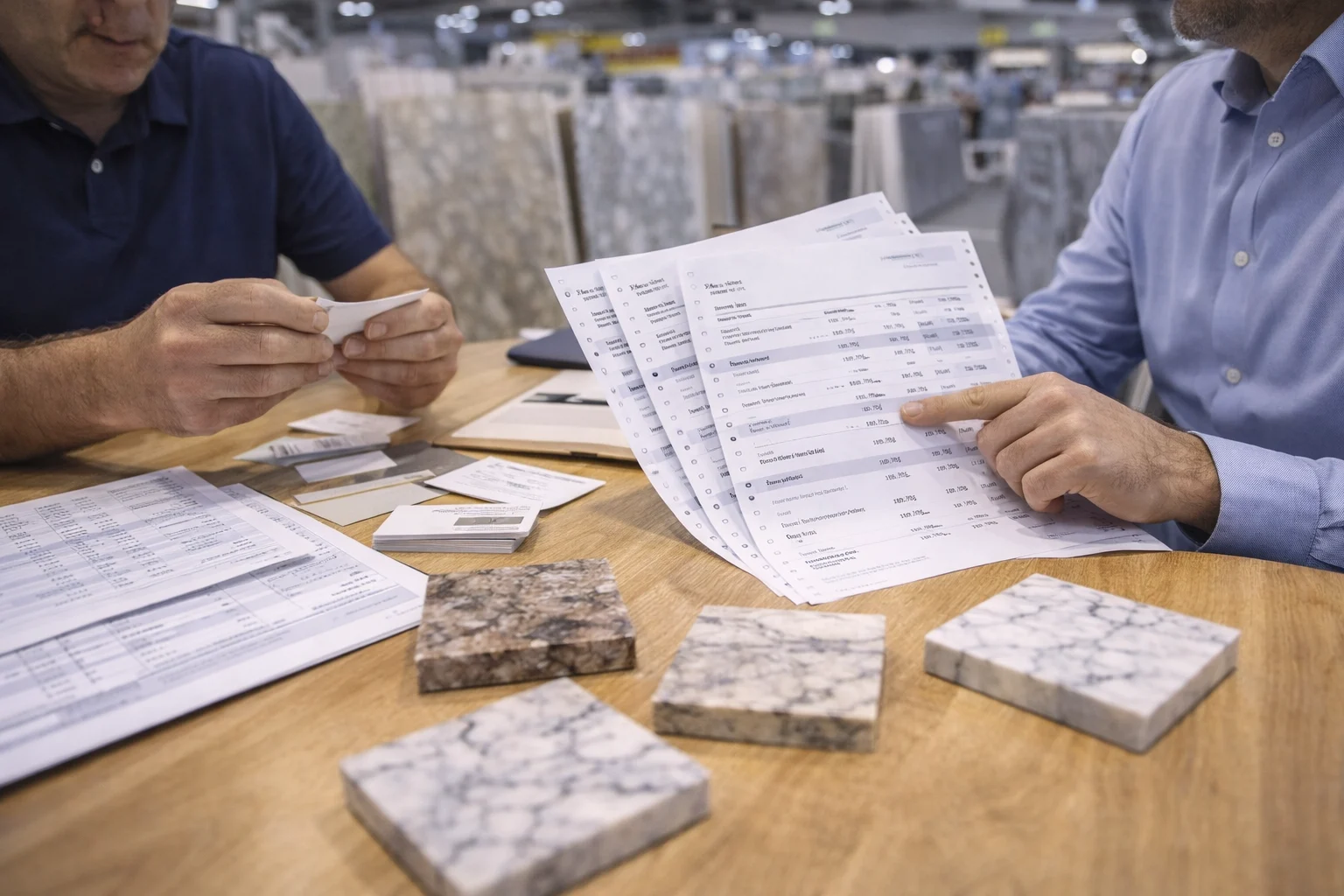
For global stone buyers, the exhibition itself is only one part of the procurement process. Xiamen Stone Fair 2026 offers access to hundreds of marble, quartzite, granite, and engineered stone suppliers, but the strongest supplier decision rarely happens inside the booth. During the fair, buyers mainly gather first impressions, collect material samples, compare booth presentation quality, and observe how suppliers communicate under exhibition pressure. However, real supplier strength usually appears only after the fair ends.
The thirty days after Xiamen Stone Fair are critical because suppliers must now convert exhibition promises into measurable performance. Buyers begin receiving revised quotations, updated slab photos, packaging proposals, and production explanations. At this stage, suppliers who looked impressive during the fair may begin showing communication delays, unclear technical responses, or inconsistent material documentation. For this reason, many procurement teams first return to the Xiamen Stone Fair exhibitor list and suppliers guide and rebuild supplier ranking from a more practical perspective.
The most common mistake buyers make is trying to keep too many suppliers active for too long. While maintaining flexibility seems attractive, too many simultaneous negotiations often delay final production decisions and weaken supplier attention. Experienced buyers usually reduce all contacts to three to five serious candidates within the first week after the fair.
Week 1: Build a Practical Supplier Shortlist
During the first week, the priority is not price negotiation but supplier categorization. Buyers should separate suppliers into clear groups: direct manufacturers, trading companies, mixed supply operators, and highly specialized workshops. This distinction matters because each type carries different production risks.
A direct manufacturer often controls cutting lines, polishing systems, packaging, and warehouse management. A trading company may offer broader product range but rely on multiple factories. To understand these differences, many buyers compare suppliers using frameworks similar to manufacturer vs trading company for marble suppliers, because supplier structure directly affects responsibility during production problems.
At this stage, buyers should request three immediate documents from every serious supplier: updated quotation, recent slab stock photos, and export packaging examples. Suppliers who respond clearly within forty-eight hours usually remain strong candidates. Suppliers who delay often become weaker under production pressure.
Another useful test is asking technical questions that require real production knowledge. For example: How do you control slab thickness tolerance for polished marble? How do you replace damaged slabs in multi-container shipments? Suppliers who answer specifically usually control production more directly.
| Evaluation Item | Buyer Focus | Decision Weight |
|---|---|---|
| Response Speed | Quotation revision within 48 hours | High |
| Technical Clarity | Detailed production answers | Very High |
| Factory Transparency | Production photos or video proof | Very High |
| Export Experience | Packing and shipping examples | High |
Week 2: Compare Material Stability Instead of Sample Beauty
Once supplier shortlist becomes clear, buyers must move beyond booth samples. Samples shown during exhibitions are usually selected pieces and cannot represent full project reality. The real question is whether the supplier can deliver visual continuity across large quantities.
This becomes especially important for white marble, beige marble, or heavily veined materials where small tone differences become highly visible after installation. Buyers handling multi-container projects often use logic similar to batch consistency strategy for marble projects because slab continuity directly affects final project appearance.
Suppliers should therefore provide complete slab sequence photographs rather than isolated slabs. Buyers should ask for numbered slabs, block references when possible, and confirmation of replacement rules if one slab arrives damaged.
At this stage, experienced buyers also compare whether material selected still matches design trend direction. If material selection remains open, reviewing top materials at Xiamen Stone Fair 2026 can help align final choice with current market movement.
Week 3: Verify Production Reality
The third week is where supplier confidence must be tested under real production conditions. If order value is medium or large, factory inspection becomes highly recommended. Even one short visit can reveal more than dozens of emails.
When travel is impossible, buyers should request live video rather than edited marketing video. The supplier should show slab storage, machine operation, current packaging area, and recent production labels. This helps confirm whether the supplier truly controls production or only arranges external processing.
Many buyers now apply methods similar to how to visit a stone factory after Xiamen Stone Fair 2026 even through remote inspection because visual verification immediately exposes production gaps.
Factory verification also helps judge management quality. A factory with organized slab storage, clear numbering, and disciplined movement usually performs better during export than a workshop with scattered unfinished materials.
Buyers should also verify who handles packing internally. Some suppliers outsource packaging, which may increase damage risk during long-distance shipment.

Week 4: Stop Comparing and Make the Final Decision
Many buyers lose momentum in the final stage because they continue requesting quotations from too many suppliers. This often weakens negotiation quality because suppliers notice indecision.
By week four, the strongest supplier is usually already visible. The supplier answers technical questions without hesitation, updates material information quickly, and accepts responsibility clearly. Price still matters, but price now becomes only one factor inside a broader reliability framework.
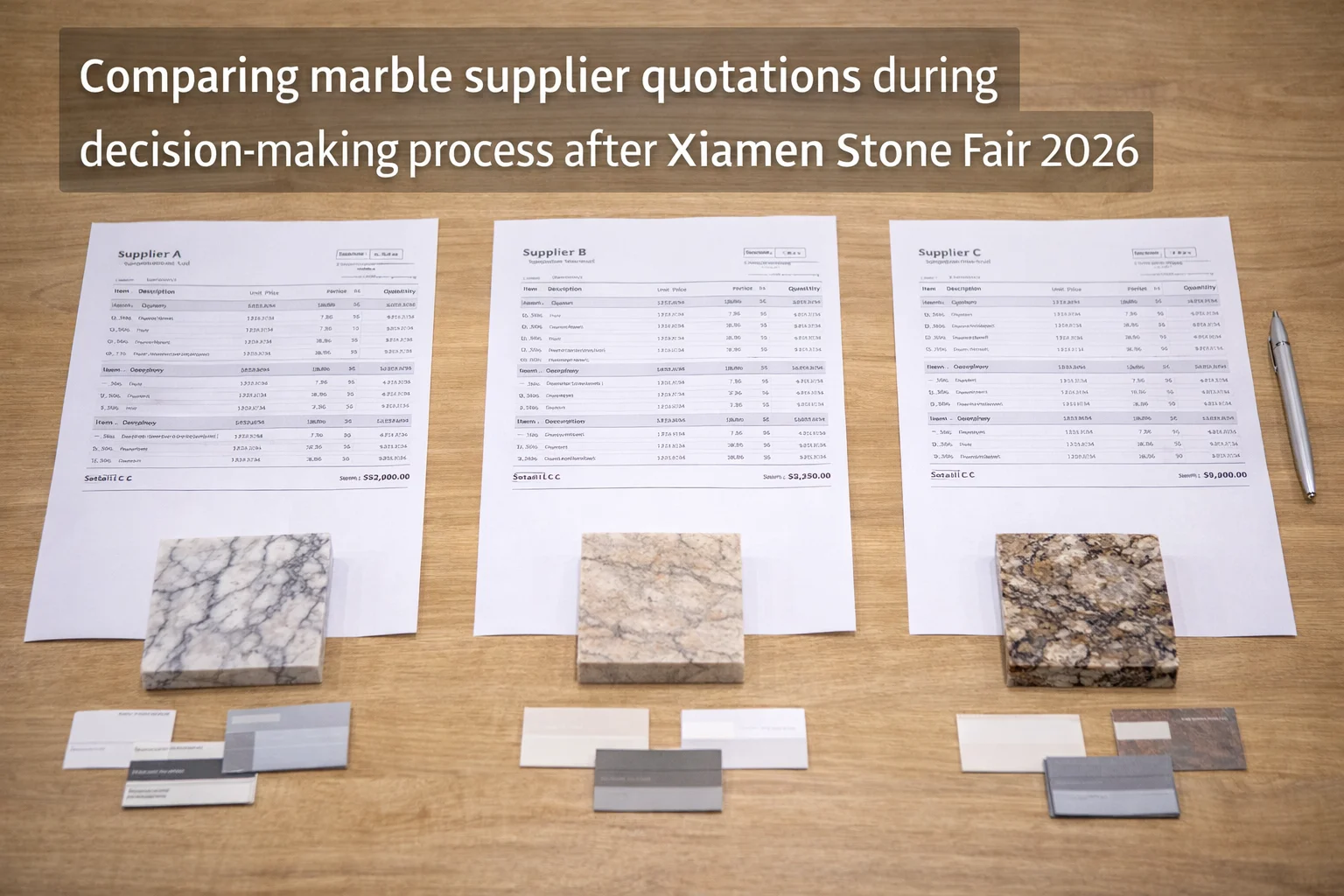
Buyers should no longer compare only total quotation numbers. Instead, they should compare hidden production value: slab replacement confidence, packaging quality, production timeline realism, and communication stability.
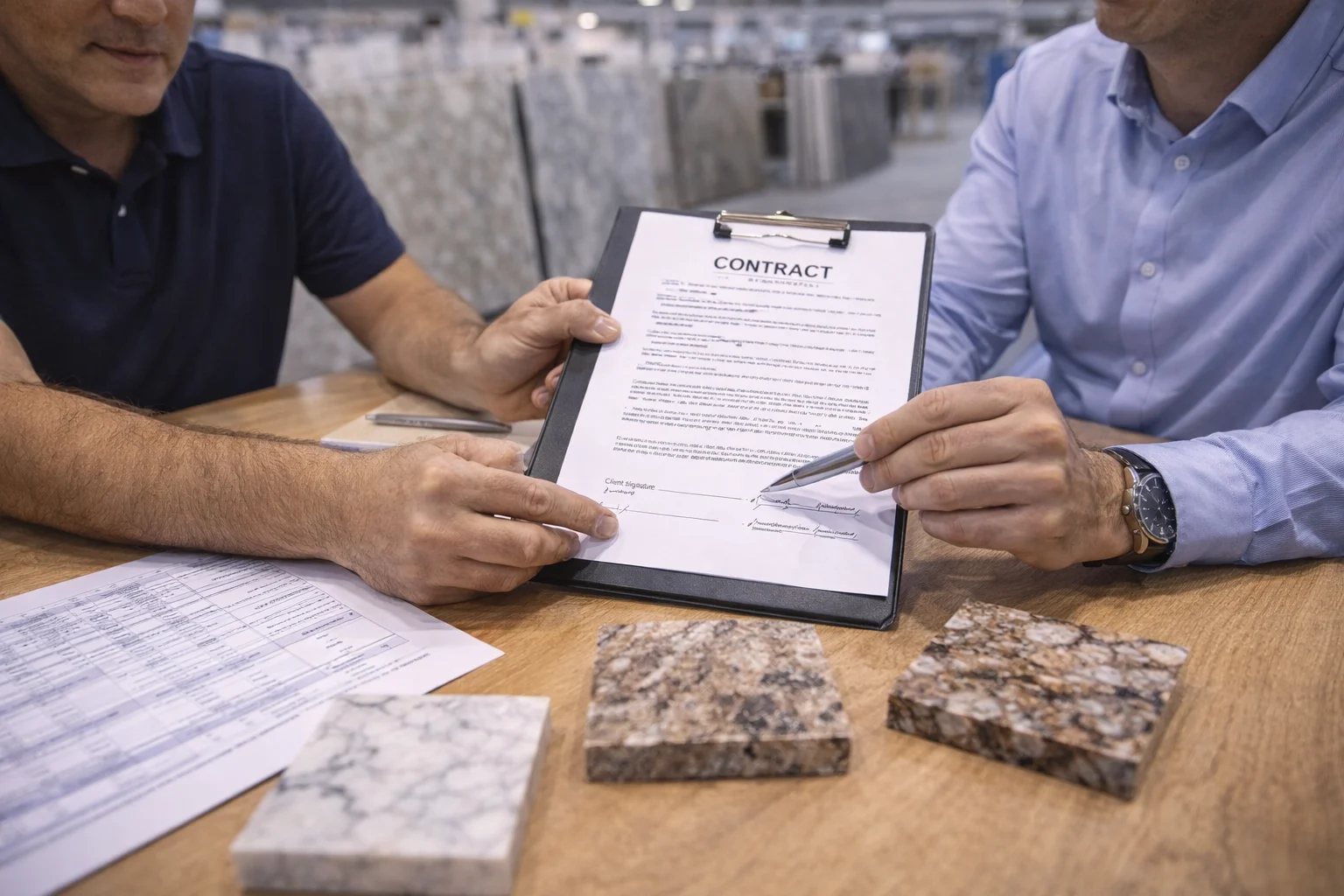
Some buyers also revisit early screening logic using वैश्विक खरीदारों के लिए आपूर्तिकर्ता चेकलिस्ट before confirming deposit payment.
The final supplier decision should happen before premium blocks become unavailable. Waiting too long often means selected material may already shift to other buyers.
In many projects, the safest supplier is not the one with the lowest quotation but the one who behaves consistently over four weeks.
सामान्य प्रश्न
1. Why should supplier decisions wait until after the fair?
Because real supplier performance appears during follow-up communication.
2. How many suppliers should remain after the first week?
Usually three to five serious candidates.
3. Is factory inspection always necessary?
For medium and large orders, factory verification is strongly recommended.
4. Should price be the main decision factor?
No, communication and production control are equally important.
5. When should deposit payment happen?
Only after slab confirmation and production confidence are clear.
6. Can one supplier handle mixed materials?
Yes, but production sources must still be verified carefully.
HowTo
Step 1: Reduce supplier list within one week.
Step 2: Compare slab continuity and quotation revision.
Step 3: Verify production conditions.
Step 4: Compare real communication quality.
Step 5: Confirm supplier before material allocation changes.