
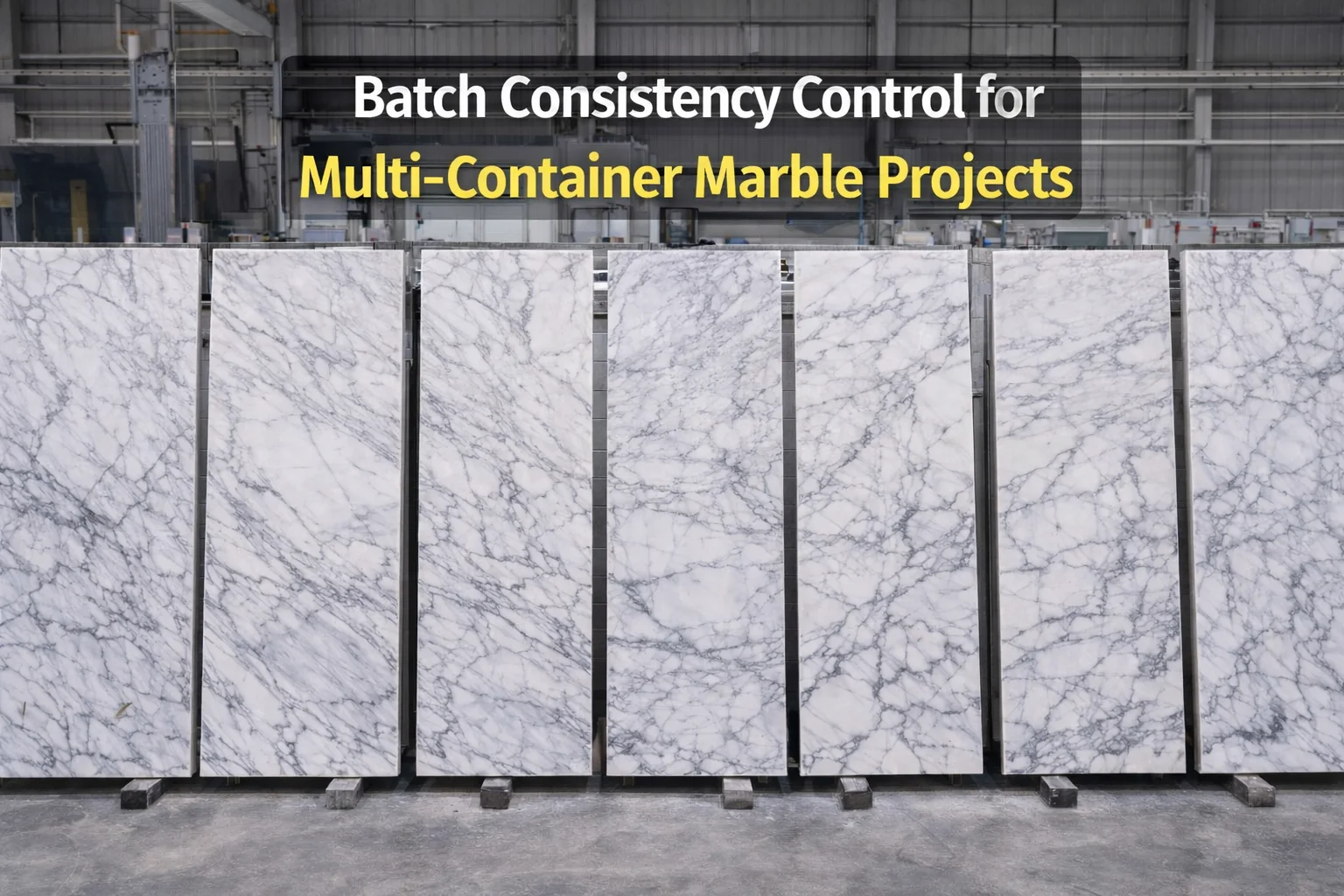
For global buyers managing large stone projects, visual consistency is often more important than individual slab beauty. A single container of marble may look excellent during sampling, but once multiple containers arrive from different production stages, color variation, vein direction, background density, and gloss differences can become serious installation problems. This is why experienced procurement teams treat batch consistency as a production strategy rather than a simple quality issue.
At Xiamen Stone Fair 2026, many suppliers will display attractive slabs under ideal lighting conditions, but professional buyers know that fair samples represent only a small portion of actual production capacity. Before placing large orders, buyers should first understand supplier stock depth and quarry control. If you are still building your supplier shortlist, reviewing the Xiamen Stone Fair exhibitor list and suppliers guide helps identify manufacturers capable of stable material allocation.
Batch consistency becomes even more important when the project includes open floor areas, long wall elevations, hotel lobbies, or continuous countertop installations. In these situations, minor variation becomes highly visible after installation. Buyers should therefore ask suppliers to show slabs from the same quarry block rather than isolated showroom pieces.
Why Batch Consistency Fails in Marble Projects
Many batch problems happen because buyers approve samples too early without confirming raw block origin. Natural marble changes significantly between quarry layers, and two blocks extracted from the same quarry may still show different visual patterns. Suppliers who rely on external stockyards often cannot guarantee continuity once production begins.
This is why supplier verification remains essential. Before production, buyers should review factory allocation methods, slab numbering systems, and stock reservation policy. If supplier control is unclear, it is advisable to use the evaluation framework described in how to verify a stone supplier at Xiamen Stone Fair 2026.
| Risk Area | Common Problem | Project Impact |
|---|---|---|
| Block Source | Different quarry blocks mixed | Visible tone variation |
| Production Timing | Containers produced weeks apart | Finish inconsistency |
| Slab Numbering | No sequence tracking | Installation mismatch |
| Polishing Stage | Different gloss levels | Surface reflection differences |
How Buyers Should Reserve Slabs Before Production

Professional buyers reserve slabs before cutting begins. This means selecting all visible slabs for the full project first, photographing them, numbering them, and locking them before processing. Suppliers with large slab yards can usually allocate same-block materials if decisions are made early.
At the fair, many buyers focus only on price negotiation, but material continuity often saves more money than minor cost reduction. A supplier offering lower price but weak stock control usually creates higher downstream cost through replacement and sorting delays.
When planning sourcing strategy, many procurement teams first define container volume and then map slab quantity backward to quarry availability. This strategic logic is also discussed in Xiamen Stone Fair strategic sourcing guide.
Slab Sequencing for Large Installations
For flooring, wall cladding, and bookmatch applications, slab sequencing should happen before cutting. Suppliers should provide digital slab layouts showing sequence order. Buyers must confirm whether finished pieces preserve vein continuity across adjacent surfaces.
Without sequencing, installers often receive correctly sized pieces but lose visual harmony. This is especially risky for hotel lobby floors and luxury villas where slab direction strongly affects design outcome.
Some buyers also compare marble and quartz alternatives when visual stability is critical. In projects where uniformity matters more than natural movement, engineered materials may reduce risk, which is why some sourcing teams also review marble vs quartz trends at Xiamen Stone Fair 2026.

Production Controls Buyers Must Confirm
During factory visits, buyers should confirm cutting machines, polishing lines, calibration systems, and packaging zones. Production consistency depends heavily on whether the same polishing line processes the full order.
If one container is produced on one machine and the next container on another, gloss difference becomes visible. Calibration tolerance should remain within controlled thickness deviation, especially for flooring projects where level differences affect installation quality.
Factory visits remain one of the strongest tools for confirming this capability. Buyers planning post-fair inspections should also review how to visit a stone factory after Xiamen Stone Fair 2026.
How Experienced Buyers Reduce Batch Risk
Experienced buyers do not approve only one sample. They request full slab photos, dry layout previews, pallet sequence control, and written agreement on replacement policy before deposit payment.
In many successful projects, suppliers reserve 5–10% extra slabs from the same block for future replacements. This prevents visual mismatch if breakage occurs during installation.
Large developers increasingly request digital approval before each production stage. This slows the first week slightly but prevents expensive claims later.

FAQ
1. Why is marble batch consistency difficult in large projects?
Because natural marble changes between quarry blocks, and visual variation becomes obvious across large surfaces.
2. How many slabs should buyers reserve before production?
Ideally all visible slabs for the full project plus extra backup material.
3. Can suppliers guarantee same color in multiple containers?
Only if slabs are reserved from the same quarry block and processed under controlled sequencing.
4. Is slab numbering necessary?
Yes, especially for flooring, walls, and bookmatch installations.
5. Should buyers always visit factories after the fair?
Yes, factory inspection reveals production capability beyond fair samples.
6. Can quartz replace marble when consistency matters?
In some projects yes, because engineered quartz provides more uniform visual control.
HowTo
Step 1: Confirm quarry block source before order.
Step 2: Reserve slabs before cutting.
Step 3: Approve slab numbering layout.
Step 4: Verify polishing line consistency.
Step 5: Reserve replacement quantity.