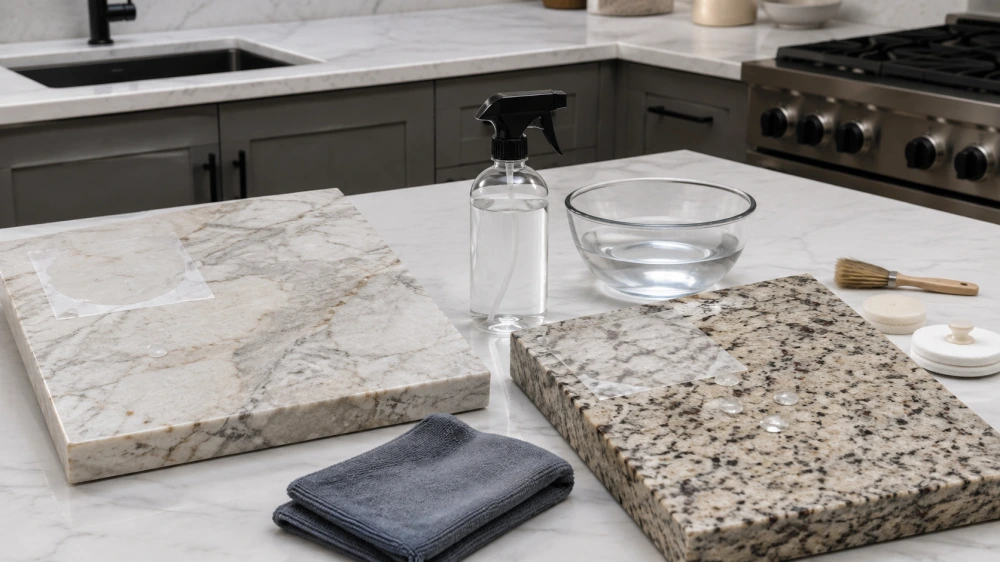
Comparación de mantenimiento: ¿Es la cuarcita más fácil de mantener que el granito?
Post navigation
Resumen rápido
Natural Quartzite and granite both need material-specific care planning. Compare the approved slabs, intended use, finish, fabrication details, and handover requirements before deciding.
For an international buyer, the question is not which label sounds stronger. It is whether the selected natural stone, the approved slab range, the fabrication plan, and the maintenance expectations fit the intended use. Maintenance Comparison: Is Quartzite Easier Than Granite? should therefore be evaluated as a project decision, not as a shortcut based on a showroom sample. Natural Quartzite and granite are both natural stones, yet their commercial names, mineral makeup, movement, absorption behavior, and suitability can vary by individual material. A disciplined comparison keeps the conversation specific and helps the project team avoid assumptions before cutting begins.
Maintenance starts with the right project brief
Maintenance comparisons should focus on practical routines, not absolute claims that one natural stone is always effortless. For importers, fabricators, designers, architects, contractors, and project procurement teams, the useful starting point is a written brief: intended application, drawings, finished dimensions, thickness, edge treatment, finish, quantity, approval process, and delivery destination. That brief lets the supplier and fabricator evaluate the chosen material as a system. It also prevents a broad “Quartzite versus granite” conversation from obscuring the details that affect a real order.
Punto de decisión
Preguntas para incluir en el brief del proyecto
Por qué es importante
Cleaning routine
Which cleaners, frequency, and operator habits are expected?
Care needs depend on the actual material and service conditions.
Sealing discussion
Is a treatment proposed, and who confirms compatibility?
Avoid category-level assumptions about absorption or protection.
Finish and detailing
How will the selected finish, edges, seams, and splash areas be maintained?
The fabricated surface needs a practical handover plan.
La cuarcita natural es una categoría de piedra natural y no debe confundirse con el cuarzo ingenierizado, que es un compuesto manufacturado. El granito también es una piedra natural, pero no es intercambiable con cualquier cuarcita vendida bajo un nombre comercial de piedra. Las declaraciones de rendimiento deben mantenerse específicas para cada material. Revise las losas reales, pregunte al fabricante cómo se manejarán el acabado seleccionado y los detalles, y confirme cualquier tratamiento o método de sellado propuesto en función de las condiciones de la piedra y del proyecto. Esto resulta más fiable que considerar una afirmación a nivel de categoría como una garantía.
Utilice la losa, no solo el nombre de la categoría
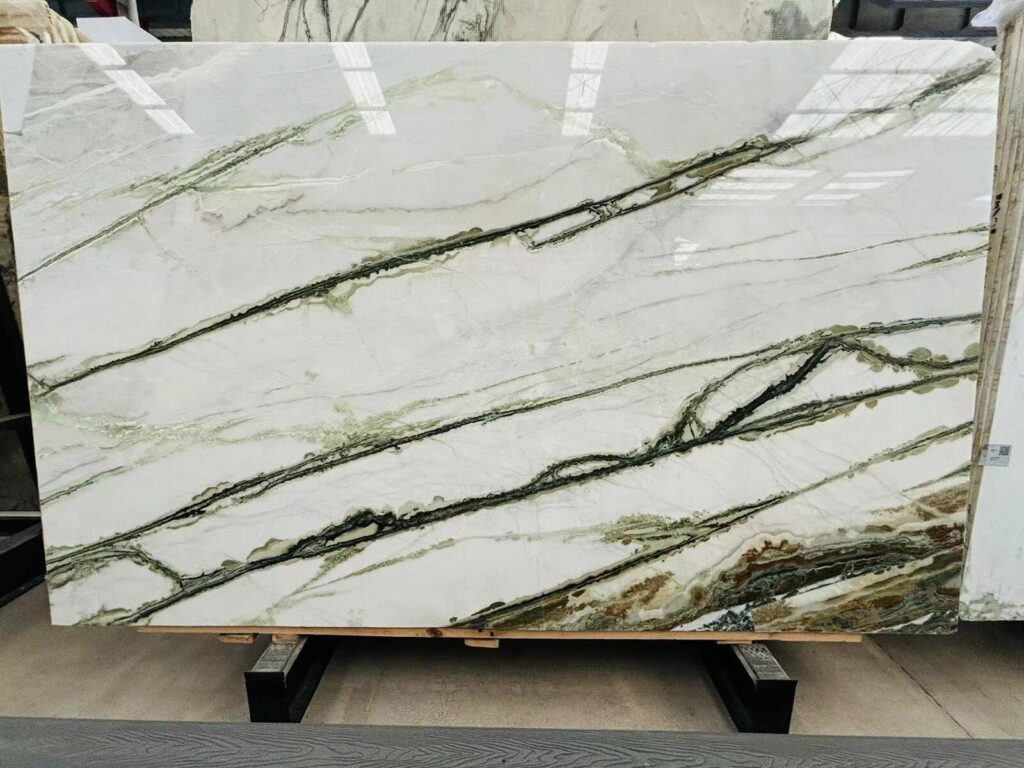
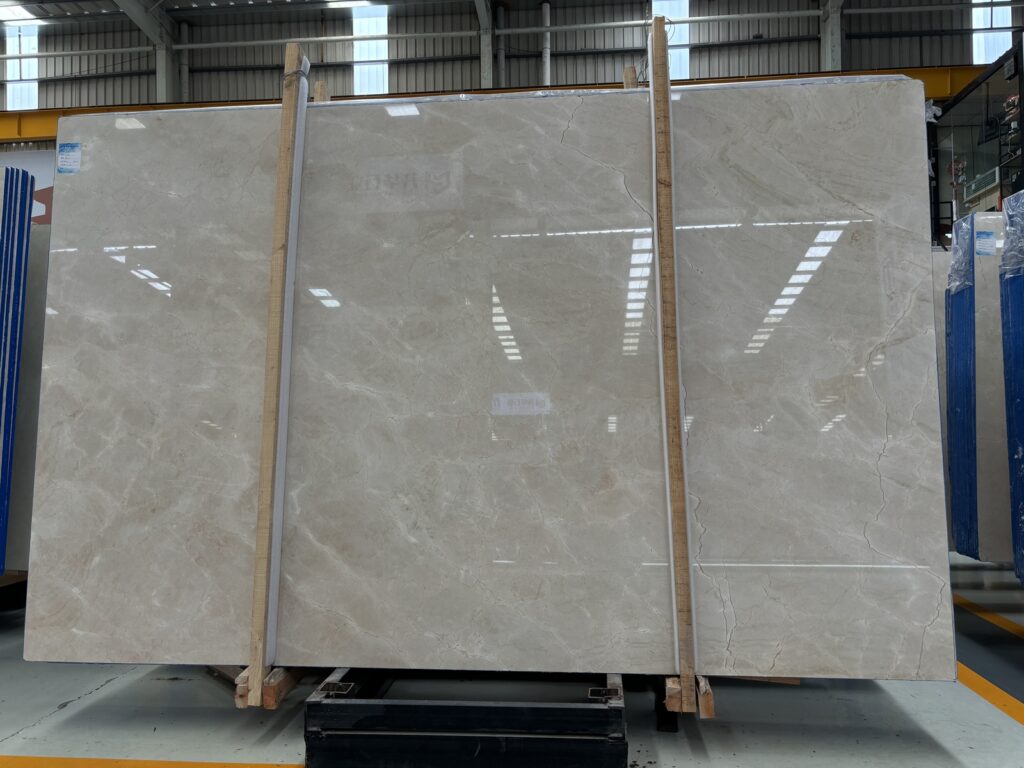
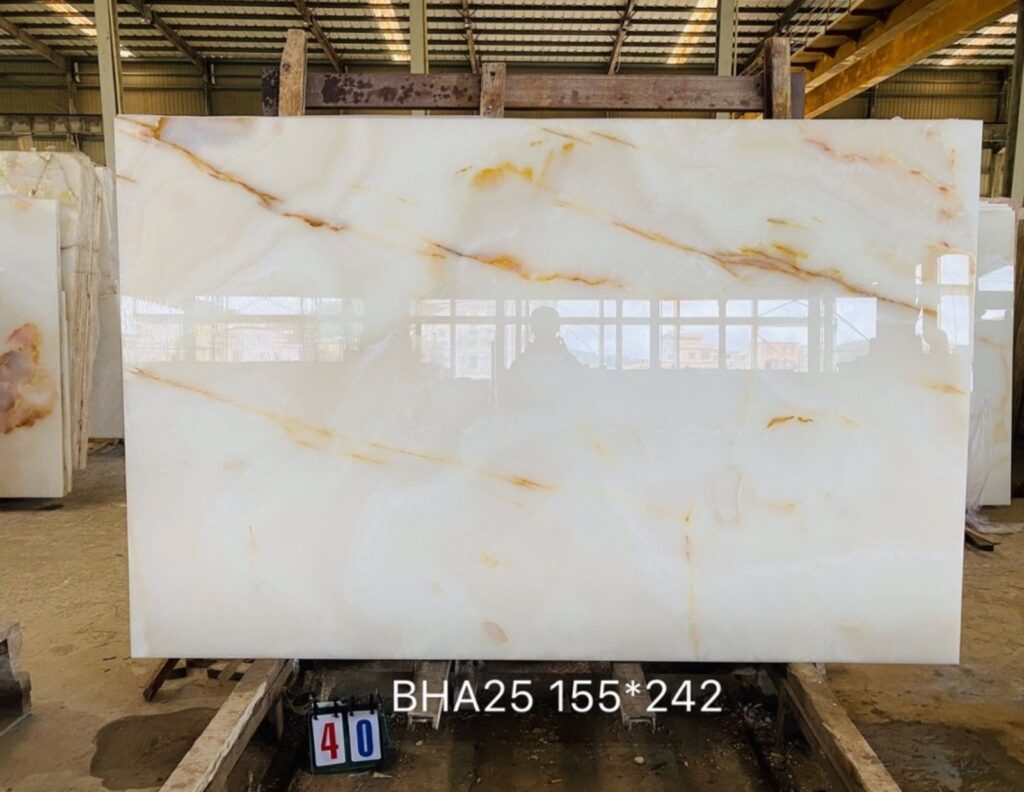
La aprobación de las losas debe ser parte activa de la comparación. Pida ver fotografías actuales de las losas o videos en vivo cuando sea posible, luego revise el tono de fondo, el movimiento, las fisuras, las áreas rellenadas, el carácter de los bordes, la consistencia del espesor y la relación entre la cara visible y la disposición prevista del corte. La variación natural forma parte de la piedra natural. La pregunta comercial clave es si la gama aprobada respalda la intención de diseño y si el número de losas, el margen de rendimiento y las decisiones sobre la disposición se comprenden antes de la fabricación.
Revise la fabricación antes de elegir el acabado o los bordes
La fabricación modifica el desempeño del material en servicio. Aberturas, rieles estrechos, voladizos sin soporte, perfiles de bordes, juntas y transiciones deben revisarse en relación con la losa real y el proceso del fabricante. Un equipo de proyecto debería compartir los planos de taller temprano, identificar zonas vulnerables y acordar quién aprueba la dirección de las vetas y la colocación de las piezas. Esto resulta especialmente valioso cuando una declaración visual y una superficie de uso diario exigente deben trabajar en conjunto.
Construya un proceso de comparación preparado para el comprador
La claridad comercial es igualmente importante. Una cotización útil separa el alcance del material aprobado de la fabricación, el acabado, el embalaje, la logística y los trabajos del lado del destino, donde esos elementos están dentro del ámbito. No debe implicar inventario, precio, plazo de entrega, origen, pruebas ni certificaciones que aún no hayan sido confirmadas. Si se comparan alternativas, mantenga la misma aplicación, dimensiones, cantidad, acabado, requisitos de bordes y modalidad de entrega en cada solicitud. Entradas similares facilitan la auditoría de la decisión de compra.
Etapa
Acción del comprador
Resultado de la decisión
Revisión de materiales
Compare las losas reales y la aplicación declarada.
Una gama visual y material aprobada.
Revisión técnica
Comparta planos, dimensiones, acabado y detalles de los bordes.
Un enfoque consciente de la fabricación.
Revisión comercial
Alinee cantidades, alcance, embalaje y destino.
Entradas comparables de los proveedores.
Aprobación final
Confirme las losas seleccionadas y la revisión actual del plano.
Un punto claro de liberación antes del procesamiento.
Planifique el uso, la limpieza y la entrega
El uso diario no es una sola condición. Una cocina privada, la barra de desayuno de un hotel, el mostrador de servicio minorista, la barra húmeda, el tocador, un elemento exterior o el mostrador de recepción introducen patrones distintos de humedad, limpieza, impacto, exposición al calor y comportamiento del usuario. El equipo de diseño debería mapear la superficie según estas condiciones y luego discutir las instrucciones de cuidado y las limitaciones prácticas con el fabricante. Un plan de mantenimiento realista, documentado para el operador, resulta preferible a promesas de que cualquier piedra natural será completamente libre de mantenimiento.
How to turn maintenance questions into a controlled order
Maintenance is often discussed too late, after a material has been selected for appearance. A better approach is to include care requirements during material review. Ask what daily cleaning team will use, whether the surface will meet food, cosmetics, water, oils, or cleaning chemicals, and how spills will be handled. The answer may differ between a residential kitchen, hospitality project, and commercial service environment.
For Natural Quartzite, a careful buyer does not assume every commercial stone name will respond identically. The same is true of granite. The approved slabs, finish, fabrication detail, and installation context should guide the care conversation. If a fabricator recommends a particular sealer, cleaner, or periodic service routine, record the product and instructions as part of the project handover.
Design details can make maintenance easier or harder. Tight joints, transitions at sinks, splash areas, drainage, and edge profiles should be reviewed as practical cleaning conditions. This is not simply an aesthetic exercise: accessible detailing helps the operator follow the intended routine without improvised methods.
Haga que la decisión sea rastreable por todo el equipo
A material choice can pass through a designer, owner, purchasing manager, fabricator, installer, and facilities representative. Each person may use different language for the same requirement. A short decision record keeps those views aligned: name the proposed material, identify the approved slab images or samples, state the proposed application, record the finish and edge details, and note any assumptions that still require specialist confirmation. This record is particularly useful when a project compares Natural Quartzite with granite, because it makes clear that the comparison is about a defined scope rather than a general preference.
Set a clear communication cadence for long-distance purchasing. After an initial brief, consolidate material questions, drawing questions, and logistics questions so that each review results in an explicit next action. Keep visual approvals separate from changes to dimensions or processing scope, because they often involve different reviewers. Where a point cannot be confirmed from the available information, record it as pending rather than converting it into an assumption. A controlled record helps the buyer, supplier, and fabricator coordinate responsibly without overstating the facts available at that stage.
Use dimensional information early. Thickness, finished edge, overhang, sink or appliance cutouts, backsplash transitions, and any changes in plane can affect both the visual result and the fabrication review. A drawing does not need to be overly complex to be valuable; it needs to be current, measurable, and attached to the material conversation. If a design detail is important to the buyer, it should be visible in the information supplied for quotation and approval rather than being left as an informal instruction.
For projects with several pieces, include a layout conversation before release. Consider which faces will be most visible, how movement should continue across adjoining pieces where relevant, which areas may have seams, and whether book-matching or another directional approach is intended. Natural Quartzite can offer expressive variation, so a buyer should ask how the proposed layout will be reviewed against the available slabs. Granite may require the same discipline. The goal is transparent expectation-setting, not a promise of identical natural patterning.
Risk management should be practical. Instead of asking for broad assurances, ask focused questions about the conditions the completed surface will encounter. Describe the location, expected traffic, cleaning practice, contact with water or heat, and any unusual operational activity. The fabricator and appropriate project professionals can then evaluate the selected material and detail in context. This approach helps the team identify where a protective practice, adjusted detail, or different material route deserves consideration before costs are committed.
Receiving and handover deserve attention too. A procurement team benefits from a clear packing list, piece identification where applicable, and an agreed process for visual and dimensional checks on receipt. The project should also maintain the final approved drawings, material visuals, and care information in a handover file. This is useful for installation coordination and for later maintenance questions. It is more reliable than trying to reconstruct what was approved after materials have moved through several parties.
When comparing suppliers, keep the brief consistent. Send the same material name or visual direction, quantities, drawings, finishes, edge details, delivery destination, and requested service scope to each party. Responses can then be assessed on what they actually cover. If an item is unknown, leave it as an open point rather than assuming it is included. This discipline improves communication without inventing claims about price, availability, timing, origin, testing, or project experience.
Finally, schedule approvals in the order they affect the project. Confirm the intended application and comparison criteria first; review current material visuals next; align fabrication details and drawings; then agree the release point for processing and packing. That sequence gives decision-makers a chance to address visual, technical, and operational questions while changes are still manageable. Maintenance comparisons should focus on practical routines, not absolute claims that one natural stone is always effortless. It is the kind of measured process that supports an international Natural Quartzite purchase from early inquiry through delivery planning.
Quality control works best when it is visible and sequenced. Before packing, buyers can request confirmation of the approved material identifier, dimensions, finish, edge work, labeling, and the agreed packing approach. For cut-to-size work, the approved drawing revision should be unambiguous. For slabs, the project team should agree how bundle identification, slab selection, and visual inspection will be recorded. These steps do not replace professional site inspection, but they reduce avoidable misunderstandings across borders.
natural-stone-cleaning-sealing-care-comparison
Questions buyers should settle before placing an order
Ask whether the project has a named facilities or cleaning team and whether they need a concise care handover. In multi-site work, a consistent instruction sheet can reduce variation between locations.
Ask the fabricator to identify any care-sensitive details on the approved drawings. The goal is not to predict every incident, but to ensure the buyer understands where ordinary use, cleaning practice, and fabrication meet.
Ask each decision-maker to sign off on the material, finish, and care assumptions at the same time. This creates a cleaner record than separating visual approval from operational approval.
Before final approval, circulate the comparison record to the buyer, design team, fabricator, and procurement contact. Confirm that the material selection, scope, drawings, finish, operational assumptions, and receiving requirements describe the same project. This short cross-check helps avoid decisions based on incomplete or conflicting information and supports a more orderly release for fabrication.
quartzite-vs-granite-maintenance-comparison
Frequently asked questions
1. Is Natural Quartzite maintenance-free?
Ninguna piedra natural debe describirse como libre de mantenimiento. El cuidado depende del material aprobado, el acabado, los detalles de fabricación, las condiciones de uso y la rutina seguida por el operador.
2. Is granite always easier to maintain than Natural Quartzite?
No. El granito y la cuarcita natural deben evaluarse material por material. Compare las losas reales, el uso previsto, el acabado y el proceso de cuidado propuesto para el proyecto.
3. Should sealing be decided before ordering?
El equipo del proyecto debe analizar cualquier tratamiento propuesto antes de su liberación para la fabricación y confirmar su compatibilidad con el material seleccionado, el acabado y la aplicación prevista.
4. What should a buyer include in a stone care handover?
Include the approved material name, finish, daily cleaning guidance, proposed treatment information if applicable, and contacts for the fabricator or qualified project professionals.
5. Can Josh help organize a maintenance-focused request?
Yes. Send Josh the material name, dimensions, quantity, drawings, surface finish, and delivery destination so the Natural Quartzite request can be structured for project review.
Nota final
The more useful question is not which category has the simplest slogan. It is whether the approved Natural Quartzite or granite selection has a documented, realistic care plan for the actual project.
Talk with Josh: Send the material name, dimensions, quantity, drawings, required surface finish, and delivery destination. HRST STONE can help structure a Natural Quartzite request for review by your procurement and fabrication teams.
Hi, I am the author of this article. I have been working in the field of Natural Stone for more than 15 years. If you need customized Natural Stone services, please feel free to contact me.
Fabricante y proveedor de mármol, granito, cuarcita, ágata de China - HRST STONE
¡Bienvenido a HRST STONE!
Hola, me gustaría conocer más sobre sus productos. ¿Podría facilitarme información sobre precios, cantidades mínimas de pedido, opciones de personalización y muestras?