
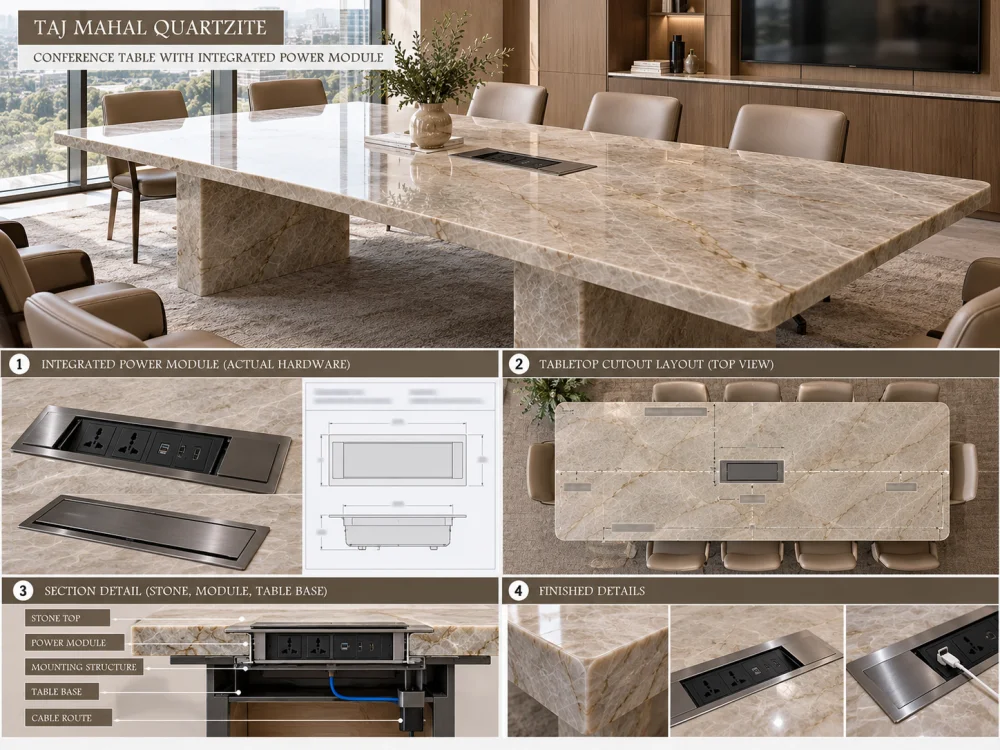
Resumen rápido
Una mesa de conferencias de cuarcita no debe ser liberada para su corte mientras el módulo de alimentación siga representado por un rectángulo aproximado. Coordine el modelo real del módulo, el plano actual del fabricante, el contorno general del hardware, la abertura requerida en la piedra, el movimiento de la tapa o acceso, la relación de montaje, el espacio inferior, el trayecto de los cables, la base de la mesa, la disposición seleccionada de la losa y la revisión de fabricación correspondiente antes de que la apertura se vuelva irreversible. Las conexiones eléctricas, la ingeniería de soporte y los requisitos de instalación permanecen dentro del ámbito de las partes cualificadas responsables de dichos sistemas.
Un dibujo de sala de conferencias muestra una gran mesa de cuarcita natural.
En el centro se encuentra un rectángulo etiquetado:
MÓDULO DE ALIMENTACIÓN.
La fábrica de piedra recibe el plano y prepara la superficie de la mesa.
Luego llega el hardware real.
Su apertura es diferente.
La tapa requiere más movimiento del previsto.
El cuerpo del módulo se extiende por debajo de la superficie de la mesa.
El trayecto del cable entra en conflicto con parte de la base de la mesa.
En ese momento, el problema ya no es un problema del plano.
Se trata de una pieza cortada de cuarcita natural.
For a custom Mesa de conferencias de cuarcita, por lo tanto, el módulo de alimentación debe tratarse como una interfaz física real antes del corte, y no como un accesorio que pueda resolverse automáticamente más adelante.
Antes de discutir la abertura en la piedra, establezca qué necesita soportar la mesa.
Una mesa de conferencias puede requerir acceso a:
El proveedor de piedra no debe decidir qué sistema eléctrico o de datos requiere la sala.
Pero el sistema requerido afecta la información física que el fabricante de cuarcita necesita.
El primer hito importante del proyecto es sencillo:
“Módulo de alimentación aproximadamente 400 × 150 mm” no es la misma información que un modelo de hardware identificado con documentación técnica actual.
Incluso productos con tamaños visibles similares pueden diferir bajo la superficie de la mesa.
Uno de los errores más comunes es planificar únicamente en función de lo que se ve desde arriba.
Un módulo de alimentación puede implicar varios contornos físicos diferentes.
01 — Contorno visible
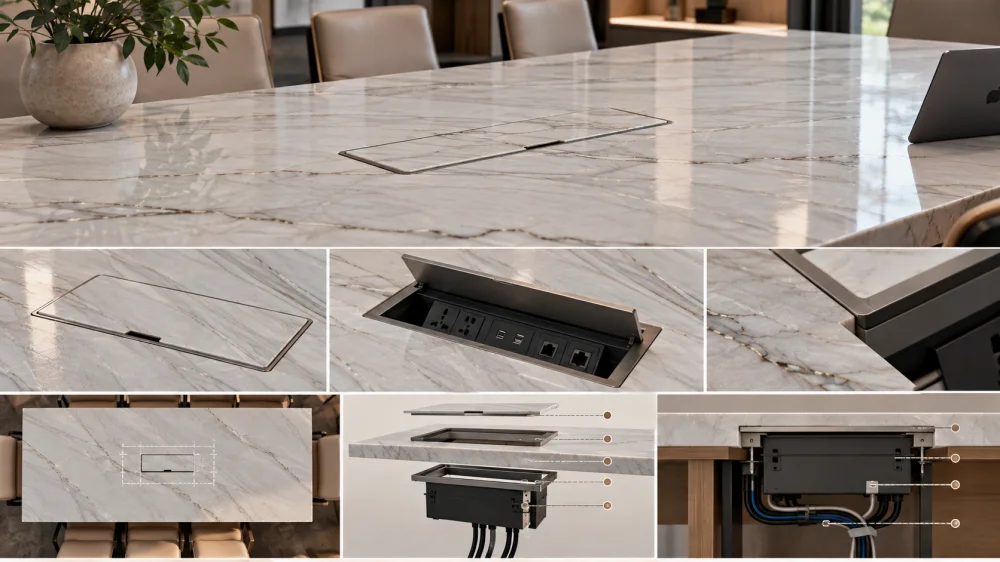
Lo que el usuario ve en la superficie terminada de la mesa.
02 — Abertura en la piedra
La abertura real requerida en la cuarcita según la base confirmada de hardware/fabricación.
03 — Contorno de montaje
El espacio necesario para que el módulo se acople o se monte a través del conjunto de la mesa.
04 — Contorno de movimiento
Espacio requerido para una tapa, solapa, cubierta u otro componente móvil, cuando corresponda.
05 — Contorno bajo la mesa
The module body and other hardware occupying space below the Quartzite.
06 — Service Envelope
Space needed for cables, connectors, access and project-specific servicing requirements.
These envelopes may not be identical.
That is why the top-view rectangle alone may not contain enough information for stone fabrication.
A top view tells only part of the story.
The section is where several interfaces become understandable.
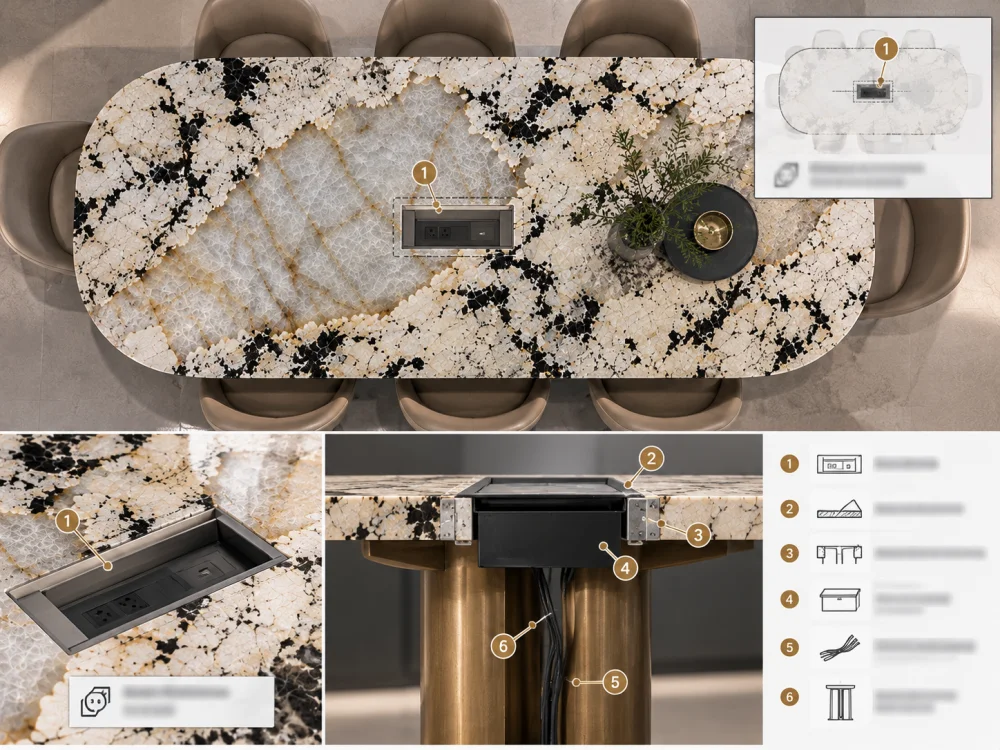
POWER-MODULE LID / VISIBLE FACE
↓
QUARTZITE TABLETOP
↓
MOUNTING INTERFACE
↓
MODULE BODY
↓
UNDERSIDE SUPPORT / TABLE BASE ZONE
↓
CABLE PATH / SERVICE ACCESS
This is where the project can identify whether the hardware concept and the furniture concept are physically compatible before the stone is cut.
This distinction is critical.
OVERALL MODULE SIZE
Describes the hardware or visible assembly according to the relevant manufacturer information.
RECORTE EN PIEDRA
Defines the opening actually fabricated in the Natural Quartzite tabletop.
They should not be assumed to be the same.
The stone opening should be based on the confirmed project information reviewed by the responsible fabricator.
The module position should make sense for the people using the table.
Depending on the conference-table design, questions may include:
Resolve the functional location first.
Then coordinate the corresponding stone opening.
Architectural drawings often center an accessory because it creates a clean plan.
That does not necessarily mean the position has been coordinated with the finished furniture.
DESIGN QUESTION
Is the power module centered because the conference-table function requires it there, or because the early drawing needed a placeholder?
The answer can affect the Quartzite layout, table base, cable path and visual composition.
Once the proposed opening is positioned, stop looking at the module for a moment.
Look at the stone around it.
The fabricator may need to review:
This article does not prescribe a universal minimum remaining-stone dimension. That decision depends on the actual geometry, Natural Quartzite, fabrication method and responsible technical review.
A technically coordinated opening can still create an undesirable visual result if it removes an important part of the selected slab.
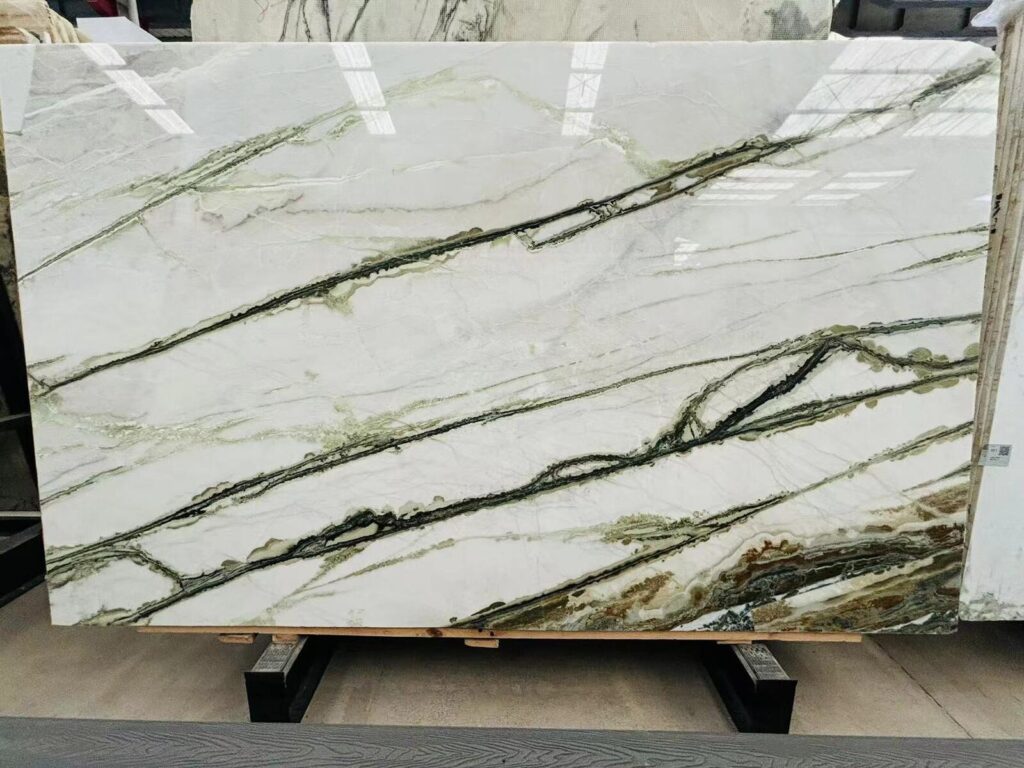
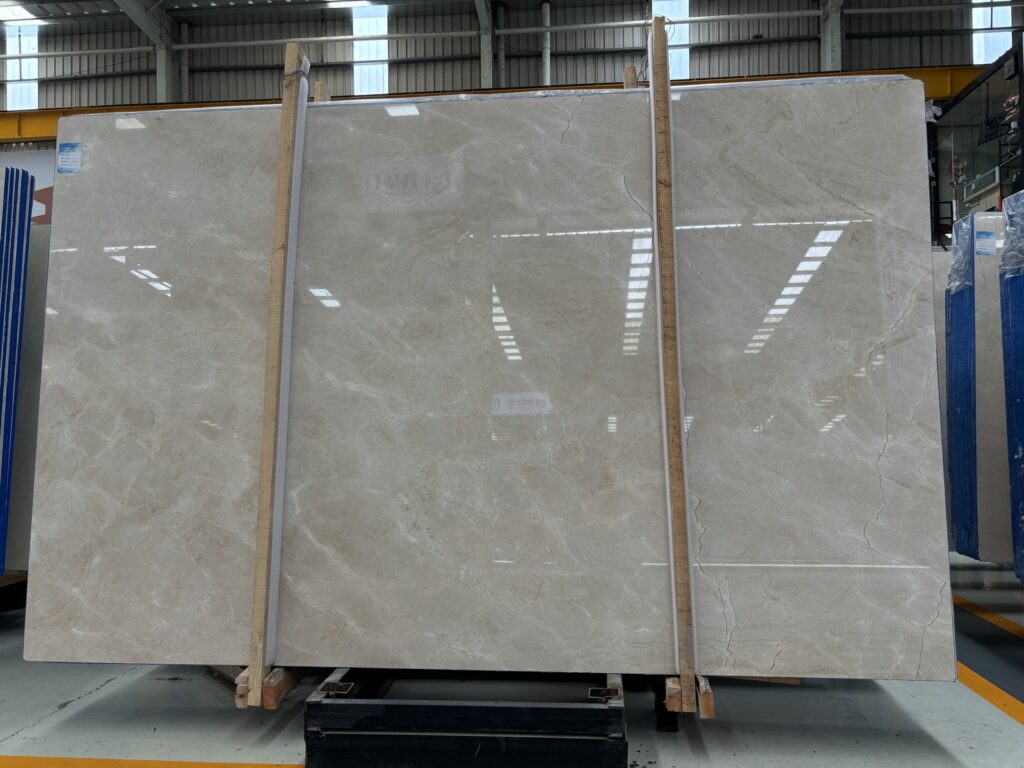
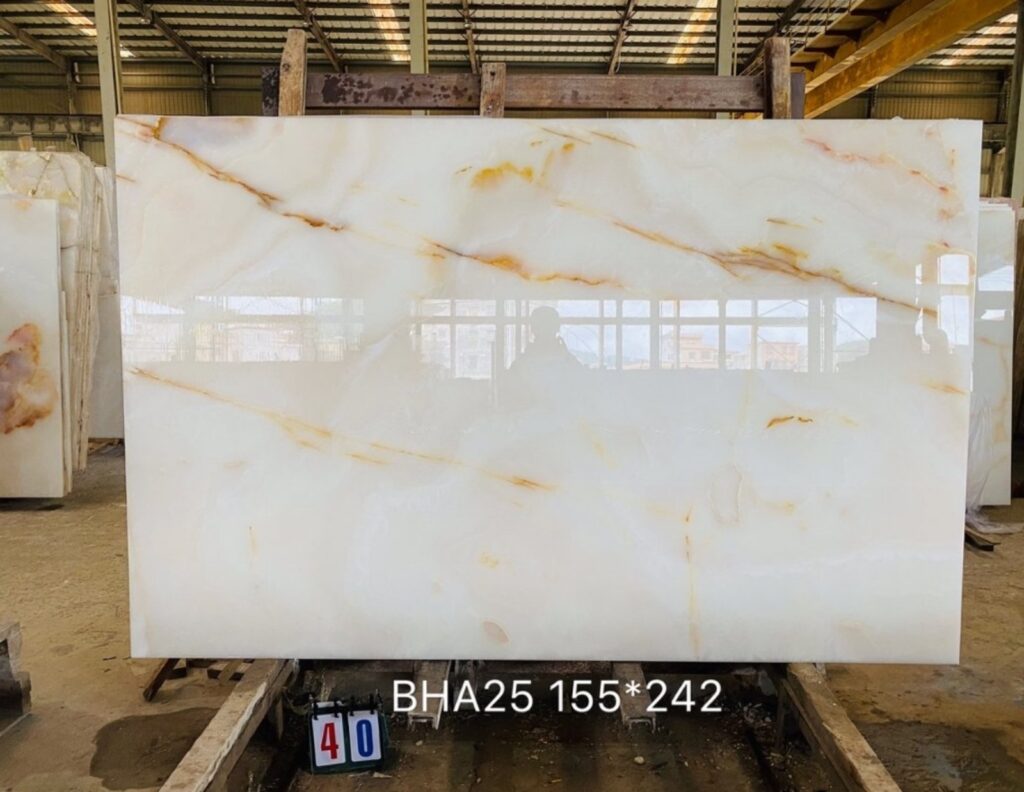
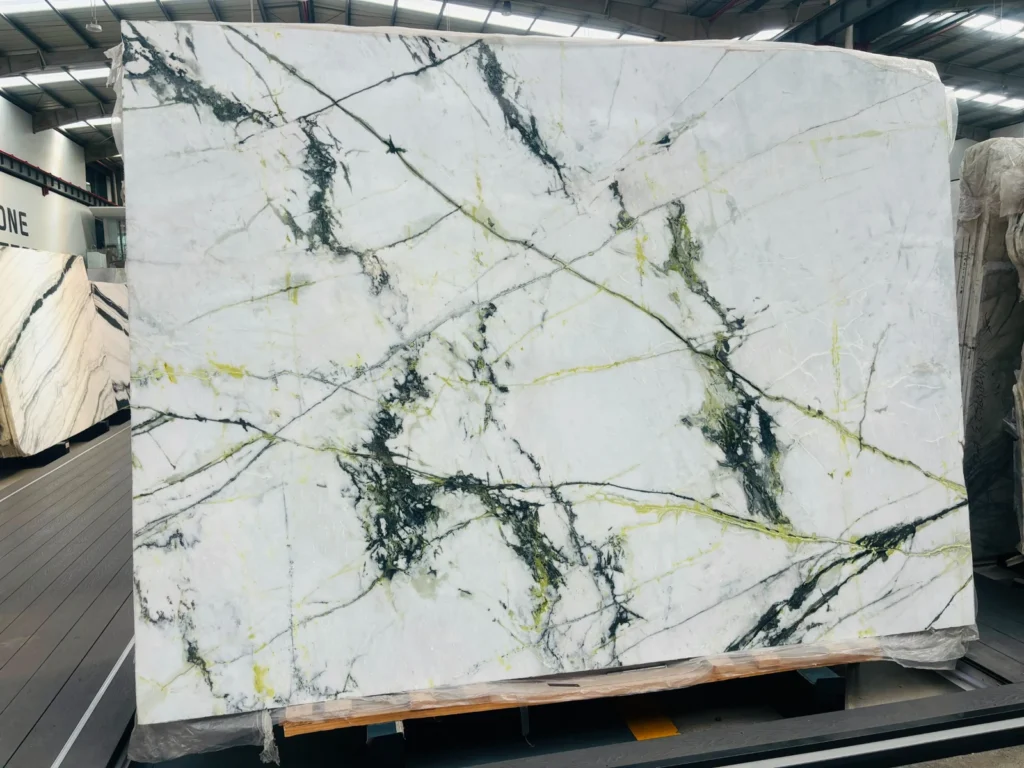
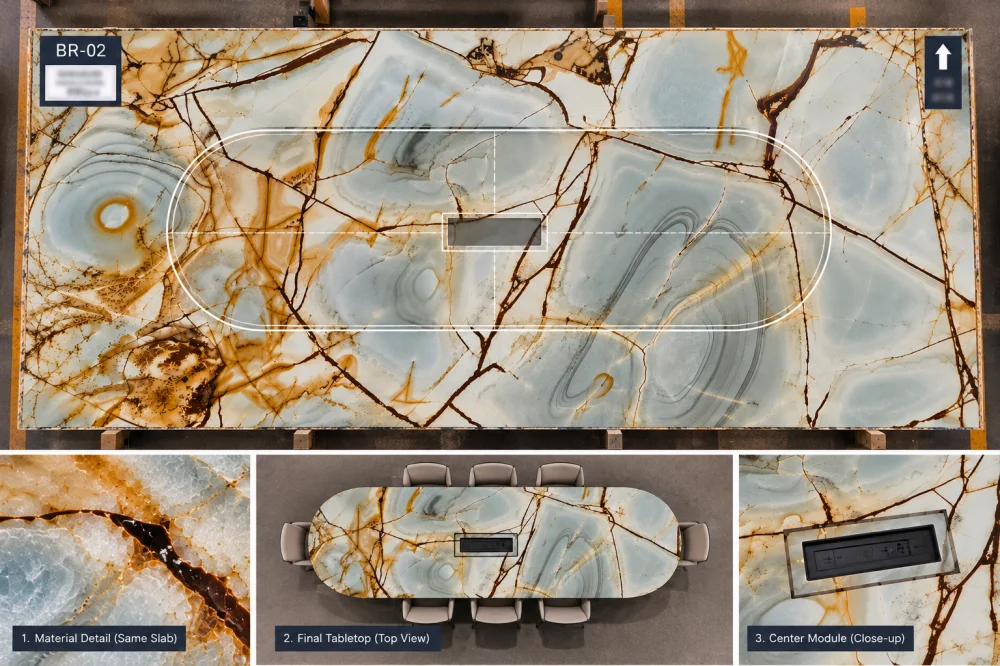
Para un impacto llamativo Mesa de conferencias de cuarcita, place the power-module opening on the actual slab layout before cutting.
Selected Slab: Actual identified Natural Quartzite board
Table Outline: Finished tabletop geometry
Primary Viewing Direction: Main conference-room view
Power Module: Confirmed location
Stone Opening: Current reviewed opening geometry
Pattern Priority: Important mineral movement or focal area
Question: What visible stone will disappear when the opening is cut?
If the selected hardware has a lid, flap or moving cover, do not review only the closed position.
The project should understand the applicable manufacturer-defined movement.
Depending on the actual product, this may affect:
Use the current manufacturer documentation rather than inventing a generic lid movement.
A conference table can look perfectly coordinated from above while containing an unresolved collision below.
The power module may extend into the same zone needed by:
UNDERSIDE COORDINATION QUESTION
After the module passes through the tabletop, what physical space does it occupy, and has that space been coordinated with the furniture and support system?
The furniture designer, hardware provider, fabricator and other responsible professionals should resolve these interfaces according to the project scope.
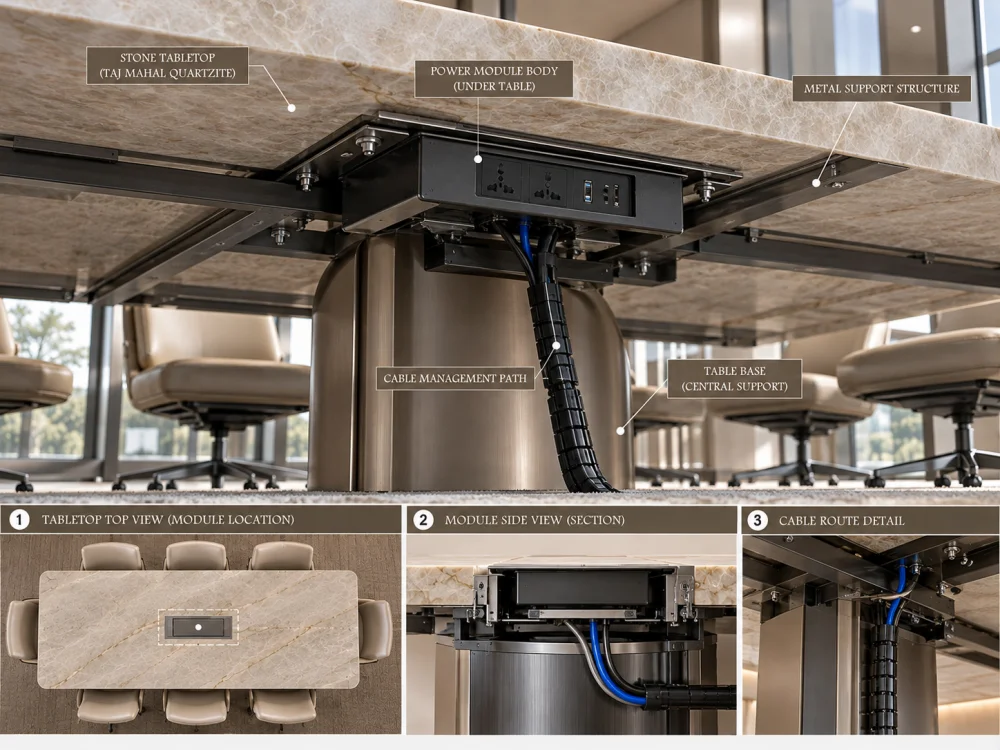
“Cable goes down” is not a complete coordination instruction.
A useful project discussion follows the path farther.
The Quartzite fabricator does not need to design the electrical installation.
But unresolved cable routing can affect the furniture interface and therefore should be identified before the stone layout is treated as complete.
Long conference tables may require more than one service point.
If several modules are proposed, review them as a system rather than duplicating one opening mechanically.
Tenga en cuenta:
Multiple openings can change both the functional and material logic of the top.
Consider a hypothetical project.
The customer has approved a Taj Mahal Quartzite tabletop layout.
The initial drawing contains Power Module A.
Before cutting, procurement changes to Power Module B.
Do not simply change the product name in the hardware schedule and retain the old stone opening.
OLD INPUT
Module A → Layout Revision R03 → Proposed Opening A
HARDWARE CHANGE
Module B selected → Current manufacturer information issued
REVIEW AGAIN
Opening → Position → Stone Around Opening → Underside Interface → Cable Route → Slab Pattern
If the change affects the visible or fabricated Quartzite layout, issue the appropriate revised drawing before cutting.
A rendering is useful for showing the intended conference-room appearance.
It may show:
But a rendering should not automatically define the final Quartzite opening.
It may not reliably communicate:
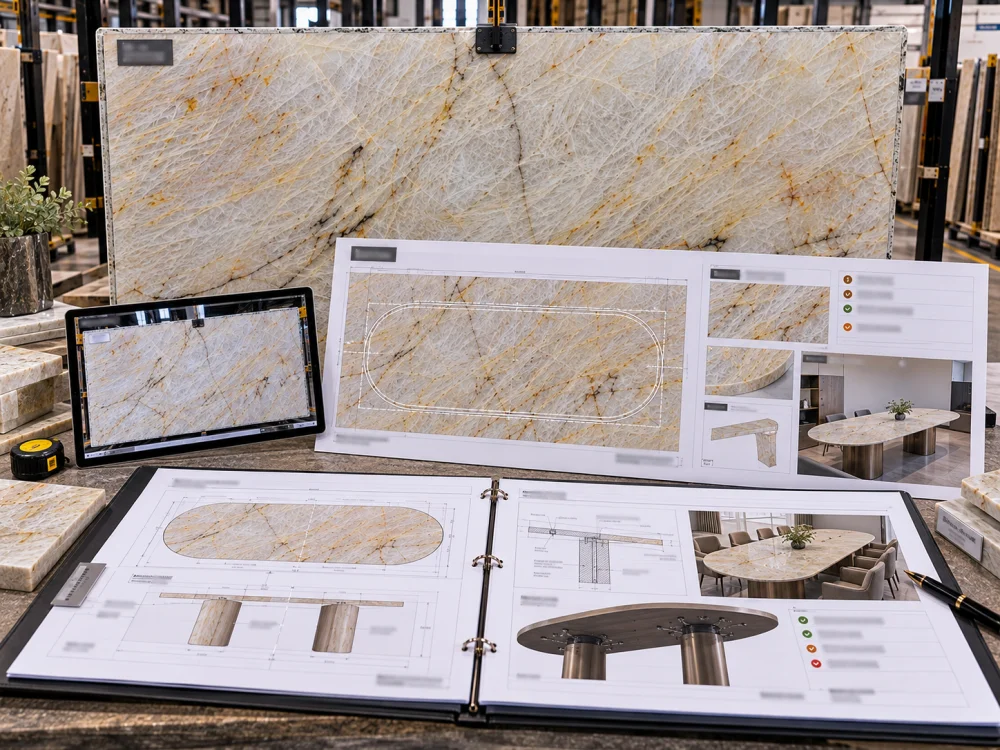
Before the Mesa de conferencias de cuarcita is released for cutting, assemble the current project inputs in one place.
| Project Input | Why It Matters to the Tabletop Review |
| Exact Module Model | Replaces an approximate hardware description with an identifiable product. |
| Current Manufacturer Drawing | Provides the current hardware geometry and relevant interface information for review. |
| Tabletop Drawing | Locates the module relative to the finished Quartzite geometry. |
| Table Section | Shows the relationship between stone, module body, support and furniture below. |
| Selected Slab Layout | Shows which part of the Natural Quartzite pattern the opening removes. |
| Furniture / Base Information | Identifies possible underside interfaces. |
| Cable-Route Requirement | Connects the tabletop module to the broader furniture/service coordination. |
| Current Revision / Review Status | Prevents an earlier module or tabletop drawing from remaining in production. |
For a fabricated Natural Quartzite tabletop, the stone-side review can focus on the confirmed project information that affects the finished component.
Cuarcita: Selected material and actual slab reference
Finished Table Size: Current dimensions and shape
Finish: Current specified surface finish
Borde: Current edge / built-up-edge requirement
Module: Exact identified hardware
Opening: Current approved fabrication basis
Position: Current tabletop location
Pattern: Important visible slab areas
Other Openings: Any additional table penetrations
Base Interface: Relevant confirmed furniture information
Drawing: Current revision to be used for review
CONFERENCE-TABLE CUTTING REVIEW
□ Exact power-module model identified
□ Current manufacturer document available
□ Visible module position confirmed
□ Applicable lid / access movement reviewed
□ Stone opening based on current confirmed information
□ Remaining Quartzite around opening reviewed by fabricator
□ Opening checked against actual slab layout
□ Below-table module envelope coordinated
□ Furniture / support interface reviewed by responsible parties
□ Cable path identified for project coordination
□ Current table drawing revision confirmed
□ Responsible parties have completed the reviews required before stone cutting
The module can affect the stone opening, visible tabletop position, remaining stone geometry, slab-pattern placement, underside furniture interface and cable-routing coordination. Once the Natural Quartzite has been cut, changing those inputs may require significant rework or replacement of the affected component.
Proporcione el modelo exacto del módulo, la documentación actual del fabricante, la geometría hardware correspondiente, la información de montaje, el movimiento aplicable de la tapa o de acceso, el dibujo actual de la mesa de conferencias, la posición prevista del módulo y la información del proyecto necesaria para comprender la interfaz inferior.
No asuma esto. Las dimensiones visibles o totales del hardware y el hueco requerido en la piedra pueden corresponder a geometrías distintas. El fabricante responsable debe utilizar el proyecto actual aprobado y la información del fabricante al definir el hueco para la piedra.
Una representación puede transmitir la intención visual, pero normalmente no debe considerarse como la única base de fabricación para una apertura irreversible. El modelo físico real y la información técnica actual deben coordinarse con el plano de la mesa correspondiente antes de proceder al corte.
[SÍ. La apertura elimina parte de la losa seleccionada y puede modificar qué vetas, áreas cristalinas u otras características naturales permanecen visibles en la mesa terminada. Para mesas de gran importancia estética, superponga la apertura del módulo confirmada sobre la disposición real de la losa antes de proceder al corte.].
Las conexiones eléctricas, los requisitos de seguridad aplicables, los sistemas de datos y las interfaces con los servicios del edificio deben ser determinados por las partes cualificadas responsables de dichos sistemas. El fabricante de cuarcita coordina el componente de piedra conforme a la información de proyecto confirmada dentro de su ámbito de fabricación.
Revise el nuevo modelo y la información actual del fabricante en comparación con la abertura existente, la posición de la cubierta, la piedra restante, la interfaz inferior, el trayecto del cable y la disposición de la losa. Si el cambio afecta a la disposición de la piedra fabricada o visible, actualice el plano correspondiente y verifique el estado antes de proceder al corte.
Envíe a Josh la preferencia de material de cuarcita natural, las dimensiones y la forma terminadas de la mesa, la cantidad, los planos actuales, el acabado superficial, los requisitos de los cantos, la información del módulo de potencia seleccionado, otros orificios, la información sobre la base de la mesa relevante para la interfaz con la piedra, las prioridades en la disposición de losas y el destino de entrega.
Planning a Custom Natural Quartzite Conference Table?
HRST STONE can coordinate selected slab references, tabletop CAD/shop drawings, actual slab layout, confirmed openings, edge fabrication, visible pattern placement, fabrication QC, trial assembly information where applicable, and reinforced fumigated wooden-crate packing around the confirmed furniture scope. Send Josh the table dimensions, quantity, selected Quartzite, finish, edge design, current power-module information, table-base information relevant to the stone interface, drawings and delivery destination before the tabletop is released for cutting.
© HRST STONE / XIAMEN HRST STONE CO., LTD. Todos los derechos reservados.