Quick Summary
Minor Cold (Xiǎohán, 小寒), arriving in early January, marks the coldest and most demanding phase of the 24 Chinese solar terms.
It is a true stress test for buildings, revealing the weaknesses of many synthetic materials under freeze–thaw pressure.
High-density natural stone—such as granite, quartzite, and basalt—demonstrates exceptional frost resistance due to its low
porosity and geological inertia, remaining structurally and visually stable even during extreme winter conditions.
Beyond durability, stone’s high thermal mass aligns with the traditional “Winter Storage” philosophy, absorbing and
gradually releasing heat to stabilise indoor comfort while reducing winter energy consumption.
Minor Cold is also a strategic season for project planning, allowing architects and developers to carefully select,
verify, and prepare stone materials that will perform flawlessly through future winters.
In the rigorous cycle of the 24 Chinese solar terms, there is one period that serves as the ultimate litmus test for both biological and structural resilience. Welcome to Minor Cold, or Xiǎohán (小寒). Arriving around the 5th of January, this 23rd solar term represents the apex of Yin energy. While its name may sound modest, meteorological data confirms that Minor Cold is consistently the most frigid window of the year.
For the architect, the developer, and the discerning homeowner, Minor Cold is more than a seasonal change; it is a period of extreme environmental pressure. When the earth hardens and the mercury plummets, the vulnerabilities of synthetic materials are laid bare. It is during this “Great Freeze” that we find our most profound inspiration in the bedrock of the planet. Natural stone does not merely survive Minor Cold; it embodies the very spirit of the season—the quiet, unyielding strength that remains stable while the world around it fluctuates.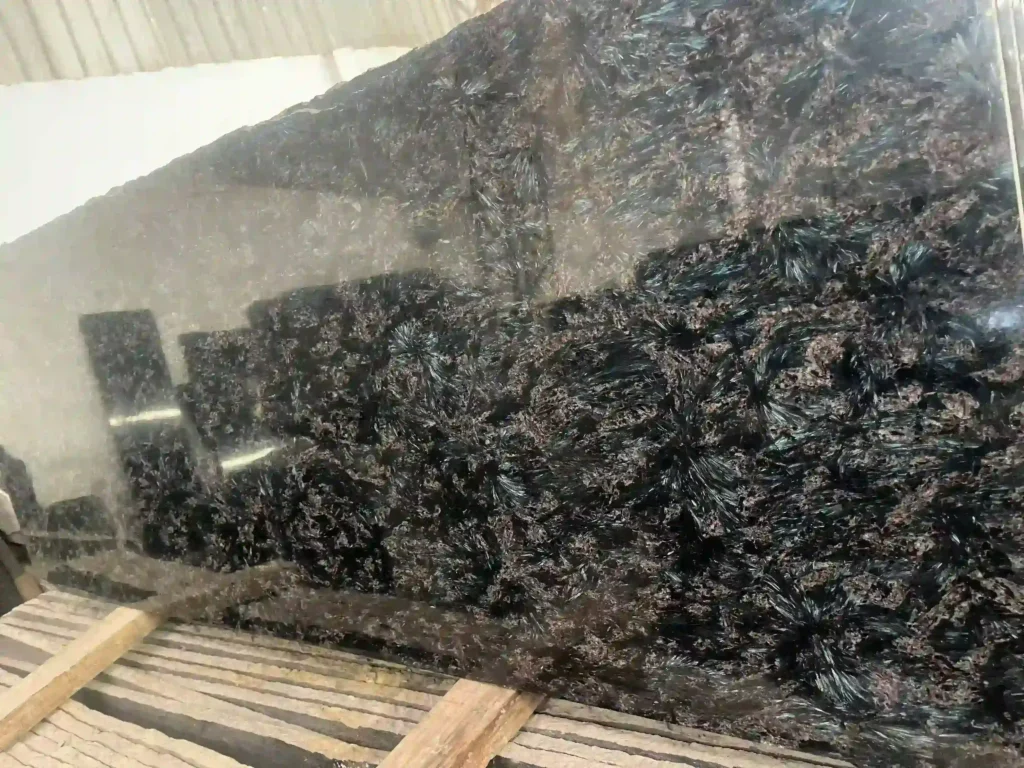
Defying the Frost: The Science of Stone’s Physical Inertia
The primary challenge during Minor Cold is the destructive power of the freeze-thaw cycle. In many temperate and cold climates, moisture trapped within building materials expands by approximately 9% upon freezing. This internal pressure is the “silent killer” of many construction elements, leading to cracking, spalling, and structural fatigue.
However, high-density natural stone—such as premium granito, cuarcita, and certain basalts—possesses a remarkably low porosity. Because these materials were forged under immense geological pressure over millions of years, they exhibit a physical inertia that synthetic alternatives cannot replicate. When the world enters the Minor Cold phase, a building clad in high-quality stone remains indifferent to the expansion of ice. By selecting stone with a high frost-resistance rating, architects ensure that the structure’s “skin” remains as flawless in the depths of January as it was in the warmth of June.
The Wisdom of Thermal Mass: Harmonising with “Winter Storage”
In Traditional Chinese Medicine (TCM) and the philosophy of Dōngzhì y Xiǎohán, the central theme is “Winter Storage” (Dōng bǔ). Nature hides its Yang energy deep within the earth to protect it from the biting winds. This ancient wisdom finds its modern technical equivalent in the concept of Thermal Mass.
Natural stone is an exceptional thermal battery. Its high volumetric heat capacity allows it to absorb, store, and slowly release heat. During the Minor Cold period, when indoor temperatures are a constant battle against the external chill, stone elements—from flooring to feature walls—act as stabilisers.
-
Passive Heat Absorption: Stone floors in south-facing rooms absorb the rare winter solar radiation, releasing it during the sub-zero nights.
-
Underfloor Heating Synergy: Stone is the most efficient conductor for radiant heating systems. Unlike timber, which acts as an insulator (blocking heat), stone allows for a rapid and uniform distribution of warmth, aligning perfectly with the TCM principle of keeping the “foundations warm” to support the body’s internal Qi.
Aesthetic Resilience: The “Fourth Friend” of Winter
Chinese art celebrates the “Three Friends of Winter”—the Pine, the Bamboo, and the Plum Blossom—for their ability to flourish in the cold. In the world of luxury design, we propose Piedra natural as the “Silent Fourth Friend.”
During Minor Cold, the landscape is stripped of its vibrant distractions, leaving behind a monochromatic, minimalist aesthetic. This is the time when the texture and vein patterns of stone truly shine. Whether it is the frosted crystalline structure of mármol blanco or the deep, subterranean grey of honed slate, stone provides a visual “weight” that anchors a property. It offers a sense of permanence and sanctuary. While wood might warp and paint may peel under the stress of extreme humidity shifts, stone maintains its aesthetic integrity, proving that true luxury is synonymous with durability.
 The “Winter Storage” Philosophy in Project Planning
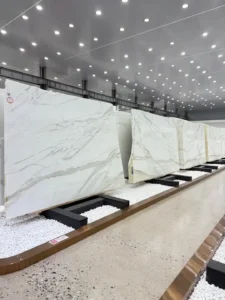
In the business of stone procurement, the Minor Cold period is a strategic window. Following the Chinese tradition of “hiding energy” to prepare for the spring, this is the ideal time for developers and designers to engage in Winter Selection.
Choosing stone during the quietest months allows for a more meticulous vetting process. It is a time to inspect slabs at the source, ensuring that the materials selected for spring installation have the requisite density and mineral composition to handle future “Minor Colds.” This is the season of deliberate planning, where the foundations of next year’s architectural masterpieces are laid through careful material curation.
FAQ: Stone Performance During the Deep Winter
1. Does the extreme cold of Minor Cold affect the installation of outdoor stone? Yes, temperature control is vital. During Minor Cold, we recommend that outdoor grouting and adhesive work be delayed until temperatures rise above 5°C, or that heated enclosures are used. However, the stone itself is unaffected by the cold, making it a safe material to store on-site.
2. Which stone finishes are safest for icy conditions during Minor Cold? For external walkways, safety is paramount. We recommend flamed, bush-hammered, or sandblasted finishes. These processes create a high-friction surface that remains slip-resistant even when covered in frost or light snow.
3. Is “Internal Sweating” (Condensation) a problem for stone walls in winter? If a stone wall is properly insulated and has sufficient thermal mass, it actually helps regulate humidity. By maintaining a more consistent surface temperature, stone reduces the “dew point” fluctuations that lead to condensation on colder, thinner surfaces like glass or metal.
4. Why is stone considered more “eco-friendly” for winter heating? Because of its thermal inertia. Stone retains heat longer than almost any other building material, meaning your heating system cycles less frequently, significantly reducing energy consumption during the year’s coldest months.
Conclusion: Embracing the Cold with Confidence
El Minor Cold solar term is a reminder that the world is governed by cycles of pressure and rest. For those who build with natural stone, this season is not a threat, but a confirmation of quality. Stone embodies the ultimate architectural paradox: it is a cold material that provides the most efficient warmth; it is a rigid material that offers the most fluid beauty.
As we navigate the peak of winter, let the enduring nature of stone provide the foundation for your next project—offering a sanctuary that remains unmoved by the biting winds of Xiǎohán.