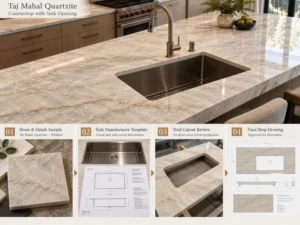


Resumen rápido
Una reserva de losas de cuarcita debe especificar las losas exactas que se están reservando, la duración de la reserva, qué sucede cuando esta expira y si alguna losa de reemplazo requiere la aprobación del comprador. Para pedidos de proyectos, registre el nombre del material, los números de las losas, la cantidad, la fecha de reserva, la fecha de vencimiento, el estado de la losa, la referencia del proyecto y la regla de sustitución antes de considerar el material como asegurado. La cuarcita natural varía de una losa a otra, por lo que una reserva debe garantizar la identidad física de la losa, no simplemente el nombre comercial de la piedra.
A reserva de losa de cuarcita Parece sencillo: seleccionar varias losas y solicitar al proveedor que las reserve. En la práctica, este pequeño paso de abastecimiento puede determinar si el material finalmente fabricado es el mismo que el diseñador, el fabricante o el comprador aprobaron originalmente.
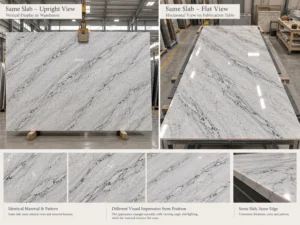
La cuarcita natural es específica para cada losa. Dos losas vendidas bajo el mismo nombre comercial pueden diferir en su movimiento, distribución mineral, tonalidad, fisuras, áreas cristalinas y dirección de las vetas. Por esta razón, un registro profesional de reservas debe vincular el proyecto con las losas físicas identificables y establecer qué ocurre si el período de reserva expira o si una losa queda indisponible.
Esta guía explica un sistema práctico de control de reservas para importadores, fabricantes, diseñadores, contratistas y equipos de adquisición de proyectos que compran cuarcita natural.
El formulario de reserva debe responder una pregunta básica: ¿Cuáles son exactamente las losas físicas que se están reservando para qué proyecto, hasta cuándo y bajo qué condiciones?
| Campo de Reserva | Registro de ejemplo | Por qué es importante |
| Material | Cuarcita Taj Mahal | Vincula la reserva con el material cotizado. |
| Números de las Losas | TM-231 / TM-232 / TM-233 | Identifica las losas físicas exactas. |
| Cantidad | 3 losas | Evita ambigüedades cuando hay varias losas disponibles dentro del lote. |
| Referencia del Proyecto | Isla de Cocina / Proyecto A | Conecta las losas con la aplicación prevista. |
| Fecha de Reserva | Fecha registrada por el proveedor | Define cuándo comienza la reserva. |
| Fecha de Vencimiento | Plazo acordado para la reserva | Hace explícita la ventana de reserva. |
| Estado Actual | Reservada / Liberada / Confirmada | Indica si el material sigue bajo control para el proyecto. |
| Regla de Sustitución | Requiere aprobación del comprador | Evita que un reemplazo no aprobado entre en producción. |
Un nombre comercial de material identifica una categoría de piedra o una selección de mercado. No identifica de manera única la losa que el comprador aprobó.
Supongamos que un equipo de proyecto aprueba tres losas de cuarcita Blue Roma tras revisar su movimiento general y la relación entre las losas adyacentes. Registrar únicamente “Cuarcita Blue Roma – 3 losas” deja un vacío importante: otras tres losas Blue Roma podrían técnicamente cumplir esa descripción, pero presentar una composición visual notablemente diferente.
Por lo tanto, el registro de reserva debe conservar el número de la losa u otro identificador único de la losa junto con las fotografías correspondientes de la losa.

Regla de Reserva
El nombre del material identifica la selección de piedra; el número de la losa identifica la losa física. Para proyectos de cuarcita natural sensibles visualmente, la reserva debe preservar ambos aspectos.
Esta distinción es especialmente importante en proyectos donde la selección de las losas ocurre antes de los planos finales de taller.
Un comprador puede reservar material mientras aún se coordinan las dimensiones, las posiciones de las juntas, los detalles de la cascada, los recortes o las cantidades finales. La reserva protege el material seleccionado durante un período acordado; no debe interpretarse automáticamente como autorización para cortarlo.
Secuencia Típica de Control
01 — Losa Ofrecida
El proveedor proporciona imágenes actuales de la losa, sus dimensiones, identificadores y la información relevante del material.
02 — Losa Seleccionada
El comprador identifica las losas preferidas.
03 — Losa Reservada
Se registran los números de las losas y el período acordado de reserva.
04 — Revisión del Diseño
Los planos y las dimensiones reales de las losas se utilizan para evaluar el corte, la orientación, las juntas y el rendimiento.
05 — Producción liberada
El corte comienza únicamente después de que se hayan completado las aprobaciones comerciales y técnicas requeridas.

Una reserva sin una fecha de expiración definida puede generar incertidumbre tanto para el comprador como para el proveedor. El comprador podría asumir que las losas seleccionadas permanecen protegidas indefinidamente, mientras que el proveedor podría considerar la reserva temporal, ya que el material sigue siendo inventario no vendido.
Por lo tanto, la reserva debería especificar una fecha de expiración o un período de reserva claramente definido.
Antes de esa fecha límite, el equipo del proyecto debería determinar qué acción es necesaria para extender o convertir la reserva; por ejemplo, confirmación comercial, depósito, orden de compra, aprobación final u otro paso acordado. Los términos exactos dependen de la transacción y deben confirmarse por escrito en lugar de asumirse.
PUNTO DE CONTROL DE EXPIRACIÓN
Una fecha de expiración debería responder a tres preguntas: ¿Cuándo termina la reserva? ¿Qué acción asegura las losas más allá de esa fecha? ¿Qué ocurre si no se completa la acción requerida?
La expiración no debe quedar a interpretación. Una vez finalizado el período de reserva acordado, el registro de la reserva debería indicar si las losas fueron:
Si las losas son liberadas, el comprador no debe suponer que los mismos números de tabla puedan recuperarse posteriormente. El inventario de piedra natural puede variar a medida que las losas se venden, se fabrican, se trasladan o se asignan a otros proyectos.

La sustitución es uno de los controles más importantes en un reserva de losa de cuarcita.
Es posible que una losa reservada quede ocasionalmente indisponible o resulte inadecuada antes de la producción. La respuesta adecuada no consiste simplemente en seleccionar otra losa con el mismo nombre comercial y continuar como si nada hubiera cambiado.
El reemplazo debe pasar por un paso de aprobación.
| Verificación de sustitución | El comprador debe revisar |
| Identidad | Nuevo número de tabla y dimensiones de la losa |
| Apariencia | Tono general, movimiento, características minerales y relación con las losas adyacentes |
| Impacto en la disposición | Dirección de las vetas, juntas, áreas visibles y continuidad |
| Impacto en la fabricación | Dimensiones útiles, recortes, rendimiento y piezas requeridas |
| Aprobación | Aceptación documentada del comprador antes de la liberación de la producción |
Para una instalación con múltiples losas, el reemplazo también debe evaluarse en comparación con las losas que siguen reservadas. Un sustituto puede parecer aceptable por sí solo, pero provocar una ruptura visual evidente cuando se instala junto a la secuencia original.
Algunos proyectos deberían aplicar una estricta “no se permite sustitución sin aprobación escrita” instrucción.
Esto resulta especialmente útil cuando la losa seleccionada es central en el diseño; por ejemplo, en una isla de cocina destacada, en una pared decorativa emparejada, en un mostrador de recepción, en el revestimiento de una chimenea o en proyectos donde varias piezas deben seguir una secuencia visual continua.
Para piezas menos sensibles visualmente, el comprador puede establecer una regla de sustitución más flexible. Lo importante es que la regla aceptable quede documentada antes de que surja cualquier problema.
Los números de tabla resultan mucho más útiles cuando aparecen en la propuesta de corte o de disposición.

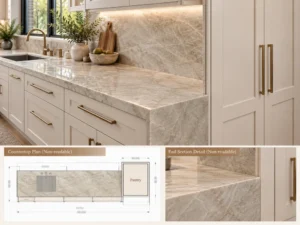
En lugar de aprobar un dibujo abstracto, el comprador puede revisar qué piezas terminadas están previstas para provenir de cada losa reservada. Esto resulta particularmente valioso en grandes islas, extremos de cascadas, paredes decorativas, encimeras largas y otras aplicaciones donde la orientación y la colocación del patrón influyen en el aspecto final.
Un dibujo práctico podría, por lo tanto, conectar:
Tabla TM-231 → Parte superior de la isla
Tabla TM-232 → Extremos de la cascada
Tabla TM-233 → Encimeras perimetrales / Piezas de reserva
La disposición exacta dependerá de las dimensiones de la losa, del área utilizable, de defectos o características naturales, de la geometría del proyecto y de la estrategia de fabricación. Lo importante es garantizar la trazabilidad entre la losa reservada y el componente terminado previsto.
Las dimensiones brutas de la losa, por sí solas, no garantizan que los componentes requeridos puedan fabricarse con el material seleccionado.
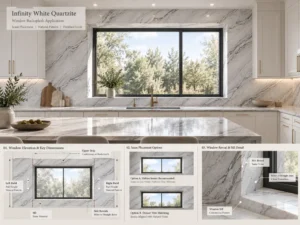
Antes de que una reserva se convierta en un compromiso definitivo de material, compare la lista de cortes del proyecto con las losas reales. Tenga en cuenta el recorte de bordes, la orientación de las vetas, las características naturales que el comprador desea evitar o resaltar, la ranura de corte, la estrategia de juntas, las aberturas grandes, los retornos tipo cascada y cualquier pieza adicional necesaria para el proyecto.
Punto de control del comprador
“Tres losas reservadas” no significa necesariamente “tres losas son suficientes”. Confirme el diseño de corte propuesto y el rendimiento útil antes de basarse en la cantidad reservada.
Los proyectos internacionales suelen involucrar a un diseñador, un importador, un proveedor de piedra, un fabricante, un coordinador de transporte y un instalador. Si cada parte trabaja desde un hilo de mensaje o una hoja de cálculo diferente, el estado de la reserva puede volverse confuso.
Un sencillo registro de estado proporciona una referencia única:
| Tablero | Estado | Aprobación | Próxima acción |
| TM-231 | Reservado | Losa aprobada | Revisión de la disposición |
| TM-232 | Reservado | Losa aprobada | Revisión de la disposición |
| TM-233 | Pendiente | A la espera de la revisión del comprador | Confirmar o reemplazar |
Para proyectos más grandes, este mismo registro puede incluir las dimensiones de las losas, referencias de paquetes o lotes, fechas de reserva, fechas de vencimiento, revisiones de planos, historial de sustituciones y el estado de liberación de producción.
Un registro controlado reserva de losa de cuarcita debería eventualmente convertirse en un registro de producción igualmente controlado.
Antes de proceder al corte, verifique que los números de tablero en las instrucciones de producción coincidan con la reserva aprobada. El plano de distribución más reciente o el dibujo de taller debe especificar dimensiones, orientación, bordes visibles, juntas, recortes y otros detalles relevantes de fabricación.
Si el diseño cambia de manera significativa, confirme si la cantidad originalmente reservada sigue siendo adecuada. En caso de sustitución de una losa, actualice tanto el registro de reserva como los documentos de fabricación, en lugar de permitir que la sustitución quede únicamente en un correo electrónico o mensaje de chat.
La trazabilidad no debe perderse después del corte.

Los componentes terminados pueden utilizar números de pieza específicos del proyecto, vinculados al plano de fabricación. Antes del embalaje, HRST STONE puede organizar los registros de producción en torno a los planos aprobados, la identificación de piezas, el acabado, las dimensiones, la orientación visible y los requisitos de embalaje acordados para la orden.
Para proyectos de exportación, la lista de embalaje y las referencias de piezas deben ayudar al equipo receptor a comprender qué componentes van juntos y dónde aparecen en la secuencia del proyecto. Esto resulta especialmente útil para múltiples habitaciones, unidades repetidas, paredes decorativas, componentes tipo cascada y envíos por etapas.
□ Nombre exacto del material registrado
□ Números de tablero registrados
□ Fotografías actuales de las losas vinculadas a cada tablero
□ Dimensiones de la losa verificadas
□ Cantidad registrada
□ Proyecto/aplicación identificado
□ Fecha de inicio de la reserva registrada
□ Fecha de vencimiento o período de retención registrada
□ Requisito de extensión o confirmación comprendido
□ Regla de sustitución documentada
□ Diseño/rendimiento revisados cuando sea necesario
□ Liberación de producción mantenida separada de la reserva de losas
Una reserva de losas de cuarcita es una retención documentada de losas específicas de cuarcita natural, destinada a un comprador o proyecto determinado. Un registro útil indica las placas exactas, el período de reserva, la referencia del proyecto, el estado actual y las condiciones que rigen su liberación o sustitución.
La cuarcita natural varía de una losa a otra. Los números de tablero vinculan la reserva con las losas físicas exactas que fueron inspeccionadas, en lugar de basarse únicamente en el nombre comercial del material.
No existe un período de retención universal. Este depende del proveedor, la situación del inventario, la etapa del proyecto y el acuerdo comercial. Los compradores deben obtener por escrito el período de reserva aplicable y la fecha de vencimiento correspondientes a la orden específica.
El resultado depende de los términos de reserva acordados. La reserva puede prorrogarse, convertirse en un pedido confirmado o liberarse. El registro de la reserva debe aclarar el proceso aplicable, en lugar de suponer que las placas permanecen reservadas indefinidamente.
Un nombre comercial no garantiza una apariencia idéntica. Para proyectos sensibles a las losas, las tablas de sustitución deben fotografiarse, identificarse, verificarse con el plano y ser aprobadas conforme a la regla de sustitución acordada antes de su fabricación.
No necesariamente. Una reserva controla la disponibilidad de materiales, mientras que la liberación de producción autoriza la fabricación. Mantener estas dos etapas separadas resulta útil cuando los planos, las dimensiones, las disposiciones o las aprobaciones comerciales aún están en proceso de finalización.
Para proyectos en los que la colocación visual o el rendimiento son importantes, sí. Asociar los números de tablero con las piezas terminadas propuestas facilita la revisión de la dirección de las vetas, las juntas, las relaciones entre cascadas, las áreas visibles y la utilización del material antes del corte.
La identidad original de la losa y la numeración de las piezas terminadas pueden formar parte de un registro de proyecto trazable. Las piezas terminadas deben poder identificarse en relación con los documentos aprobados de fabricación y embalaje, para que los equipos de recepción e instalación puedan seguir la secuencia prevista.
Regla final de adquisición
No considere “material reservado” como documentación de proyecto suficiente. Una reserva controlada de cuarcita debe responder a cuatro preguntas: ¿Cuáles son exactamente los tableros? ¿Hasta cuándo están reservados? ¿Qué ocurre al vencerse el plazo? ¿Quién debe aprobar una sustitución?
Para la obtención de cuarcita natural basada en proyectos, HRST STONE puede coordinar las referencias actuales de las losas, la identificación de los tableros, la revisión del plano de colocación, la información de fabricación, los registros de control de calidad y el embalaje de exportación, todo ello en torno al alcance confirmado del pedido. Envíe el nombre del material, las dimensiones requeridas, la cantidad, los planos, el acabado, la aplicación en el proyecto y el destino de entrega, para que el requisito de las losas pueda revisarse en función de la disponibilidad real del material.
© HRST STONE / XIAMEN HRST STONE CO., LTD. Todos los derechos reservados.