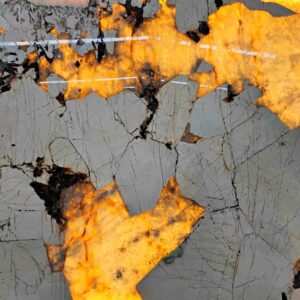


Gold Patagonia Granit ist ein äußerst ausdrucksstarker brasilianischer Stein mit einer großflächigen kristallinen Struktur, statt eines kleinen, wiederholenden Granitkorns. Warme Champagner-, Honiggold- und Beige-Mineralbereiche stehen in Wechselwirkung mit hellen Kristallen, rauchig-grauen Zonen und markanten dunklen Einschlüssen, wodurch eine abstrakte natürliche Komposition entsteht, die sich von Platte zu Platte erheblich unterscheiden kann.
Große Kristallstruktur
15 mm / 18 mm
Maßfertigung
Ausgewählte hinterleuchtete Bereiche

Naturstein
Brasilien
Gold / Champagner / Creme / Grau / Schwarz
Platten / Maßanfertigungen / Sonderanfertigungen
Produktübersicht Gold Patagonia Granit
Gold Patagonia, auch gesucht als Patagonia Gold oder Granit aus Patagonien, wird vor allem aufgrund seiner dramatischen Mineralzusammensetzung ausgewählt. Übergroße helle Kristalle können neben warmen Gold- und Champagnerbereichen, rauchigen Mineralübergängen sowie kräftigen schwarzen oder dunkelbraunen Einschlüssen liegen.
Im Gegensatz zu einer wiederholbaren künstlichen Oberfläche sieht jede Gold Patagonia Platte deutlich anders aus. Eine Platte kann von cremefarbenen Kristallfeldern dominiert sein, während eine andere dichtere honiggoldene Mineralzonen oder ausgeprägtere dunkle grafische Strukturen aufweisen kann.
Aus diesem Grund sollte der Handelsname nicht als präzise Farbgarantie angesehen werden. B2B-Käufer sollten die tatsächliche Plattenoberfläche, die Abmessungen sowie die ausgewählten fertigen Teilebereiche genehmigen, bevor mit dem Schneiden begonnen wird.

Produktspezifikationen
| Artikel | Spezifikationsdetails |
| Materialbezeichnung | Goldfarbener Patagonien-Granit |
| Verwandte Markennamen | Gold Patagonia / Patagonia Gold / Patagonia Granit |
| Materialtyp | Brasilianischer Naturstein / Im Handel als Granit geführt |
| Herkunft | Brasilien |
| Primärfarben | Champagner, Honiggold, Creme, Beige, Rauchgrau, Braun und Schwarz |
| Texturmuster | Übergroße kristalline Felder mit unregelmäßigen goldenen Mineralinseln, dunkleren Einschlüssen und komplexer natürlicher Bewegung |
| Verfügbare Dicke | 15 mm / 18 mm; weitere Projektstärken je nach verfügbarer Plattenstärke |
| Oberflächenbearbeitung | Poliert / Geschliffen / Lederfinish / Projektspezifisches Finish |
| Durchsichtigkeit | Variabel; ausgewählte Kristallbereiche können Licht durchlassen und sollten an der jeweiligen Platte getestet werden |
| Lieferformen | Platten, Arbeitsplatten, Inselen, Waschtischplatten, Wandpaneele, Kaminstücke, Tischplatten, Barplatten sowie maßgeschneiderte Komponenten |
| Anwendungsbereich | Luxuriöse Wohnbereiche, Villen, Hotels, Küchen, Bäder, Akzentwände, Kamine, Bars und maßgefertigte Möbel |
| Maßfertigung | Zuschnitt auf Maß, CNC‑Fräsungen, Gehrungen, Kantenprofile, Wasserfall‑Elemente, Wandpaneele, Tischplatten und architektonische Komponenten |

So wählen Sie Gold Patagonia Granit aus
Für Gold Patagonia ist die Auswahl der Platte wichtiger als die reine Produktnamenwahl. Das Verhältnis von cremefarbenen Kristallen, goldenem Feldspat und dunklen Einschlüssen entscheidet darüber, ob das fertige Projekt hell und elegant wirkt oder deutlich dramatischer erscheint.
Für ein Patagonia‑Theke, Patagonia‑Insel oder große Akzentwand, sollten die visuell wichtigsten Bereiche vor dem Schneiden den fertigen Teilen zugeordnet werden.
Auswahllogik
Wenn das Projekt einen helleren Luxuslook benötigt → Wählen Sie Platten mit größeren cremefarbenen und hellen Kristallfeldern.
Wenn ein wärmeres Goldcharakteristikum im Vordergrund steht → Wählen Sie Platten mit stärkeren Konzentrationen von Champagner-, Honig- und Goldmineralien.
Wenn maximale visuelle Dramatik gefordert ist → Wählen Sie kontrastreiche Platten mit größeren dunklen Einschlüssen und komplexen Kristallübergängen.
Wenn mehrere Teile zu einer Installation zusammengefügt werden → Genehmigen Sie das gesamte Schnittlayout vor der Fertigung.
Anwendungen von Gold Patagonia Granit
Die übergroße Kristallskala von Kristallgranit macht Gold Patagonia besonders effektiv dort, wo große Elemente die natürliche Komposition ohne übermäßige Fugen zur Geltung bringen können.
Patagonia‑Insel
Große Kücheninseln gehören zu den stärksten Einsatzgebieten, da sie es ermöglichen, dass übergroße Kristalle und goldene Mineralfelder in architektonischer Größe sichtbar bleiben.
Patagonia‑Theke
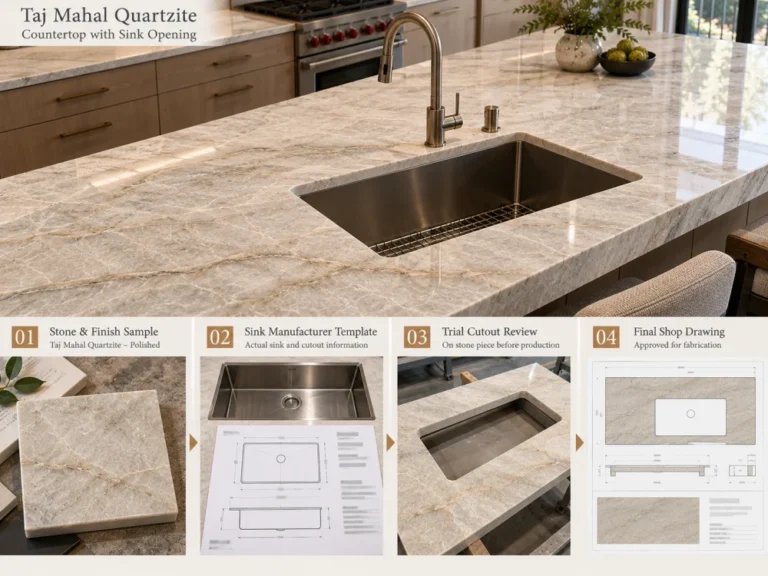
Arbeitsplatten können ausgewählte Plattenbereiche nutzen, wenn bei Spülenöffnungen, Kochfeldern, Nähten und sichtbaren Kanten sorgfältig geplant wird.
Patagonia‑Waschtisch
Waschtischplatten können mit Beckenöffnungen, Wasserhahnlöchern, Rückwänden und Kantendetails gemäß den genehmigten Projektzeichnungen gefertigt werden.
Patagonia-Wandpaneel
Große Wandpaneele können die Beziehung zwischen Champagner-Mineralfeldern, hellen Kristallen und grafischen dunklen Einschlüssen ohne übermäßige Musterunterbrechungen darstellen.
Patagonia Kamin
Kaminsimse können starke Kristall- und dunkle Mineralzonen als architektonischen Blickpunkt nutzen, wenn die Öffnung mit dem Plattenlayout abgestimmt ist.
Patagonia Tischplatte
Esstische, Couchtische, Konsolen und maßgefertigte Möbel können ausgewählte Plattenabschnitte als stark sichtbare Statement-Oberflächen verwenden.
Große Kristalle und Planung des Schnittlayouts
Die große Mineralskala, die Patagonia attraktiv macht, birgt auch eine der Hauptherausforderungen bei der Fertigung. Ein einzelner dunkler Einschluss, eine Kristallgrenze oder ein goldener Mineralbereich kann einen erheblichen Teil einer fertigen Arbeitsplatte oder Insel einnehmen.
Das Schneiden sollte daher vom fertigen Komponentenlayout rückwärts bis zur Platte geplant werden. Spülenöffnungen, Kochfelder, Nähte, Wasserfallrückläufe und sichtbare Kanten sollten erst nach Prüfung der wichtigen Mineralbereiche positioniert werden.
Wenn eine große Wasserfall-Insel erforderlich ist → Koordinieren Sie die Oberseite und den vertikalen Rücklauf aus kompatiblen Plattenzonen, bevor Sie schneiden.
Wenn das Projekt mehrere Akzentflächen enthält → Weisen Sie zunächst die am besten sichtbaren Plattenbereiche zu und verwenden Sie sekundäre Bereiche für weniger sichtbare Teile, sofern praktikabel.
Hinterleuchtetes Patagonia: Nur dort einsetzen, wo die Platte dies unterstützt
Einige Gold Patagonia-Platten enthalten helle Kristallbereiche mit spürbarer Lichtdurchlässigkeit. Diese Zonen können Hinterleuchtetes Patagonia effektiv für ausgewählte Akzentwände, Barfronten, Empfangstheken oder dekorative Paneele sein.
Allerdings ist die Transluzenz nicht über die gesamte Platte gleichmäßig verteilt. Goldener Feldspat, dunkle Mineral-Einschlüsse und opake Bereiche lassen möglicherweise wenig oder gar kein Licht durch. Daher sollte die Hintergrundbeleuchtung als plattenspezifisches Designmerkmal betrachtet werden und nicht als garantierte Eigenschaft jedes Gold Patagonia-Stücks.
Logik der Hintergrundbeleuchtung
Wenn die genehmigte Platte große durchscheinende Kristallbereiche aufweist → Prüfen Sie genau diese Bereiche mit dem vorgesehenen Beleuchtungssystem.
Wenn die Transluzenz begrenzt ist → Verwenden Sie die Beleuchtung gezielt, anstatt zu versuchen, die gesamte Oberfläche gleichmäßig auszuleuchten.
Wenn eine gleichmäßige Ausleuchtung erforderlich ist → Abstimmen von Stein, Lichtabständen, Streuung und Hohlraumtiefe mithilfe eines physischen Mock-ups vor der endgültigen Produktion.
Leitfaden zur Anwendungsauswahl
| Projektanforderung | Wählen Sie | Auswahlpriorität |
| Akkzentkücheninsel | Großes, ausdrucksstarkes Gold-Patagonia-Plattenstück | Kristallzusammensetzung, Fugen und Kontinuität des Wasserfalls |
| Warme Luxusküche | Gold-dominiertes Patagonia-Plattenstück | Champagner‑ und honiggoldene Mineralbalance |
| Akzentwand | Patagonia-Wandpaneel | Paneelabfolge und großflächige Musterkomposition |
| Hintergrundbeleuchtetes Akzentpaneel | Platte mit getesteten transluzenten Kristallzonen | Lichtdurchlässigkeit und Beleuchtungs‑Mock-up |
| Statement-Möbelstück | Patagonia Tischplatte | Sichtbare Kristallplatzierung und Kantenqualität |
Oberflächenbearbeitung und Fertigung
Poliertes Patagonia
Eine polierte Oberfläche maximiert die visuelle Tiefe und lässt Champagner-, Gold‑ sowie kristalline Bereiche lebendiger erscheinen, während sie den Kontrast zu dunkleren Mineralfragmenten betont.
Geschliffenes Patagonia
Eine geschliffene Oberfläche verringert Reflexionen und erzeugt ein sanfteres architektonisches Erscheinungsbild, wobei jedoch die wahrgenommene Farbe und Kristalltiefe etwas zurückhaltender wirken können.
Gepolsterte Patagonia-Oberfläche
Eine gepolsterte Oberfläche kann für ausgewählte Theken, Möbel und Gestaltungselemente einen subtilen taktilen Charakter hinzufügen und die Blendung reduzieren.
Wesentliche Beschaffungsrisiken
Eine kleine Probe kann das vollständige Gleichgewicht zwischen Kristall-, Gold-, Creme‑ und dunklen Mineralbereichen nicht abbilden. Patagonia sollte in Originalplattenformat freigegeben werden.
Gold‑Patagonia ist eine kommerzielle Farbbeschreibung. Verschiedene Platten können von hellem Champagner bis hin zu deutlich satteren honiggoldenen Zusammensetzungen reichen.
Große Kristalle und dunkle Mineralzonen können bei der Fertigung ohne genehmigtes Plattenlayout innerhalb von Öffnungen verloren gehen oder an Fugen unzureichend aufgeteilt werden.
Die Lichtdurchlässigkeit variiert je nach Mineralzone. Die Hintergrundbeleuchtung muss an der tatsächlich ausgewählten Platte getestet werden, statt anhand von Referenzfotos zu schätzen.
Häufige Einkaufsfehler und deren Folgen
| Häufiger Fehler | Mögliche Konsequenz | Empfohlene Kontrolle |
| Bestellung nur nach Materialnamen | Unerwartete Farb‑ oder Kristallstrukturgleichgewichte | Freigabe der tatsächlichen Platten vor der Produktion |
| Schneiden ohne Plattenlayout | Wichtige Mineralzonen gehen an Öffnungen oder Fugen verloren | Zuerst die Positionen der fertigen Teile freigeben |
| Ignorieren struktureller Übergänge | Höheres Fertigungsrisiko rund um Öffnungen oder enge Bereiche | Überprüfung von Kristallgrenzen, Reparaturen und Verstärkungen vor dem Schneiden |
| Nur Vergleich des Patagonia-Plattenpreises | Unvollständiger Vergleich der Projekt‑Kosten | Verwendbare Ausbeute, Fertigung, Verpackung und Logistik vergleichen |
| Überspringen des Hintergrundbeleuchtungstests | Ungleichmäßige Beleuchtung oder unerwartete opake Zonen | Mock-up der tatsächlichen Platte und des vorgesehenen Beleuchtungssystems |
Maßgeschneiderte Fertigung und Qualitätskontrolle
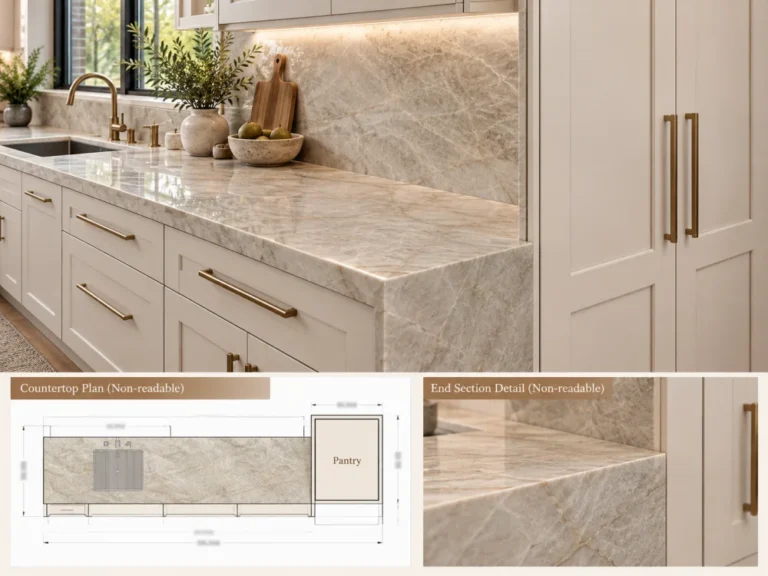
Gold‑Patagonia‑Granit kann gemäß genehmigten CAD‑ oder Werkzeichnungen zu Arbeitsplatten, Wasserfallinseln, Waschtischplatten, Gestaltungswandpaneelen, Kaminbauteilen, Tischplatten, Bars und anderen maßgeschneiderten architektonischen Elementen verarbeitet werden.
Da das Material große mineralische Strukturen enthält, sollte die Fertigungsplanung über die reine Maßkontrolle hinausgehen. Die ausgewählte Sichtseite, wichtige Kristallzonen, natürliche Spalten, reparierte Bereiche, Ausschnittpositionen, Fugenstandorte, Kantendetails sowie Anforderungen an die Verstärkung sollten alle vor dem Schneiden geprüft werden.
Empfohlener Projektablauf
Materialinspektion → Auswahl der tatsächlichen Platte → Plattenkartierung → Zeichnungsfreigabe → Schnittlayout → Hintergrundbeleuchtungstest, wo erforderlich → Schneiden → CNC‑ und Kantenausführung → Überprüfung der Verstärkung → Trockenverlegungskontrolle → Endgültige Qualitätskontrolle → Packinspektion
Verpackung und Projektlieferung
Fertige Patagonia‑Teile sollten entsprechend ihren Abmessungen, ihrem Gewicht, den Öffnungen, der Kristallstruktur und dem Transportrisiko verpackt werden. Große Wasserfall‑Elemente, Arbeitsplatten mit Spülen‑ oder Kochfeldöffnungen, Kaminpaneele und lange Möbeloberflächen benötigen zusätzlichen strukturellen Schutz.
Fertige Oberflächen sollten mit geeigneten Schutzmaterialien getrennt werden. Freiliegende Kanten, Öffnungen und empfindliche Ecken sollten zusätzlich gepolstert und gestützt werden, bevor die Komponenten sicher im Inneren befestigt werden. verstärkte, begaserte Holzkisten.
Erforderliche Angaben für das Angebot
Für eine präzise B2B‑Preisgestaltung sollten die wichtigsten Projektanforderungen angegeben werden, damit Plattenmenge, nutzbarer Ertrag, Fertigungskomplexität, Hintergrundbeleuchtung, Verpackung und Logistik gemeinsam evaluiert werden können.
Insel / Arbeitsplatte / Wand / Kamin / Tisch
Größen der fertigen Komponenten
Stückzahl oder Gesamtfläche
Erforderliche Steindicke
Poliert / Geschliffen / Lederbearbeitet
[Benötigt / Nicht benötigt]
Kanten / Ausschnitte / Gehrungen / Wasserfall
Hafen oder Lieferadresse
FAQ zu Gold‑Patagonia‑Granit
1. Wie sieht Gold Patagonia Granit aus?
Der Gold-Patagonia-Granit weist in der Regel übergroße cremefarbene und hellkristalline Bereiche auf, die von mineralischen Feldern in Champagner-, honiggoldener, beiger und rauchig-grauer Farbe sowie kontrastreichen dunklen Einschlüssen durchzogen sind. Die genaue Zusammensetzung variiert von Platte zu Platte erheblich.
2. Ist Gold Patagonia dasselbe wie normales Patagonia-Granit?
Gold Patagonia ist im Allgemeinen eine handelsübliche Bezeichnung für Patagonia-Platten mit einer ausgeprägteren mineralischen Farbgebung in den Tönen Champagner, Bernstein, Honig oder Gold. Es sollte nicht als einheitlich standardisierte Farbklasse angesehen werden; daher sind die jeweiligen Platten vor der Bestellung zu prüfen und freizugeben.
3. Kann Gold Patagonia Granit für Kücheninseln verwendet werden?
Ja. Anwendungen auf Patagonia Island gehören zu den stärksten Einsatzmöglichkeiten, da die großen Inselflächen dafür sorgen, dass die übergroße Kristallstruktur und die goldenen Mineralzonen weiterhin gut sichtbar bleiben.
4. Kann Gold Patagonia Granit hinterleuchtet werden?
Ausgewählte Platten weisen durchscheinende Kristallzonen auf, die eine Hintergrundbeleuchtung ermöglichen können. Die Lichtdurchlässigkeit ist nicht in jeder Platte gleichmäßig; daher sollte das jeweilige Material vor der Fertigung mit dem vorgesehenen Beleuchtungssystem geprüft werden.
5. Kann Patagonia-Granit für Akzentwände und Kamine verwendet werden?
Ja. Die Anwendungen Patagonia Wandpaneel und Patagonia Kamin ermöglichen die Darstellung der großflächigen mineralischen Zusammensetzung auf weiten sichtbaren Oberflächen, wodurch sie sich für markante Innenräume eignen.
6. Sollte die tatsächliche Patagonia-Platte vor der Fertigung ausgewählt werden?
Ja. Die Auswahl ganzer Platten wird nachdrücklich empfohlen, da Farbbalance, Kristallgröße, Konzentration dunkler Minerale, Risse und durchscheinende Bereiche von Platte zu Platte erheblich variieren können.
7. Welche Oberflächenbehandlung ist für Gold Patagonia Granit am besten geeignet?
Das polierte Patagonia bietet die stärkste visuelle Tiefe und kristallinen Kontrast; geschliffene Oberflächen erzeugen ein sanfteres, weniger spiegelndes Erscheinungsbild, während lederartige Oberflächen zusätzlichen haptischen Charakter verleihen. Die optimale Oberflächengestaltung hängt vom jeweiligen Projekt und der ausgewählten Platte ab.
8. Was beeinflusst den Preis von Gold Patagonia Granit?
Der Preis hängt von der tatsächlichen Plattenzusammensetzung, der Kristall- und Farbqualität, den Abmessungen, der Dicke, dem nutzbaren Ertrag, der Oberflächenbearbeitung, der Komplexität der Verarbeitung, der Bewehrung, den Anforderungen an die Hintergrundbeleuchtung sowie der Verpackung und Logistik ab.
9. Was sollten Käufer vor der Bestellung von Gold-Patagonien-Granit überprüfen?
Käufer sollten die tatsächlichen Plattenfotos, Abmessungen, Menge, Oberflächenbearbeitung, sichtbare Kristallverteilung, natürliche Risse oder Reparaturen, Schnittplan, Fertigungszeichnungen, gegebenenfalls Anforderungen an die Hintergrundbeleuchtung, QC‑Standards sowie die Exportverpackung bestätigen.
Schlussbemerkung / Praktische Hinweise
Gold‑Patagonia‑Granit eignet sich am besten für Projekte, bei denen der Stein selbst zum Hauptarchitekturmerkmal werden soll. Seine Kombination aus übergroßen Kristallen, champagnerfarbenen und honiggoldenen Mineralfeldern, rauchigen Übergängen sowie grafischen dunklen Fragmenten kommt besonders gut bei markanten Kücheninseln, Arbeitsplatten, Gestaltungswänden, Kaminen, Bars und maßgefertigten Möbeln zur Geltung. Für B2B‑Beschaffungen ist die tatsächliche Platte wichtiger als der handelsübliche Farbname. Wenn das Projekt ein helleres und ruhigeres Ergebnis erfordert → wählen Sie Platten mit größeren hellen Kristallfeldern. Wenn ein stärkerer goldener Charakter gefordert ist → wählen Sie Platten mit konzentrierten champagnerfarbenen und honigfarbenen Mineralbereichen. Wenn das Projekt eine Hintergrundbeleuchtung benötigt → wählen Sie zunächst die Platte und testen Sie die genauen transluzenten Zonen, bevor Sie das Beleuchtungs‑ und Fertigungssystem finalisieren.