
ملخص سريع
يجب عدم البدء في قطع طاولة اجتماعات من الكوارتزيت ما دامت وحدة الطاقة لا تزال ممثلة بمستطيل تقريبي. يُرجى تنسيق نموذج الوحدة الفعلي، والرسم الحالي للمصنع، والحجم الإجمالي للأجهزة، وفتحة الحجر المطلوبة، وحركة الغطاء أو الوصول، وعلاقة التركيب، والمساحة أسفل السطح، ومسار الكابلات، وقاعدة الطاولة، وتخطيط البلاطة المختار، ومراجعة التصنيع المسؤولة قبل أن تصبح الفتحة غير قابلة للتغيير. تبقى التوصيلات الكهربائية وهندسة الدعم ومتطلبات التركيب ضمن نطاق الأطراف المؤهلة المسؤولة عن تلك الأنظمة.
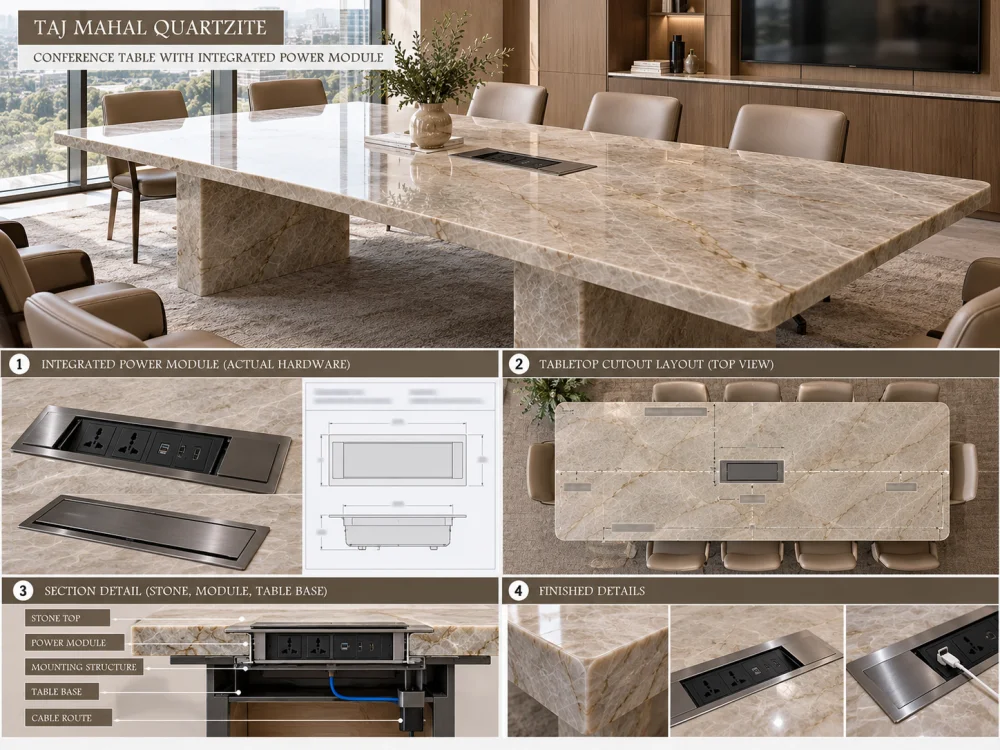
يُظهر رسم غرفة الاجتماعات طاولة كبيرة من الكوارتزيت الطبيعي.
في المنتصف يوجد مستطيل مُعنون بـ:
وحدة الطاقة.
يتلقى مصنع الحجر الرسم ويقوم بإعداد سطح الطاولة.
ثم يصل الجهاز الفعلي.
فتحته مختلفة.
يحتاج الغطاء إلى حركة أكبر مما كان متوقعًا.
جسم الوحدة يمتد تحت سطح الطاولة.
يتداخل مسار الكابلات مع جزء من قاعدة الطاولة.
عند هذه النقطة، لم تعد المشكلة مشكلة رسم فقط.
إنها قطعة مقطوعة من الكوارتزيت الطبيعي.
لطلب مخصص طاولة اجتماعات من الكوارتزيت، لذلك يجب التعامل مع وحدة الطاقة كواجهة مادية حقيقية قبل القطع—وليس كملحق يمكن حلّه تلقائيًا لاحقًا.
قبل مناقشة فتحة الحجر، حدد ما تحتاج الطاولة إلى دعمه.
قد تتطلب طاولة الاجتماعات إمكانية الوصول إلى:
لا ينبغي لمورد الحجر أن يقرر أي نظام كهربائي أو بيانات تحتاج إليه الغرفة.
لكن النظام المطلوب يؤثر على المعلومات المادية التي يحتاجها صانع الكوارتزيت.
المحطة الرئيسية الأولى في المشروع بسيطة:
“وحدة الطاقة بقياس تقريبي 400 × 150 ملم” ليست نفس المعلومات الموجودة في نموذج أجهزة محدد مع وثائق تقنية حديثة.
حتى المنتجات ذات الأحجام المرئية المتشابهة قد تختلف تحت سطح الطاولة.
من أسهل الأخطاء أن يتم التخطيط بناءً على ما هو مرئي فقط من الأعلى.
يمكن أن تشتمل وحدة الطاقة على عدة أغلفة مادية مختلفة.
01 — الغلاف المرئي
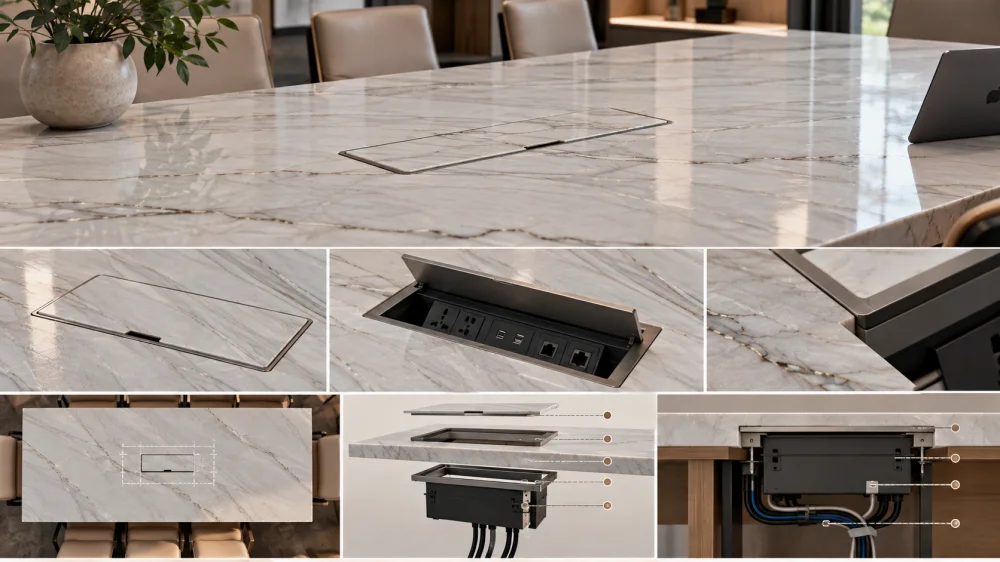
ما يراه المستخدم عند اكتمال سطح الطاولة.
02 — فتحة الحجر
الفتحة الفعلية المطلوبة في الكوارتزيت وفقًا للأساس المثبت للأجهزة/التصنيع.
03 — غلاف التركيب
المساحة اللازمة لتوافق الوحدة مع مجموعة سطح الطاولة أو لتثبيتها عبرها.
04 — غلاف الحركة
المساحة المطلوبة لغطاء أو رفرف أو غطاء أو أي مكون متحرك آخر حسب الحاجة.
05 — الغلاف تحت الطاولة
جسم الوحدة والأجهزة الأخرى التي تشغل حيزًا أسفل الكوارتزيت.
06 — مساحة الخدمة
المساحة اللازمة للكابلات والموصلات ومتطلبات الوصول والصيانة الخاصة بالمشروع.
قد لا تكون هذه المساحات متطابقة.
لهذا السبب، قد لا تحتوي المخطط العلوي وحده على معلومات كافية لتصنيع الحجر.
المظهر العلوي يروي جزءًا فقط من القصة.
القسم هو المكان الذي تصبح فيه عدة واجهات واضحة ومفهومة.
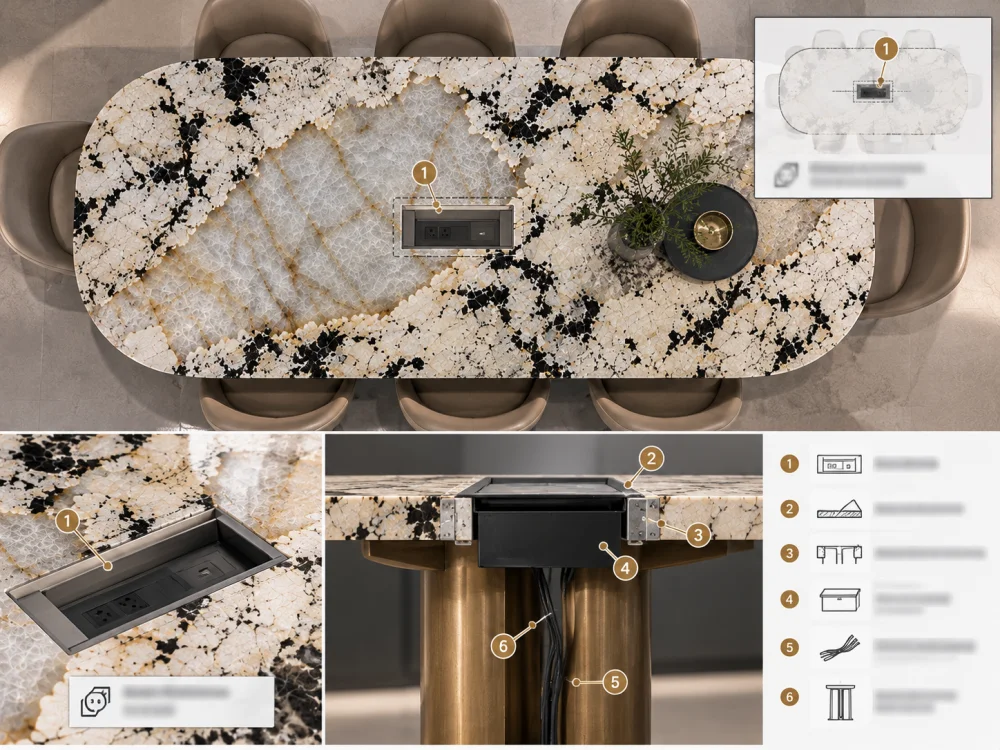
غطاء-وحدة-الطاقة / الوجه الظاهر
↓
سطح-طاولة-كوارتزيت
↓
واجهة-التركيب
↓
جسم-الوحدة
↓
دعم-الجانب السفلي / منطقة قاعدة الطاولة
↓
مسار-الكابلات / الوصول للخدمة
هنا يمكن للمشروع تحديد ما إذا كانت فكرة الأجهزة وفكرة الأثاث متوافقتين فعليًا قبل قطع الحجر.
هذا التمييز بالغ الأهمية.
الحجم-الكلي-للوحدة
يصف الأجهزة أو التجميع الظاهر وفقًا لمعلومات الشركة المصنعة ذات الصلة.
قطع الحجر
يحدد الفتحة المصنوعة فعليًا في سطح طاولة الكوارتزيت الطبيعي.
لا ينبغي افتراض أنها متطابقة.
يجب أن تستند فتحة الحجر إلى معلومات المشروع المؤكدة والمراجعة من قبل الصانع المسؤول.
يجب أن يكون موقع الوحدة منطقيًا بالنسبة للمستخدمين الذين يستخدمون الطاولة.
اعتمادًا على تصميم طاولة المؤتمرات، قد تشمل الأسئلة:
قم أولاً بحل مشكلة الموقع الوظيفي.
ثم نسّق فتحة الحجر المقابلة.
غالبًا ما تُركّز الرسومات المعمارية إكسسوارات معينة لأنها تخلق مخططًا نظيفًا.
وهذا لا يعني بالضرورة أن الموقع قد تم تنسيقه مع الأثاث النهائي.
سؤال-تصميم
هل تتمركز وحدة الطاقة لأن وظيفة طاولة المؤتمرات تتطلب ذلك هناك، أم لأن الرسم الأولي كان بحاجة إلى مكان بديل؟
الإجابة يمكن أن تؤثر على تخطيط الكوارتزيت وقاعدة الطاولة ومسار الكابلات والتكوين البصري.
بمجرد تحديد موقع الفتحة المقترحة، توقف عن النظر إلى الوحدة للحظة.
انظر إلى الحجر المحيط بها.
قد يحتاج الصانع إلى مراجعة:
This article does not prescribe a universal minimum remaining-stone dimension. That decision depends on the actual geometry, Natural Quartzite, fabrication method and responsible technical review.
A technically coordinated opening can still create an undesirable visual result if it removes an important part of the selected slab.
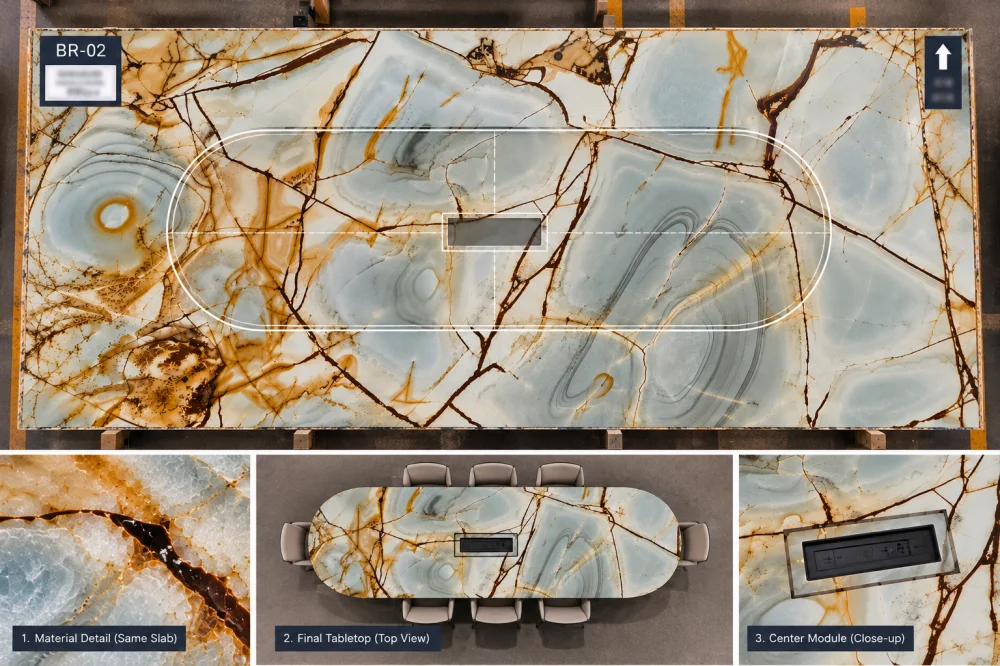
للتعبير عن شخصية واضحة طاولة اجتماعات من الكوارتزيت, place the power-module opening on the actual slab layout before cutting.
Selected Slab: Actual identified Natural Quartzite board
Table Outline: Finished tabletop geometry
Primary Viewing Direction: Main conference-room view
Power Module: Confirmed location
Stone Opening: Current reviewed opening geometry
Pattern Priority: Important mineral movement or focal area
Question: What visible stone will disappear when the opening is cut?
If the selected hardware has a lid, flap or moving cover, do not review only the closed position.
The project should understand the applicable manufacturer-defined movement.
Depending on the actual product, this may affect:
Use the current manufacturer documentation rather than inventing a generic lid movement.
A conference table can look perfectly coordinated from above while containing an unresolved collision below.
The power module may extend into the same zone needed by:
UNDERSIDE COORDINATION QUESTION
After the module passes through the tabletop, what physical space does it occupy, and has that space been coordinated with the furniture and support system?
The furniture designer, hardware provider, fabricator and other responsible professionals should resolve these interfaces according to the project scope.
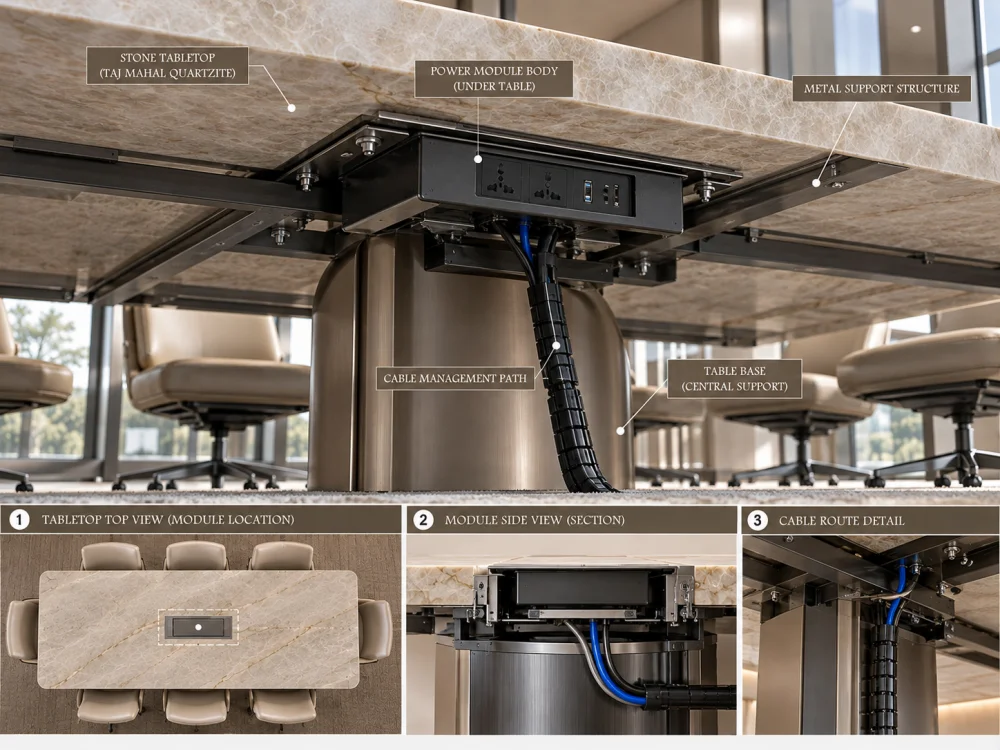
“Cable goes down” is not a complete coordination instruction.
A useful project discussion follows the path farther.
The Quartzite fabricator does not need to design the electrical installation.
But unresolved cable routing can affect the furniture interface and therefore should be identified before the stone layout is treated as complete.
Long conference tables may require more than one service point.
If several modules are proposed, review them as a system rather than duplicating one opening mechanically.
ضع في اعتبارك:
Multiple openings can change both the functional and material logic of the top.
Consider a hypothetical project.
The customer has approved a Taj Mahal Quartzite tabletop layout.
The initial drawing contains Power Module A.
Before cutting, procurement changes to Power Module B.
Do not simply change the product name in the hardware schedule and retain the old stone opening.
OLD INPUT
Module A → Layout Revision R03 → Proposed Opening A
HARDWARE CHANGE
Module B selected → Current manufacturer information issued
REVIEW AGAIN
Opening → Position → Stone Around Opening → Underside Interface → Cable Route → Slab Pattern
If the change affects the visible or fabricated Quartzite layout, issue the appropriate revised drawing before cutting.
A rendering is useful for showing the intended conference-room appearance.
It may show:
But a rendering should not automatically define the final Quartzite opening.
It may not reliably communicate:
Before the طاولة اجتماعات من الكوارتزيت is released for cutting, assemble the current project inputs in one place.
| Project Input | Why It Matters to the Tabletop Review |
| Exact Module Model | Replaces an approximate hardware description with an identifiable product. |
| Current Manufacturer Drawing | Provides the current hardware geometry and relevant interface information for review. |
| Tabletop Drawing | Locates the module relative to the finished Quartzite geometry. |
| Table Section | Shows the relationship between stone, module body, support and furniture below. |
| Selected Slab Layout | Shows which part of the Natural Quartzite pattern the opening removes. |
| Furniture / Base Information | Identifies possible underside interfaces. |
| Cable-Route Requirement | Connects the tabletop module to the broader furniture/service coordination. |
| Current Revision / Review Status | Prevents an earlier module or tabletop drawing from remaining in production. |
For a fabricated Natural Quartzite tabletop, the stone-side review can focus on the confirmed project information that affects the finished component.
Quartzite: Selected material and actual slab reference
Finished Table Size: Current dimensions and shape
التشطيب: Current specified surface finish
الحافة: Current edge / built-up-edge requirement
Module: Exact identified hardware
Opening: Current approved fabrication basis
Position: Current tabletop location
Pattern: Important visible slab areas
Other Openings: Any additional table penetrations
Base Interface: Relevant confirmed furniture information
Drawing: Current revision to be used for review
CONFERENCE-TABLE CUTTING REVIEW
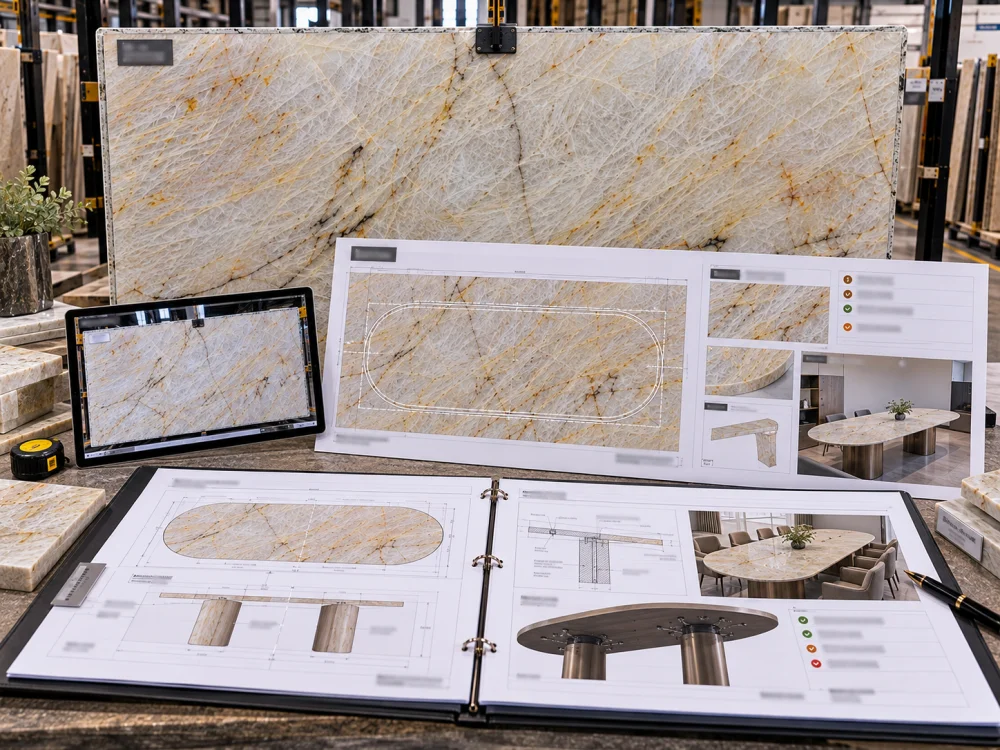
□ Exact power-module model identified
□ Current manufacturer document available
□ Visible module position confirmed
□ Applicable lid / access movement reviewed
□ Stone opening based on current confirmed information
□ Remaining Quartzite around opening reviewed by fabricator
□ تم فحص الفتحة مقارنةً بمخطط اللوح الفعلي
□ Below-table module envelope coordinated
□ Furniture / support interface reviewed by responsible parties
□ Cable path identified for project coordination
□ Current table drawing revision confirmed
□ Responsible parties have completed the reviews required before stone cutting
يمكن للوحدة أن تؤثر على فتحة الحجر، وموضع سطح الطاولة الظاهر، وهندسة الحجر المتبقية، ووضع نمط الألواح، وواجهة الأثاث من الأسفل، وتنسيق مسار الكابلات. وبمجرد قطع حجر الكوارتزيت الطبيعي، قد يتطلب تعديل هذه المدخلات إعادة عمل كبيرة أو استبدال المكوّن المتأثر.
يُرجى تقديم موديل الوحدة بالتحديد، والوثائق الحالية الصادرة عن الشركة المصنعة، وبيانات هندسة الأجهزة ذات الصلة، ومعلومات التركيب، وحركة الغطاء أو فتح الوصول المناسبة، ورسم طاولة الاجتماعات الحالي، وموضع الوحدة المقصود، بالإضافة إلى معلومات المشروع اللازمة لفهم الواجهة السفلية.
لا تفترض ذلك. قد تمثل الأبعاد المادية المرئية أو الإجمالية للحاجز، وكذلك الفتحة المطلوبة في الحجر، هندسات مختلفة. ينبغي للمصنع المسؤول أن يستخدم المشروع المعتمد الحالي ومعلومات الشركة المصنعة عند تحديد فتحة الحجر.
يمكن للرسومات أن تعبر عن النية البصرية، لكن لا ينبغي عادةً اعتبارها الأساس الوحيد لتنفيذ عملية فتح لا رجعة فيها. يجب مواءمة نموذج المعدات الفعلي والمعلومات التقنية الحالية مع الرسم الحالي للطاولة قبل البدء بالقطع.
نعم. يؤدي الفتح إلى إزالة جزء من البلاطة المختارة، وقد يغيّر الأوردة أو المناطق البلورية أو غيرها من المعالم الطبيعية التي تبقى مرئية في سطح الطاولة النهائي. بالنسبة للطاولات ذات الأهمية البصرية، قم بوضع مخطط الفتحة المحددة فوق التخطيط الفعلي للبلاطة قبل الشروع في القطع.
يتعين على الأطراف المؤهلة المسؤولة عن أنظمة التوصيلات الكهربائية ومتطلبات السلامة المطبقة وأنظمة البيانات وواجهات خدمات المباني تحديد هذه المتطلبات. ويقوم مصنع الكوارتزيت بتنسيق الجزء الحجري بما يتوافق مع معلومات المشروع المعتمدة ضمن نطاق تصنيعه.
راجع النموذج الجديد ومعلومات الشركة المصنعة الحالية مقارنةً بالفتحة الموجودة، وموضع سطح الطاولة، والحجر المتبقي، والواجهة السفلية، ومسار الكابلات، وتخطيط البلاطة. إذا كان التغيير يؤثر على ترتيب الحجر المصنّع أو المرئي، فقم بتحديث الرسم المناسب ومراجعة الحالة قبل القطع.
أرسل إلى جوش تفضيلات مادة الكوارتزيت الطبيعي، وأبعاد الطاولة النهائية وشكلها، والكمية، والمخططات الحالية، وتشطيب السطح، ومتطلبات الحواف، ومعلومات وحدة الطاقة المختارة، والفتحات الأخرى، ومعلومات قاعدة الطاولة ذات الصلة بواجهة الحجر، وأولويات تخطيط الألواح، ووجهة التسليم.
Planning a Custom Natural Quartzite Conference Table?
HRST STONE can coordinate selected slab references, tabletop CAD/shop drawings, actual slab layout, confirmed openings, edge fabrication, visible pattern placement, fabrication QC, trial assembly information where applicable, and reinforced fumigated wooden-crate packing around the confirmed furniture scope. Send Josh the table dimensions, quantity, selected Quartzite, finish, edge design, current power-module information, table-base information relevant to the stone interface, drawings and delivery destination before the tabletop is released for cutting.
© شركة HRST STONE / شركة شيامن HRST STONE المحدودة. جميع الحقوق محفوظة.